Connect with us

Editor's Pick

Far-Right Rioters Assault Asylum Seeker Hotels Amid UK’s Worst Unrest in Over a Decade

Published

on

Far-Right Rioters Assault Asylum Seeker Hotels Amid UK’s Worst Unrest in Over a Decade

The United Kingdom is reeling from its most severe unrest in over a decade, as far-right rioters have unleashed violence on hotels housing asylum seekers, triggering a nationwide crisis. Prime Minister Keir Starmer has vowed that the perpetrators will be “brought to justice,” but the country remains on edge.

The latest wave of attacks saw hundreds of far-right demonstrators converging on a Holiday Inn Express near Rotherham. The mob hurled bricks at police, shattered hotel windows, and set fire to bins. Footage from Sky News depicted a chaotic scene: a line of police officers with shields facing a relentless barrage of projectiles, including wood, chairs, and fire extinguishers. As the rioters, many masked, attempted to storm the hotel, the situation grew increasingly volatile. A police helicopter circled overhead, and at least one officer in riot gear was carried away injured.

Advertisement

“The behavior we witnessed has been nothing short of disgusting,” said Assistant Chief Constable Lindsey Butterfield. “While it was a smaller number of those in attendance who chose to commit violence and destruction, those who simply stood on and watched remain absolutely complicit in this.” Butterfield assured the public that officers were working tirelessly to review the extensive online footage of the incident, with arrests imminent.

Advertisement

The violence wasn’t isolated to Rotherham. Staffordshire Police reported that a hotel near Birmingham, known to house asylum seekers, was also targeted by a “large group of individuals” who smashed windows, started fires, and attacked police officers. One officer was injured in the melee.

This recent surge in violence follows a stabbing rampage in Southport that left three girls dead and several others injured. False rumors spread online that the 17-year-old suspect was a Muslim immigrant, igniting a powder keg of xenophobic fury. The suspect, British-born Axel Rudakubana, was named in court last week after a judge lifted reporting restrictions.

Advertisement

Prime Minister Keir Starmer, addressing the nation on Sunday, promised a swift and severe response. “I guarantee, you will regret taking part in this disorder,” he declared. “Whether directly or those whipping up this action online and then running away themselves.” He condemned the “far-right thuggery” that had led to attacks on mosques and assaults on Muslims and ethnic minorities. “People in this country have a right to be safe, and yet we have seen Muslim communities targeted and attacks on mosques. To those who feel targeted because of the color of your skin or your faith, I know how frightening this must be. This violent mob does not represent this country, and we will bring them to justice.”

Chaos in the UK: Violent Protests Erupt After Children’s Murders

Despite these strong words, Starmer has faced criticism for not being vocal enough in denouncing the explicitly racist and Islamophobic nature of the attacks. Labour MP Zarah Sultana, currently suspended from the party, called for Parliament to be recalled from its summer break to address the crisis.

Advertisement

The unrest has not been confined to Rotherham and Birmingham. In Middlesborough, protesters broke free of a police cordon, while in Bolton, police authorized a dispersal notice to combat antisocial behavior. The violence has spread across the country, with more than 150 arrests made in cities including Liverpool, Manchester, Bristol, Blackpool, and Hull, as well as Belfast in Northern Ireland.

Many of these actions have been organized online by shadowy far-right groups using slogans like “enough is enough,” “save our kids,” and “stop the boats.” This narrative, amplified by right-wing media and commentators, taps into fears about immigration, particularly migrants arriving from France across the English Channel.

Advertisement

Stephen Yaxley-Lennon, known as Tommy Robinson, has been a key figure in inciting these protests. Robinson, who led the English Defence League, has a long history of criminal activity and currently faces an arrest warrant after fleeing the UK. Nigel Farage, leader of the right-wing Reform UK, has also been blamed for stoking anti-immigration sentiment, though he condemns the violence, framing it as a reaction to widespread fear.

The anti-far-right group Hope Not Hate condemned the protests as “racist violence spurred on by far-right hatred.” They called for accountability for those directly involved and those promoting the riots, including Robinson. “This explosion of racist violence across the country is the result of years of far-right agitation,” the group stated, adding that the violence is also fueled by a climate of anti-Muslim and anti-asylum seeker hostility stoked by elements of the media and mainstream politicians.

As the UK grapples with this unprecedented wave of far-right violence, the nation’s leadership faces mounting pressure to restore order and address the deep-seated issues fueling this unrest.


Advertisement

Editor's Pick

Inside Iran’s Elite Meltdown: Corruption, Paranoia, and the Race to Succeed Khamenei

Published

on

A fierce political feud is tearing through Iran’s ruling elite, exposing deep fractures within a regime long defined by unity in repression and control.

Analysts in Tehran are calling it a “war of wolves” — a brutal contest for survival among insiders as Supreme Leader Ali Khamenei’s grip weakens and his eventual succession looms ever closer.

The turmoil reached a public crescendo this week when Ali Larijani, a former parliament speaker and one of Khamenei’s most trusted lieutenants, issued a rare public appeal for restraint.

Advertisement

Writing on X, the social media platform banned for ordinary Iranians but routinely used by officials, Larijani warned that senior figures “still fail to grasp the sensitivity and gravity of the current situation,” urging them to “move beyond differences and strengthen national unity.”

For many Iranians, that call rang hollow. Citizens mocked the appeal, noting that the Islamic Republic has lived in “sensitive circumstances” since 1979, yet has never tolerated dissent or accountability.

Behind the public bickering lies a deeper, more dangerous struggle: the competition for wealth and influence in a crumbling, corrupt system.

Advertisement

Since the devastating Israeli air campaign in June 2025, which destroyed key elements of Iran’s nuclear and air defense infrastructure, Khamenei has largely vanished from public view.

His frail appearance and absence from major state functions have left Iran’s elite guessing who actually runs the country.

Former President Hassan Rouhani reignited tensions in July by criticizing the Islamic Revolutionary Guard Corps (IRGC) for wasting national resources on “inefficient” military programs.

Advertisement

The IRGC struck back, accusing Rouhani of cutting defense budgets and undermining national security during his presidency.

Rouhani went further, warning that Russia’s alliance with Tehran was “self-serving and unreliable,” a rare challenge to the Kremlin-friendly faction now dominant in Iran.

Parliament Speaker Mohammad Bagher Ghalibaf, a former IRGC commander, lashed out at Rouhani and former Foreign Minister Mohammad Javad Zarif for their remarks.

Advertisement

By early November, the feud had escalated to open confrontation: parliamentary spokesman Abbas Goudarzi urged the judiciary to prosecute Zarif for “anti-Russian statements” and “disturbing national unity.”

The IRGC-aligned hardliners have crushed Rouhani’s reformist bloc since 2020, seizing control of parliament through tightly managed elections. Yet their dominance has not brought cohesion.

Instead, competing factions within the conservative camp are now fighting over who will control Iran’s political and financial machinery once Khamenei — now 86 and visibly frail — is gone.

Advertisement

At the heart of the struggle lies Iran’s crony capitalist economy, which rewards loyalty over competence and has bred staggering corruption.

Most members of the political elite depend entirely on state contracts, monopolies, and subsidies — systems they built and now cling to for survival. “They have no skills to thrive in a free-market economy,” one Tehran economist said. “Without the regime, they lose everything.”

That fragility was laid bare by the collapse of Bank Ayandeh in October, a scandal that revealed decades of insider theft and mismanagement.

Advertisement

The Central Bank’s decision to absorb the institution rather than prosecute its operators provoked outrage — even among loyal conservatives. Seyyed Yasser Jebraily, a regime insider, admitted on X that “nearly one hundred billion dollars of the nation’s capital has been plundered” since 2018.

For many Iranians, this confirmed what they already believed: that corruption, not foreign sanctions, has impoverished the country.

Decades of cronyism have gutted Iran’s productive economy and concentrated power in the hands of a few families and security networks.

Advertisement

As uncertainty grows over Khamenei’s successor, those networks are turning on each other — looting what remains of the state before the system they built begins to devour itself.

Continue Reading

Editor's Pick

Arise, Sir David: The Significance of David Beckham’s Knighthood

Published

on

David Beckham has been knighted by King Charles III, in what the retired British soccer star described as his “proudest moment.”

The former England soccer captain accepted the knighthood for his services to sport and charity on Tuesday at a ceremony at Windsor Castle, where Japanese-British author and screenwriter Kazuo Ishiguro, and West End and Broadway star Elaine Paige also received honors.

Beckham was named earlier this year in the King’s Birthday Honours list.

Advertisement

“I’ve been very obviously lucky in my career to have won what I’ve won and done what I’ve done but to receive an honor like this, of a knight, is beyond anything that I ever thought that I would receive,”

Beckham told Britain’s PA Media news agency after the ceremony. “To be honest, a young boy from the east end of London, born in Leytonstone, and here at Windsor Castle, being honored by His Majesty the King – the most important and the most respected institution in the world – it’s quite a moment,” he added.

Beckham was accompanied by his wife, Victoria, who made the suit he wore to accept the award.

Advertisement

The father-of-four said the King had “inspired quite a few” of his looks over the years. “I looked at old pictures of him when he was quite young in morning suits and I was like, ‘OK, that’s what I want to wear,’ so I gave it to my wife and she did it.”

The honor comes more than two decades after the 50-year-old, who represented England in 115 international games and won league titles in four different countries, was appointed an officer of the Order of the British Empire (OBE) by Queen Elizabeth II.

Beckham, who retired from professional soccer in 2013, is also a UNICEF goodwill ambassador. In 2015, he launched the “7” fund to support children at risk of dangers such as the Ebola crisis – a fund named after the number on his Manchester United shirt.

Advertisement

He made a notable return to soccer in 2018 when he was awarded a Major League Soccer franchise in Miami, Florida, and went on to form the football club Inter Miami.

Beckham has a good working relationship with King Charles, having exchanged “beekeeping tips” in the Cotswolds, England, last year, when he became an ambassador for The King’s Foundation.

Advertisement
Continue Reading

Editor's Pick

FBI Terror Raid Rekindles Old Fears in Arab America

Published

on

When flashbangs lit up a quiet Dearborn street before dawn on Halloween, residents thought they were reliving an old nightmare.

The FBI shouted commands in Arabic as agents stormed a family home, detaining several young men. Hours later, FBI Director Kash Patel declared on X that agents had “thwarted a potential terrorist attack” in Michigan.

But days have passed without charges, evidence, or answers — and the community that woke up to sirens, helicopters, and suspicion says it has seen this movie before.

Advertisement

Dearborn, often dubbed “the heart of Arab America,” is home to the largest Arab population in the United States — and for many residents, the government’s handling of this case feels eerily familiar.

In the absence of indictments or details, speculation has rushed to fill the void, and once again an entire city finds itself on trial by perception.

“I don’t believe it,” said Ahmed, a neighbor who described the family in question as kind and quiet. “They’re good people. They help everyone.” Another resident, Laraib Irfan, said he saw FBI agents leading the family out with their hands behind their backs as stunned neighbors looked on. “We heard two loud bangs — it felt like bombs,” he said.

Advertisement

The FBI insists it prevented a “potential mass-casualty event,” citing encrypted online chats referencing “pumpkin day” and a shooting range visit involving legally registered firearms.

But defense attorneys say the claims are flimsy and premature. Amir Makled, representing one of the detainees, argues the so-called plot may have been nothing more than “online gamer chat that was misinterpreted.”

“We are confident that once the facts are reviewed objectively, it will be clear there was never any planned terror attack,” Makled said. “All firearms were legally obtained. This was not a terrorist cell — it was a family.”

Advertisement

So far, no federal charges have been filed, a delay that experts say either suggests a cautious prosecution or a weak case. “It makes me think the plot wasn’t as mature as they led people to believe,” said Colin Clarke, executive director of The Soufan Center. “If this were a credible ISIS-directed plot, there would be more to show.”

What has emerged instead is a deepening unease. Patel’s announcement triggered a wave of online hate, with commenters calling Dearborn “a sleeper cell” or “an Islamic hub for terror.” For a city that the FBI itself ranks as one of Michigan’s safest, such comments sting.

Dearborn’s residents say they are used to being the scapegoat — from airport watchlists to surveillance operations after 9/11, Arab and Muslim Americans have lived under an unshakable shadow of suspicion.

Advertisement

“This community is part of the American fabric,” Makled said. “But we’re tired of being treated like we’re guilty by default.”

The Michigan branch of the Council on American–Islamic Relations (CAIR) condemned the FBI’s lack of transparency, warning that the absence of charges while publicly touting a “foiled terror plot” risks fueling Islamophobia.

“People in the community are tired of this idea of collective guilt,” said Executive Director Dawud Walid. “Muslims in Dearborn don’t owe anyone an apology for the alleged actions of others.”

Advertisement

FBI officials have declined to clarify whether the suspects remain in custody or what specific threats prompted the raid. For now, Dearborn is left in limbo — a city that prides itself on safety and solidarity, thrust again into the national spotlight as a backdrop for a story it didn’t write.

Makled said his client’s mother “hasn’t stopped crying.” And for many in Dearborn, the emotional toll of once again being cast under suspicion feels heavier than any legal burden.

“If the director put out a statement prematurely,” Makled said, “he should apologize. That’s how you heal this community — not by treating it like a suspect, but like a partner.”

Advertisement

Whether the FBI caught a real threat or a misunderstanding will eventually come out in court. But for Arab Americans in Dearborn, the verdict they care about most isn’t legal — it’s social. After decades of loyalty, they’re still waiting for their government to trust them back.

Continue Reading

Editor's Pick

Why the Two Superpowers Must Unite to End Global Terrorism

Published

on

As U.S. President Donald Trump and Chinese President Xi Jinping prepare for their high-stakes summit in South Korea this week, Israeli legal scholar and reform advocate Adv. Shraga Biran has issued a moral challenge that goes far beyond trade or technology: a call for both leaders to sign what he calls the “death warrant for global terrorism.”

Biran — a 90-year-old lawyer, former partisan fighter, and founder of Israel’s Institute for Structural Reforms (ISR) — has sent formal letters to both Washington and Beijing, urging Trump and Xi to use their meeting to jointly declare war on terrorism and antisemitism.

“This is not diplomacy,” he says. “It is a moral and civilizational imperative.”

Advertisement

Biran’s message is built on a simple conviction: only the world’s two largest powers, representing more than half of global output, possess the authority and capacity to crush terrorism’s economic and ideological roots.

“The American eagle and the Chinese dragon can do it,” he says. “They carry not only power but responsibility.”

A Moral Blueprint for a Global Alliance

Biran’s new initiative, The Trump–Xi Summit Imperative, expands on his 2023 book Liberating Gaza and his forthcoming work When Eagle and Dragon Unite: A Global Alliance to Rebuild Gaza and Eradicate Terrorism Worldwide.

Advertisement

His argument is stark: local wars — whether in Gaza, Syria, or Ukraine — will continue to regenerate unless the world’s superpowers coordinate a global campaign to dismantle terrorism’s deeper ecosystem of poverty, fundamentalism, and manipulation.

“The fight against Hamas, ISIS, or al-Qaeda means nothing if their economic and ideological networks are left untouched,” Biran writes. “Terrorism is a cancer — cutting the tail is useless if the head survives.”

He envisions a U.S.–China–led international task force dedicated to “de-Hamasization and denazification in the style of 2025,” pairing economic reconstruction with coordinated intelligence and law enforcement operations.

Advertisement

His proposal calls for diverting one percent of global wealth — roughly $4.5 trillion — toward eradicating poverty in vulnerable regions, which he views as terrorism’s primary incubator. “This is not charity,” he insists, “it is enlightened self-interest.”

Parallels in Power and Principle

Biran argues that Trump and Xi, despite their ideological differences, already share the same moral vocabulary.

Trump’s condemnation of “jihadist terrorism and militant antisemitism,” and Xi’s pledge to combat the “three evils” of terrorism, separatism, and extremism, demonstrate a rare convergence. Both leaders, he says, “speak the same language of necessity.”

Advertisement

He also points to their nations’ moral histories: America’s post-9/11 campaign against extremism and China’s wartime refuge for 20,000 Jewish refugees during the Holocaust. “China is the only civilization where the word ‘antisemitism’ has no translation,” he notes.

A Warning from History

Drawing parallels to the 1930s, Biran warns that populist and nationalist movements — from the far-right to the pseudo-left — are reviving antisemitic and fascist ideologies under democratic guises. “Fascism no longer marches in uniform,” he cautions. “It hides behind slogans of freedom.”

The failure to act now, he says, would mark a moral collapse akin to Europe’s prewar paralysis. “If they miss this summit,” Biran writes, “humanity will have lost a historic moment.”

Advertisement

Toward a New Covenant

Biran’s appeal is already circulating in the United States, China, and the Arab world, with an Arabic edition of his new book published by Jordanian publisher Mohammad Alsharqawi.

It has been distributed in Jordan, Egypt, Saudi Arabia, the UAE, Lebanon, and Syria, signaling a rare cross-regional appetite for an economic path out of extremism.

“The enlightened world must unite against global terrorism and antisemitic terror,” Biran says. “History does not decide — people do. If Trump and Xi understand that, they can bring about the first true covenant of the new world.”

Advertisement
Continue Reading

Editor's Pick

Reforming the African Union: A Blueprint for a Stronger, Self-Reliant Continent

Published

on

After years of stalled discussions and missed deadlines, the African Union (AU) is once again at a crossroads. With the world shifting toward multipolar power and rapid geopolitical change, Africa’s premier continental body faces mounting pressure to reinvent itself — not through rhetoric, but through deep structural reform.

The call for transformation is not new. In 2016, African heads of state tasked Rwandan President Paul Kagame with leading a sweeping reform initiative to make the AU “fit for purpose” in achieving the ambitions of Agenda 2063, Africa’s long-term blueprint for inclusive growth and sustainable development.

Yet nearly a decade later, many of the same institutional weaknesses persist: sprawling bureaucracies, dependence on foreign funding, and fragmented coordination with regional economic communities.

Advertisement

The Case for Urgent Reform
Analysts and official studies have long identified core issues hampering the AU’s effectiveness. The organization’s wide array of overlapping mandates and limited managerial capacity have led to inefficiency and slow decision-making.

Its heavy reliance on external donors — who finance the majority of its programs — undermines both sovereignty and accountability. Meanwhile, poor coordination with regional blocs continues to dilute the AU’s authority on issues of peace, security, and trade.

The reform agenda seeks to change this by focusing on five key areas:

Advertisement
  • Institutional Restructuring: Streamlining the AU’s organs and commissions to eliminate redundancy and speed up decision-making.

  • Financial Independence: Implementing sustainable funding mechanisms, including improved member-state contributions, to reduce reliance on non-African partners.

  • Peace and Security: Strengthening conflict-prevention and rapid-response systems to address Africa’s persistent instability.

  • Civic Engagement: Expanding participation of civil society groups to enhance transparency and grassroots inclusion.

  • Operational Efficiency: Ensuring all AU initiatives align with a smaller set of continental priorities.

Momentum for reform gained traction again in October 2025, when AU Commission Chairperson Mahmoud Ali Youssouf and Kenyan President William Ruto, the AU Champion for Institutional Reform, convened the first virtual meeting of the Ad-Hoc Reform Committee.

Ruto emphasized Africa’s shared duty to build “a stronger, more coherent, and people-centered Union,” while announcing that Angola’s President João Lourenço will host an Extraordinary Summit on AU Reforms in Luanda on November 26, 2025.

The message from Ruto and Youssouf is that reform is no longer optional. To lead in a rapidly evolving world, the AU must be financially self-reliant, operationally lean, and politically united.

Advertisement

Agenda 2063’s promise of “The Africa We Want” cannot be achieved without an African Union that is empowered to act decisively and funded by Africans themselves.

As the Luanda summit approaches, the question is no longer whether reform is necessary — but whether the continent’s leaders are finally ready to deliver it.

Advertisement
Continue Reading

Editor's Pick

Unlocking Africa’s Airspace: The $75 Billion Opportunity

Published

on

OPEN THE SKY: How a Unified African Airspace Could Unleash a $75 Billion Economic Revolution. From Nairobi to Marrakech, Africa’s fragmented skies hide one of its greatest untapped engines of growth — a unified aviation market.

LONDON / ADDIS ABABA — A traveler flying from Nairobi to Marrakech — two of Africa’s most dynamic cities — must first cross the Mediterranean. The quickest route goes through Paris, not the Sahara.

It’s a symbol of Africa’s fractured airspace, and the staggering cost of disconnection that continues to limit the continent’s economic rise.

Advertisement

Despite accounting for 20% of the world’s landmass, Africa represents only 2% of global air traffic.

Its 1.4 billion people — more than the population of Europe and North America combined — remain trapped under a system of bilateral air service agreements that restrict which airlines can fly where, when, and how often.

“The biggest challenge is market access,” said Raphael Kuuchi of the African Airlines Association (AFRAA). “We need airlines to move passengers freely without the restrictions that currently exist.”

Advertisement

At present, Africa’s skies are a patchwork of national fiefdoms. Each country guards its routes and fees like private kingdoms.

The result: high fares, thin connections, and airports that feed more traffic to Europe and the Middle East than to each other.

A Locked Sky, a Lost Fortune

According to the International Air Transport Association (IATA), aviation already supports $75 billion in economic activity and 8.1 million jobs in Africa — but with open skies, that figure could multiply.

Advertisement

A 2021 IATA study found that liberalized air markets could add $4 billion to Africa’s GDP and create 500,000 new jobs.

Yet for now, intra-African routes account for just 21% of all flights, compared to 67% in Europe.

Even Africa’s largest low-cost carrier, FlySafair, operates only five international routes — with its entire fleet totaling 37 planes, compared to Southwest’s 800.

Advertisement

“Air travel in Africa is still really tiny compared to the rest of the world,” admitted FlySafair’s Kirby Gordon.

Cost remains the other barrier. While airlines globally make about $7 per passenger, African carriers average just $1.

“Many states treat aviation as a cash cow,” said Somas Appavou of IATA. “They overtax it, not realizing that aviation itself is an economic multiplier.”

Advertisement

The Single African Sky

The African Union’s flagship initiative, the Single African Air Transport Market (SAATM), launched in 2018 to create a borderless aviation zone — a system modeled on Europe’s single aviation market.

So far, 38 countries, including Kenya, Ethiopia, Rwanda, Nigeria, and South Africa, have signed on.

But implementation has been slow. Political caution, protectionism, and inconsistent regulations continue to stall progress.

Advertisement

Still, there are signs of lift-off: in the past four years, 108 new intra-African routes have opened under SAATM’s pilot framework.

Rwanda and Ethiopia have become models of what’s possible when aviation is treated as a pillar of economic policy. Ethiopian Airlines, now Africa’s largest carrier, is building a $10 billion mega-airport to handle 60 million passengers annually.

RwandAir, just 20 years old, has positioned Kigali as a rising pan-African hub, backed by visa-on-arrival policies that make travel seamless.

Advertisement

“The results go beyond the runway,” Appavou said. “When governments see aviation as a strategic enabler, it multiplies investment, trade, and tourism.”

Europe’s Bet on African Connectivity

Even Europe sees the potential. The European Union has funded a €15.8 million partnership with the African Union, extending to 2030, to help harmonize safety standards and train aviation regulators.

“Air connectivity is existential,” said Javier Niño Pérez, EU Ambassador to the African Union. “It’s an engine for trade, it creates jobs, it creates business.”

Advertisement

But connectivity is only part of the equation. Africa’s aviation future depends equally on visa reform, digital integration, and affordable energy, alongside peace and political stability.

Only five African countries — Benin, Rwanda, Seychelles, The Gambia, and Ghana — currently offer visa-free entry to all Africans.

As Pérez noted, Africa’s challenge is its geography: flying north-to-south is like crossing New York to Istanbul; east-to-west, Paris to Mumbai. But that scale is also its greatest opportunity — a sky large enough to unite a continent and transform its economy.

Advertisement

The Takeoff Moment

The question now is whether African leaders will treat aviation as infrastructure — not luxury. The cost of delay is visible in every empty runway and rerouted traveler forced to transit through Europe to reach another African capital.

As the Global Perspectives summit in London approaches, the message from industry leaders is clear: unlocking Africa’s airspace could unlock Africa itself.

Once the continent’s skies open — for business, for trade, for its own citizens — it will no longer need a layover in Paris to reach its potential.

Advertisement
Continue Reading

Editor's Pick

Trump’s Fiercest Critic Faces Trial for National Security Leaks

Published

on

WASHINGTON, D.C. — Former U.S. National Security Adviser John Bolton, one of the most hawkish figures of the Trump era, has surrendered to federal authorities in Maryland to face 18 criminal charges related to mishandling and sharing classified information.

The indictment — long whispered about in Washington — accuses Bolton, 76, of retaining and transmitting top-secret material, including intelligence on foreign adversaries and sensitive details about U.S. defense strategy.

The case marks a dramatic fall for a man once trusted to sit at the heart of America’s national security machine.

Advertisement

Bolton’s court appearance Friday morning in Greenbelt, Maryland, was subdued. The once-fiery official ignored shouted questions from reporters as he entered the courthouse, a silent figure walking into what could be the most consequential legal test of his life.

From Trump Ally to Enemy

Bolton served as Donald Trump’s national security adviser from 2018 to 2019, departing after a bitter policy clash over Iran and Afghanistan.

Once a loyal ideologue of American power, he has since become one of Trump’s fiercest public critics, accusing him of “endangering the republic.”

Advertisement

Now, he finds himself on the other side of Trump’s Justice Department — a target, he claims, of political revenge disguised as law enforcement.

“I’ve become the latest target in weaponizing the Justice Department,” Bolton said in a statement. “These charges distort the facts and revive cases that were previously declined. I will defend my lawful conduct.”

The 18-count indictment alleges that Bolton used personal messaging apps and private email to share “diary-like entries” containing classified information with two unnamed individuals.

Advertisement

Prosecutors claim the materials included intelligence about future attacks and foreign adversaries, a level of detail that federal officials argue could “severely compromise national security.”

Hacked by Iran, Haunted by Trump

The indictment also reveals a chilling twist: between 2019 and 2021, Iranian cyber operatives allegedly hacked Bolton’s personal email, gaining access to sensitive materials.

Prosecutors say the intrusion exposed a trove of classified documents, though there’s no evidence Bolton intentionally leaked them.

Advertisement

Bolton’s attorney, Abbe Lowell, dismissed the allegations as an overreach.

“Like many public officials throughout history, Ambassador Bolton kept diaries — that is not a crime,” Lowell said. “The records were unclassified, known to the FBI for years, and shared only with his immediate family.”

The Justice Department previously tried to block the publication of Bolton’s 2020 memoir, The Room Where It Happened, alleging it contained classified material.

Advertisement

A federal judge later allowed the book to be released but criticized Bolton, saying he had “gambled with national security.”

The investigation, which began under the Trump administration and quietly continued into the Biden years, culminated in an FBI raid on Bolton’s home and office in August — a sign prosecutors were building an airtight case.

A Political Firestorm

Trump’s reaction to Bolton’s downfall has been predictably blistering. The former president once called his ex-adviser “a lowlife who should be in jail,” claiming he had “illegally released much classified information.”

Advertisement

This year, after returning to office, Trump revoked Bolton’s security detail, along with those of several political rivals — a move critics saw as vindictive.

Bolton’s indictment follows similar charges brought against former FBI Director James Comey and New York Attorney General Letitia James, both outspoken critics of Trump.

The pattern has fueled fears that the Justice Department is being used as a political weapon against dissenting voices.

Advertisement

For Bolton — a figure who built his career on uncompromising national security orthodoxy — the irony is bitter. Once the architect of hardline intelligence policy, he now faces prison under the very laws he once championed.

As he stood before the federal courthouse on Friday, John Bolton didn’t say a word. But the silence spoke volumes — about power, loyalty, and the ruthless cycle of American politics that devours even its most devoted warriors.

Advertisement
Continue Reading

Editor's Pick

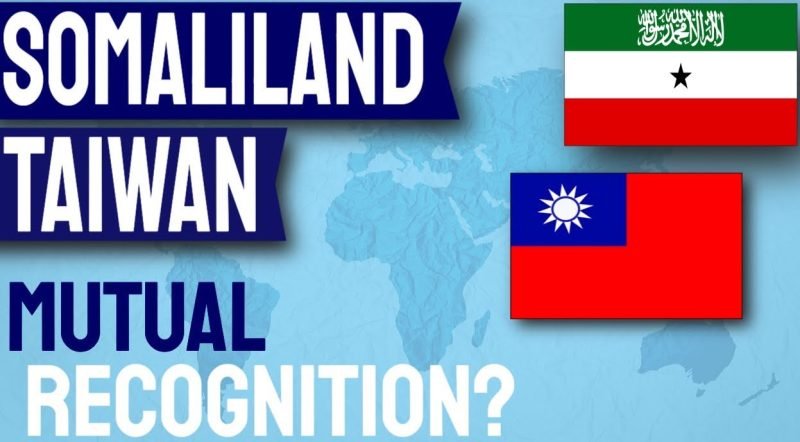
Farewell to Raila Odinga: Somaliland Honors a Reformer Who Understood Its Cause

Published

on

President Abdirahman Mohamed Abdillahi (Irro) of the Republic of Somaliland has extended heartfelt condolences to the family, government, and people of Kenya following the death of former Prime Minister Raila Amolo Odinga, who passed away Wednesday at the age of 80.

In a solemn statement, President Irro hailed Odinga as “a towering African statesman and visionary reformer whose unwavering pursuit of justice, democracy, and unity uplifted his nation and inspired the continent.”

The President also remembered Odinga as “a principled friend of Somaliland — a leader of wisdom and integrity who deeply understood and respected the aspirations and legitimate rights of its people.”

Advertisement

President Irro said Africa had lost “one of its most steadfast voices for democracy and good governance,” and conveyed Somaliland’s solidarity with the people of Kenya during this “moment of profound loss.”

Odinga’s death, confirmed by his office and reported by Reuters, came after the veteran leader suffered a cardiac arrest while undergoing treatment in Kochi, India.

A defining figure in Kenyan politics for more than four decades, Raila Odinga led the struggle for multiparty democracy, helped usher in Kenya’s 1991 democratic reforms, and played a central role in shaping the 2010 constitution.

Advertisement

Though he never captured the presidency despite five attempts, his influence transcended electoral politics. Odinga’s leadership during Kenya’s most turbulent years — including the aftermath of the 2007 election violence, which left more than 1,300 people dead — solidified his place as a symbol of resilience and reform in African democracy.

Across the continent, tributes have poured in from heads of state and political leaders honoring a man many viewed as “the conscience of the Kenyan republic.”

In Somaliland, where Odinga was seen as a rare African leader who privately supported Hargeisa’s right to self-determination, his death resonates deeply.

Advertisement

His passing, President Irro said, “reminds Africa that true leadership is measured not by power, but by principle.”

Continue Reading

Most Viewed

error: Content is protected !!