On Saturday, tensions escalated across multiple fronts as Israeli Prime Minister Benjamin Netanyahu’s residence was targeted by a drone attack, while intense airstrikes in Gaza claimed the lives of at least 21 civilians, including children, according to local medical officials. The Israeli government confirmed the attack on Netanyahu’s home in Caesarea, though neither he nor his wife were present at the time, and no casualties were reported. The drone was launched as Israel’s war with Hezbollah in Lebanon and Hamas in Gaza intensified, signaling a dangerous new phase in the conflict.
This latest assault on Israeli soil coincides with a broader, more sustained exchange of fire between Israeli forces and Hezbollah, the Iran-backed militant group operating from Lebanon. Hezbollah, a close ally of Hamas, has pledged to increase its missile and drone strikes against Israel. Over 55 projectiles were fired at northern Israel from Lebanon on Saturday morning alone, though many were intercepted by Israel’s defense systems. In response, Israeli airstrikes targeted Hezbollah’s infrastructure, including the assassination of Nasser Rashid, a key Hezbollah commander in southern Lebanon.
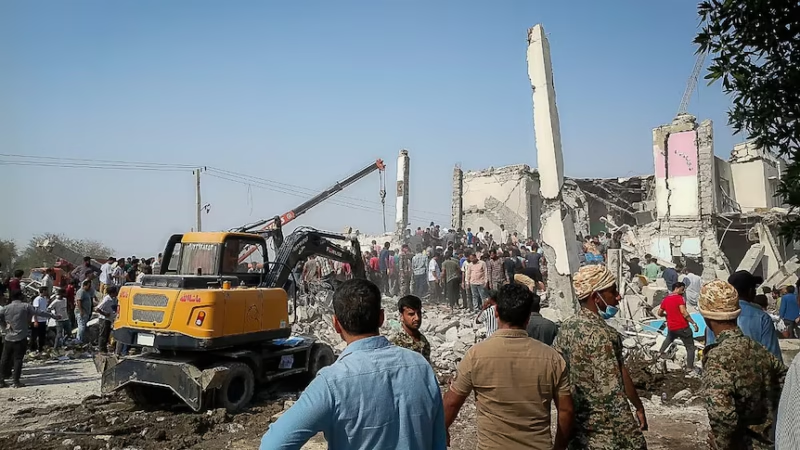
Meanwhile, Israel’s air campaign in Gaza continues unabated. Hospitals in the region reported catastrophic damage, including strikes on the Indonesian Hospital in Beit Lahiya and the Awda Hospital in Jabaliya, causing widespread panic among patients and staff. Civilian casualties mounted as airstrikes also destroyed residential areas. In central Gaza, a house in the town of Zawayda was struck, killing at least 10 people, including two children, while another strike on the Maghazi refugee camp wiped out 11 members of the same family. The war has left much of Gaza in ruins, displacing around 90% of the population and causing a humanitarian crisis as residents struggle to find food, water, and medical supplies.
This conflict continues against the backdrop of heightened geopolitical tensions, as Iran’s Supreme Leader Ayatollah Ali Khamenei vowed that Hamas would continue its fight against Israel, despite the recent killing of Hamas leader Yahya Sinwar. Sinwar, who masterminded the October 7, 2023, attack on Israel that killed 1,200 people, was a top target for Israel. His death, which Israel claimed on Thursday, may shift the balance of the ongoing war in Gaza. However, Hamas remains defiant, with leaders refusing to negotiate the release of hostages taken in last year’s raid until Israel ceases its military campaign in Gaza.
The potential for further escalation is high, with Iran publicly supporting Hamas and Hezbollah’s operations against Israel, framing the conflict as part of a broader resistance against Western and Israeli influence in the region. Israeli Prime Minister Netanyahu, however, remains resolute, declaring that Israel will continue its operations until Hamas is destroyed politically and militarily, vowing that Sinwar’s death does not mark the end of the conflict.
Amid this violence, families of Israeli hostages are urging their government to leverage Sinwar’s killing to negotiate the return of their loved ones. Around 100 hostages are believed to remain in Gaza, though the Israeli military estimates that at least 30 are already dead. The families’ pleas underscore the human toll of a conflict that shows no signs of abating. While international leaders express hope that Sinwar’s death could lead to de-escalation, the war’s trajectory remains uncertain, with both Israel and Hamas entrenched in their positions.
As the violence rages on, it’s clear that the death of Sinwar may have shifted the tactical dynamics on the ground, but the war’s broader political and humanitarian consequences are likely to be felt for much longer.