Top stories
Trump’s New Cabinet Faces Criticism Over Loyalty, Ideological Disparities
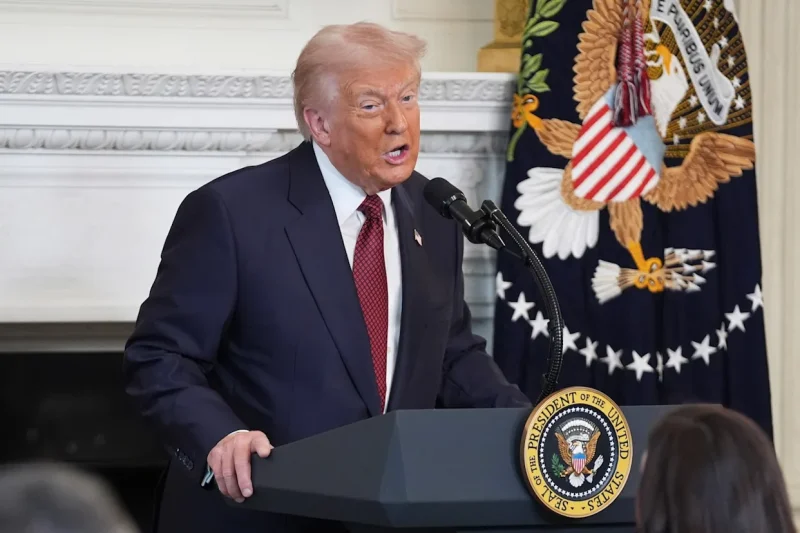
President-elect Donald Trump’s second-term cabinet is drawing scrutiny for prioritizing loyalty over experience, with selections that critics describe as a “hodgepodge” of ideologies unified only by their allegiance to the former president. The appointments come three weeks after Trump’s surprise victory over Kamala Harris and reflect his “America First” agenda emphasizing mass deportations, deregulation, and military reform.
A Cabinet of Contradictions
While Trump’s Maga base hails the team as ready to implement his bold policies, analysts warn the ideological differences could spark internal clashes. Critics see echoes of his first administration, characterized by frequent turnover and infighting.
Political strategist Rick Wilson, of the anti-Trump Lincoln Project, said, “Trump thrives on chaos. The same dysfunction that plagued his first term will likely resurface as he pits allies against one another.”
Unlike his 2017 administration, which included traditional conservatives, Trump’s latest selections focus on loyalty and alignment with his personal agenda. Notable choices include:
- Pam Bondi as attorney general, replacing initial pick Matt Gaetz, who stepped down amid misconduct allegations. Bondi is a staunch Trump ally with plans to investigate prosecutors who pursued charges against the president.
- Pete Hegseth as defense secretary, despite no government experience, chosen for his alignment with Trump’s push to eliminate “woke” military policies.
The economic appointments offer conflicting signals. Treasury Secretary nominee Scott Bessent, a Wall Street veteran with ties to George Soros, suggests market reassurance. However, commerce secretary pick Howard Lutnick supports Trump’s tariff-heavy, protectionist trade agenda.
In foreign policy, Senator Marco Rubio is tapped for secretary of state, signaling a conventional approach to international adversaries. Conversely, Tulsi Gabbard, nominated as director of national intelligence, raises eyebrows for past remarks seen as sympathetic to Russia.
The cabinet also features controversial figures like Robert Kennedy Jr., an anti-vaccine advocate, as head of the Environmental Protection Agency, sparking concerns over conflicts with Trump’s pro-oil stance.
Outside formal cabinet roles, Elon Musk and Vivek Ramaswamy will lead a new “Department of Government Efficiency,” tasked with promoting deregulation and budget cuts. Trump’s embrace of the Heritage Foundation’s Project 2025, including appointing fiscal hawk Russell Vought as director of the Office of Management and Budget, underscores his intent to reshape federal governance.
Observers predict challenges in managing the cabinet’s ideological divisions. For instance, Kennedy’s environmental activism contrasts sharply with the pro-drilling ethos of figures like EPA chief Lee Zeldin. Similarly, labor secretary pick Lori Chavez-DeRemer, one of the few union-friendly Republicans, might clash with staunchly anti-labor colleagues.
Trump’s selections reflect his reshaped Republican Party, prioritizing loyalty and his political vision over traditional qualifications. While the cabinet’s effectiveness remains to be seen, analysts caution that its lack of cohesion and Trump’s penchant for discord could undermine its stability and policy implementation.
As his second term approaches, Trump’s administration stands as a testament to his influence within the GOP and his commitment to advancing an agenda shaped by his personal priorities and Maga movement ideals.
Top stories
Xi Courts Global Leaders as U.S. Struggles With Allies Over Iran War
Beijing Rising, Washington Isolated: Xi Seizes the Moment. While the U.S. fights a war, China is winning the room.
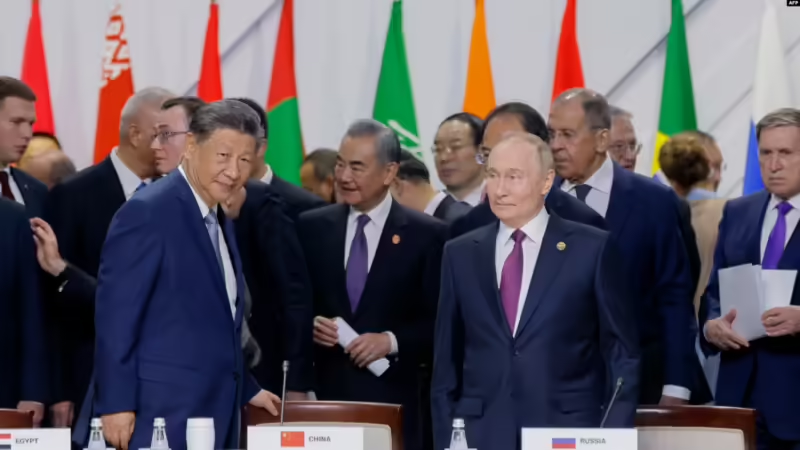
As Washington grapples with war and strained alliances, Xi Jinping is executing a quieter but no less consequential strategy—turning Beijing into the center of global diplomacy.
Over the past week, Xi has hosted a rapid succession of world leaders, including Spain’s Prime Minister Pedro Sánchez and Abu Dhabi Crown Prince Sheikh Khaled bin Mohammed, in a calculated display of China’s growing geopolitical appeal. The pace of meetings—unusually dense even by Beijing’s standards—signals a deliberate effort to project stability at a moment when the United States appears increasingly consumed by conflict.
The contrast with Donald Trump is stark. As the U.S. president presses a military campaign against Iran and publicly clashes with allies—from Italy to the United Kingdom—foreign leaders are hedging their bets, deepening ties with China as an alternative pole of influence.
Analysts say the shift is less about ideology than predictability. “World leaders increasingly see China as a hedge against an unpredictable United States,” one policy expert noted, capturing a sentiment now quietly shaping diplomatic behavior across Europe, the Middle East, and Asia.
Beijing has been careful not to overplay its hand. While China has called for restraint and positioned itself as a defender of international order, it has stopped short of offering concrete solutions to the crisis in the Strait of Hormuz or the broader Iran conflict. That restraint is strategic: China seeks influence without entanglement.
At the same time, its alignment with Russia remains a critical pillar. Xi’s meeting with Foreign Minister Sergei Lavrov reaffirmed coordination between the two powers, both of which have resisted U.S.-led efforts to legitimize military action in the Gulf. Together, they are shaping a counterweight to Western pressure—subtle, but increasingly effective.
Meanwhile, U.S. allies are exploring alternatives. European leaders, including Emmanuel Macron and Keir Starmer, are organizing parallel initiatives to secure maritime routes without direct U.S. involvement, reflecting a growing willingness to act independently.
Yet China’s position is not without risk. As the world’s largest oil importer, prolonged instability threatens its economic interests. Rising energy costs are already testing domestic industries, and Beijing’s reluctance to intervene more directly may eventually collide with its need for stable supply chains.
For now, however, China is benefiting from a simple dynamic: while the United States is absorbed in managing a volatile conflict, Beijing is expanding its diplomatic footprint with minimal cost.
The result is a shifting balance—not defined by decisive moves, but by who appears steady when others do not.
Top stories
South Africa’s Julius Malema Sentenced to Five Years Over Gun Incident
Malema Convicted: Firebrand Leader Faces Jail—But Fights Back.
A rifle shot in 2018 now shakes South African politics. Is this justice—or political fallout?
South African opposition leader Julius Malema has been sentenced to five years in prison for firing a rifle into the air at a political rally—an outcome that immediately reverberated through the country’s already polarized political landscape.
The ruling stems from a 2018 incident at a rally marking the anniversary of his party, the Economic Freedom Fighters, in what is now known as KuGompo City. A court found Malema guilty last year on multiple charges, including unlawful possession of a firearm and discharging a weapon in a public space.
Delivering the sentence, Magistrate Twanet Olivier rejected the argument that the act was harmless celebration. The firing, she said, was deliberate and emblematic of a broader culture of gun violence in South Africa, where stray bullets frequently result in civilian deaths. Public figures, she added, bear a heightened responsibility to uphold the law.
Malema’s legal team swiftly appealed the sentence, ensuring he will remain free while the case moves through higher courts. They are also seeking to challenge the conviction itself, though the court granted leave to appeal only the sentence at this stage.
The stakes extend beyond the courtroom. Any sentence exceeding one year could ultimately disqualify Malema from serving in parliament—potentially reshaping the political calculus ahead of future elections.
Outside the court, Malema struck a defiant tone. Addressing supporters clad in the EFF’s signature red, he accused the judiciary of bias and framed the case as part of a broader struggle against systemic injustice. His rhetoric—long a hallmark of his political brand—again invoked themes of inequality, race, and land reform.
Prosecutors had pushed for a far harsher penalty, arguing that Malema’s influence over young supporters made the offense particularly serious. As a national figure and lawmaker, they said, his actions risk normalizing unlawful behavior.
The case was originally brought by AfriForum, a conservative organization representing Afrikaner interests, highlighting the deep societal divisions that continue to shape South African politics more than three decades after the end of apartheid.
For Malema, the verdict marks a critical juncture. Once a rising star within the ruling party, the African National Congress, he built his political identity on confrontation and populist appeal after founding the EFF in 2013. Though the party retains a loyal base, its support has slipped in recent elections.
Now, the legal battle ahead will determine not only Malema’s personal fate, but also the future trajectory of one of South Africa’s most polarizing—and influential—political movements.
Top stories
Libya’s Financial Clean-Up Faces Reality Test in Washington
Billions lost, networks exposed—Libya’s financial system is under the microscope. But is reform finally real?
Senior Libyan and U.S. officials met in Washington this week to address money laundering and terrorism financing, as authorities in Tripoli intensify a parallel crackdown on corruption at home.
The talks, led by Naji Issa of the Central Bank of Libya, focused on tightening financial oversight and aligning Libya’s systems with international standards. U.S. officials and financial partners also explored expanding electronic payments and improving transparency—key steps in a country long plagued by illicit financial flows.
Libya’s central bank said Issa outlined reforms aimed at strengthening anti-money laundering frameworks and counterterrorism financing controls. These include broader use of digital payments and new monetary tools designed to rebuild trust with global financial institutions.
The delegation also held discussions with executives from Visa, reflecting a push to modernize Libya’s largely cash-based economy and expand financial inclusion.
The urgency is clear. According to Transparency International, Libya ranks among the most corrupt countries globally, placing near the bottom of its 2025 Corruption Perceptions Index. Years of political fragmentation and weak institutions have enabled widespread abuse across banking and energy sectors.
Even as officials discussed reform abroad, Libyan prosecutors announced new arrests at home. Authorities said five bank employees were detained for allegedly embezzling funds and manipulating customer accounts, part of a broader investigation that uncovered a network using data from more than 200,000 individuals in a sophisticated money-laundering scheme.
The scale of the case highlights the systemic nature of the challenge. Investigators said suspects exploited their positions to move funds through international payment channels, raising concerns about vulnerabilities in Libya’s financial infrastructure.
In a separate development, a Tripoli court handed a 10-year prison sentence to a former official at the National Oil Corporation, along with a $1.8 billion fine. Prosecutors said the case involved failures to collect payments for oil sales and approval of substandard fuel contracts—allegations that strike at the heart of Libya’s main source of national revenue.
The Washington meetings took place alongside the spring gatherings of the International Monetary Fund and World Bank, where regional officials discussed broader economic pressures, including slowing growth and rising energy costs.
For Libya, the message is twofold. International partners are willing to support reform—but only if domestic enforcement matches diplomatic commitments. The recent arrests and court rulings suggest movement in that direction, though the depth of corruption means progress is likely to be slow and uneven.
The real test now is whether these efforts can move beyond isolated cases to reshape the financial system itself.
Top stories
Ted Cruz Attacks Tucker Carlson in Escalating GOP Rift Over Iran War
When allies start attacking each other, something bigger is breaking.
A growing rift within the American right burst into the open this week as Senator Ted Cruz launched a sharp personal attack on commentator Tucker Carlson, accusing him of embracing views he described as hostile to conservative principles.
In a post on X, Cruz called Carlson a “deranged” figure who had drifted toward left-wing positions, responding to commentary from Carlson’s media platform defending religious sensitivities in the wake of a controversy involving Donald Trump.
The dispute stems from a broader debate over the administration’s handling of the Iran conflict and its political messaging. Carlson, once a prominent supporter of Trump, has increasingly criticized the war and the president’s rhetoric, particularly after Trump shared an AI-generated image that appeared to depict himself in a religious context—drawing backlash from religious leaders and political allies alike.
Carlson argued that such messaging risked offending both Muslims and Christians, warning against what he described as the politicization of religious imagery. That position triggered a swift response from Cruz, who has been among Trump’s most consistent defenders on foreign policy.
The episode underscores a deeper ideological split inside conservative circles. While figures like Cruz continue to back a hardline approach toward Iran, others—Carlson among them—have questioned both the strategic rationale for the war and its political consequences at home.
The tension has not been limited to commentators. Trump himself has publicly dismissed Carlson’s criticism, signaling a widening divide between the former allies as the conflict reshapes domestic political alliances.
Complicating matters further, the controversy drew in international reaction. Iranian President Masoud Pezeshkian condemned the image shared by Trump, framing it as an insult to religious values—a response that amplified the debate beyond U.S. borders.
What emerges is a fragmented political landscape where foreign policy, religion, and media influence intersect in unpredictable ways. For Republicans heading into a critical election cycle, the infighting presents a strategic dilemma: whether to maintain unity behind the administration’s agenda or confront internal disagreements that risk weakening the broader coalition.
The clash between Cruz and Carlson may be personal in tone, but it reflects a larger question—one that is increasingly shaping the direction of American conservatism in a time of war.
Top stories
Clarence Thomas Declares Ideological War on Progressivism
A Supreme Court justice just called an entire ideology a threat to America—this will spark debate.
Clarence Thomas delivered a forceful critique of progressivism on Wednesday, framing it as a direct challenge to the philosophical foundations of the United States during a televised address marking the nation’s approaching 250th anniversary.
Speaking at the University of Texas at Austin law school, Thomas argued that modern progressive thought seeks to replace the core principles of the Declaration of Independence—particularly the idea that rights are inherent and not granted by government.
“Progressivism seeks to replace the basic premises of the Declaration of Independence and hence our form of government,” Thomas said, warning that a growing number of Americans no longer accept the founding belief that individuals possess “unalienable rights.”
The 77-year-old justice, appointed by George H. W. Bush in 1991, did not reference specific political figures or policies. Instead, he cast his remarks in broader terms, describing what he sees as a cultural and intellectual shift—one driven in part by academic institutions and public discourse.
Thomas said a climate of “cynicism” and “hostility” toward the country has taken hold, arguing that this trend reflects a deeper rejection of traditional views on limited government, individual liberty, and the origin of rights.
In his view, progressivism redefines those rights as products of the state rather than inherent to individuals—a shift he described as incompatible with the constitutional framework. He also criticized what he called a lack of conviction among political leaders, accusing them of retreating from foundational principles under the guise of pragmatism.
The speech comes at a moment of heightened political polarization in the United States, where debates over the role of government, constitutional interpretation, and national identity remain deeply contested.
Thomas concluded by urging Americans to reaffirm the values he associates with the country’s founding, calling for a renewed sense of civic responsibility and, if necessary, personal sacrifice.
His remarks are likely to intensify ongoing debates about the direction of American political thought—particularly as the nation approaches a symbolic milestone that invites reflection on its founding ideals and their modern interpretation.
Middle East
Did Satellites Give Iran a Target?
Satellite Images May Have Exposed U.S. Base Before Iran Strike, Lawmaker Warns.
In modern war, the battlefield isn’t just physical—it’s visible from space.
Sensitive U.S. military positions in the Middle East may have been inadvertently exposed through commercial satellite imagery before an Iranian strike that injured American personnel, according to a senior U.S. lawmaker, raising fresh concerns about the risks of open-source intelligence in wartime.
Representative John Moolenaar, chairman of the House Select Committee on China, warned that high-resolution images of Prince Sultan Air Base circulated publicly shortly before Iran launched a March 27 missile and drone attack on the installation. The strike wounded at least 12 U.S. service members and damaged key aircraft, including refueling tankers and airborne surveillance systems.
In a letter to Defense Secretary Pete Hegseth, Moolenaar pointed to evidence suggesting the images may have originated from satellites operated by Airbus before being republished by a China-based firm, MizarVision. The imagery reportedly showed detailed layouts of aircraft on the ground—information that, in the wrong hands, could serve as targeting data.
The lawmaker did not present direct proof linking the images to Iran’s attack, but said the timing and level of detail raised “serious national security concerns.” A technical review cited in the letter found Airbus satellites were the “most plausible” source, while noting that commercial imagery often moves through complex global distribution networks before reaching end users.
Airbus denied the allegations, stating it complies with all international regulations and export controls.
The episode highlights a growing dilemma for governments: how to manage the expanding availability of near real-time satellite imagery without undermining transparency. Commercial providers such as Planet Labs have at times restricted access to sensitive images at government request, but no universal framework exists.
For military planners, the concern is increasingly urgent. High-resolution satellite images—once the exclusive domain of intelligence agencies—are now widely accessible, allowing analysts, journalists and potentially adversaries to monitor troop movements and infrastructure with unprecedented clarity.
The implications extend beyond a single incident. As conflicts become more technologically interconnected, the boundary between public information and operational intelligence is blurring. What was once considered benign transparency can, under certain conditions, become a vulnerability.
The question now confronting policymakers is whether tighter controls are needed—and if so, how to impose them without eroding the very openness that has made satellite imagery a cornerstone of modern reporting and accountability.
In an era where war can be tracked from orbit in near real time, visibility itself may be emerging as a new strategic risk.
Middle East
Clinton Sounds Alarm as Iran Crisis Deepens
Hillary Clinton Warns U.S. Has ‘Lost Leverage’ With Iran as Blockade Escalates.
When even insiders say the U.S. lost leverage, the real question isn’t what happens next—it’s who is actually in control.
Former Secretary of State Hillary Clinton has issued one of the bluntest assessments yet of Washington’s position in the Iran crisis: the United States, she argues, is no longer negotiating from strength.
Her warning comes at a pivotal moment—just days after talks in Islamabad collapsed and as the U.S. intensifies pressure through a naval blockade targeting Iranian ports around the Strait of Hormuz.
“We are in a very weak position,” Clinton said, arguing that Washington has “lost the leverage and initiative” that once defined its approach to Tehran.
That critique cuts directly against the Trump administration’s strategy, which rests on the belief that maximum pressure—military, economic, and psychological—can force Iran into concessions.
Clinton’s argument is the opposite: pressure without a clear diplomatic framework erodes leverage rather than strengthens it.
Her position reflects a deeper strategic divide in U.S. foreign policy. While she supported earlier, limited strikes on Iranian nuclear facilities, she criticized what she described as a broader, “incoherent” escalation lacking a defined end state. In her view, leverage comes not just from القوة—but from clarity, credibility, and coalition-building.
That credibility, she suggests, has been damaged.
The collapse of talks led by JD Vance—combined with unilateral actions like the blockade—has reinforced Iranian perceptions that Washington is negotiating on shifting terms. At the same time, U.S. allies have refused to join the blockade, further weakening the appearance of a united front.
This matters because leverage in diplomacy is not just about capability—it is about alignment.
If Iran believes the United States is isolated, divided from allies, or uncertain in its objectives, it has less incentive to compromise. Instead, it can wait, escalate selectively, or seek alternative backing from powers like China or Russia.
Clinton also pointed to another structural problem: the absence of experienced negotiators deeply versed in nuclear diplomacy. Her call to “bring in people who actually know something about nuclear weapons” signals concern that technical complexity is being overshadowed by political messaging.
Meanwhile, the battlefield reality is moving in the opposite direction of de-escalation. The blockade is tightening. Shipping is disrupted. Iran is threatening retaliation. And Israel’s continued operations in Lebanon complicate any ceasefire framework.
In that environment, leverage becomes fluid.
Washington may hold military dominance, but Iran retains asymmetric tools—control over chokepoints, proxy networks, and the ability to destabilize global energy markets. Each side believes it can outlast the other.
Clinton’s warning ultimately points to a larger risk: that the United States is drifting into a position where it must negotiate not from strength, but from necessity.
And in high-stakes conflicts, that shift can define the outcome.
Top stories
Xi to Europe: Choose Stability Over Chaos
Xi Urges Stronger China-Spain Ties Amid Global ‘Chaos’ and Strained US Alliances.
As Washington fights wars, Beijing builds alliances. Europe is being forced to choose.
Chinese President Xi Jinping called for closer economic and strategic ties with Spain on Tuesday, warning that global instability risks pushing international relations toward a “law of the jungle.”
Speaking during talks in Beijing with Spanish Prime Minister Pedro Sánchez, Xi framed the current geopolitical moment as a test of competing worldviews—one based on cooperation and international law, the other on raw power.
“China and Spain should strengthen communication, consolidate mutual trust, and cooperate closely,” Xi said, according to state media, urging both countries to resist what he described as a regression toward disorder in global affairs.
The meeting, held at Beijing’s Great Hall of the People, comes as Spain seeks to position itself as a bridge between China and the European Union at a time of growing tension with the United States. Washington’s recent foreign policy moves—including tariffs and its handling of the Iran conflict—have unsettled traditional allies and opened space for Beijing to deepen engagement.
Sánchez welcomed China’s role in supporting diplomatic efforts to resolve the Middle East crisis, saying Beijing could play a “significant” role in advancing peace and stability. He also pointed to the need for reforms in global institutions to better reflect what he described as a “multipolar reality.”
The visit marks Sánchez’s fourth trip to China in as many years and reflects a broader trend of European leaders seeking to diversify economic partnerships. Spanish officials say a key goal is to expand market access for agricultural and industrial exports while exploring joint ventures in energy and technology.
At the same time, Madrid has acknowledged tensions in its economic relationship with Beijing. Sánchez described the trade imbalance between China and the EU as “unsustainable,” signaling that deeper ties will likely come with calls for fairer market conditions.
The diplomatic push comes against the backdrop of strained transatlantic relations. U.S. President Donald Trump has threatened trade measures against Spain after Madrid refused to allow U.S. military operations from its bases during the Iran conflict—an issue that has further complicated Western unity.
For Beijing, the moment presents an opportunity. By positioning itself as a partner for stability and economic cooperation, China is attempting to strengthen its influence in Europe while avoiding direct confrontation with Washington.
For Spain—and much of Europe—the challenge is more delicate: balancing economic opportunity with China against long-standing political and security ties to the United States.
As global power centers shift, the meeting in Beijing underscores a growing reality: alliances are no longer fixed, and strategic flexibility is becoming a necessity rather than a choice.
-
Red Sea2 weeks agoHouthis Threaten to Shut Red Sea if War Widens
-
Top stories2 weeks agoIRGC Moves to Control Iran’s Future
-
Terrorism3 weeks agoEgypt Uncovers Alleged Plan to Down Presidential Plane
-
Top stories1 week agoKremlin Claims EU Is Working Against Orbán
-
Middle East1 week agoIsrael’s War Goals Unmet as U.S.-Iran Ceasefire Shifts Conflict Dynamics
-
Analysis1 week agoSaudi Arabia and UAE Split on Iran Strategy Despite Ceasefire Unity
-
Top stories1 week agoUAE Says No New Iranian Threats Detected as Ceasefire Holds
-
Red Sea5 days agoIran Threatens Bab el-Mandeb Disruption