Clashes with M23 rebels near Goma intensify, claiming the lives of peacekeepers and foreign soldiers amid a worsening humanitarian crisis.
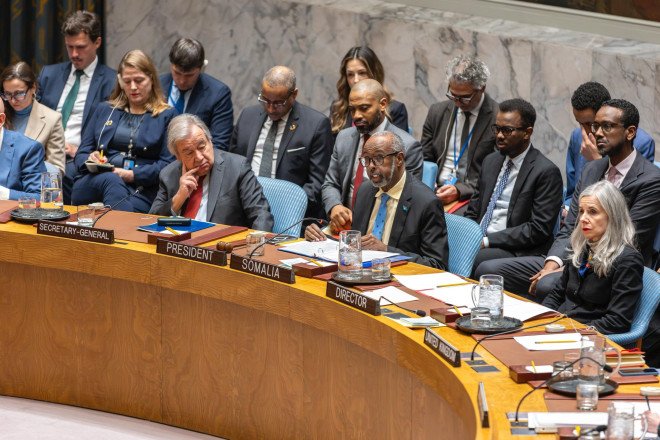
Fighting in eastern Congo with the M23 rebel group has resulted in the deaths of at least 13 peacekeepers and foreign soldiers, according to United Nations and Congolese army officials. The violence near Goma, a city of approximately 2 million people and a critical hub for regional security and humanitarian efforts, has intensified, prompting the UN Security Council to advance an emergency meeting from Monday to Sunday at Congo’s request.
Congo’s army reported that it, alongside allied forces—including United Nations peacekeepers and troops from the Southern African Development Community Mission in the Democratic Republic of Congo (SAMIDRC)—successfully repelled an M23 offensive aimed at Goma. However, the clashes highlight the increasing risks to civilians and international personnel in the region.
The M23 rebel group, comprised mainly of ethnic Tutsis who defected from the Congolese army over a decade ago, has made substantial territorial gains in recent weeks. Amnesty International’s Kate Hixon suggested that M23 is exploiting the current U.S. presidential transition to escalate its actions, further endangering thousands of civilians.
Congo and United Nations experts have repeatedly accused Rwanda of backing M23, claims that Kigali denies. However, Rwanda has admitted to deploying troops and missile systems in eastern Congo, citing security concerns. UN estimates indicate that up to 4,000 Rwandan troops are operating in the region.
The recent violence has taken a heavy toll on peacekeeping forces. Among the casualties are two South African peacekeepers, a Uruguayan Blue Helmet, and three Malawian peacekeepers. Seven additional South African soldiers with SAMIDRC were killed in the last two days, South Africa’s defense department confirmed. Uruguay identified its fallen soldier as Rodolfo Alvarez, part of a battalion tasked with fulfilling the UN mandate and ensuring the evacuation of non-essential personnel from Goma.
Burning wreckage of UN-marked vehicles was visible along the road between Goma and Sake, where much of the recent fighting has concentrated. South African Defense Minister Angie Motshekga, who was visiting the country’s troops stationed in Congo on the day of the attacks, called the deaths a “tragedy” and vowed to assess measures to improve troop safety.
The United Nations peacekeeping mission in Congo, known as MONUSCO, has been active for over two decades and maintains approximately 14,000 personnel on the ground. Despite its presence, the M23 insurgency remains a significant challenge, threatening not only regional stability but also the safety of peacekeepers and civilians.
The situation underscores the urgency for a coordinated international response. The emergency UN meeting on Sunday will address the escalating violence and explore measures to prevent further destabilization near Goma. As the conflict continues, concerns grow for the millions of civilians caught in the crossfire and the peacekeepers tasked with protecting them.