Connect with us

Commentary

Israel to Strike Iran’s Nuclear Sites in 2025 – U.S. Intel Report

Published

on

Israeli military planning possible strikes on Iran’s nuclear facilities amid mounting tensions, U.S. intelligence reports reveal. Trump administration’s stance remains unclear.

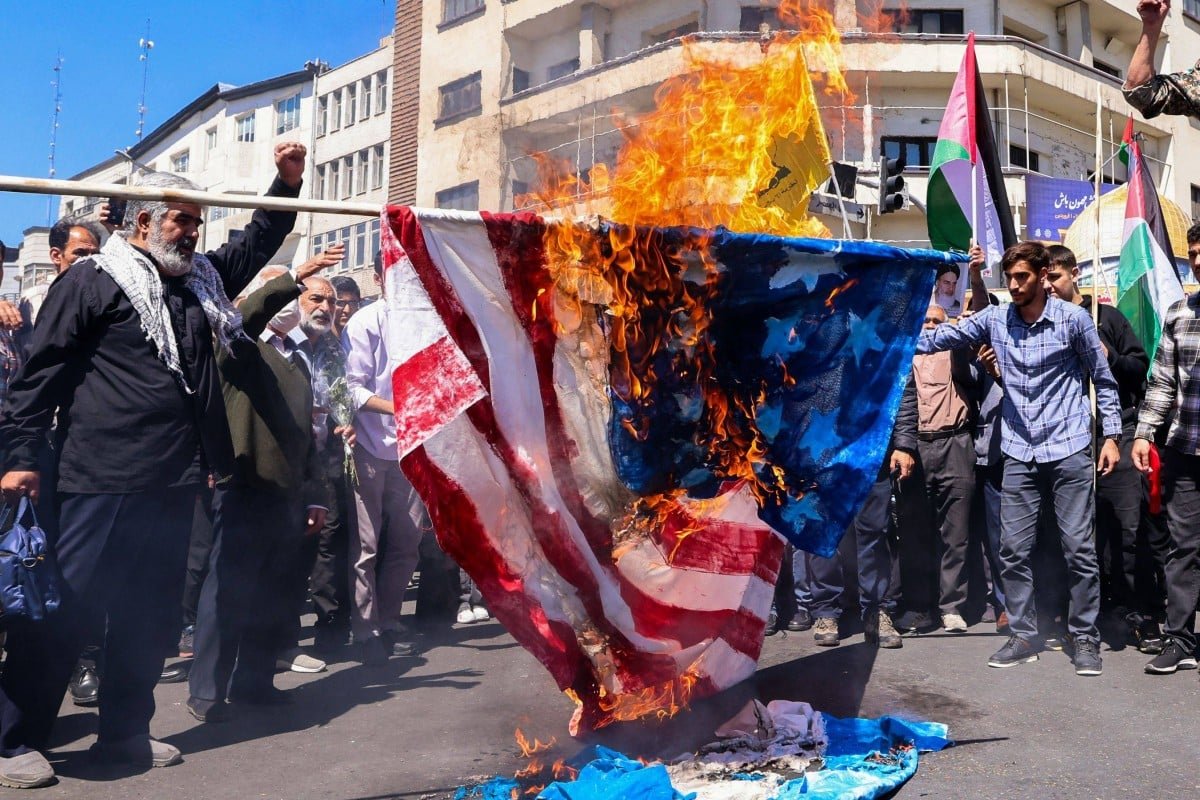
Israel is edging closer to an inevitable showdown with Iran as new intelligence reports indicate that strikes on Tehran’s nuclear facilities may be planned within the first half of 2025. The Wall Street Journal and Washington Post have revealed that a classified assessment from the U.S. military’s intelligence directorate points to an Israeli strategy aimed at crippling Iran’s nuclear program before it reaches an irreversible threshold. With potential backing from the Trump administration, the stage is set for a high-stakes military gamble that could ignite a broader Middle East war.
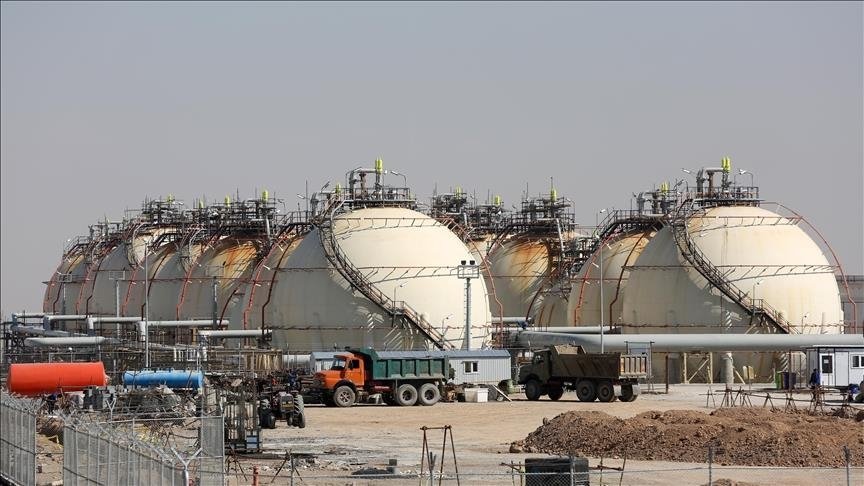
Iran’s nuclear facilities

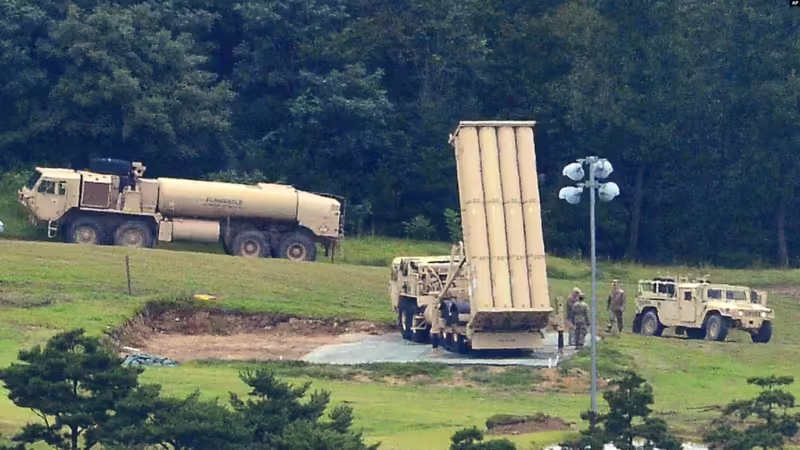
The report underscores two possible attack scenarios: an Israeli long-range missile strike launched from outside Iranian airspace or a direct penetration using fighter jets to drop BLU-109 bunker-busting bombs. The latter, a higher-risk option, could provoke severe Iranian retaliation and escalate tensions between Israel and Tehran’s regional proxies, including Hezbollah and the Houthis.

Despite Trump’s initial preference for diplomacy over direct military action, his administration has greenlit the sale of critical bomb guidance systems to Israel, a move widely interpreted as preparation for a possible strike. Trump’s rhetoric remains ambiguous—signaling both a desire to broker a deal with Iran and a readiness to support Israel should military action become inevitable.

Advertisement

Israeli officials remain tight-lipped on the allegations, but Iran continues to push forward with its nuclear ambitions, further heightening the urgency of Israel’s decision-making process. Military analysts suggest that an Israeli strike would at best set Iran’s program back by months, potentially even accelerating its drive for weapons-grade uranium enrichment.

With Tehran already defying Western pressure and enriching uranium at alarming rates. If diplomacy fails, Israel will have little choice but to act decisively. The world may soon witness the most consequential military operation in the Middle East in decades—one that could redefine the regional power balance for years to come.


Advertisement

Commentary

Macron in China: Can Beijing Help Broker a Ukraine Ceasefire?

Published

on

French President Emmanuel Macron arrived in Beijing this week with a dual mission: press China’s Xi Jinping to help secure a ceasefire in Ukraine and confront a widening trade imbalance that has become a political and economic liability for Paris and Brussels.

The visit, Macron’s fourth to China since taking office, comes as France prepares to assume the G7 presidency next year and as global pressure mounts to break the stalemate in Europe’s deadliest conflict since World War II.

Xi greeted Macron and his wife, Brigitte, with full ceremonial fanfare in the Great Hall of the People, underscoring China’s desire to project stability and diplomatic maturity.

Advertisement

Rows of schoolchildren waving French and Chinese flags, military honor guards, and a red-carpet welcome set the tone for a meeting framed as a partnership rather than a confrontation.

Macron reciprocated with a warm public display, blowing kisses to the crowd before stepping into a more sober conversation behind closed doors.

Once inside, the French leader delivered a clear message: the war in Ukraine remains the defining test of the international order and China’s global ambitions.

Advertisement

He urged Xi to use his influence with Moscow to push for a ceasefire and support a “fair, lasting and binding agreement” that respects territorial integrity and the rule of law. Europe, Macron stressed, cannot absorb another year of conflict without profound security and economic consequences.

For Xi, peace messaging is part of Beijing’s broader strategic narrative—one that positions China as a global stabilizer while avoiding direct criticism of Russia, its most important geopolitical partner against Western influence.

He told Macron that China supports all efforts toward dialogue, but offered no indication Beijing intends to pressure the Kremlin publicly.

Advertisement

The meeting unfolded against a backdrop of competing diplomatic initiatives. Macron is leading an effort to counter a U.S.-backed plan that critics say grants Russia too much leverage, while Ukraine’s President Volodymyr Zelensky has warned European leaders not to drift toward political fatigue.

Zelensky, fresh from talks in Paris, reminded allies that Ukraine needs unity more than ever as Washington pushes its own proposals.

If Ukraine dominated the geopolitical agenda, trade dominated the economic one. France’s deficit with China reached €46 billion last year, and the EU’s broader imbalance—$357 billion—has become politically explosive.

Advertisement

Macron urged Xi to work with the G7 on new rules for a fairer, more balanced global trading system, warning that Europe cannot maintain its political stability or industrial resilience if dependency on Chinese exports continues to grow.

His advisers were blunt: China must consume more and export less; Europe must save less and produce more.

Macron reiterated long-standing calls for European “strategic autonomy,” particularly in the tech sector, where he fears the continent is becoming a “vassal” to U.S. and Chinese companies.

Advertisement

Xi, for his part, signaled interest in easing tensions by announcing a new cooperation deal on giant panda protection—an unmistakable gesture of goodwill toward French public sentiment.

From here, Macron heads to Chengdu, where he will meet Premier Li Qiang and seek to reinforce China’s commitments on trade, investment, and cultural cooperation.

But the larger question remains unanswered: can Europe persuade China to shift from symbolic neutrality to meaningful influence over Russia’s war in Ukraine? Macron’s visit may clarify China’s intentions, but it has not yet revealed China’s willingness.

Advertisement
Continue Reading

Commentary

Trump Says What Others Fear: The Somali Scandal Minnesota Tried To Bury

Published

on

Donald Trump Is Right About Somalis: The Brutal Truth No One Else Will Say.

MINNEAPOLIS is experiencing a political earthquake that its leadership hoped the rest of the country would never detect, yet the truth has forced its way to the surface.

The largest pandemic fraud case in America was not a harmless mistake or a bureaucratic oversight; it was a coordinated, deliberate, and highly organized multimillion-dollar criminal enterprise embedded within Minnesota’s Somali community, and the shockwaves from that corruption have now collided with one of the most powerful political disruptors in the modern era: Donald J. Trump.

Advertisement

Critics can debate Trump’s tone and accuse him of being harsh, provocative or divisive, but such objections do little to change the reality that he stepped directly into a scandal that others tiptoed around for years.

He said openly what political elites, community power-brokers, and local officials were unwilling to confront.

He pointed directly at Minnesota and voiced what the national media avoided — something uncomfortable, something politically dangerous, and something rooted in a crisis that had already shattered public trust long before he uttered a single word.

Advertisement

The courts built the foundation for this firestorm by exposing, in painstaking detail, how millions of dollars intended to feed children during the pandemic were transformed into fleets of luxury cars, Nairobi apartment towers, foreign real estate, private aircraft, and designer lifestyles.

Abdiaziz Shafii Farah emerged as the face of the scandal when he received a 28-year federal sentence and a $47.9 million restitution order after leading one of the largest fraud schemes in state history, even attempting to bribe a juror with $120,000 in cash — an act the judge denounced as pure unmitigated greed.

Week after week, hearings laid out the full picture: fabricated meal counts that claimed 3,000 children were fed daily from a small deli, money diverted to a 37-acre Kenyan property and an aircraft purchase, and tens of millions in taxpayer funds dissipating into an international financial maze.

Advertisement

More than 70 defendants were charged and at least 45 convicted. Officials acknowledged that a substantial portion of the stolen money would never be recovered.

The scale was staggering and the embarrassment national, yet the public conversation remained restrained as community leaders urged calm, politicians attempted to soften the implications, activists blamed stereotypes, and media coverage stayed cautious.

The entire political class handled the scandal as if they feared igniting a cultural inferno. Then Trump entered the conversation and detonated it.

Advertisement

His language was so abrasive that even his supporters paused, yet the power of his intervention was not in the insults themselves, but in the timing.

He spoke precisely when public faith had already collapsed under the weight of a fraud operation too vast to minimize, stepping into the vacuum left by Minnesota’s leaders and filling it with a narrative that millions of Americans were ready to hear because they believed the truth had been carefully diluted, softened, or hidden.

Local officials pushed back instantly. The Minneapolis mayor called Trump’s remarks terrifying, the governor dismissed them as political theater, and community advocates denounced what they saw as collective scapegoating.

Advertisement

But their objections could not erase the fundamental questions that had been simmering beneath the surface: How did such an immense fraud network operate for so long without serious intervention? How did hundreds of millions vanish while state agencies quarreled about paperwork?

And why did so many people fear speaking openly about the internal problems that allowed it to happen?

The uncomfortable reality is that Trump did not create this crisis; the fraud did. The erosion of trust did. The reluctance to confront internal wrongdoing did. The silence of community elites did. Trump merely voiced loudly what many whispered privately.

Advertisement

Minnesota has found itself at the center of a national reckoning because it attempted to bury a scandal too large to hide, and Trump recognized the political opening in that silence, seizing it and turning it into a weapon.

Whether he is right or wrong no longer matters. He has already reshaped the national conversation.

Fraud Storm in Minnesota — Al-Shabaab Link Feared

Advertisement

TRUMP CALLS SOMALIS ‘GARBAGE’ — CRACKDOWN BEGINS

Abdiaziz Farah Sentenced to 28 Years in Feeding Our Future Fraud

Minnesota Woman Pleads Guilty in $5.7M Feeding Our Future Fraud

Advertisement

Minneapolis Man Convicted in Massive $250M Feeding Our Future Fraud Scheme

Lakeville Man Pleads Guilty in $250 Million Feeding Our Future Fraud Case

Key Figure in Feeding Our Future Scandal Pocketed $1.6 Million

Advertisement

The Feeding Our Future Fraud: FBI Unmasks Massive Scam in Minnesota

Aimee Bock Trial: Prosecutors Unravel Massive $250M Feeding Our Future Fraud

Somali-American Leader Sentenced to 17 Years for Role in $250M Feeding Our Future Fraud

Advertisement

FBI Forensic Accountant Tracks Misused Taxpayer Funds in Feeding Our Future Trial

Minnesota: Somali Journalist Admits Guilt in $250M Fraud Scandal

Court Clash Over Somali Real Estate Developer Unveils Tensions in Minnesota

Advertisement

Court Clash Over Somali Real Estate Developer Unveils Tensions in Minnesota

Somali Refugee Pleads Guilty to Stealing Millions in COVID Fraud Scheme

Advertisement
Continue Reading

Commentary

Can Somaliland Break Omar’s Grip on U.S. Policy?

Published

on

The Omar Obstacle: How a Single Power Center in Washington Complicates Somaliland’s Path to Recognition. 

For more than three decades, Somaliland’s campaign for international recognition has rested not on military conflict but on diplomacy—on persuading the world’s major capitals that its stability, democratic governance, and distinct political identity warrant sovereign status.

Yet the greatest resistance to this goal does not come from African battlefields or regional rivals. It emerges, unexpectedly, from inside the U.S. Congress.

Advertisement

At the center of this resistance is Representative Ilhan Omar, whose influence over U.S. policy toward the Horn of Africa has become a formidable barrier for Somaliland’s advocates.

While framed publicly as defending Somalia’s territorial claims, her critics in Hargeisa view her role as far more consequential: a one-woman veto bloc capable of shaping Washington’s perceptions and blocking pro-Somaliland initiatives before they ever gather momentum.

From Somaliland’s vantage point, Omar’s statements on the Ethiopia–Somaliland memorandum and her sharp opposition to any departure from Mogadishu’s preferred narrative carry significant weight.

Advertisement

In a Congress where foreign policy bandwidth is limited and internal divisions run deep, a single influential voice—especially one representing a large Somali-American constituency—can define the entire scope of debate.

That influence effectively channels Somalia’s centralized political position into U.S. policymaking, countering Somaliland’s three decades of democratic development and self-governance.

Recent Republican outrage over Omar’s remarks underscores how polarizing—and strategically potent—this dynamic has become.

Advertisement

Calls for her deportation, though legally baseless as experts have emphasized, reveal something far more relevant for Somaliland: a widening political fault line in Washington.

On one side: a high-profile lawmaker advocating strongly for Somalia’s view of the region. On the other: senior Republican figures, including Governor Ron DeSantis and Representative Marjorie Taylor Greene, urging a hard reassessment of U.S. engagement in the Horn of Africa and increasingly receptive to Somaliland’s security and strategic value.

This division presents Somaliland with an unmistakable strategic opportunity. As interest in the Red Sea corridor intensifies and U.S. security planners look for reliable partners in a troubled region, Somaliland’s stability stands out.

Advertisement

Key voices within the Republican foreign-policy establishment have already signaled openness to deeper engagement, and in some cases, to formal recognition.

The objective for Somaliland’s advocates is not to inflame partisan battles, nor to pursue unrealistic outcomes. Rather, the goal is political neutralization—ensuring no single congressional figure can unilaterally shape the U.S. understanding of Somaliland’s position.

That requires cultivating a broader coalition in Congress, particularly among those who have expressed willingness to challenge longstanding U.S. policy assumptions toward Somalia.

Advertisement

The current controversy surrounding Omar’s remarks has created a rare opening. As Republicans publicly question her foreign-policy posture, Somaliland has an opportunity to elevate its own narrative: one grounded in democratic performance, counterterrorism reliability, and strategic relevance.

The task now is to anchor Somaliland’s case within the growing chorus of policymakers who see the region through a security lens rather than through Somalia’s internal political disputes.

If seized effectively, this moment could shift Somaliland’s standing in Washington from a peripheral issue to a serious policy consideration—reducing the disproportionate influence of its most determined political opponent and clearing space for a long-overdue reassessment of U.S.–Somaliland relations.

Advertisement
Continue Reading

Commentary

Inside Asia’s Billion-Dollar Fraud Empire

Published

on

The Rise of the ‘Scam State’: How a Criminal Economy Captured Southeast Asia.

The demolition of KK Park in Myanmar was staged as a triumphant end to one of Southeast Asia’s most notorious scam hubs. Explosions levelled empty office towers, barren food courts, shuttered karaoke bars, and a hospital cleared long before the first blast.

The junta presented the operation as a decisive blow against the region’s sprawling cyberfraud industry.

Advertisement

But the truth was already out of reach. The operators had escaped days earlier, warned of the coming raids, and were reportedly rebuilding new compounds elsewhere. More than a thousand trafficked laborers fled across the border; others were detained.

An estimated 20,000 people—many kidnapped or lured into forced cybercrime—simply vanished. KK Park had been destroyed, but the industry behind it remains untouched.

That is the defining feature of what experts now call the scam state.” Borrowing from the concept of the narco-state, the term describes countries where criminal enterprises have embedded themselves so deeply into the economy and government that they shape national policy, corrupt institutions, and become essential sources of revenue.

Advertisement

Southeast Asia is entering this era with alarming speed. In less than a decade, online fraud operations have evolved from small-scale grifts into a global criminal economy worth tens of billions.

These syndicates run on a system of industrialized exploitation—trafficked workers forced to run romance scams, investment fraud schemes, and crypto cons targeting victims worldwide.

And the states hosting these operations benefit directly.

Advertisement

Myanmar, Cambodia, and Laos have become the epicenter of the industry, with entire border regions now functioning as semi-autonomous enclaves for criminal networks.

Analysts say periodic “crackdowns” are often political theater—high-profile raids that remove intermediaries but leave the real operators and their government patrons untouched.

“It’s Whack-a-Mole,” says Jacob Sims of Harvard’s Asia Center. “Except you’re not actually trying to hit the mole.” The scam economy, he argues, is no longer a criminal fringe activity. “In terms of gross GDP, it’s the dominant economic engine for the entire Mekong sub-region. And that means it’s one of the dominant political engines.”

Advertisement

In Cambodia, allegations that powerful elites protect scam networks have been dismissed by the government as “baseless.” Myanmar’s junta claims it is working to eliminate cyberfraud entirely, even as vast scam complexes operate openly along its borders.

The scale of the industry reveals a darker truth: these states may no longer be capable—or willing—to dismantle it. Scam centers rely on cross-border patronage networks, corrupt police, pliant bureaucrats, and private militias.

They have become major employers and major revenue generators in economies already battered by conflict, sanctions, and political instability.

Advertisement

The criminal model is also evolving. What once resembled crude email cons has transformed into highly sophisticated psychological operations, complete with multilingual staff, corporate-style management, and advanced technology.

Fraud rings now target victims in the U.S., Europe, and East Asia with precision campaigns that mimic legitimate financial firms and exploit global cryptocurrency markets.

KK Park’s rubble does not symbolize collapse. It is evidence of a well-established system capable of adapting instantly.

Advertisement

Operators relocate, rebuild, and continue extracting billions from victims worldwide—while thousands of trafficked workers remain trapped inside compounds hidden from public view.

The rise of the scam state marks a profound geopolitical shift: a region where illicit economies increasingly outperform legitimate ones, and where the boundary between government and organized crime becomes almost impossible to trace.

This is not an emerging threat; it is a consolidated political economy—one that will shape regional security, migration, and global financial crime for years to come.

Advertisement
Continue Reading

Commentary

Hezbollah’s Vanishing War Machine: Abandoned Tunnel Stuns the World

Published

on

The Lebanese Armed Forces opened one of Hezbollah’s underground tunnels to international journalists on Friday, offering a rare glimpse into the group’s concealed military infrastructure in the country’s volatile south.

The visit, organized by the LAF, appeared aimed at demonstrating both the army’s expanding control in areas long dominated by Hezbollah and the scale of the challenge it faces as tensions with Israel continue to rise.

The tunnel, dug into the hillside of Wadi Zibqin, sits in one of Hezbollah’s most entrenched strongholds just north of the Israeli border. Inside, reporters walked through a narrow passage that led to what resembled a small medical station, a rudimentary kitchen, preserved food supplies, water tanks, electrical wiring, and a ventilation system — evidence of a site designed to sustain fighters for extended periods.

Advertisement

No Hezbollah personnel were present, and the Lebanese military insisted the position had been abandoned.

Brig. Gen. Nicolas Thabet, who oversees army operations south of the Litani River, moved through the tunnel alongside the media delegation.

He framed the visit as part of a broader effort to reassert state authority in an area where Hezbollah’s influence has been largely unchecked for nearly two decades.

Advertisement

“We will not give up our objectives, whatever the difficulties may be,” he told reporters, describing the terrain as “one of the most dangerous areas in the Middle East” and stressing that the army has “sacrificed greatly.”

The location has already proven deadly. In August, six LAF sappers died when an explosion ripped through a nearby weapons depot believed to contain munitions stored by Hezbollah.

The army says it has since taken control of several former positions that were either struck by Israeli fire or abandoned by fighters.

Advertisement

Friday’s tour came at a moment of renewed tension following the killing of senior Hezbollah commander Haytham Ali Tabatabai in an Israeli airstrike on Beirut’s Dahiyeh district earlier in the week. Tabatabai, considered one of Hezbollah’s most experienced field commanders, played a central role in the group’s operations in Syria and Yemen and was a key node in Iran’s regional network.

Speaking after the strike, Hezbollah Deputy Secretary-General Naim Qassem warned that the group retained “the right to respond” and would choose the timing.

He accused the United States and unnamed Arab states of helping orchestrate what he described as a campaign of “infiltrations” targeting Hezbollah.

Advertisement

“The enemy did everything in its power to end the resistance, but it failed,” Qassem said, casting the group once again as the vanguard against what he called “Israeli-American aggression.”

For the LAF, the tunnel tour was as much an act of messaging as it was a display of access.

By showing the site to foreign media, the army signaled that it is trying — despite limited resources and complicated political constraints — to present itself as a stabilizing actor in a landscape now shaped by Israeli precision strikes, Hezbollah’s internal recalculations, and growing uncertainty over how long the current cycle of escalation can be contained.

Advertisement
Continue Reading

Commentary

Leaked Wedding Video Exposes Hypocrisy of Iran’s Ruling Elite

Published

on

A leaked video of a lavish wedding inside an exclusive Tehran hotel has thrown Iran’s ruling establishment into one of its most visible crises of legitimacy in years, igniting nationwide outrage and laying bare the vast gulf between the Islamic Republic’s moral edicts and the private behavior of its most powerful families.

The footage — a short clip showing the daughter of Ali Shamkhani, a top adviser to Supreme Leader Ali Khamenei, walking into her ceremony in a strapless, low-cut Western-style gown — spread across Iranian social media with blistering speed.

Filmed in mid-2024 at the opulent Espinas Palace Hotel, the scene bore no resemblance to the austere, hijab-enforced Iran that ordinary citizens are forced to live in.

Advertisement

Here was the family of a man deeply involved in crushing the 2022 “Woman, Life, Freedom” protests, celebrating in a swirl of bare shoulders, uncovered hair, and Western fashion.

Many guests appeared without head coverings. Champagne flutes dotted the tables. It was precisely the sort of event that Iran’s morality police have spent decades punishing the public for attempting.

For millions of Iranians, the anger is not about a dress. It is about a system that demands sacrifice from the poor while affording indulgence to the elite.

Advertisement

Two Irans, One Regime

Shamkhani is no peripheral figure. A former Revolutionary Guard commander and longtime security chief, he remains one of the most influential voices in the Islamic Republic — and one of the architects of the bloody crackdowns meant to uphold the same moral codes his family casually violated.

His clan is also emblematic of the privileged stratum that has thrived under sanctions. Forbes reported that Iran’s “high net worth” population grew 21.6% in 2020, even as the country slid deeper into poverty.

Earlier this year, the U.S. Treasury sanctioned members of the Shamkhani family for running a sprawling illicit shipping network that trafficked Iranian and Russian oil.

Advertisement

To the roughly 36% of Iranians now living below the poverty line, the video was a wound: proof of an elite that lectures the public on Islamic modesty while dining, dressing, and celebrating as if the rules were meant for someone else.

A Direct Challenge to the Morality State

Since 1979, the Islamic Republic has justified its authority through the policing of public behavior — particularly the control of women’s bodies. The hijab mandate has become a pillar of the state’s ideological identity. That is why the viral footage has touched such a raw national nerve.

Millions of Iranian women have openly defied the hijab since the death of Mahsa Amini, sparking waves of protests the regime violently crushed.

Advertisement

Even today, morality police continue crackdowns. But the leaked video confirms something millions already suspected: Iran’s rulers enforce a morality they themselves do not believe in.

“Why are we being beaten for the same thing their daughters do freely?” one Iranian wrote on Telegram.

Power Struggle in the Shadows

The timing of the leak has fueled another theory: this scandal is no accident, but a political weapon.

Advertisement

Supreme Leader Khamenei has appeared rarely in public since June’s 12-day war with Israel and subsequent U.S. strikes on Iranian nuclear sites. Behind the scenes, factional infighting has intensified as rivals position themselves for succession.

Among the fiercest rivals are Shamkhani and former president Hassan Rouhani. Their long-standing feud — from the nuclear deal to economic mismanagement — has created speculation that Rouhani or his allies allowed the video to escape as part of a broader political assault.

Regardless of who leaked the footage, its impact is severe. It has exposed the regime’s most sensitive vulnerability: the crumbling social contract between Iran’s rulers and its people.

Advertisement

The Islamic Republic’s legitimacy has always rested on a claim to moral authority. But rules lose their power when those who make them are the first to break them.

The Shamkhani wedding is not just an embarrassment; it is a warning. A regime that preaches piety but practices privilege risks eroding the very foundations that sustain it.

As one Iranian commentator wrote:
“Once the veil slips, the entire masquerade begins to unravel.”

Advertisement
Continue Reading

Analysis

The Psychology Behind Somaliland’s Most Explosive Political Breakup

Published

on

How Praise Triggered Rage: The Psychological Chess Behind Bihi’s Trap — A Friendship Shattered, A Party Divided.

Hargeisa — The dramatic rupture between former President Muse Bihi Abdi and Kulmiye Chairman Mohamed Kahin Ahmed—two men whose political partnership spans the Barre era, the SNM struggle, and the post-war state-building years—has become more than an internal party dispute.

It is a textbook demonstration of how a leader’s greatest strength can harden into his most dangerous vulnerability.

Advertisement

What has unfolded in recent days reveals a familiar political pattern in the Horn of Africa: power brokers who rise through force, endurance, and personal authority often assume their dominance is permanent. In reality, their power is most fragile at the very moment they believe it is absolute.

A Calculated Trigger

Inside Kulmiye circles, many now argue that the confrontation was not spontaneous but a deliberate provocation engineered by Muse Bihi himself. After decades of working side-by-side, Bihi understood Kahin’s psychological architecture better than anyone.

He knew that a direct confrontation would only embolden the Chairman. Instead, Bihi offered public praise—measured, calm, even deferential.

Advertisement

To the public, it sounded conciliatory. To Kahin, it sounded like a challenge.

Unable to leave even a subtle provocation unanswered, Kahin rushed to the cameras and unleashed a blistering, abrasive attack on the man he once called a brother. The outburst shocked the country—its tone, its speed, and the personal venom behind it.

And that, insiders say, was precisely the reaction Bihi anticipated.

Advertisement

Strength That Became Weakness

Mohamed Kahin’s political authority has always been rooted in force: a reputation for toughness, a voice that commands rooms, and the lingering aura of a wartime figure who can intimidate without trying. That image built his career. It also made him the easiest man in Somaliland to provoke.

His hunger for confrontation—once an asset—became a trap.

By taking the bait, he cast himself as the aggressor in a conflict the public did not want. He alienated allies, alarmed neutral figures, and appeared increasingly unhinged at a moment when the party needed calm stewardship. His defining strength—his willingness to fight—became the very trait that isolated him.

Advertisement

The Strategist’s Advantage

Muse Bihi, ever the tactician, emerged from the episode with his political instincts on display. By setting the trap without raising his voice, he shifted the country’s perception of Kahin from veteran statesman to destabilizing force. His strategy reinforced a long-standing truth: the battle is rarely won by the loudest man, but by the one who controls the tempo.

Yet Bihi’s success carries its own peril. His history of sidelining opponents—even long-standing allies—feeds a growing narrative that he trusts no one, values loyalty only when convenient, and views politics as a battlefield to be dominated rather than a system to be shared.

Such mastery can turn into isolation. And isolation, in the Horn of Africa’s political landscape, has destroyed leaders far stronger than him.

Advertisement

A Mirror for Both Men

Somaliland now watches two giants struggle with the consequences of their own identities:

Kahin, undone by the aggression that once made him powerful.

Bihi, strengthened by strategy but endangered by the cold precision of his own methods.

Advertisement

Their feud exposes a broader truth about leadership in Somaliland: the figure who appears unbreakable is often the most predictable, and the most predictable leader is the easiest to defeat.

In the end, the unlocked gate was built not by their enemies, but by the very strengths that carried them to the top.

Somaliland’s Parties Committee Forces Opposition Kulmiye to Hold Leadership Vote

Advertisement

Inside the High-Risk Battle Over Kulmiye’s Future

Kulmiye Civil War: Kahin Accuses Bihi of Leading a ‘Coup’ to Oust Him

Advertisement
Continue Reading

Commentary

Putin Says Russia Will Halt War Only if Ukraine Withdraws From Occupied Territories

Published

on

Russian President Vladimir Putin’s latest remarks in Kyrgyzstan signal an unusually blunt negotiating posture: Moscow will halt its nearly four-year war only if Ukrainian forces withdraw from all territories Russia claims as its own—territory Kyiv insists remains sovereign and non-negotiable.

The statement underscores a widening gap between battlefield realities, domestic political constraints, and the frantic U.S. effort to secure a cease-fire before the conflict escalates further.

Putin framed the offer as a straightforward choice: a voluntary Ukrainian withdrawal or a forced one. His confidence reflects the momentum of Russian forces, which have tightened their grip across multiple fronts in Donetsk, Vovchansk and Siversk, and are advancing toward the strategic hub of Guliaipole.

Advertisement

Moscow claims to have encircled Ukrainian formations in Pokrovsk and Myrnograd, though Kyiv disputes any such encirclement. What is clear, however, is that Ukrainian troops—short on ammunition, manpower and air defense—are fighting under conditions that Western officials increasingly describe as unsustainable.

The timing of Putin’s remarks is not accidental. Washington has launched an accelerated diplomatic push built around a revised peace framework, now reduced to roughly 20 points after strong resistance from Kyiv and European allies.

Earlier U.S. drafts proposed Ukrainian withdrawal from parts of Donetsk and implicit recognition of Russia’s hold over Crimea, Luhansk and Donetsk—ideas that provoked immediate backlash.

Advertisement

Even the softened version faces political headwinds in Kyiv, where President Volodymyr Zelenskyy is under pressure to reject any territorial concessions while simultaneously confronting doubts about his own constitutional mandate.

Putin hinted that the latest U.S. proposal could serve as a “basis for future agreements,” but his caveat—that signing anything with Zelenskyy is “almost impossible” due to questions over his legitimacy—introduces a destabilizing complication.

By casting doubt on the Ukrainian leader’s authority, the Kremlin appears to be maneuvering for leverage, perhaps anticipating a fractured or weakened Ukrainian negotiating position.

Advertisement

Meanwhile, U.S. negotiator Steve Witkoff is expected in Moscow next week to continue discussions, and Army Secretary Dan Driscoll will arrive in Kyiv for consultations with Ukrainian officials.

This parallel diplomacy reflects Washington’s attempt to maintain pressure on both sides even as the situation on the ground deteriorates.

According to data compiled by the Institute for the Study of War, Russia has captured roughly 467 square kilometers per month in 2025—an acceleration from the previous year and a trend that strengthens Moscow’s bargaining power.

Advertisement

As Putin put it, “There is little that can be done about it,” a message clearly intended for both Ukrainian leaders and Western capitals debating how much more support to provide.

The war has already reshaped the European security order, displaced millions, and cost hundreds of thousands of lives. Putin’s latest remarks suggest he believes time—and momentum—is now firmly on his side.

What remains unclear is whether Washington’s evolving peace plan can bridge the distance between battlefield realities and political red lines, or whether the conflict is entering a new, more dangerous phase driven by exhaustion, necessity, and geopolitical expediency.

Advertisement
Continue Reading

Most Viewed