Somaliland singer Haboon Nuura receives a hero’s welcome in Hargeisa after Mogadishu cancels her concert. The controversy highlights deep political and cultural divisions.
Haboon Nuura’s triumphant return to Hargeisa after being barred from performing in Mogadishu is more than just a cultural dispute—it’s a statement of identity and defiance. The singer’s recent struggles reveal the growing politicization of Somali music, where lyrics are now judged as ideological battlegrounds.
Nuura’s song, in which she declared Mogadishu as her worst enemy, struck a nerve, leading to widespread backlash in the Somalia capital. The decision to cancel her concert reflects how art is no longer immune from politics in a divided Somalia. But while Mogadishu shut its doors, Hargeisa embraced her as a national icon, turning the controversy into a moment of pride for Somalilanders.
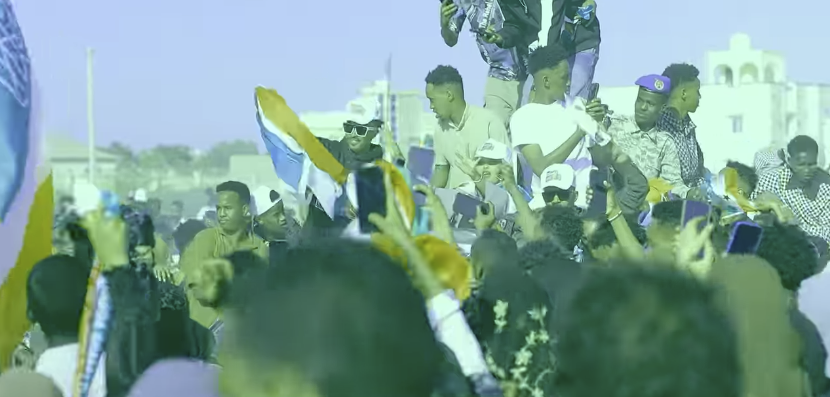
Her airport reception—thousands waving the Somaliland flag—was more than just fan enthusiasm; it was a political message. Hargeisa, long considered the beating heart of Somali music and poetry, is reclaiming its historical role as the cultural capital of the Somali-speaking world.

This episode echoes last year’s incident when singer Dayar Dalnuurshe faced a concert ban in Hargeisa for allegedly disrespecting the city. The tit-for-tat nature of these cultural bans shows how regional identities are now shaping artistic expression.
For Mogadishu, this was about maintaining nationalist unity. For Hargeisa, it was about reasserting its cultural sovereignty. But for Somali music as a whole, it’s a dangerous precedent—where political allegiances determine who can sing and where.
Somaliland continues to dominate Somali arts, poetry, and music, a legacy built since 1960. Nuura’s return only reinforces Hargeisa’s undisputed role as the capital of Somali music, while Mogadishu’s reaction exposes the growing fractures within the Somali cultural scene.