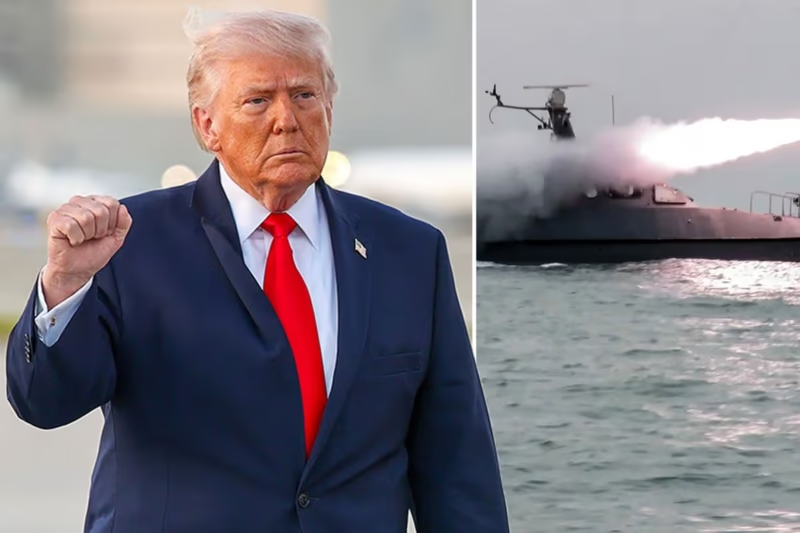
In a fiery new phase of global geopolitics, all signs point toward a turning tide in Washington’s posture toward Iran — and it may be irreversible.
Sources close to the U.S. intelligence community and military planning circles are signaling what they call a “pre-operational environment” — a coded reference to preparations for a potential military strike, possibly targeting the heart of the Islamic Republic’s regime architecture. That includes, Khamenei himself, IRGC command-and-control networks, and the nuclear and drone infrastructure that feeds regional instability from Yemen to Lebanon.
Trump’s Second-Term Red Line?
President Donald Trump has made clear through both official channels and strategic leaks: the Islamic Republic is in the crosshairs not because of its people, but because of its regime — a corrupt clerical elite the White House now labels “fundamentally illegitimate.”
“The regime in Tehran is not salvageable. Its ideology is based on permanent war with the West and terror as foreign policy,” said a former senior EU diplomat who now advises the Trump administration. “This is not just about Iran’s nuclear program anymore. This is about ending the ideology itself.”
And there is more: a second U.S. aircraft carrier now looms in the Gulf. Cyber-activity targeting Iranian defense networks has surged. And recent satellite activity suggests U.S.-Israeli joint reconnaissance flights over Iran’s nuclear and military facilities.
The Letter That Changed Everything
Senior sources in both Washington and Israel told that Trump personally authored a direct letter to Ali Khamenei weeks ago. It included what one source called “final conditions”: full dismantling of Iran’s uranium enrichment program, cessation of arms shipments to groups like Hezbollah and the Houthis, and immediate recognition of Israel’s right to exist.
Khamenei’s reported response? Silence.
But in Tehran, there’s panic.
A former Mossad field officer told media: “This is 1989 for the mullahs. They just don’t realize it yet. Trump and Netanyahu both know they won’t get a better window for regime collapse.”
Internal Collapse — or External Decapitation?
Dissidents inside Iran have reportedly been briefed on a contingency plan for a post-Khamenei transition. One U.S.-based Iranian opposition figure said there are “channels wide open between the White House and exiled Iranian democratic forces.”
Meanwhile, cyber units in Langley and Tel Aviv have quietly ramped up operations designed to undermine regime command chains. “This is not just boots-on-the-ground warfare,” noted a former CIA cyber-ops analyst. “This is doctrine-level collapse from within.”
A War No One Wants — But Everyone’s Preparing For
Despite official denials, the tempo of military coordination between the U.S., Israel, Saudi Arabia, and even Azerbaijan has quickened. An ex-U.S. Navy admiral told WARYATV that what’s coming could resemble “a five-day lightning operation to neutralize Iran’s capacity to retaliate — followed by a psychological campaign to trigger internal collapse.”
Yet, some officials remain cautious. “One wrong move could open up a regional inferno,” warned a former EU envoy to the Middle East.
Free Tehran? Or Forever War?
Trump dares to confront what previous administrations only negotiated with. And the stakes are colossal.
Will Tehran fall to pressure, or be dragged into a fight it can’t win? Is Trump’s endgame total regime change — or simply peace through power?
In the streets of Iran, many already chant “Death to the Dictator.” But what comes after the collapse?
The flags of Israel and America raised in a free Tehran may be a fantasy — or the first image of a new Middle East order.