As Turkey drags a Swedish reporter through terrorism courts, Erdoğan’s war on journalism crosses borders and shreds NATO diplomacy.

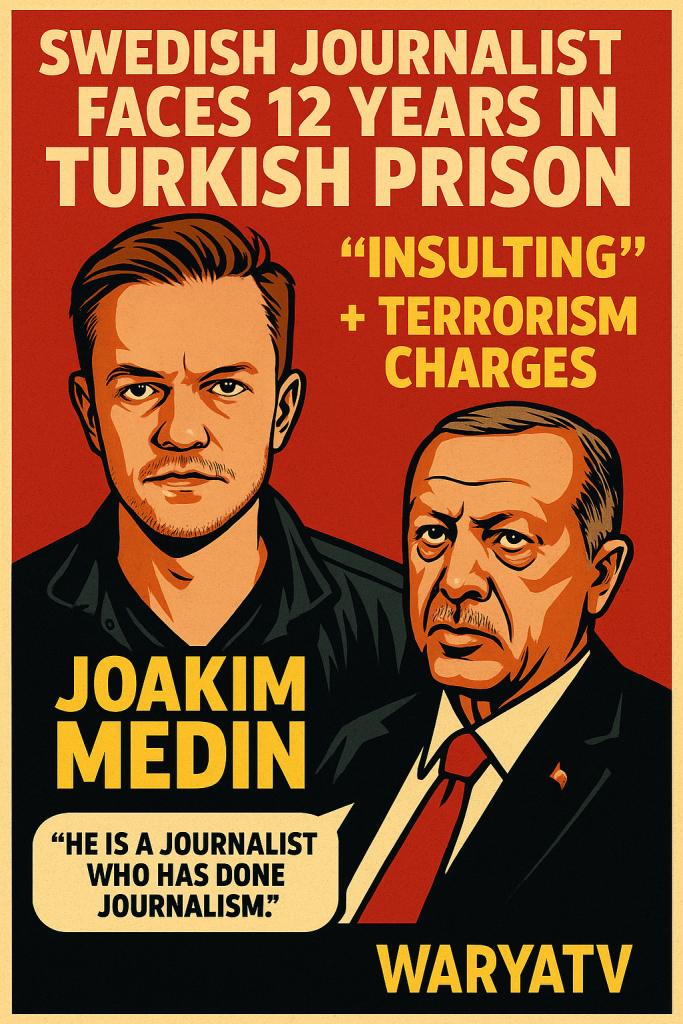
Recep Tayyip Erdoğan’s regime has once again proven that journalism is a dangerous profession in Turkey — especially if it dares to expose dissent. The latest victim? Swedish reporter Joakim Medin, who now faces up to 12 years behind bars on charges that are as politically charged as they are absurd.
His crime? Journalism.
Medin, who traveled to Turkey to cover protests against the politically motivated arrest of Istanbul’s mayor and Erdoğan rival, Ekrem İmamoğlu, was promptly detained. Turkish prosecutors accuse him of “insulting the president” — a charge that, under Erdoğan’s rule, has been leveled at students, artists, and now foreign journalists — and of “membership in a terrorist organization,” meaning the PKK.
This isn’t law enforcement — it’s authoritarian intimidation. This is the Turkish president’s latest attempt to criminalize dissent and muzzle foreign coverage of his crackdown on opposition.
The fact that Sweden — a democratic NATO applicant — is caught in this diplomatic chokehold is no accident. Erdoğan has consistently used Sweden’s perceived support for Kurdish groups as leverage in the NATO accession drama. This arrest adds another card to Ankara’s geopolitical poker hand.
But Turkey’s actions risk detonating more than just diplomatic tensions. They embarrass NATO, undermine freedom of the press, and expose how Erdoğan’s regime blends legal persecution with political blackmail.
What’s more concerning is how quiet European leaders remain as their citizens are jailed for exercising basic freedoms. If the EU and NATO tolerate this, they send a signal to every strongman watching: press freedom is negotiable.
Medin’s trial is set for April 30. If convicted, Sweden will be forced to confront not only Erdoğan’s authoritarianism but also the limits of Western moral authority.
This isn’t just about one journalist. This is about whether democracies can still protect their own — or whether dictatorships now set the rules.