
Top stories
Kenya Fights Suspension of EU Deal Amid Fears for Key Export Sector


Kenya will appeal a regional court decision that suspended its trade agreement with the European Union, Trade Minister Lee Kinyanjui said Wednesday, warning the ruling threatens more than $1.5 billion in annual exports to Europe.
The East Africa Court of Justice, based in Arusha, Tanzania, issued an injunction on Monday halting implementation of the 2023 Economic Partnership Agreement between Nairobi and the EU.
The suspension followed a petition filed by the Centre for Law Economics and Policy, a regional nongovernmental organization, which argued the deal violates provisions of the East African Community’s common market treaty.
Kinyanjui said the government has begun the legal process to overturn the injunction, though he did not specify when the appeal will be heard.
He emphasized that the trade pact remains central to Kenya’s economy, guaranteeing access for Kenyan goods to the 27-nation bloc while gradually lowering barriers for European products entering Kenya.
“The Kenya-EU EPA is the lifeline of our booming exports and a source of livelihood to a large majority of Kenyans,” Kinyanjui said in a statement. “Kenya will continue to trade with the EU, and steps are being taken to ensure continuity and protection of our existing commercial arrangements.”
Kenya exported $1.56 billion in goods to the EU last year — mostly horticulture, tea, and coffee — while importing $2.09 billion worth of European products, according to ministry data.
The ruling comes as African economies scramble to secure market access following a wave of higher tariffs imposed by the United States this year. For Kenya, the EU remains one of its most dependable destinations for agricultural exports, and uncertainty over the trade pact raises concerns among producers and exporters already facing global price volatility.
Officials from the East African Community secretariat did not respond to requests for comment.

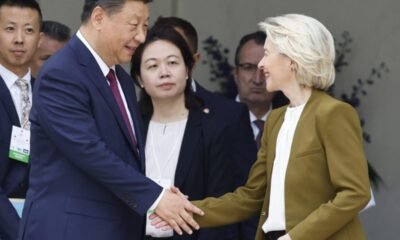









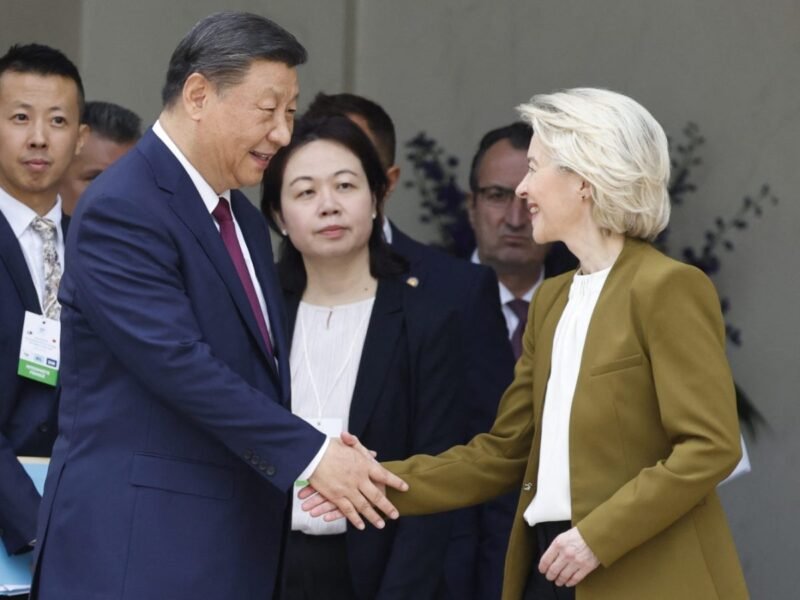
China has quietly escalated its campaign to isolate Taiwan — this time by pressuring European governments to deny entry to Taiwanese politicians, or risk “crossing China’s red lines.” Behind closed doors, Chinese diplomats have delivered pointed legal warnings to multiple European capitals, arguing that EU border rules obligate them to block Taiwanese officials from visiting Europe.
The move reflects a sharper, more coercive phase in Beijing’s diplomacy. By invoking the Schengen Borders Code — which allows entry denial if a visitor is deemed a threat to a country’s international relations — China is advancing an aggressive interpretation: that any engagement with Taiwan automatically threatens EU–China relations. In effect, Beijing is asking Europe to internalize China’s political sensitivities into its own visa enforcement.
European diplomats familiar with the demarches describe the legal reasoning as strained and unconvincing, but the tone as unmistakably intimidating — especially for smaller states more dependent on Chinese trade and investment. The message is less about law and more about leverage: accommodate Taiwan, and relations with Beijing may suffer.
This pressure campaign follows a series of high-profile visits by Taiwanese leaders, including the vice president and foreign minister, to EU member states and even the European Parliament. Beijing’s reaction signals that parliamentary diplomacy — once tolerated — is now being treated as a strategic provocation.
The broader pattern is clear. As China ramps up military pressure around Taiwan, it is simultaneously tightening diplomatic screws abroad, attempting to shrink Taipei’s international space without firing a shot. Europe, which officially maintains a “one China” policy but robust unofficial ties with Taiwan, is being tested: comply quietly, or assert political autonomy.
So far, responses suggest resistance. Several governments, including the UK, have stressed that visa decisions are governed solely by domestic law. Taiwan, meanwhile, has rejected Beijing’s claims outright, arguing that China’s coercion — not Taiwan’s diplomacy — is what truly destabilizes Europe’s international relations.
At its core, this episode exposes a growing fault line. Beijing is no longer content with managing Taiwan bilaterally; it is now attempting to discipline third parties. Whether Europe accepts that logic will shape not just EU–China relations, but the future balance between rules-based diplomacy and power-based pressure.

Why Somalia’s UAE Decree Reveals Strategic Failure and Accelerates Somaliland’s Rise.
The Federal Government of Somalia’s decision to unilaterally void defense and security agreements with the United Arab Emirates is being framed in Mogadishu as an assertion of sovereignty. In strategic terms, however, it reads very differently: as a public admission of how little authority the federal cabinet actually exercises beyond the capital.
By targeting agreements tied to ports, logistics, and maritime security — sectors firmly outside its physical control — Mogadishu has effectively issued a decree to territory it does not govern. The move is heavy on symbolism and light on enforceability, underscoring a widening gap between legal claims and operational reality.
Nowhere is this clearer than in Somaliland. The UAE-backed expansion of Berbera Port continues uninterrupted, serving as one of the Horn of Africa’s most reliable trade and security hubs. Mogadishu’s argument that such agreements violate a provisional constitution collapses when confronted with three decades of autonomous governance in Hargeisa, including elections, taxation, security control, and international partnerships.
From an intelligence and risk-management perspective, the UAE’s posture is pragmatic rather than political. Abu Dhabi has consistently aligned itself with actors capable of delivering stability and protecting assets. Somaliland fits that profile; Mogadishu does not. The federal government’s own acknowledgment that enforcement would be “difficult” is, in effect, a concession that its authority over these spaces exists largely on paper.
The timing is also telling. Somaliland’s growing alignment with Israel, alongside sustained Emirati investment, is shaping a parallel Red Sea security and logistics architecture — one that operates entirely outside the Mogadishu framework. Instead of countering this shift, Somalia’s attempt to restrict Emirati military and cargo flights risks accelerating it, pushing partners further north toward jurisdictions that can guarantee access and continuity.
Strategically, this decree functions as weak-state signaling: an effort to project centralized control without the means to impose it. The real levers of power — ports, airspace reliability, maritime security, and diplomatic momentum — continue to migrate toward Hargeisa.
For regional and international actors, the lesson is increasingly clear. Stability in the Horn of Africa is no longer routed through a dysfunctional center. It is being built, quietly and methodically, where governance works. Mogadishu’s latest move does not slow that shift; it confirms it.
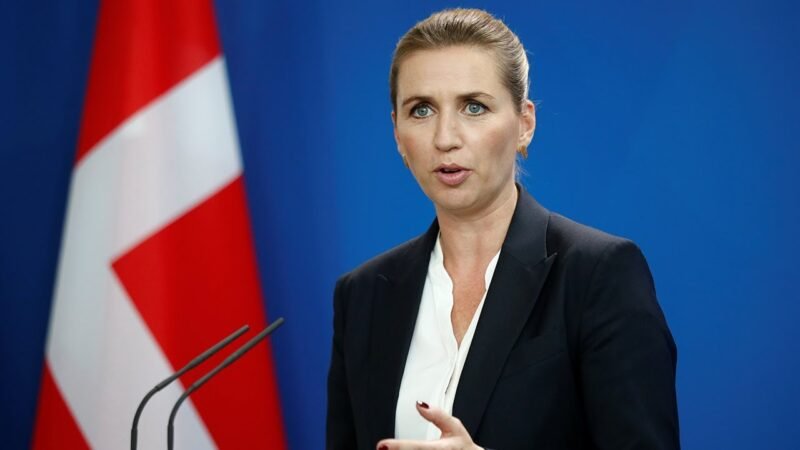
Denmark Says Greenland Crisis at ‘Decisive Moment’ After Trump Renews Threats.
Denmark has warned that the standoff over Greenland has reached a decisive and dangerous moment, after U.S. President Donald Trump again suggested Washington could seize the Arctic territory “whether they like it or not.”
Danish Prime Minister Mette Frederiksen framed the confrontation as far bigger than Greenland alone, calling it a test of international law, sovereignty, and the right of peoples to self-determination. “There is a conflict over Greenland,” she said, adding that Denmark is prepared to defend its values — including in the Arctic.
Trump argues that U.S. control of Greenland is essential for national security, citing increased Russian and Chinese activity in the region. But his rhetoric has alarmed European allies, who see forced acquisition as a clear violation of international norms and a dangerous precedent.
Sweden and Germany quickly lined up behind Denmark. Swedish Prime Minister Ulf Kristersson condemned Washington’s “threatening rhetoric,” warning that a U.S. takeover would undermine international law and embolden other powers to redraw borders by force. Germany echoed those concerns, stressing that Arctic security must remain a collective NATO matter, not a unilateral one.
Behind the scenes, the dispute is already reshaping military planning. Reports suggest the UK, France, Germany and other NATO members are quietly discussing contingency plans for a potential NATO mission to protect Greenland, including deployments of troops, warships and aircraft. European officials frame this not as provocation, but deterrence — aimed at Russia, China, and now, increasingly, an unpredictable Washington.
Belgium has gone further, openly calling for a NATO “Arctic Sentry” operation modeled on existing Baltic and Eastern Sentry missions, using joint forces, drones and surveillance to stabilize the High North.
Greenland itself remains firmly opposed to any U.S. takeover. Polls consistently show overwhelming resistance among Greenlanders, who gained home rule in 1979 and continue to debate their future relationship with Denmark — on their own terms.
What makes this moment explosive is not just Trump’s language, but the broader signal it sends. If even allies feel threatened, the rules-based order in the Arctic — long defined by cooperation and restraint — is under real strain.
As Frederiksen put it, Greenland has become the front line in a much larger struggle over power, law and the future of the Arctic.
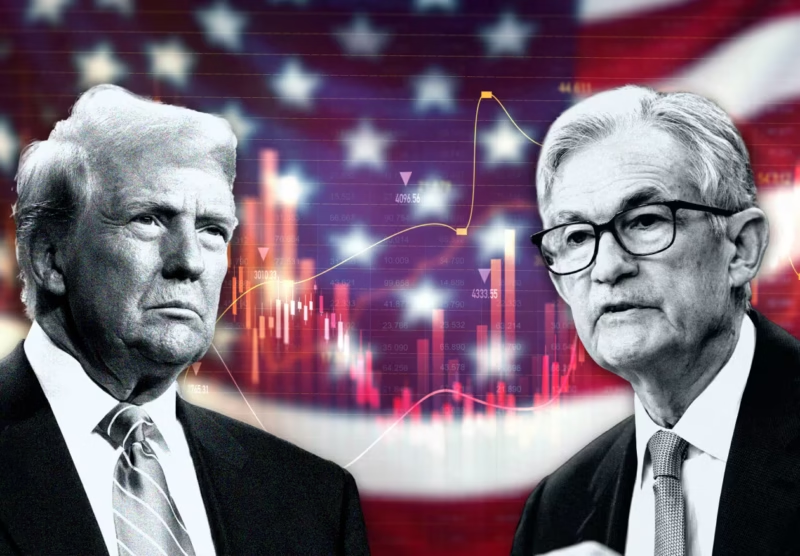
Trump Administration Opens Criminal Investigation Into Fed Chair Jerome Powell, Raising Alarm Over Central Bank Independence.
The Trump administration has crossed a historic red line, opening a criminal investigation into Federal Reserve Chair Jerome Powell — a move that has sent shockwaves through financial markets and reignited fears of direct political interference in U.S. monetary policy.
Powell confirmed Sunday that the Department of Justice issued grand jury subpoenas tied to his congressional testimony about the $2.5 billion renovation of the Federal Reserve’s Washington headquarters. But in an unusually blunt public statement, the central bank chief dismissed the probe as a “pretext,” warning that it represents an effort to intimidate the Fed for refusing to bend interest-rate policy to presidential demands.
At its core, this confrontation is not about construction costs. It is about power.
Trump has repeatedly attacked Powell for resisting faster interest-rate cuts, openly threatening to fire him and attempting to remove fellow Fed governor Lisa Cook. The investigation now escalates that pressure into the criminal arena — a step critics say threatens the institutional firewall that has insulated the Fed from politics for decades.
Powell framed the moment starkly: either the Federal Reserve continues setting rates based on data and economic conditions, or monetary policy becomes subject to political coercion. His warning resonated immediately. U.S. stock futures slid, the dollar weakened, and investor anxiety surfaced across global markets — a reminder that confidence in the Fed’s independence underpins the credibility of the U.S. economy itself.
Trump publicly denied knowledge of the probe but continued to deride Powell’s leadership, reinforcing the perception of a coordinated pressure campaign. Legal experts note that under U.S. law, a president can only remove a Fed chair “for cause,” not for policy disagreements — a safeguard now being stress-tested.
The political fallout is growing. Senator Thom Tillis said he would block any new Fed chair nomination until the case is resolved, while Senator Elizabeth Warren accused Trump of attempting a “corrupt takeover” of the central bank. Even some Republican lawmakers are warning that the credibility of the Justice Department itself is now at stake.
With Powell’s chairmanship ending in May and Trump expected to name a successor soon, the timing is no accident. Whether this investigation succeeds or collapses, the signal has already been sent: the independence of America’s most powerful economic institution is under direct assault.
For markets, allies, and rivals alike, this is no longer just a legal dispute — it is a stress test of whether U.S. institutions can withstand presidential pressure in a new era of confrontational governance.

Somalia Revives 1988 Rhetoric: Somaliland Condemns Somalia’s Bombing Threats, Citing 1988 Genocide and Violations of International Law.
Somaliland has issued a sharp diplomatic warning after senior Somali officials openly called for military attacks on its territory, reviving rhetoric that many Somalilanders associate with one of the darkest chapters in their history.
In a statement released this week, the Ministry of Foreign Affairs of the Republic of Somaliland condemned remarks by Somalia’s Minister of Defense, Ahmed Moallim Fiqi, who urged Arab countries — particularly Saudi Arabia — to bomb Somaliland “as they did in Yemen.” Hargeisa said the comments violate international law and the United Nations Charter and amount to incitement of war.
For Somaliland, the language is not abstract. Officials drew a direct parallel to 1988, when the Siad Barre regime hired foreign pilots and mercenaries to bombard Hargeisa and Burao, killing 500 of thousands of civilians in what is widely documented as genocide against the Isaaq population. The reference has struck a nerve across Somaliland, where collective memory of the air raids remains central to national identity.
The Foreign Ministry said the threats underscore why Somaliland remains united in defending its sovereignty, just as it did during the SNM-led resistance of the late 1980s. That uprising ultimately led to Somaliland’s withdrawal from the failed union and the restoration of its independence in 1991.
Hargeisa also dismissed Mogadishu’s threats as hollow, noting that Somalia remains heavily dependent on international aid and has failed for more than two decades to fully secure its own capital from Al-Shabaab. Recent Somalia threats against Israel — following Israel’s recognition of Somaliland — were described by officials as further evidence of political desperation rather than strategic capacity.
Adding to tensions, Somaliland pointed to Turkey’s recent delivery of military equipment to Mogadishu, warning that external militarization risks emboldening reckless rhetoric in an already fragile region.
For Somaliland, the message is clear: calls to repeat the crimes of 1988 will not intimidate a society that survived them. Instead, officials argue, such statements reinforce Somaliland’s case as a stable, self-governing state — and highlight Somalia’s continued struggle as one of the world’s most enduring failed states.
The Ghost of Sovereignty: Mogadishu’s Hollow Claim Over Somaliland Exposed

Iran Protest Death Toll Surpasses 500 as Trump, Israel Signal Escalating Pressure on Tehran.
Iran’s protest movement has entered its deadliest phase yet, with rights groups reporting that more than 500 people have been killed as security forces intensify a nationwide crackdown. According to the U.S.-based Human Rights Activists News Agency, at least 538 deaths have been documented so far — the vast majority protesters — alongside more than 10,600 arrests. The group warns the true toll is likely higher as Iran enforces near-total internet blackouts and cuts international phone lines.
The numbers point to a regime choosing force over compromise. What began as economically driven unrest has evolved into a direct challenge to clerical rule, met with mass detentions, live fire, and systematic information suppression. Tehran has released no official casualty figures, a familiar tactic during moments of internal crisis.
International pressure is now rising in parallel. President Donald Trump is reportedly weighing options ranging from new sanctions and cyber operations to more direct military measures. Israeli Prime Minister Benjamin Netanyahu added to the pressure by declaring that Israel hopes the “Persian nation will soon be freed from the yoke of tyranny,” a statement that openly frames the unrest as a liberation struggle rather than a domestic disturbance.
Meanwhile, exiled crown prince Reza Pahlavi has stepped forward, signaling readiness to return and oversee a political transition — a move that will further alarm Iran’s leadership, which views alternative centers of authority as existential threats.
The scale of deaths, the regime’s information blackout, and the growing chorus of external voices suggest Iran is approaching a decisive moment. Whether the protests collapse under repression or fracture the system from within may determine not just Iran’s future, but the balance of power across the Middle East.
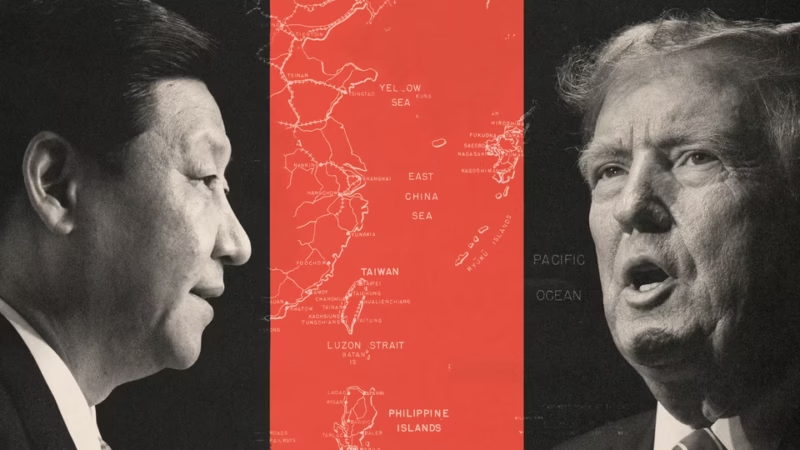
Trump: “It’s Up to Xi” on Taiwan but U.S. Would Be “Very Unhappy” With Change to Status Quo.
President Donald Trump has drawn fresh controversy by saying that Chinese President Xi Jinping ultimately decides what China does regarding Taiwan — effectively placing Taiwan’s future “up to him,” though he warned he would be “very unhappy” with any change to the status quo. Trump made the comments in an interview with The New York Times published Thursday, framing Taiwan’s situation as fundamentally Beijing’s decision and distinguishing it from U.S. actions in Venezuela.
Trump emphasized that Taiwan does not pose the same kind of direct threat to China that Venezuela’s government, in his view, posed to the United States, and expressed confidence that Xi would refrain from military action during his presidency, which runs through 2029. “He may do it after we have a different president, but I don’t think he’s going to do it with me as president,” Trump said.
The remarks prompted concern in Taipei and among U.S. allies, as they appeared to defer to Xi’s judgment on Taiwan’s fate and undercut longstanding U.S. strategic ambiguity about defending the self-governing island. China reacted by reiterating that Taiwan is an “inalienable part” of its territory and a purely internal matter that brooks no external interference.
While Trump signaled opposition to any forceful change in Taiwan’s status, his phrasing — that the decision rests with Xi — has raised fears in Washington, Taipei and allied capitals about the strength of U.S. deterrence and how Taiwanese security fits into broader U.S.–China strategic competition.
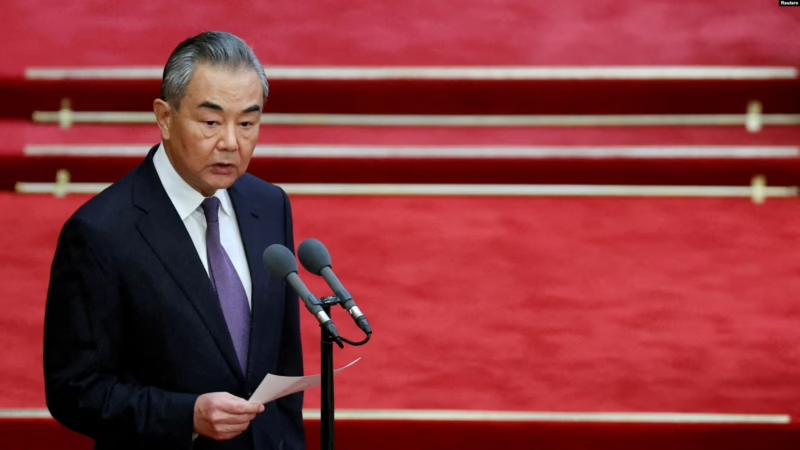
China’s Top Diplomat Postpones Somalia Visit, Citing Security Concerns, Continues Africa Tour in Tanzania.
China’s top diplomat, Wang Yi, has postponed what would have been a rare and symbolically important visit to Somalia, a move that quietly underscores Mogadishu’s growing diplomatic vulnerability amid shifting regional dynamics.
The visit — which would have been the first by a Chinese foreign minister to Somalia since the 1980s — was expected to bolster the Somali government at a delicate moment. Israel’s recent recognition of Somaliland has weakened Mogadishu’s diplomatic position, while relations with Washington have sharply deteriorated following the U.S. decision to suspend assistance benefiting Somalia’s federal government over allegations of aid misuse.
Officially, Somalia’s foreign ministry said the reason for Wang’s postponement would be clarified later. But intelligence-linked sources indicate security concerns in Mogadishu were the decisive factor, with unconfirmed threats reportedly contributing to Beijing’s decision. China’s foreign ministry declined to comment, maintaining its characteristic silence on sensitive security matters.
The postponement is notable not just for what it says about Somalia’s internal stability, but for what it reveals about China’s strategic calculus. Wang’s annual New Year Africa tour is tightly choreographed around trade routes, infrastructure access, and long-term resource security. In that context, Beijing appears unwilling to take even symbolic risks in a capital it views as unstable.
Instead, Wang arrived in Tanzania on Friday for a two-day visit focused on strengthening economic and diplomatic ties. Earlier in the week, he met Ethiopian Prime Minister Abiy Ahmed, pushing deeper cooperation in infrastructure, green industry and the digital economy. Lesotho is next on his itinerary before the tour concludes on January 12.
The contrast is stark. While Beijing deepens engagement with relatively stable and strategically positioned African states, Somalia is left waiting — diplomatically exposed, facing U.S. pressure, and increasingly overshadowed by Somaliland’s rising international profile.
For Mogadishu, the message is uncomfortable but clear, global powers prioritize predictability and security. Until Somalia can offer both, even long-anticipated diplomatic milestones can vanish overnight.
China Tightens Grip as Wang Yi Meets Abiy, Heads to Mogadishu

China Pressures European States to Block Taiwanese Officials Using Visa

Assessing the Strategic Failure of the Mogadishu Cabinet’s UAE Decree

US War Plans Against Iran Enter Advanced Stage


-
 Analysis10 months ago
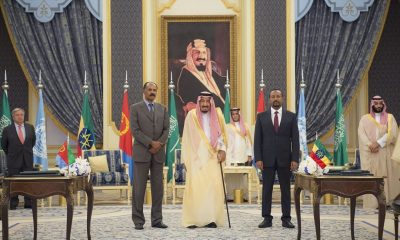
Saudi Arabia’s Billion-Dollar Bid for Eritrea’s Assab Port
-

 Opinion17 years ago
Somaliland Needs a Paradigm Change: Now or Never!
-
 Interagency Assessment4 weeks ago
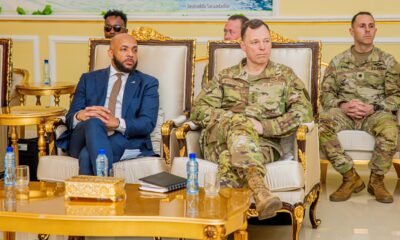
TOP SECRET SHIFT: U.S. MILITARY ORDERED INTO SOMALILAND BY LAW
-

 Somaliland3 months ago
Somaliland Recognition: US, UK, Israel, and Gulf Bloc Poised for Historic Shift
-

 EDITORIAL1 year ago
Dr. Edna Adan Champions the Evolving Partnership Between Somaliland and Ethiopia
-
 ASSESSMENTS10 months ago
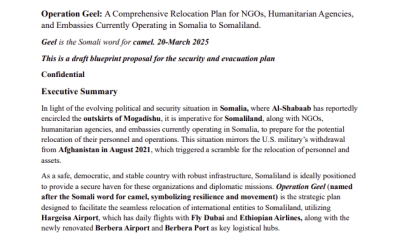
Operation Geel Exposes the Truth: International Community’s Reluctance to Embrace Somaliland as a Strategic Ally
-
 Somaliland12 months ago
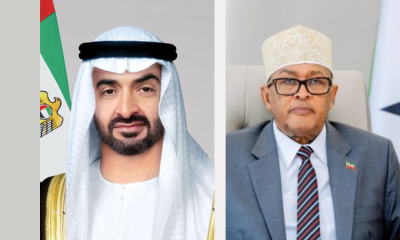
Somaliland and UAE Elevate Ties to Comprehensive Strategic Partnership
-
Top stories2 years ago
Ireland, Norway and Spain to recognize Palestinian state