Connect with us

Comment

Trump’s Africa Doctrine, China’s Shadow, and Why Somaliland Sits in the Crosshairs

Published

on

Donald Trump’s new National Security Strategy does something Washington avoided for years: it treats Africa not as a humanitarian afterthought, but as a frontline in great-power competition.

The document frames the continent through three lenses — China, Russia, and security of trade routes — and argues that US engagement must shift from aid language to hard interests: ports, minerals, Red Sea access, and counterterrorism.

For Somaliland, this framing is not abstract. It quietly moves Hargeisa from the margins of US policy into the centre of a strategic map that already pits Washington against Beijing and Ankara along the Red Sea and Gulf of Aden.

Trump’s strategy casts China and Russia as “revisionist powers” using loans, infrastructure and arms to gain leverage over ports and resources. In Africa, that means Chinese-built terminals, opaque debt for rail and highways, and security deals that blend commercial presence with military access.

Overlay that with our previous analysis of Turkey’s projection from Mogadishu — ports, bases, and missile-adjacent testing spaces on Somali soil — and the pattern is clear: the southern Somali coastline is being folded into a Eurasian strategic architecture that is neither transparent nor Western-aligned.

Advertisement

Ankara and Beijing use similar tools: long concessions, state-linked companies, and security “assistance” that blurs where sovereignty ends and dependency begins.

Trump’s Africa doctrine, whatever one thinks of him, is built to counter exactly this model. It calls for:

Protecting sea lanes and chokepoints.

Challenging “predatory” infrastructure and port deals.

Backing partners that can police their territory and coasts.

Advertisement

That is where Somaliland becomes the missing piece.

Unlike Mogadishu, Somaliland has demonstrated something US strategists claim to want: a relatively stable democracy, a functioning coast guard, and a deep-water port at Berbera already tied into GCC and Western commercial networks.

The Berbera corridor sits between two forms of proxy geography: Houthi-influenced Yemen to the north and foreign-captured Somalia to the south.

Recognized or not, Somaliland already behaves like the kind of partner the new strategy describes — one that can secure an 850-kilometre coastline without inviting Chinese or Turkish basing rights.

This is exactly the logic that surfaced in the recent US Senate focus on African maritime security and in Senator Ted Cruz’s description of Somaliland as a “critical U.S. maritime security partner.”

Advertisement

The Senate conversation is, in many ways, the operational translation of Trump’s doctrine: if you are serious about contesting China and Russia along the Red Sea, you cannot ignore the one jurisdiction that is actually keeping its water relatively clean.

Compare the three vectors now on the table:

China’s Africa play: ports, minerals, and dual-use infrastructure extending influence from the Indian Ocean to the Atlantic, often through weak or indebted states.

Turkey’s Somali corridor: an offshore strategic ecosystem — training bases, ports, and missile testing potential — that sits outside NATO constraints but benefits from its cover.

Trump’s US strategy: a call to back “sovereign, resilient states” that resist coercive loans, secure their coasts, and align with US commercial and security interests.

Advertisement

Somaliland sits at the intersection of all three. Beijing views Hargeisa’s ties with Taiwan as an intolerable breach; Mogadishu acts as China’s political proxy in trying to box Somaliland out of recognition; Turkey uses southern Somalia to contest the same waters Berbera seeks to stabilize.

The US, for now, formally clings to the “one Somalia” fiction, but its own strategic logic points in another direction: toward partners that actually deliver security outcomes.

This is where Trump’s strategy and the Cruz-style Senate framing quietly converge. Both are less interested in lines on a colonial map and more concerned with who can keep global trade moving and keep Chinese-built bases, Iranian proxies, and jihadist networks from merging into a single threat picture along the Red Sea corridor.

In that world, the question for Washington becomes brutally simple:

Do you continue to route your Red Sea security through a fragile federal government in Mogadishu that cannot control its coastline and is increasingly entangled with Chinese and Turkish designs — or do you start treating Somaliland as the democratic outpost that already fits your own written doctrine?

Advertisement

Trump’s Africa strategy, China’s expanding footprint, and the latest Senate hearings all point to the same conclusion: the frontline of US–China rivalry in the Horn is not theoretical, and Somaliland is no longer a peripheral actor.

It is the unrecognized state that matches the checklist in Washington’s own strategic documents — and the longer the US pretends otherwise, the more space it leaves for Beijing and Ankara to write the rules of the corridor first.

Somaliland Was Fighting China All Along—And Didn’t Know It

U.S. Senate Hearings Highlight Somaliland as Key to Maritime Security Strategy

Advertisement

Comment

Europe Trapped Between Putin’s War and Trump’s Greenland Gambit

Published

on

Europe’s Strategic Dilemma: Defending Ukraine from Putin While Confronting Trump Over Greenland.

When allies start sounding like adversaries, the foundations of global security begin to crack.

For four years, Europe has spoken with remarkable discipline about one principle: sovereignty matters. From emergency summits to midnight phone calls, European leaders have rallied behind Ukraine’s right to exist within its internationally recognized borders, resisting Russia’s war of aggression with sanctions, weapons, and unyielding rhetoric.

This weekend, that script broke — and in a way few in Brussels ever imagined.

European capitals were once again issuing joint statements, convening crisis calls, and invoking the language of territorial integrity. But this time, the threat was not coming from Moscow. It was coming from Washington.

Advertisement

After U.S. President Donald Trump renewed threats to pressure Denmark into relinquishing Greenland — including the possibility of punitive tariffs — Europe found itself defending the sovereignty of a NATO member against its own principal security guarantor. The reversal was jarring.

European Commission President Ursula von der Leyen responded with words that could have been lifted directly from her speeches on Kyiv. Europe, she said, would stand firm in defending Greenland and Denmark, protect its strategic interests, and face the challenge with unity and resolve. Only the target had changed.

The implications are profound. A NATO power openly threatening economic coercion to acquire another country’s territory strikes at the core principle that has underpinned the transatlantic alliance since 1945. Even if the threat is never carried out, its mere articulation corrodes trust — the most valuable currency in collective defense.

For Europe, the timing could not be worse.

At the very moment Trump escalated rhetoric over Greenland, Washington and European capitals were deep into negotiations over post-war security guarantees for Ukraine. Those talks — involving ceasefire monitoring, multinational deployments, and binding defense commitments — depend on a single assumption: that the United States remains a credible partner in defending sovereignty against aggression.

Advertisement

That assumption is now under strain.

French President Emmanuel Macron drew the connection bluntly. Europe, he said, would not bow to intimidation — whether in Ukraine, Greenland, or anywhere else. Spanish Prime Minister Pedro Sánchez went further, warning that any U.S. move against Greenland would hand Russian President Vladimir Putin a strategic gift.

The logic is stark. If borders can be rewritten by force or coercion — even by allies — the moral case against Russia’s invasion of Ukraine collapses. The message to Moscow would be unmistakable: power, not law, decides.

This is the impossible puzzle Europe now faces. Can it credibly defend Ukraine’s sovereignty alongside a partner that appears willing to undermine Denmark’s? Can it sit at the same table designing security guarantees for Kyiv while questioning whether those guarantees would hold if inconvenient?

For NATO, the stakes are existential. Collective defense depends not on hardware alone, but on the belief that allies will not turn coercive against one another. Once that belief erodes, deterrence weakens — not just against Russia, but everywhere.

Advertisement

Europe is discovering that its greatest security challenge may no longer be choosing between Washington and Moscow, but reconciling a world in which its closest ally speaks the language of revisionism.

Ukraine remains the front line. Greenland has become the warning shot.

Continue Reading

Comment

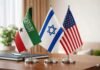
A Muslim NATO Emerges as Somaliland Draws a Red Line

Published

on

Turkey’s Defense Pivot: Turkey in Advanced Talks to Join Saudi–Pakistan Mutual Defense Pact Amid Horn of Africa Tensions.

Turkey’s reported move to join the Saudi–Pakistan Strategic Mutual Defence Agreement (SMDA) marks a quiet but profound shift in the security architecture of the Muslim world — and it lands at a moment of extreme sensitivity in the Horn of Africa.

Unlike past military cooperation, this is not ad hoc coordination. It is formalization. The SMDA, signed in Riyadh in September 2025, includes a collective defense clause explicitly stating that an attack on one member is an attack on all. If Ankara accedes, the pact would evolve from a bilateral guarantee into a tri-power security bloc spanning the Middle East, South Asia, and the Red Sea corridor — what analysts increasingly describe as a de facto “Muslim NATO.”

Each member brings a distinct pillar of power. Saudi Arabia supplies capital, energy leverage, and diplomatic weight. Pakistan contributes strategic depth, missile capacity, and nuclear deterrence. Turkey adds conventional military strength, expeditionary experience, and a fast-growing defense industry. Together, they would form a coordinated security mechanism capable of projecting power far beyond their borders.

But the timing matters — and so does geography.

Advertisement

As talks advance, Somaliland has issued its most direct warning yet, accusing Turkey and Somalia’s federal leadership of preparing a military escalation in Las Anod following Israel’s recognition of Somaliland. President Abdirahman Mohamed Abdullahi Irro has framed Turkish troop movements, airlift activity, and high-level visits as destabilizing interference rather than neutral partnership.

From Hargeisa’s perspective, the pattern is unmistakable: diplomatic pressure failed, symbolic politics followed, and now militarization appears to be the next instrument. Somaliland’s message is blunt — sovereignty will be defended, and those enabling force will share responsibility for the consequences.

This is where Turkey’s broader ambitions collide with new realities. Ankara is already deeply embedded in Somalia: its largest overseas military base, long-term naval patrol mandates, energy exploration, and now plans for a dual-use spaceport capable of missile testing. Add accession to a collective defense pact, and Turkey’s footprint shifts from partner to power broker.

The move also complicates Ankara’s NATO posture. While not a treaty violation, joining a parallel mutual defense bloc underscores Turkey’s accelerating strategic autonomy — and deepens friction with Western allies already wary of its regional trajectory.

What emerges is a sharper geopolitical divide. As Turkey anchors itself in new defense frameworks and Somalia, Somaliland is doing the opposite: consolidating recognition, locking in pragmatic alliances, and asserting what it calls the Hargeisa Doctrine — sovereignty exercised, not negotiated.

Advertisement

If finalized, Turkey’s entry into the SMDA will reshape regional security. But in the Horn of Africa, it may also test a hard limit: Somaliland has made clear that its future will not be decided by pacts signed elsewhere.

Continue Reading

Comment

Trump Declares Trade War on Europe Over Greenland

Published

on

NATO Crisis Goes Economic: Trump Threatens Tariffs on European Allies to Force Greenland Deal as Protests Erupt.

President Donald Trump has pushed the Greenland confrontation into dangerous new territory, threatening sweeping tariffs on key European allies unless they agree to negotiations over the Arctic island’s transfer to U.S. control. The move marks an unprecedented escalation: using economic coercion against NATO partners to force a geopolitical outcome.

Trump announced a 10% tariff on all goods from Denmark, Norway, Sweden, France, Germany, the UK, the Netherlands and Finland starting February 1, rising to 25% by June if no “deal” is reached. His justification blended grievance and brinkmanship, framing Greenland as a centuries-old U.S. interest now essential for missile defense and global security.

European leaders reacted with shock and open defiance. Danish Foreign Minister Lars Løkke Rasmussen said the threat contradicted recent “constructive” talks with Washington, while French President Emmanuel Macron called the tariffs unacceptable and warned of a coordinated EU response. EU officials are now openly discussing freezing the EU–US trade deal reached last year, signaling a rapid deterioration in transatlantic trust.

The crisis comes as European troops deploy to Greenland in a symbolic show of support for Danish sovereignty—an act Trump labeled “dangerous for the survival of our planet.” For Europe, the deployments are defensive and transparent. For Trump, they are a provocation.

Advertisement

Public resistance has also surged. Thousands protested in Copenhagen and Nuuk, chanting “Greenland is not for sale” and rejecting any notion of annexation. With Greenland’s population barely 56,000, the demonstrations represent a rare, unified stand by Inuit communities against great-power bargaining over their land.

Legally, Trump’s tariff threat rests on shaky ground, likely invoking emergency economic powers that the Supreme Court is already scrutinizing. Politically, the strategy is even riskier: polls show three-quarters of Americans oppose taking Greenland, and bipartisan lawmakers are moving to block the tariffs.

The deeper rupture is strategic. NATO was built on collective defense, not economic blackmail. By tying tariffs to territorial demands, Trump has crossed from alliance pressure into coercion—forcing Europe to prepare not just for rivalry with Russia or China, but for instability driven from within the Western camp itself.

Continue Reading

Comment

Iran’s Killing Machine Accelerates as Trump Issues Final Warning

Published

on

More Than 2,400 Protesters Killed in Iran as Trump Warns Against Executions.

Iran’s crackdown has entered its deadliest phase yet. More than 2,400 protesters have reportedly been killed and over 18,000 arrested as the Islamic Republic intensifies repression under a nationwide internet blackout now stretching into its sixth day. What began as economic protests has evolved into an existential challenge for the regime — and Tehran is responding with speed, secrecy, and the threat of executions.

The immediate concern is the fate of Erfan Soltani, a 26-year-old protester facing imminent execution after what his family and U.S. officials describe as a rushed trial without legal representation. His case has become a symbol of a broader pattern: fast-track death sentences, public trials, and intimidation designed to break the protest movement through fear.

Iran’s judiciary has made its intentions clear. Chief Justice Gholam-Hossein Mohseni-Eje’i announced that protesters accused of violence or “terrorism” will receive priority punishment, signaling that executions may soon become a routine tool of deterrence. Rights groups warn that the real death toll may be far higher as communications remain cut and families are silenced.

President Donald Trump has issued unusually blunt warnings, urging Iranians to keep protesting and cautioning Tehran that executions would trigger “strong action” from the United States. While the White House has not detailed its next steps, the language marks a sharp escalation — moving from condemnation to implied consequences.

Advertisement

Inside Iran, regime figures are attempting to reframe the uprising as foreign-backed “ISIS-style terrorism,” a narrative long used to justify mass repression. But the scale, persistence, and nationwide spread of the protests suggest something deeper: a population no longer deterred by fear, even as the cost in lives continues to rise.

Iran now stands at a dangerous crossroads. Executions may crush individuals, but they risk accelerating the collapse of legitimacy of a system already ruling through force alone. The question is no longer whether the crisis will deepen — but how far the regime is willing to go to survive.

Continue Reading

Comment

The Brutal Logic Behind the Turkey-Somaliland Clash

Published

on

Hargeisa Draws the Line: Somaliland Rejects Ankara’s Patronage Politics.

Somaliland’s response to recent remarks by Turkish Foreign Minister Hakan Fidan marks more than a diplomatic spat. It signals a strategic shift — one that places Hargeisa firmly in control of its narrative, its alliances, and its future.

When Fidan attempted to frame Somaliland’s foreign relations as a “religious disaster,” the reaction from Hargeisa was swift and calculated. Rather than engaging in emotional rebuttal, Somaliland’s Minister of the Presidency, Khadar Hussein Abdi, delivered a precise message: Mogadishu has neither the authority nor the capacity to decide Somaliland’s affairs — including who sets foot on its soil.

That statement crystallized what can now be described as the Hargeisa Doctrine: sovereignty is not requested, negotiated, or deferred. It is exercised.

For decades, Somaliland played defense — seeking validation, patiently arguing its case, and tolerating external actors who treated its stability as useful but its sovereignty as inconvenient. This moment represents a clean break from that posture. Abdi’s response did not ask Turkey to understand Somaliland’s position; it asserted it.

Advertisement

Ankara’s appeal to religious solidarity was not lost on Hargeisa. Somaliland’s leadership recognized it as a political tool — one designed to maintain Turkey’s entrenched interests in Mogadishu while sidelining a functioning, democratic polity that has governed itself peacefully for over 35 years. By rejecting that framing, Somaliland exposed the gap between rhetoric and reality.

What makes this episode significant is not confrontation, but confidence. Somaliland is no longer explaining why it deserves partnerships — it is choosing them. Engagements with Israel, the UAE, and other pragmatic actors reflect a foreign policy anchored in maritime security, trade integration, and long-term economic resilience, not ideological loyalty tests.

By calling out Turkey’s decades-long absence from Somaliland’s development while attempting to assert influence today, Hargeisa delivered an uncomfortable truth: strategic importance cannot be invoked selectively. Respect follows consistency.

This is modern sovereignty in action. Somaliland is positioning itself not as a “territory awaiting recognition,” but as a capable authority already delivering governance, security, and growth in one of the world’s most sensitive corridors — the Gulf of Aden and Red Sea basin.

The so-called “anger” noted in international coverage is better understood as discipline. A disciplined refusal to be spoken for. A disciplined insistence that the land belongs to those who govern it, protect it, and build its future.

Advertisement

In that sense, Somaliland’s message to Ankara was not defiance. It was doctrine.

Continue Reading

Comment

Aid Freeze, Trust Collapse: Somalia–US Ties Enter Dangerous Territory

Published

on

Somalia–US Relations Hit Low Point as Washington Pauses Aid Over WFP Warehouse Dispute.

Relations between Somalia and the United States have sunk to one of their lowest points in years after Washington announced it was pausing government-benefiting assistance to Mogadishu, citing allegations of aid misuse linked to a demolished World Food Programme (WFP) warehouse.

The trigger was a blunt statement from the U.S. State Department’s under secretary for foreign assistance, who accused Somali officials of destroying a U.S.-funded WFP warehouse and illegally seizing donor-funded food meant for vulnerable Somalis. The administration said the move reflected its “zero-tolerance” approach to waste, diversion and theft of humanitarian aid.

Somali authorities pushed back quickly. The Ministry of Foreign Affairs denied that aid had been stolen, insisting the food remained under WFP custody and that the warehouse demolition was part of port redevelopment works that did not affect humanitarian operations. Documents seen by Reuters appear to confirm that 75 metric tons of nutritional supplies were transferred to another warehouse and formally handed back to WFP, pending lab tests to confirm the food’s safety.

WFP itself struck a careful tone, acknowledging that the warehouse had been demolished but saying it was working with Somali authorities to secure alternative storage. The agency stressed that the food — designed for malnourished pregnant women, nursing mothers and young children — is critical at a time when roughly 4.4 million Somalis face crisis-level hunger or worse.

Advertisement

Still, Washington remains unconvinced. U.S. officials said investigations into possible diversion and misuse are ongoing and made clear that any resumption of aid would depend on Somali authorities taking accountability and corrective steps.

The dispute lands amid a broader chill in relations. Under President Donald Trump’s second term, the U.S. has hardened its stance toward Somalia, tightening immigration restrictions, auditing citizenship cases involving Somali-Americans, and repeatedly highlighting fraud cases linked to nonprofit groups in Minnesota’s Somali community. At the same time, the administration has sharply cut foreign aid globally, pivoting U.S. policy in Africa away from assistance and toward trade.

For Mogadishu, the aid pause is more than a bureaucratic dispute. It exposes how fragile Somalia’s international standing remains — and how quickly humanitarian issues can spill into strategic fallout at a moment when the government is already under pressure from security challenges, diplomatic setbacks, and declining Western patience.

Continue Reading

Comment

China Tightens Grip as Wang Yi Meets Abiy, Heads to Mogadishu

Published

on

Abiy Hosts China’s Wang Yi as Beijing Deepens Horn of Africa Diplomacy, Eyes Somalia Visit.

Ethiopian Prime Minister Abiy Ahmed on Wednesday hosted China’s Foreign Minister Wang Yi at the National Palace, marking the latest signal of Beijing’s intensifying diplomatic engagement in the Horn of Africa.

The high-level meeting, held as part of Wang’s two-day official visit to Ethiopia, focused on strengthening bilateral cooperation and exchanging views on regional and international issues, according to Ethiopian officials. Wang Yi, who also serves as a member of the Political Bureau of the Communist Party of China’s Central Committee, is among Beijing’s most senior and influential diplomats, underscoring the political weight of the visit.

The talks reflect the long-standing partnership between Addis Ababa and Beijing, which has expanded over two decades to include infrastructure development, trade, investment, and security cooperation. China remains one of Ethiopia’s largest trading partners and a major financier of railways, industrial parks and energy projects, even as Addis Ababa seeks to rebalance its external relationships amid economic strain and regional instability.

Wang’s stop in Ethiopia is part of a broader African tour that also includes Tanzania, Lesotho — and notably Somalia. China’s Foreign Ministry announced Wednesday that the foreign minister will travel to Mogadishu in the coming days, a visit that carries significant geopolitical overtones.

Advertisement

The Somalia leg of the trip comes at a sensitive moment in the Horn of Africa, as Mogadishu works aggressively to rally international opposition to Israel’s recent recognition of Somaliland as an independent state. Beijing has already rejected the move, aligning itself with Somalia’s federal government and the African Union.

Analysts say China’s stance is consistent with its broader foreign policy doctrine, which places sovereignty and non-recognition of Somaliland at the center of international order — a principle Beijing applies not only in Africa, but also in cases closer to home, including Taiwan, Tibet and Xinjiang.

While details of Wang’s planned meetings in Somalia have not been made public, officials familiar with the agenda say discussions are expected to cover bilateral cooperation, regional security, and the future of China–Africa relations. Somalia has become an increasingly important node in Beijing’s Red Sea and Indian Ocean calculus, particularly as global competition intensifies over trade routes, ports and political influence in the region.

Taken together, Wang Yi’s visits to Addis Ababa and Mogadishu highlight China’s methodical approach in the Horn of Africa: strengthening ties with established regional powers like Ethiopia, while simultaneously reinforcing the sovereignty-based international framework that favors Mogadishu — and constrains Somaliland’s push for broader recognition.

As geopolitical fault lines harden across the Horn, China intends not merely to observe, but to shape the diplomatic terrain.

Advertisement
Continue Reading

Comment

Why Maduro’s Fall Is Haunting Iran’s Ruling Clerics

Published

on

CARACAS TO TEHRAN: As Venezuela Buckles Under Trump, Iran Sees an Unsettling Mirror of Its Own Future.

As protests ripple across Iran and the economy sinks deeper into crisis, Tehran is confronting a nightmare scenario it has long warned its people about — and one that now feels uncomfortably real.

Over the weekend, Iranian leaders watched U.S. forces land in Caracas and seize Venezuelan President Nicolás Maduro in a swift nighttime operation, dragging a longtime American adversary from power and flying him to the United States. For Tehran, the message was unmistakable: regime change is no longer theoretical.

President Donald Trump reinforced that message days later, issuing a direct warning to Iran as demonstrations spread across the country. “If they start killing people like they have in the past,” Trump said aboard Air Force One, “they’re going to get hit very hard by the United States.”

The warning landed as Iran struggles to contain the largest wave of unrest since the 2022 Mahsa Amini uprising. What began as localized protests over the collapsing rial quickly spread nationwide. According to Human Rights Activists News Agency, demonstrations have erupted in 88 cities across 27 provinces. At least 29 protesters have been killed and nearly 1,200 arrested as security forces — including the Basij paramilitary — moved to crush dissent.

Advertisement

The regime’s response has been predictable and brutal. Security forces have raided hospitals to arrest wounded demonstrators, while officials brand protesters as “rioters” and foreign agents. Supreme Leader Ayatollah Ali Khamenei drew a hard line this week, insisting that unrest must be put down, not negotiated.

Yet the shadow looming over Tehran is no longer just domestic unrest. It is Venezuela.

For years, Iran and Venezuela were ideological twins — sanctioned, oil-rich states bound together by hostility toward Washington. When Caracas buckled under U.S. pressure, Tehran stepped in, shipping oil, repairing refineries and deepening military ties. Now, Venezuela’s collapse is being studied in Tehran less as a tragedy and more as a warning.

“The American message is maximalist,” said Vali Nasr of Johns Hopkins University. “From Tehran’s perspective, Venezuela shows how far Washington is now willing to go.”

Iran’s leaders insist their country is different — and in key ways, it is. Iran has spent decades preparing for confrontation, building missile forces, drone capabilities and a regional network of armed proxies. Officials have openly warned that any U.S. strike would trigger retaliation across the Middle East.

Advertisement

But the parallels are still unnerving. Both regimes sit atop massive energy reserves. Both face crushing sanctions and collapsing economies. Both have endured waves of public anger — and both are led by aging, isolated rulers.

Sanam Vakil of Chatham House describes Iran’s predicament as a “triple crisis”: economic collapse, political legitimacy erosion, and escalating external pressure from the U.S. and Israel. Israeli Prime Minister Benjamin Netanyahu’s public support for Iranian protesters has only intensified paranoia inside Tehran.

For Iran’s leadership, the lesson of Venezuela is stark. Removing the man at the top may not immediately change the system — but it can shatter the illusion of permanence. And once that illusion breaks, power becomes fragile.

Tehran has long told its people that negotiation with Washington is a trap. Maduro’s fate is now being used as proof.

The question haunting Iran’s rulers is no longer if pressure will increase — but whether the system they built is strong enough to survive it.

Advertisement
Continue Reading

Most Viewed

error: Content is protected !!