Europe’s Strategic Dilemma: Defending Ukraine from Putin While Confronting Trump Over Greenland.
When allies start sounding like adversaries, the foundations of global security begin to crack.
For four years, Europe has spoken with remarkable discipline about one principle: sovereignty matters. From emergency summits to midnight phone calls, European leaders have rallied behind Ukraine’s right to exist within its internationally recognized borders, resisting Russia’s war of aggression with sanctions, weapons, and unyielding rhetoric.
This weekend, that script broke — and in a way few in Brussels ever imagined.
European capitals were once again issuing joint statements, convening crisis calls, and invoking the language of territorial integrity. But this time, the threat was not coming from Moscow. It was coming from Washington.
After U.S. President Donald Trump renewed threats to pressure Denmark into relinquishing Greenland — including the possibility of punitive tariffs — Europe found itself defending the sovereignty of a NATO member against its own principal security guarantor. The reversal was jarring.
European Commission President Ursula von der Leyen responded with words that could have been lifted directly from her speeches on Kyiv. Europe, she said, would stand firm in defending Greenland and Denmark, protect its strategic interests, and face the challenge with unity and resolve. Only the target had changed.
The implications are profound. A NATO power openly threatening economic coercion to acquire another country’s territory strikes at the core principle that has underpinned the transatlantic alliance since 1945. Even if the threat is never carried out, its mere articulation corrodes trust — the most valuable currency in collective defense.
For Europe, the timing could not be worse.
At the very moment Trump escalated rhetoric over Greenland, Washington and European capitals were deep into negotiations over post-war security guarantees for Ukraine. Those talks — involving ceasefire monitoring, multinational deployments, and binding defense commitments — depend on a single assumption: that the United States remains a credible partner in defending sovereignty against aggression.
That assumption is now under strain.
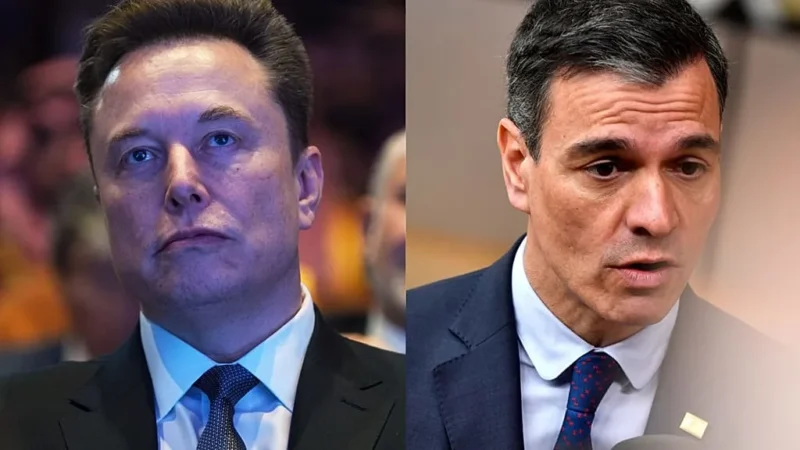
French President Emmanuel Macron drew the connection bluntly. Europe, he said, would not bow to intimidation — whether in Ukraine, Greenland, or anywhere else. Spanish Prime Minister Pedro Sánchez went further, warning that any U.S. move against Greenland would hand Russian President Vladimir Putin a strategic gift.
The logic is stark. If borders can be rewritten by force or coercion — even by allies — the moral case against Russia’s invasion of Ukraine collapses. The message to Moscow would be unmistakable: power, not law, decides.
This is the impossible puzzle Europe now faces. Can it credibly defend Ukraine’s sovereignty alongside a partner that appears willing to undermine Denmark’s? Can it sit at the same table designing security guarantees for Kyiv while questioning whether those guarantees would hold if inconvenient?
For NATO, the stakes are existential. Collective defense depends not on hardware alone, but on the belief that allies will not turn coercive against one another. Once that belief erodes, deterrence weakens — not just against Russia, but everywhere.
Europe is discovering that its greatest security challenge may no longer be choosing between Washington and Moscow, but reconciling a world in which its closest ally speaks the language of revisionism.
Ukraine remains the front line. Greenland has become the warning shot.