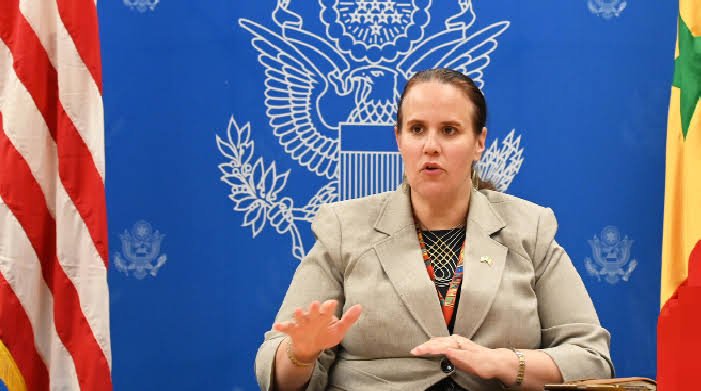
The Ilhan Omar Investigation: A Somali Bodyguard, an Immigration Case and Questions Over Political Pressure
A criminal case against a former Somali bodyguard to U.S. Rep. Ilhan Omar has raised questions about how federal investigators pursued information connected to a broader investigation of the Minnesota congresswoman.
According to The New York Times, federal prosecutors indicted Abdullahi Mohamed, a former member of Omar’s security detail, on allegations that he lied under oath during a green card interview. His lawyer, Bruce Rivers, says prosecutors subsequently sought to persuade Mohamed to provide damaging information about Omar in exchange for assistance with his immigration situation.
The case was dismissed in September, after Mohamed testified before a federal grand jury investigating Omar.
The central issue is no longer simply the immigration allegations against Mohamed. It is whether a criminal prosecution was used to pressure a potential witness in a politically sensitive investigation.
1. How the case developed
The case began in October 2025, when Mohamed attended a routine immigration interview after marrying a U.S. citizen and applying for permanent residency.
According to his lawyer, investigators asked questions about his contacts with American politicians and government officials. Mohamed, who reportedly has limited English proficiency, denied such contacts despite having briefly worked on Omar’s security detail during an overseas trip and visiting her congressional office.
His green card application was denied. In February 2026, the Justice Department notified him that he was under criminal investigation for allegedly making false statements under oath, an offence carrying a potential prison sentence of up to five years.
In April, prosecutors secured an indictment.
The unusual development came during a March meeting in Minneapolis, when prosecutors allegedly sought information about Omar’s immigration history, marriage records and a reported $10,000 payment involving Mohamed’s brother.
His lawyer said investigators offered to intervene in his immigration situation and help prevent deportation if he supplied damaging information about the congresswoman. Mohamed reportedly told investigators that the payment concerned repayment of a loan, not a bribe.
These accounts come primarily from Mohamed’s lawyer and people familiar with the investigation. The Justice Department has not publicly confirmed the alleged arrangement.
2. The White House connection
Perhaps the most consequential allegation concerns the relationship between the investigation and the White House.
Mohamed’s attorney, Bruce Rivers, told The New York Times that prosecutors repeatedly described the investigation into Omar as being directed from the White House.
The allegation carries additional political significance because President Donald Trump and senior administration officials have publicly called for investigations into Omar.
Vice President JD Vance also acknowledged discussing the congresswoman’s case with White House adviser Stephen Miller.
However, these statements do not independently establish that the White House directed prosecutors to pursue Mohamed or that any prosecutorial decision was politically ordered.
The Justice Department declined to discuss the specific case, saying it was unrelated to any current investigations.
3. Why prosecutors dropped the case
On September 3, Mohamed appeared before a federal grand jury in Washington, where he reportedly repeated his earlier account and said he had no substantive knowledge of Omar’s immigration or marriage history.
The following day, prosecutors moved to dismiss the indictment.
Their stated reason was that Mohamed had entered deportation proceedings and that there was no longer a federal interest in continuing his prosecution given his anticipated removal from the United States.
He subsequently left America for Nairobi, Kenya, leaving his wife behind.
Former federal prosecutor and immigration judge Ryan Wood described the prosecution as highly unusual, particularly given the alleged language barrier and ambiguity surrounding the interview questions.
The dismissal does not establish that the original prosecution was politically motivated. Equally, it leaves unanswered questions about why investigators pursued the case and what they expected Mohamed to provide.
4. Strategic and institutional implications
Three issues deserve particular attention.
The independence of federal law enforcement: If the allegations about White House involvement are substantiated, the case would raise serious questions about the separation between presidential political interests and independent prosecutorial decision-making.
Immigration enforcement as investigative leverage: The alleged offer to intervene in Mohamed’s immigration proceedings in exchange for cooperation raises questions about the use of immigration vulnerability to obtain testimony. Such testimony can also become less credible when witnesses receive benefits in exchange for cooperation.
The Somali-American dimension: Mohamed’s experience has implications beyond one congressional investigation. Somali immigrants and naturalized Americans may closely watch how immigration enforcement, political scrutiny and criminal investigations intersect. However, this individual case should not be treated as evidence that Somali immigrants generally face similar circumstances.
As of November 12, 2026, available reporting indicates that the broader federal investigation into Omar remains a separate matter. She has not been charged with a crime in connection with those allegations.
WARYATV Strategic Judgment
The Mohamed case exposes a difficult institutional question for American democracy: where does legitimate criminal investigation end and political pressure begin?
The Justice Department has the authority to investigate credible allegations of criminal conduct, including those involving elected officials. But that authority carries an obligation to maintain clear evidentiary standards, prosecutorial independence and safeguards against coercion.
The most important issue is not whether Ilhan Omar should be investigated. No public official is above the law. It is whether investigators applied the same legal standards they would apply to any other individual, regardless of political affiliation.
For Somali-American communities, the case also carries a broader significance. It places immigration vulnerability, political representation and institutional trust at the centre of a national debate.
The ultimate test will be evidence, not political rhetoric. If wrongdoing occurred, it must be demonstrated through credible evidence and due process. If investigative powers were used to manufacture cooperation against a political opponent, that too demands accountability.