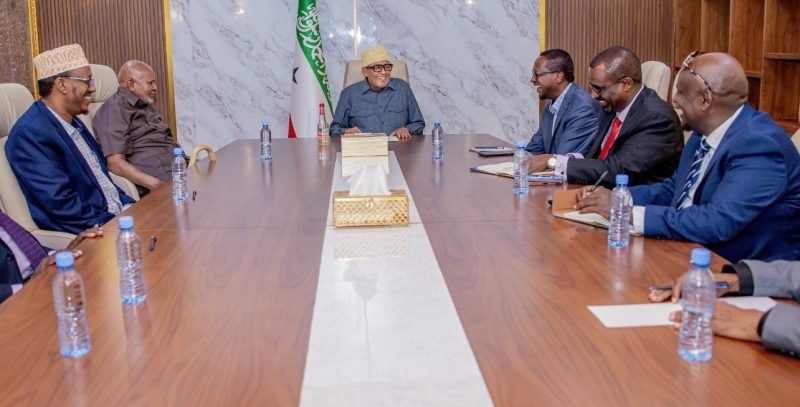
Egyptian Foreign Minister Badr Abdelatty delivers a crucial message from President El Sisi to Eritrea’s President Afwerki, highlighting efforts in economic collaboration and regional security, especially regarding the Red Sea and Sudan’s stability. The visit underscores Egypt’s strategic role in the Horn of Africa’s geopolitical landscape.
the Egyptian foreign ministry is optimistic about deepening cooperation on multiple fronts, particularly in advancing the goals set forth in the tripartite framework. This ongoing dialogue is crucial for the stability and development of the Horn of Africa and reflects Egypt’s proactive engagement in fostering regional solidarity.
The collaboration between Egypt, Eritrea, and Somalia is particularly significant in the context of the growing geopolitical importance of the Red Sea corridor. This area is critical not only for maritime trade but also as a strategic buffer against the spread of extremism and instability from the Arabian Peninsula and the wider Middle East.
Egypt’s focused approach on strengthening ties with Eritrea and Somalia underscores President Sisi’s commitment to positioning Egypt as a key security and economic partner in the region. The discussions are also aimed at leveraging mutual interests to counter external pressures and interventions that could destabilize the region.
In addition to security and economic development, the talks between Abdelatty and Afwerki likely touched on infrastructure development and trade enhancement, considering the strategic location of Eritrea along the Red Sea, which could serve as a vital link in north-south and east-west trade corridors.
Furthermore, the cooperation extends to addressing humanitarian and environmental issues that affect the region, such as water resource management and climate change impacts, which are significant for both Egypt and Eritrea given their reliance on the Nile and Red Sea ecosystems.
As Egypt, Eritrea, and Somalia continue to solidify their tripartite partnership, the international community watches closely. The outcomes of these collaborations could set a precedent for regional cooperation in Africa, potentially offering a model for other regions facing similar challenges of security, economic instability, and external interference.
The commitment to a unified approach to regional issues demonstrates a shared understanding of the complexities of modern geopolitical challenges in Africa. It also highlights the importance of African nations taking charge of their own security and developmental agendas, supported by a framework of cooperation that respects the sovereignty and mutual interests of each nation.