First Hormuz—now Bab al-Mandeb. The war is moving from land to the world’s shipping arteries.
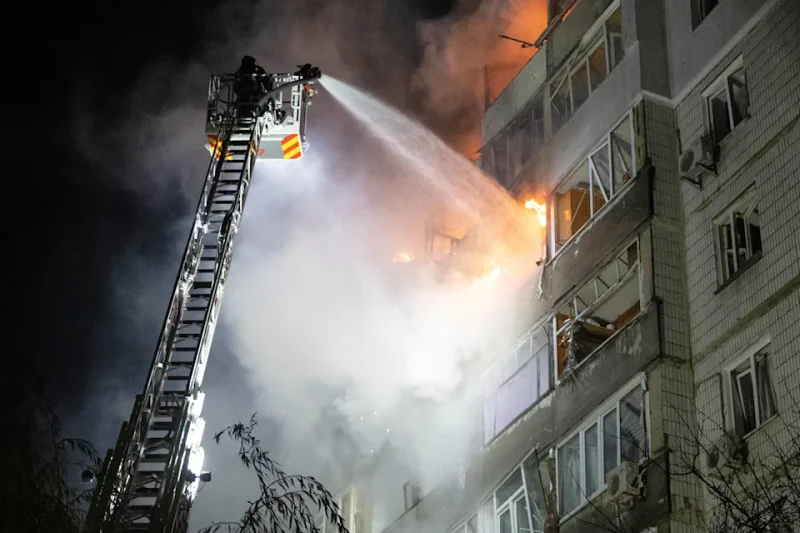
The war surrounding Iran has entered a more dangerous phase, as Yemen’s Houthi movement opens a new front—one that could shift the conflict from regional warfare to global economic disruption.
The Houthis launched a barrage of ballistic missiles toward Israel, marking their first direct involvement since the U.S.-Israeli campaign began. While Israeli defenses intercepted at least one missile, the strategic significance lies not in the immediate damage, but in what the attack signals: escalation across multiple theaters.
More consequential than the missiles themselves is the threat tied to them.
Houthi officials have openly warned that closing the Bab al-Mandeb Strait remains “an option.” This narrow waterway connects the Red Sea to the Gulf of Aden and carries a substantial share of global trade—including a significant portion of Israel’s imports.
If Hormuz is the artery of oil, Bab al-Mandeb is the artery of commerce.
Together, they form a dual chokepoint system. One under pressure is disruptive. Two under threat is systemic.
The Houthis have already demonstrated their capability. Between late 2023 and early 2025, they targeted over 100 commercial vessels, sinking ships and forcing global shipping routes to reroute around Africa—adding time, cost, and risk to international trade. A renewed campaign, now synchronized with a broader regional war, would multiply those effects.
The implications extend far beyond Israel.
A shutdown—or even partial disruption—of Bab al-Mandeb would reverberate through the Suez Canal, European supply chains, and Asian energy markets. Insurance costs would spike. Shipping delays would intensify. Prices of goods—from fuel to food—would rise globally.
Strategically, this marks a turning point.
Iran’s broader approach—leveraging geography and allied actors—appears to be expanding westward. Where the Strait of Hormuz has already been used to pressure energy markets, Bab al-Mandeb offers leverage over trade itself. The battlefield is no longer confined to territory or airspace—it now includes the world’s economic lifelines.
For Israel, the opening of a Yemeni front complicates an already stretched military posture, as it continues operations against both Iran and Hezbollah. For the United States and its allies, it raises a more urgent question: how many fronts can be contained at once?
The risk is no longer hypothetical.
If both chokepoints are disrupted simultaneously, the war will no longer be defined by missiles or strikes—but by who controls the flow of global commerce.
And at that point, the conflict ceases to be regional. It becomes global.