Ukraine’s Rafale deal is not just about fighter jets. It is about Europe building a war economy for a long confrontation with Russia.
Why Europe Is Building a War Economy
Ukraine’s new defense agreement with France shows that Europe is moving from emergency support to long-term military production.
Reuters reports that Ukraine will use a European loan facility to buy French Rafale fighter jets and next-generation Franco-Italian air-defense systems. The first order includes 16 Rafales, part of a wider plan for up to 100 aircraft.
This is not only a weapons purchase. It is an industrial shift.
France is also allowing Ukraine to produce French-made cruise missiles, precision-guided bombs and air-defense interceptor missiles. That means Kyiv is no longer only asking allies for weapons. It is building the capacity to manufacture parts of a Western-backed defense ecosystem inside Ukraine.
The strategic message to Russia is direct: Ukraine’s military modernization will not stop with the current battlefield. Europe is preparing Ukraine for a long war, a long deterrence posture, and eventual integration into a wider European defense architecture.
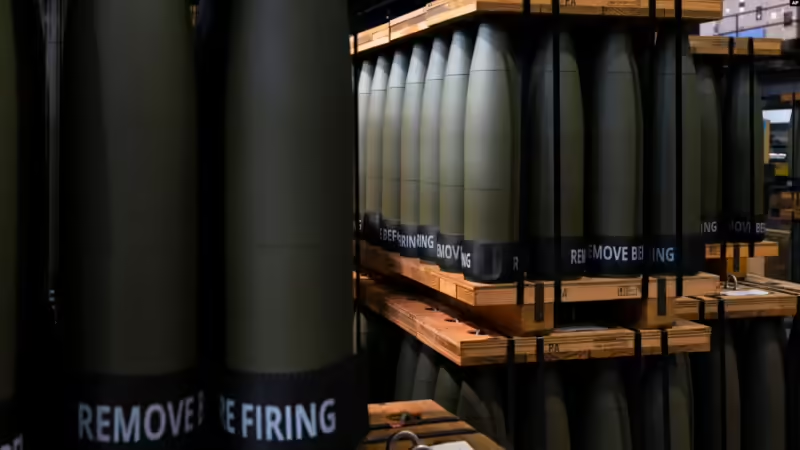
For Europe, the agreement also reflects a harder reality. The continent can no longer rely only on U.S. military guarantees. It must produce more jets, missiles, drones, air defenses, ammunition and electronic warfare systems. Ukraine has become both a battlefield and a laboratory for Europe’s future military doctrine.
This is how war economies are built: finance, factories, technology transfer, training and battlefield demand working together.
Strategic Assessment: Ukraine’s Rafale deal marks a new phase in European defense policy. Europe is not only arming Ukraine; it is helping turn Ukraine into a long-term military production partner. This strengthens deterrence but also confirms that the war is no longer viewed as short-term.
By WARYATV Intelligence Desk | waryatv@waryatv.com