Russia’s latest rhetoric, emphasizing the need to prepare for a potential conflict with NATO while intensifying its war in Ukraine, signals a significant escalation in its military and geopolitical posture. The remarks from Russian Defense Minister Andrei Belousov, made during a Defense Ministry meeting with President Vladimir Putin, reveal a deliberate shift toward a more confrontational stance against the West. Combined with Putin’s accusations of NATO provocation and his warnings about a “red line,” the messaging is clear: Moscow is gearing up for a prolonged struggle not only in Ukraine but potentially on a broader front against the Western alliance.
Belousov’s comments underscore Russia’s growing militarization in response to what it perceives as NATO’s encroachment. The reference to NATO’s July summit and Western doctrinal documents indicates that Moscow interprets the alliance’s actions — including increased troop deployments and expanded military budgets — as direct threats to Russian security. This interpretation aligns with Putin’s longstanding narrative that NATO’s presence near Russian borders and support for Ukraine are forms of aggression designed to destabilize Russia.
The minister’s claim that Russia must prepare for a military conflict with NATO within the next decade raises the stakes considerably. It reflects not just Moscow’s strategic planning but also its perception of the inevitability of further confrontation with the West. Belousov’s mention of NATO troop levels and doctrinal changes serves to reinforce Moscow’s framing of the alliance as a hostile force, despite NATO’s insistence that its actions are defensive in nature.
Domestically, these warnings serve several purposes. By portraying NATO as an existential threat, the Kremlin justifies its ongoing military buildup and extraordinary recruitment efforts. Belousov’s announcement that Russia has recruited over 427,000 troops this year is an attempt to project strength and readiness, countering perceptions of Russian military setbacks in Ukraine. However, such figures also underscore the extent to which the Kremlin is mobilizing its population for what it anticipates to be a long and arduous conflict.
In Ukraine, Belousov’s assertion that Russia aims to fully conquer Luhansk, Zaporizhzhia, Kherson, and Donetsk regions by next year signals Moscow’s continued commitment to its territorial ambitions. This rhetoric, combined with claims of “rapid advances” on all fronts, contrasts sharply with battlefield realities reported by independent analysts, who highlight ongoing resistance and resilience from Ukrainian forces. These statements likely serve both to bolster domestic support for the war and to pressure Ukraine’s allies by suggesting Russian momentum.
On the international stage, Putin’s comments blaming NATO and the U.S. for escalating tensions aim to shift responsibility for the conflict. His accusations that NATO countries are “scaring people with a mythical Russian threat” and increasing their military presence in Europe are designed to reinforce his narrative of Western provocation. While there is no evidence to support claims of NATO instructors operating in Ukraine, such statements serve Moscow’s broader effort to depict itself as a victim of Western hostility, justifying its aggressive policies.
Simultaneously, Putin’s rhetoric about “red lines” indicates that Russia views the current Western support for Ukraine as a significant escalation. By framing NATO’s actions as nearing an intolerable threshold, Putin is signaling a willingness to escalate further if the West does not scale back its involvement. However, this approach risks deepening the very cycle of escalation it claims to oppose, particularly as NATO countries reaffirm their support for Kyiv.
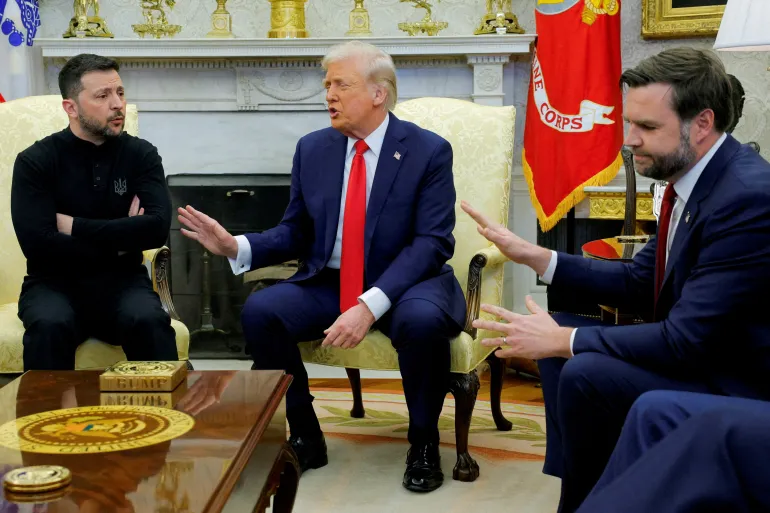
Contrasting with Moscow’s hardline stance, U.S. President-elect Donald Trump’s recent remarks emphasize a desire to end the conflict through diplomacy. Trump’s call for Ukrainian President Volodymyr Zelenskyy to “be prepared to make a deal” reflects a pragmatic but controversial perspective, as it suggests a potential shift in U.S. policy toward pressuring Ukraine to negotiate. While this aligns with Trump’s broader skepticism of prolonged foreign entanglements, it risks alienating key U.S. allies in Europe who see a negotiated settlement under current conditions as capitulation to Russian aggression.
The broader implications of Russia’s warnings about NATO extend beyond the immediate conflict in Ukraine. They reflect a deliberate effort by Moscow to frame the current war as part of a larger ideological and geopolitical struggle against Western dominance. For NATO, this poses a dual challenge: maintaining unity in support of Ukraine while managing the risk of further escalation with Russia. NATO’s recent measures, including bolstering troop levels and enhancing its eastern flank, indicate that the alliance is taking Moscow’s threats seriously. However, these actions also feed into Russia’s narrative, potentially exacerbating the very tensions they aim to deter.
In conclusion, Russia’s intensified rhetoric and preparations for a potential conflict with NATO highlight the deepening polarization between Moscow and the West. For Ukraine, the stakes remain existential, as Moscow shows no sign of easing its territorial ambitions. For NATO, the challenge lies in balancing deterrence with the risk of escalation, as Russia’s narrative increasingly frames the alliance as a direct adversary. As the conflict continues, the global implications of Russia’s militarized posture and the West’s response will shape the geopolitical landscape for years to come.