Top stories
US Report Reveals Vulnerabilities in Kenya’s Financial Management System Portal
The shortcomings in Kenya’s financial management system portal have been underscored by the United States. According to a recent report from the Office of the United States Trade Representative (USTR), Kenya’s Integrated Financial Management Information System (Ifmis) is deemed vulnerable to various risks, which have been flagged by American firms engaged in or looking to engage in business activities within Kenya.
In the report, USTR highlights concerns raised by US companies regarding Ifmis. These include issues such as inadequate connectivity and technical capabilities in county government offices, disinterest from county government officials, instances of central control shutdowns, and security vulnerabilities that leave the system susceptible to manipulation and hacking, as noted by US Trade Representative Katherine Tai.
Notably, Kenya’s absence as a party to the WTO Agreement on Government Procurement and its lack of observer status in the WTO Committee on Government Procurement are noted in the review conducted by USTR.
Ifmis was initially designed to establish audit trails for all financial transactions, providing comprehensive details such as user identification, timestamps, computer used, and actions performed, with the aim of combating corruption.
Functioning as a vital technological tool, Ifmis serves as the government’s means of monitoring national finances, spanning from planning and budgeting to procurement, payment, accounting, and reporting. However, it has been embroiled in numerous corruption scandals, both at the national and county government levels, casting doubt on its effectiveness in ensuring accountability.
A prominent case in 2016 involved senior officials from a Ministry of Health agency attempting to embezzle Ksh30 million through Ifmis. This incident shed light on an intricate network of corruption involving government officials and unscrupulous suppliers. Fortunately, the attempted theft was thwarted at the eleventh hour, revealing the extent to which fraudsters, in collaboration with corrupt officials, have siphoned off billions of shillings from state coffers through dubious supplier contracts.
Top stories
Puntland Denies Role in Sudan Conflict, Accuses Mogadishu of Defamatory Propaganda
The Government of Puntland has issued a strong statement denying allegations that its territory or facilities have been used in connection with the ongoing civil war in Sudan, dismissing the claims from Mogadishu as “baseless propaganda.”
In a press release from the Ministry of Federal Interior and Democracy, Puntland rejected reports that Bossaso Airport is being used as a launch site for air operations or mercenary flights allegedly linked to the United Arab Emirates.
The administration emphasized that Puntland “has no reason or interest to be involved in Sudan’s internal conflict,” describing Sudan as a “brotherly nation to Somalia and the wider Muslim world.”
“The Puntland government categorically denies any involvement in the civil war in Sudan or that Bossaso Airport is being used for airstrikes,” the statement read. “We strongly condemn the Federal Government for its defamatory propaganda and unfounded accusations against Puntland.”
The remarks come two days after Somalia’s Federal Government claimed that aircraft had taken off from Bossaso bound for Sudan, though it provided no evidence to substantiate the claim.
Puntland officials said the allegations were politically motivated, designed to discredit their regional administration amid ongoing tensions with Mogadishu.
Puntland’s statement accused the federal authorities of trying to divert attention from domestic failures and to “distort the historical achievements” of Puntland’s own counterterrorism operations, particularly its recent offensives against al-Shabaab militants in the Al Miskaad mountains of Bari Region.
Officials in Garowe described the federal government’s claim as “cheap propaganda,” arguing that Puntland’s focus remains on safeguarding its territory, maintaining stability, and contributing to Somalia’s broader security — not meddling in foreign conflicts.
The press release also underscored Puntland’s longstanding diplomatic principle of non-interference in the internal affairs of other states, reaffirming that its cooperation with international partners — including the UAE — is “transparent and consistent with Somalia’s national interest.”
While Somalia’s Ministry of Defense has not offered further clarification, the exchange underscores deepening mistrust between Mogadishu and Puntland, which has increasingly operated with de facto autonomy after suspending ties with the federal government in 2023.
As Sudan’s civil war continues to draw in regional actors, Puntland’s categorical denial reflects a desire to shield itself from regional power struggles and avoid becoming another arena in the Horn of Africa’s widening proxy tensions.
Top stories
Tanzania Charges Dozens With Treason After Deadly Election Protests
Tanzania’s government has charged dozens of citizens with treason and criminal conspiracy following a wave of deadly protests over last month’s disputed election — a move that religious leaders and rights advocates warn could deepen the country’s political crisis.
According to court documents obtained by international news agencies, between 76 and 145 people are accused of attempting to obstruct the October 29 election, which saw President Samia Suluhu Hassan claim victory with nearly 98 percent of the vote.
Prosecutors allege that some of the defendants conspired to disrupt polling and incite unrest; one businesswoman has been specifically accused of selling tear-gas masks to protesters.
Opposition party Chadema and human rights groups say more than 1,000 people were killed during clashes with security forces, who used live ammunition to disperse demonstrators.
The government has rejected that figure but has yet to provide its own death toll, fueling accusations of a cover-up.
The African Union’s election observation mission sharply criticized the vote, citing ballot stuffing, a nationwide internet blackout, military intimidation, and politically motivated abductions that “compromised the integrity of the election.”
Both of the country’s leading opposition candidates were disqualified before the polls opened. Tundu Lissu, Chadema’s leader, remains imprisoned on separate treason charges brought earlier this year.
Religious and civic leaders have urged restraint, warning that criminalizing dissent will only harden divisions. “These charges will not bring peace,” said Bishop Benson Bagonza of the Evangelical Lutheran Church in Tanzania.
“They will only deepen the acrimony that has already wounded this nation.”
The treason indictments — among the most serious in Tanzanian law and punishable by death — mark the government’s most forceful crackdown on dissent since President Hassan succeeded the late John Magufuli in 2021.
Hassan, who was once viewed by Western observers as a potential reformer, has increasingly relied on security forces to suppress opposition and silence critics, particularly in urban centers where protests erupted after the election results were announced.
International observers and civil society organizations are now calling for an independent investigation into the election violence and the mass arrests.
Human Rights Watch described the charges as “a clear attempt to intimidate the opposition and close civic space,” while Amnesty International said the detentions “violate fundamental political rights guaranteed under Tanzania’s constitution and international law.”
Despite the mounting criticism, the government insists it acted within its legal mandate to maintain order.
In a brief statement, a justice ministry spokesperson said, “The Republic will not tolerate acts that threaten national security or seek to undermine democracy through violence.”
Top stories
Beijing’s Fujian Joins Fleet, Signaling New Phase in U.S.-China Naval Competition
China has officially commissioned its newest and most advanced aircraft carrier, the Fujian — a milestone that underscores Beijing’s accelerating push to rival American naval power and reshape the balance of maritime influence in the Indo-Pacific.
Chinese leader Xi Jinping presided over the carrier’s commissioning ceremony earlier this week at a military port in Sanya, on Hainan Island, according to state broadcaster CCTV.
More than 2,000 naval personnel and shipbuilders were present as Xi toured the vessel and symbolically pressed the catapult launch button on its flight deck — a moment rich with political and military symbolism.
The Fujian is China’s third aircraft carrier and the first equipped with electromagnetic catapults (EMALS) — the same cutting-edge launch technology used by the U.S. Navy’s USS Gerald R. Ford.
The system allows aircraft to take off with heavier payloads and more fuel, dramatically extending their combat range and operational flexibility.
Xi personally approved the adoption of the EMALS system, according to Chinese state media.
During the ceremony, three catapult launch positions and carrier-based aircraft — the J-35 stealth fighter, J-15T, and KJ-600 early-warning plane — were prominently displayed on the deck. Nearby, China’s second carrier, the Shandong, was docked for a synchronized show of naval strength.
Launched in 2022 and tested at sea in 2024, the Fujian marks a new era for the People’s Liberation Army Navy (PLAN).
Displacing about 80,000 tons, it is the largest conventional warship ever built in Asia and China’s first flat-deck carrier, replacing the “ski-jump” ramps used on earlier carriers Liaoning and Shandong.
Its entry into service is being celebrated across Chinese social media, where the hashtag “My country’s first electromagnetic catapult-equipped aircraft carrier enters service” drew over 10 million views within an hour of the announcement — reflecting both national pride and Xi’s political messaging that China is now a peer competitor to the U.S. at sea.
Under Xi’s decade-long military modernization campaign, China has built the world’s largest navy by number of vessels, commissioning warships at a rate unmatched by any other nation.
The buildup has fueled growing unease among regional neighbors and the United States, especially as Beijing becomes more assertive in the South China Sea and seeks to project power across the western Pacific.
Despite its scale, analysts say China still lags far behind the U.S. Navy in operational experience, nuclear propulsion, and sortie generation rates.
Two former U.S. carrier officers told CNN that the Fujian’s air operations might reach only 60% efficiency of a U.S. carrier’s due to flight-deck configuration and fuel constraints.
Unlike America’s nuclear-powered carriers, the Fujian runs on conventional fuel and must return to port or refuel at sea, limiting its endurance.
Even so, the ship represents a leap in Chinese military capability — and a clear statement of intent.
China is already working on its next-generation carrier, the Type 004, expected to combine EMALS with nuclear propulsion, potentially closing one of the last technological gaps separating the PLAN from its American counterpart.
For Washington, the Fujian’s commissioning signals that naval parity in the Indo-Pacific is no longer theoretical — it’s taking shape on the water.
Top stories
Trump: Democrats Will Most Likely Never Attain Power Again
Trump Pushes to End Senate Filibuster After Democratic Wins, Vowing Democrats Will ‘Most Likely Never Attain Power Again’
President Donald Trump has launched an extraordinary push to eliminate the Senate filibuster, telling Republicans that doing so would ensure Democrats “most likely never attain power again.”
The declaration came less than 24 hours after Democrats scored sweeping victories in key races across New York, New Jersey, and Virginia — a sharp political blow to Trump’s second-term agenda.
In an all-caps post on his Truth Social platform Wednesday morning, Trump urged the GOP to invoke the so-called “nuclear option” and abolish the filibuster rule, which requires a 60-vote supermajority to advance most legislation in the Senate.
“END THE FILIBUSTER,” Trump wrote, “AND GET BACK TO PASSING LEGISLATION AND VOTER REFORM.”
Speaking to Republican senators over breakfast, Trump doubled down. “If we do what I’m saying,” he said, “they’ll never — they’ll most likely never attain power. Because we will have passed every single thing that you can imagine that is good, and all good for the country.”
The president warned that Democrats, if given the chance, would grant statehood to Washington, D.C., and Puerto Rico, and “pack” the Supreme Court — moves he argued would permanently tip the balance of power.
“These guys are kamikaze,” Trump said, comparing Democrats to Japanese pilots who carried out suicide attacks during World War II.
“They’ll take down the country if they have to.”
The comments came amid mounting frustration inside the White House after a wave of Democratic victories in Tuesday’s off-year elections.
Progressive state lawmaker Zohran Mamdani’s win in New York City, along with decisive Democratic gubernatorial victories in New Jersey and Virginia, dealt the Trump administration a political setback and emboldened opposition calls to check his agenda through Congress.
Trump acknowledged to aides that the results were “not good” for Republicans, citing internal polling that linked the GOP’s poor showing to the ongoing government shutdown — now the longest in U.S. history.
Still, he insisted that eliminating the filibuster was the key to breaking what he described as a “legislative chokehold” by Democrats.
Yet even within his own party, Trump’s proposal faces resistance. Senate Majority Leader John Thune (R-S.D.) dismissed the idea, saying flatly, “The votes aren’t there.”
House Speaker Mike Johnson (R-La.) also warned against the move, calling the filibuster “an important safeguard” and cautioning that its removal could backfire if Democrats regain power.
“Desperate times call for desperate measures,” Johnson said, “but the Senate’s design was meant to protect minority voices — even when we’re not the minority.”
Trump previously called for abolishing the filibuster during his first term, but the effort failed to gain traction. This time, his tone is more urgent — reflecting both the pressure of recent electoral losses and the looming midterm battles ahead.
The president’s critics say the move underscores a deeper ambition: to reshape the political system in his favor while using populist anger to push through sweeping voter and legislative reforms. Allies, however, argue that Trump is confronting a broken system designed to obstruct change.
Either way, his promise — that Democrats would “most likely never attain power again” — has sent shockwaves through Washington, underscoring how deeply partisan warfare has blurred the line between political strategy and democratic principle.
Top stories
Jacob Frey Wins Third Term as Minneapolis Mayor
Minneapolis voters have handed Mayor Jacob Frey a third term, reaffirming his moderate leadership in a city still grappling with the political and social aftershocks of the George Floyd era.
Frey, 44, secured just over 50 percent of the vote, defeating State Sen. Omar Fateh, a rising democratic socialist whose campaign had drawn comparisons to New York City’s progressive star Zohran Mamdani.
Fateh, who embraced the label “Mamdani of Minneapolis,” captured 44.4 percent but fell short in a ranked-choice race that saw Frey maintain strong first-choice support and consolidate enough secondary votes to clinch victory.
The outcome marks a significant win for the Democratic Party’s centrist wing during a nationwide election cycle that also saw progressive candidates falter in key races from New York to California.
Frey’s message — pragmatic, business-friendly, and unapologetically moderate — resonated with voters who appear weary of ideological polarization and citywide unrest.
Frey entered the race with major financial advantages, raising nearly $1 million, more than his three main rivals combined. Business-backed political action committees poured an additional $500,000 into his campaign, including more than $130,000 in ads targeting Fateh.
Though Frey prevailed decisively, his political challenges are far from over. His allies failed to capture a majority on the City Council, leaving him to navigate a chamber still dominated by left-wing critics.
However, two flipped seats will narrow the progressive bloc’s influence, likely softening its ability to override mayoral vetoes.
In office since 2018, Frey has defined himself as a pro-growth mayor focused on urban development and public safety reform.
He championed the city’s landmark zoning overhaul that spurred a construction boom, while resisting calls from activists to “defund the police” after 2020.
Instead, he promoted incremental police reform, rebuilding depleted officer ranks and introducing new 911 response models that pair law enforcement with mental health professionals.
“I’ve always believed leadership means having the courage to do the right thing — even when it’s hard,” Frey told Axios earlier this year. “That includes telling people on our own side what they occasionally don’t want to hear.”
The mayor’s critics, however, argue that Frey’s pragmatic style too often shades into obstruction. They accuse him of stonewalling oversight efforts, particularly over police accountability, and failing to deliver on his 2017 promise to end chronic homelessness within five years.
The 2022 police killing of Amir Locke, during a no-knock raid Frey claimed to have banned, remains a lasting political scar.
Still, for now, Minneapolis voters have opted for continuity over confrontation. Frey’s victory underscores a broader national trend: in a moment of progressive ambition and populist backlash, moderation still sells — at least in cities looking for stability after years of turmoil.
Top stories
Ethiopia–Russia Ties Deepen as Nuclear and Trade Cooperation Accelerate
Ethiopia and Russia are rapidly expanding their partnership across political, economic, and technological fronts, marking one of the most ambitious phases of bilateral engagement between the two nations, Russian Ambassador Evgeny Terekhin said this week in an interview with the Ethiopian News Agency (ENA).
Ambassador Terekhin described the relationship as “comprehensive and full-scale,” underscoring that it now spans nearly every major sector—from high-level political dialogue and parliamentary cooperation to science, trade, and nuclear energy development.
“Frankly speaking, it would be very difficult to find any sphere in which we don’t cooperate,” he said, calling the progress in recent years “remarkable.”
According to the ambassador, political ties between Moscow and Addis Ababa have strengthened significantly through repeated direct engagements between President Vladimir Putin and Prime Minister Abiy Ahmed—four meetings in recent years that, he said, focused on “deepening and strengthening” cooperation.
Beyond leadership diplomacy, Terekhin highlighted robust coordination between the House of Federation, the House of People’s Representatives, and their Russian counterparts, alongside growing interparty collaboration between the ruling political movements in both countries.
The ambassador pointed to a major surge in bilateral trade, noting that in just the first six months of the current year, total trade volume had already surpassed that of the entire previous year.
“We have already reached very inspiring results,” Terekhin said, emphasizing that economic engagement remains a central pillar of the relationship.
A major new frontier, however, lies in technology and nuclear energy. The ambassador revealed that several agreements have been signed to accelerate Ethiopia’s entry into the nuclear sector in partnership with Russia’s state-owned energy corporation, Rosatom.
During Russian Atomic Week in Moscow, Prime Minister Abiy and President Putin approved an action plan for the construction of Ethiopia’s first nuclear power plant, a move hailed by both sides as a historic milestone in bilateral cooperation.
“The development of nuclear energy will be a cornerstone of our modern scientific and technological partnership,” Terekhin said, noting that Russia views Ethiopia as a key strategic partner in Africa’s emerging energy transformation.
The deepening partnership comes as both countries pursue independent foreign policies amid shifting global alignments—Ethiopia’s government positioning itself as a regional power in the Horn of Africa, and Russia expanding its footprint across the continent through infrastructure, energy, and defense projects.
With trade, technology, and diplomacy all advancing in tandem, Ambassador Terekhin suggested that Moscow and Addis Ababa are entering a new era of alignment rooted in mutual respect and strategic ambition.
Top stories
Iran Frees Two French Citizens After Three Years in Prison on Spying Charges
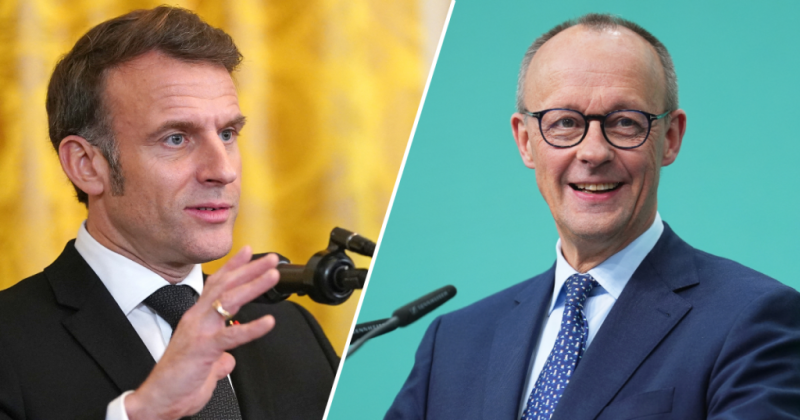
Iran has released two French nationals who had been imprisoned for more than three years on espionage charges that their families and the French government long described as baseless, President Emmanuel Macron announced Wednesday, calling it an “immense relief.”
The two detainees — Cécile Kohler, 41, and her partner Jacques Paris, 72 — were freed from Tehran’s notorious Evin Prison and transferred to the French embassy, according to French officials. Macron described the release as a “first step,” saying efforts are under way to secure their return to France “as quickly as possible.”
Kohler and Paris, both teachers, were arrested in May 2022 while visiting Iran. Iranian authorities accused them of spying for France and Israel — charges that Paris and their families have denied. The pair were sentenced last month in a closed-door trial to 17 and 20 years in prison, respectively.
Iran’s Foreign Ministry said they had been granted “conditional release” on bail and will remain under judicial supervision until further proceedings. French Foreign Minister Jean-Noël Barrot confirmed that the two were “in good health” but declined to specify when they might be allowed to leave Iran.
Their release follows months of quiet diplomatic engagement and comes amid rising tensions between Iran and Western nations after the U.S.–Israel conflict with Tehran in June, which reignited global concern over Iran’s nuclear ambitions and triggered a new round of United Nations sanctions.
Observers believe the timing of the release reflects both international pressure and potential backchannel negotiations between Paris and Tehran.
France had previously taken Iran to the International Court of Justice (ICJ), accusing it of targeting French citizens for political leverage, but withdrew the case abruptly in September — fueling speculation that a prisoner swap was being arranged.
Indeed, Iranian media hinted that the release of Kohler and Paris could be linked to the recent bail of Mahdieh Esfandiari, an Iranian citizen detained in France on terrorism-related charges. Barrot declined to confirm whether a deal had been struck.
Rights organizations have long accused Iran of “hostage diplomacy” — detaining Western nationals as bargaining chips in geopolitical disputes. Kohler’s case drew particular outrage after she appeared in a televised “confession” in 2022, which advocacy groups said was coerced under duress.
Her parents, Pascal and Mireille, told AFP that they felt “immense relief” knowing their daughter and her partner were safe inside the embassy compound — “a little corner of France,” as they put it.
The pair’s release narrows the list of Western detainees still held in Iran, but several remain, including Ahmadreza Djalali, a Swedish-Iranian academic sentenced to death in 2017 on espionage charges widely condemned as fabricated.
For Paris, the episode marks another test of Macron’s delicate diplomacy toward Tehran — balancing the defense of French nationals with broader efforts to defuse tensions over Iran’s nuclear program.
Top stories
Blue Wave 2.0: Democrats Dominate Off-Year Races Across the U.S.
Democrats Ride Anti-Trump Wave to Sweep 2025 Elections: From Mamdani’s New York Victory to California’s Prop. 50 Power Play.
Democrats scored sweeping victories across the nation in Tuesday’s off-year elections, channeling discontent with President Donald Trump’s second term into decisive wins from coast to coast — signaling a potential path to resurgence ahead of next year’s midterms.
In New York City, Zohran Mamdani, a 34-year-old democratic socialist, made history by defeating independent Andrew Cuomo and Republican Curtis Sliwa to become the city’s next mayor.
His win, built on grassroots energy and economic populism, ended Cuomo’s long political dynasty and energized the progressive wing of the Democratic Party.
“My friends, we have toppled a political dynasty,” Mamdani declared to roaring crowds. “Tonight is a mandate for change — for a city we can afford and a government that delivers for everyone.”
Across the country, California’s Prop. 50 — a controversial measure championed by Gov. Gavin Newsom to redraw congressional districts — passed with overwhelming support.
The victory could shift multiple Republican-held districts into Democratic hands, cementing Newsom’s influence in shaping the party’s 2026 strategy and fueling speculation about his presidential ambitions.
Meanwhile, in two key bellwether states, Democrats Mikie Sherrill of New Jersey and Abigail Spanberger of Virginia won their gubernatorial races by double-digit margins, delivering a stinging rebuke to Trump’s economic record.
Both candidates, military veterans and moderates, emphasized pocketbook issues — inflation, jobs, and energy costs — rather than the culture-war battles dominating Trump’s rhetoric.
“Virginia chose pragmatism over partisanship,” Spanberger said in her victory speech. “We chose our commonwealth over chaos.”
The wins — from Mamdani’s left-wing triumph to Sherrill and Spanberger’s centrist successes — revealed the Democratic Party’s evolving coalition: progressives driving turnout in urban centers, and moderates holding ground in suburban battlegrounds.
Together, they underscored a unified voter message — frustration over Trump’s economy.
Polls show 60% of Americans disapprove of Trump’s handling of the economy, with grocery and housing costs continuing to rise despite his promises to “end inflation on day one.” Exit polls confirmed that affordability was the top issue across all major races.
In New York, Mamdani’s sweeping proposals to lower living costs — including rent freezes, free public buses, and higher corporate taxes — resonated with voters.
On the opposite coast, Newsom’s Prop. 50 initiative symbolized Democrats’ willingness to fight Trump’s redistricting offensive with their own aggressive political counterstrike.
“Trump changed the rules,” Newsom said Tuesday night. “California is fighting fire with fire — and we’re winning.”
The results now place Democrats on offense heading into 2026.
With redistricting battles intensifying and Trump’s approval rating slipping, party strategists see a window to reclaim the U.S. House and block the administration’s agenda.
-
Analysis8 months agoSaudi Arabia’s Billion-Dollar Bid for Eritrea’s Assab Port
-
Opinion17 years agoSomaliland Needs a Paradigm Change: Now or Never!
-
ASSESSMENTS7 months agoOperation Geel Exposes the Truth: International Community’s Reluctance to Embrace Somaliland as a Strategic Ally
-
Somaliland9 months agoSomaliland and UAE Elevate Ties to Comprehensive Strategic Partnership
-
Africa2 years agoHow Somaliland Could Lead the Global Camel Milk Industry
-
Analysis7 months agoFrom Cell to Summit: The Prisoner Who Became Syria’s President
-
Analysis7 months ago
How an Israeli Strike on Iran’s Nuclear Program Could Play Out
-
Analysis2 years ago
Iran escalates conflict, attacking Israel; US forces help Israel to intercept Iranian projectiles