Nicaragua, China, and India Among Countries Targeting Dissidents with Mobility Controls
A new Freedom House report has exposed a troubling global trend: at least 55 governments have systematically curtailed the freedom of movement for individuals deemed as threats or dissenters over the past decade. This sweeping report, released Thursday, details how nations employ various tactics—travel bans, revocation of citizenship, and denial of consular services—to silence and control those who challenge their authority.
Among the most notorious offenders are Belarus, China, India, Nicaragua, Russia, and Rwanda. These countries, the report reveals, have increasingly resorted to these methods to stifle criticism and suppress dissent. Jessica White, the London-based co-author of the report, describes this as “a vindictive and punitive tactic” aimed at choking off free expression and mobility.
The report highlights travel bans as the most prevalent strategy, with at least 40 governments preventing their citizens from leaving or re-entering their countries. This tactic is employed to isolate critics and restrict their ability to engage with the outside world.
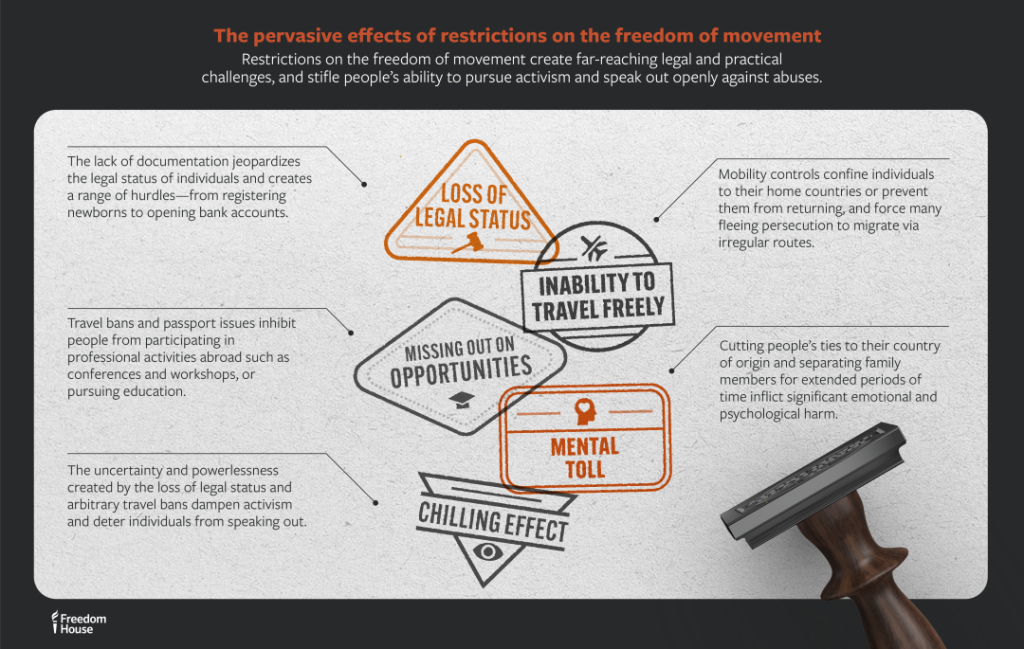
Revoking citizenship is another severe measure, despite its violation of international law. The Nicaraguan government, for example, stripped over 200 political prisoners of their nationality in 2023, shortly after deporting them to the United States. Among them was Juan Lorenzo Holmann, the head of Nicaragua’s oldest newspaper, La Prensa. Holmann, who spent 545 days imprisoned under politically charged circumstances, lamented, “It is as if I do not exist anymore. It is another attack on my human rights.”
Blocking access to passports and other travel documents adds another layer of repression. In June, Hong Kong canceled the passports of six pro-democracy activists living in Britain, trapping them in exile. Similarly, Myanmar’s embassy in Berlin has refused to renew the passport of Ma Thida, a Burmese writer who believes the denial is a retaliatory act against her outspoken work.
These restrictions can severely disrupt lives, impacting individuals’ ability to work, travel, and maintain familial connections. The emotional toll of such separation is profound, according to White, who noted that many affected individuals experience significant psychological distress due to their inability to return home or see loved ones.
The report urges democratic nations to impose sanctions on those implementing such mobility controls and suggests that they should offer alternative travel documents to dissidents who cannot obtain them from their home countries. White stresses, “Our ability to freely leave and return to our home country is a fundamental human right, but it is being undermined and violated across many parts of the world.”
As the international community grapples with these revelations, the report serves as a stark reminder of the growing repression faced by many around the globe and the urgent need for global solidarity in defending fundamental freedoms.