How Somaliland Entered the New Red Sea Security Order. This wasn’t an airshow. It was a message—to the Horn, the Red Sea, and the world.
At approximately 10:00 p.m., the sky above Hargeisa stopped being symbolic and became strategic.
Residents looked up to see the unmistakable silhouettes of F-35 fighter jets banking low over the capital. In most regions, such a sound triggers fear. In Somaliland, it triggered applause. Phones came out. Cheers followed. The moment carried a meaning far larger than the aircraft themselves: Somaliland had crossed a geopolitical threshold.
This was the visible confirmation of Israel’s formal recognition of Somaliland and the extension of the Abraham Accords into the Horn of Africa.
When Israeli Prime Minister Benjamin Netanyahu announced the recognition, he framed it not as a legal footnote, but as a strategic decision rooted in the Abraham Accords’ logic—security alignment, economic integration, and regional realignment. Somaliland was not being recognized out of sentiment. It was being integrated into a new order.
For years, the Abraham Accords reshaped the Middle East by replacing ideological paralysis with transactional cooperation. Somaliland’s inclusion extends that gravitational pull across the Red Sea. The implication is blunt: Somaliland is no longer peripheral. It is now a node in a high-value security and trade architecture linking the Gulf, the Levant, and East Africa.
This move fits seamlessly into an Emirati-centered political economy. The United Arab Emirates has spent the past decade building ports, logistics corridors, and military infrastructure along the Red Sea. The Port of Berbera Port is not an outlier in that strategy—it is one of its anchors.
By aligning with Israel, Somaliland locks itself into this UAE-led stability framework. This is not proxy politics. It is economic realism. It places Somaliland inside a system that rewards predictability, trade security, and modern defense capability rather than ideological posturing.
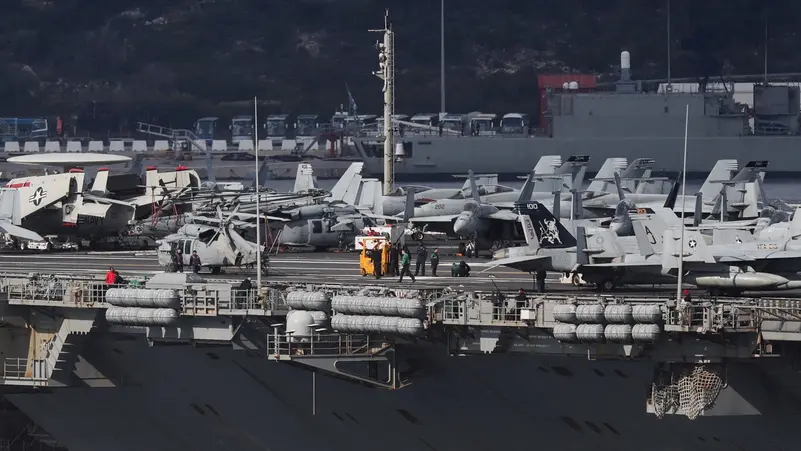
The F-35s themselves carry symbolism that goes beyond firepower. Valued at over $80 million per jet, they are among the most advanced machines ever built. Their presence signals entry into a modern defense tier—one defined by interoperability, intelligence fusion, and deterrence credibility.
Contrast this with Mogadishu, where officials reportedly reacted with shock. While Somalia remains trapped in internal fragmentation and reactive diplomacy, Somaliland has made a forward-looking bet: align early with the emerging Red Sea order rather than plead for relevance in collapsing ones.
Recognition is often discussed in abstract legal terms—resolutions, committees, corridors in New York. But last night demonstrated something more concrete. Recognition is also airspace. It is security guarantees. It is being included in who protects what—and why.
The roar over Hargeisa was not intimidation. It was validation. A 34-year project of state-building, stability, and strategic patience was acknowledged not with speeches, but with presence.
The Red Sea is being reorganized in real time. Trade routes are militarized. Alliances are hardening. And for the first time in modern history, Somaliland is not watching from the margins.
It is inside the architecture—visible, protected, and increasingly indispensable.