
Diplomacy
Eritrea: Washington’s Strategic Opportunity in the Volatile Horn of Africa


As tensions rise in the Horn of Africa, Eritrea emerges as a potential U.S. partner to counter regional instability and foreign influence.
Eritrea, often labeled Africa’s most authoritarian state, is paradoxically one of the Horn of Africa’s most stable nations. Its geostrategic location along the Red Sea positions it as a critical potential ally for the United States in addressing regional instability and countering the influence of China, Russia, and Iran. The Trump administration’s return to the White House presents an opportunity to recalibrate U.S. foreign policy in the region and engage with Eritrea pragmatically, aligning Washington’s geopolitical interests with the realities on the ground.
Eritrea’s location offers unparalleled advantages in the Horn of Africa. A U.S. military base in cities like Assab, Massawa, or Tio could provide Washington with enhanced access to the Red Sea, allowing it to secure shipping routes, counter piracy, and disrupt Houthi activities destabilizing international trade. Eritrea’s proximity to Yemen also positions it as a valuable asset in countering Iranian influence and mitigating the Houthi threat.
Historically, Eritrea’s leadership, under President Isaias Afwerki, has navigated regional complexities with pragmatism. While authoritarian, the Eritrean government has demonstrated an ability to maintain stability amid the chaos engulfing its neighbors, including Sudan, Ethiopia, and Somalia.
Eritrea’s authoritarianism has shielded it from the ethnic and political fractures that destabilize other Horn nations. While the country shares historical ties with China, dating back to Afwerki’s education during the Cultural Revolution, its alliances are largely transactional and ripe for redefinition.
Washington can capitalize on this transactional nature by fostering a partnership that addresses shared security and economic goals. Eritrea’s military capabilities and centralized governance offer a foundation for collaboration, particularly in countering threats like piracy, terrorism, and regional insurgencies.
A U.S. presence in Eritrea would serve as a counterbalance to these influences, reinforcing Washington’s foothold in the region. Revisiting historical precedents, such as the Cold War-era Kagnew Station, provides a blueprint for establishing a lasting partnership that aligns with U.S. geoeconomic and geopolitical objectives.
Afwerki’s regime may be nearing its conclusion, presenting an opportunity for Washington to engage Eritrea’s ruling party, the People’s Front for Democracy and Justice (PFDJ), in shaping a post-Afwerki future. While Eritrea is unlikely to adopt Western democratic governance, incremental reforms—similar to China’s economic liberalization under Deng Xiaoping—could align its development with U.S. interests.
By fostering economic development, privatization, and integration into global markets, the U.S. could support Eritrea’s transition while securing a strategic partnership that stabilizes the Horn of Africa.
Eritrea’s unique stability amidst regional volatility makes it a critical partner in advancing U.S. interests in the Horn of Africa. A pragmatic approach—grounded in shared security and economic objectives rather than ideological preconditions—offers the best path forward.
As Washington confronts the realities of rising Chinese and Russian influence, regional instability, and the destabilizing effects of Iranian-backed Houthi activities, Eritrea presents a rare opportunity to reshape U.S. engagement in East Africa. The question remains whether the U.S. will seize this moment to turn suspicion into strategic collaboration, ensuring its dominance in one of the world’s most volatile yet vital regions.

















Israeli Prime Minister Benjamin Netanyahu is scheduled to meet U.S. President Donald Trump in Washington on Wednesday, with discussions expected to focus on Iran’s nuclear programme and recent indirect talks between Washington and Tehran.
Netanyahu’s office said the Israeli leader believes any negotiations with Iran must go beyond uranium enrichment and include limits on Iran’s ballistic missile programme, as well as an end to Tehran’s support for allied militant groups across the Middle East.
The meeting comes days after indirect US–Iran talks in Oman appeared to circle back to fundamental disagreements over how negotiations should proceed.
Trump described the Oman talks as “very good” and said further discussions were planned for early next week. The US delegation was led by Middle East envoy Steve Witkoff alongside Jared Kushner, the president’s son-in-law.
Despite the diplomatic push, Trump has repeatedly threatened military action if Iran refuses to accept a new nuclear deal, while reinforcing US military presence in the region with additional warships and an aircraft carrier.
Iranian Foreign Minister Abbas Araghchi responded sharply over the weekend, saying US military deployments “do not scare” Tehran. He insisted Iran would not abandon uranium enrichment, even under the threat of war, and reiterated that Iran’s missile programme was “never negotiable.”
Araghchi also warned that Iran would target US bases in the region if attacked, citing deep distrust following last year’s conflict, when US strikes hit Iranian nuclear facilities during fighting between Israel and Iran.
While calling the talks a “good start,” Araghchi said rebuilding trust would take time, accusing the United States and Israel of pursuing a “doctrine of domination” that allows Israel to expand its military capabilities while pressuring others to disarm.
With talks set to resume soon, Netanyahu’s meeting with Trump is expected to shape Washington’s next steps as diplomatic efforts with Tehran remain fragile and highly contested.
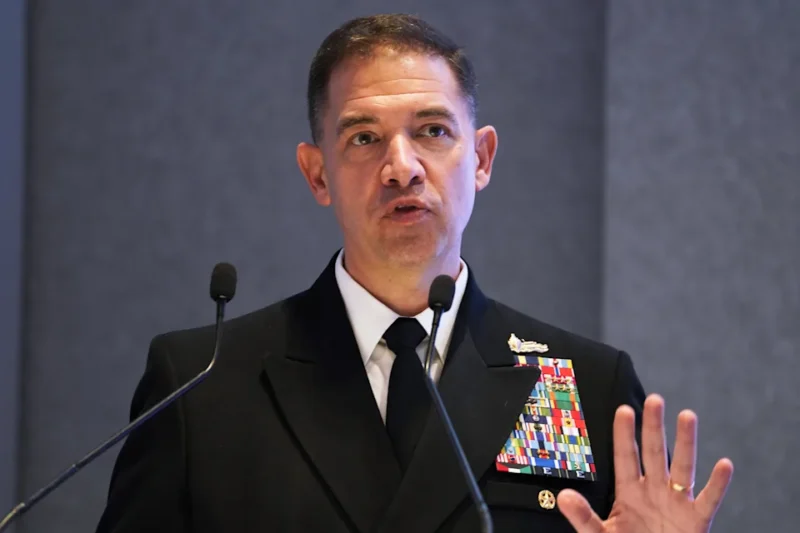
From missiles to meetings — Trump puts America’s generals on the diplomatic front line.
President Donald Trump has turned to senior U.S. military leaders for unusually prominent diplomatic roles, dispatching top commanders to negotiations on Iran’s nuclear program and efforts to end the war in Ukraine.
The head of U.S. Central Command, Adm. Brad Cooper, joined indirect U.S.–Iran talks in Oman on Friday, marking the first time a serving CENTCOM commander has taken part in such negotiations. Cooper appeared in full uniform, underscoring Washington’s military buildup in the region as Trump presses Tehran to accept limits on its nuclear program.
At the same time, Army Secretary Dan Driscoll has emerged as a key intermediary in talks aimed at ending the Russia–Ukraine war. Driscoll participated in recent negotiations in Abu Dhabi, maintaining contact with Ukrainian officials between formal sessions and acting as a liaison to Trump’s inner circle.
The move reflects a broader shift in Trump’s foreign policy style, relying on military leaders alongside civilian envoys to signal resolve and keep pressure on adversaries. Analysts say Cooper’s presence in the Iran talks was intended to reinforce the implicit threat of force, while also bringing technical military expertise to discussions over nuclear capabilities.
Trump said the Oman talks were “very good” but warned of “very steep” consequences if Iran refuses a deal. Meanwhile, Driscoll’s involvement has helped reopen high-level military-to-military dialogue between Washington and Moscow, suspended since Russia’s invasion of Ukraine.
Critics argue the approach sidelines traditional diplomacy, while supporters note that U.S. presidents have historically used trusted military figures as emissaries during moments of heightened global tension.
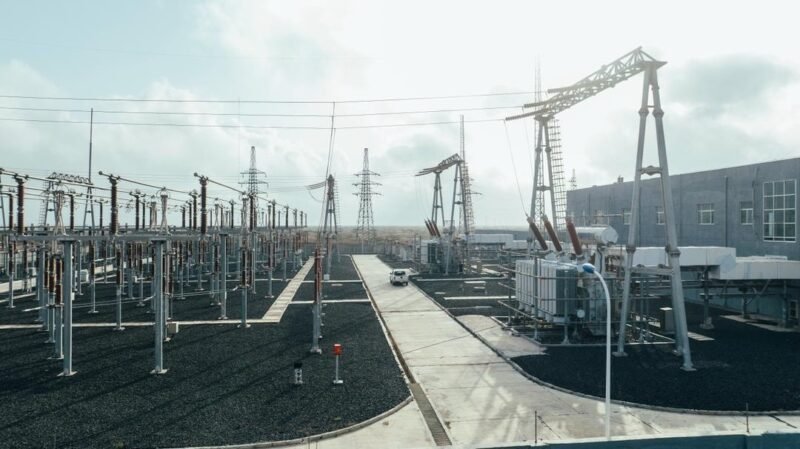
Ethiopia Frames Clean Energy Push as Regional Project, Linking Power Growth to Cross-Border Integration.
Ethiopia is no longer presenting clean energy as a domestic development project. It is framing it as a regional system, one that binds neighbors together through power lines, shared infrastructure, and economic interdependence.
Prime Minister Abiy Ahmed’s remarks at the inauguration of the Aysha II Wind Power Project made that strategy explicit. Standing alongside Djibouti’s President Ismail Omar Guelleh and Somalia’s President Hassan Sheikh Mohamud, Abiy cast Ethiopia’s renewable energy drive as inseparable from cross-border connectivity and regional cooperation.
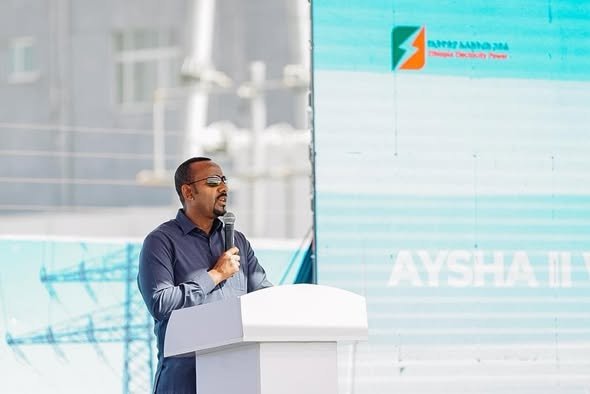
Prime Minister Abiy Ahmed
The symbolism of the location mattered. Aysha II sits in Ethiopia’s Somali Region, a peripheral area historically associated with marginalization rather than national transformation. By placing a major wind project there, Addis Ababa is signaling that its energy transition is also a political project—one aimed at integrating border regions into national and regional economic systems.
With a total planned capacity of 120 megawatts and 80 megawatts already feeding the national grid, Aysha II is modest compared with hydropower giants like the Grand Ethiopian Renaissance Dam. But its strategic value lies elsewhere. Wind power diversifies Ethiopia’s energy mix, reduces dependence on rainfall-dependent hydropower, and supports a narrative of climate-aligned growth that resonates with international partners.
Abiy’s repeated emphasis on regional integration reflects a deeper calculation. Ethiopia’s economic ambitions exceed what its domestic market alone can absorb. Power exports to Djibouti already generate revenue and political leverage. Expanding energy and transport links with Somalia and South Sudan would extend that influence, turning Ethiopia into a regional energy hub rather than just a large consumer.
The reference to the GERD reinforces this framing. By portraying the dam as an African achievement built with domestic resources, Abiy is positioning Ethiopia as proof that large-scale clean energy projects can be delivered without external dependency. At the same time, the dam remains a reminder that energy projects in the Horn are never purely technical. They reshape regional politics, provoke disputes, and redefine power relations.
This is why Abiy pairs energy with diplomacy. Cooperation with Djibouti on power, water and infrastructure offers a model of pragmatic integration. Engagement with Somalia carries higher political risk but also higher strategic payoff, especially as Addis Ababa seeks diversified access routes and economic corridors in a volatile region.
Hosting the upcoming COP-32 Summit adds another layer. Ethiopia intends to use the platform to present itself as a continental leader on climate and development, leveraging its renewable portfolio to attract financing, legitimacy and partnerships. Clean energy becomes both a development tool and a diplomatic asset.
The broader message is clear. Ethiopia is betting that shared infrastructure can stabilize relationships in a region marked by conflict and mistrust. Power lines, in this vision, are not just conduits for electricity but for influence and interdependence.
Whether that bet pays off will depend on political realities beyond turbines and grids. Regional tensions, internal conflicts, and competing ambitions could just as easily turn energy into a new fault line. For now, Addis Ababa is pushing a confident narrative: that East Africa’s future will be cleaner, more connected, and more integrated—and that Ethiopia intends to sit at the center of it.
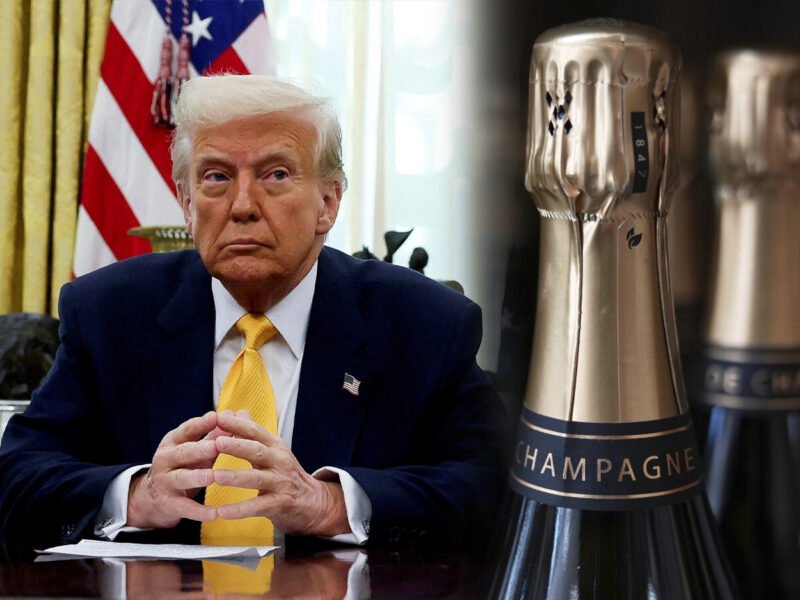
From Gaza to Greenland, Trump turns tariffs into leverage—and Europe into the test case.
U.S. President Donald Trump has escalated his trade-as-coercion strategy, threatening a 200% tariff on French wine and champagne after France signaled it would not join his proposed international “Board of Peace.”
The threat came after an aide to French President Emmanuel Macron said Paris “does not intend” to accept an invitation to the board, an initiative Trump first floated last September as part of a plan to end the Gaza war but has since expanded into a loose framework for mediating global conflicts.
“Nobody wants him because he’s going to be out of office very soon,” Trump said when told of Macron’s likely refusal. “I’ll put a 200% tariff on his wines and champagnes and he’ll join—but he doesn’t have to join.”
Macron’s term runs until May 2027, and French officials have so far dismissed Trump’s remarks as political theater. But the threat underscores a broader shift: tariffs are no longer just economic tools in Trump’s playbook—they are instruments of diplomatic pressure.
According to a draft charter seen by Reuters, countries invited to the Board of Peace would be expected to contribute $1 billion in cash to secure membership beyond three years. The document proposes Trump as the board’s inaugural chairman, with authority over membership decisions. Invitations reportedly went out to a wide—and controversial—list of leaders, including Vladimir Putin, UK Prime Minister Keir Starmer, Belarusian leader Alexander Lukashenko, and Indian Prime Minister Narendra Modi.
Critics warn the board could undermine the United Nations by creating a parallel, pay-to-participate forum with unclear mandates and opaque decision-making. The publication by Trump of a private text exchange with Macron—shared on Truth Social—has only deepened concerns about the initiative’s seriousness and intent.
The dispute also folds into a wider transatlantic clash. Washington has already warned that eight European countries—Denmark, Norway, Sweden, France, Germany, the UK, the Netherlands, and Finland—could face 10% tariffs from February unless they support U.S. efforts to acquire Greenland, a move Europe has rejected as a violation of Danish sovereignty.
EU officials are weighing retaliatory options, including tariffs on €93 billion worth of U.S. goods and the activation of the bloc’s anti-coercion instrument, designed to counter economic pressure used to force policy change.
“I don’t think they’re going to push back too much,” Trump said of Europe. “We have to have it… They can’t protect it.”
For Europe, the pattern is becoming unmistakable: sovereignty disputes, security alliances, and economic penalties are being braided together. For Washington, the message is equally clear—participation is optional, but resistance may come at a steep price.
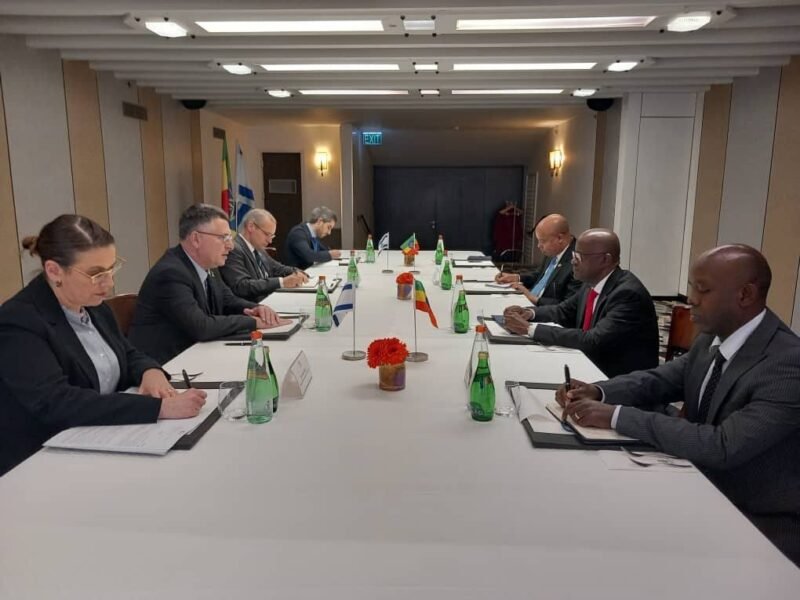
Ethiopia and Israel Reaffirm Strong Ties Ahead of Fourth Political Consultation in Jerusalem.
Ethiopia and Israel are moving to consolidate a quietly resilient partnership at a moment of heightened geopolitical flux in the Horn of Africa and the Middle East. Talks this week between Ethiopia’s State Minister for Foreign Affairs, Ambassador Hadera Abera, and Israeli Foreign Minister Gideon Sa’ar signal continuity — and strategic intent — ahead of the fourth Ethio–Israel Political Consultation set to take place in Jerusalem.
The discussions focused on deepening bilateral cooperation, with particular emphasis on economic ties, while also addressing regional and multilateral issues of shared concern.
For Addis Ababa, the engagement reinforces its long-standing diplomatic balance: maintaining Western, Middle Eastern, and emerging partnerships as it navigates post-conflict recovery and regional competition.
For Israel, Ethiopia remains a pivotal African partner — politically influential, demographically significant, and strategically located near the Red Sea corridor.
The timing matters. With shifting alliances in the Horn, rising Red Sea security tensions, and Israel expanding its diplomatic footprint in Africa, the reaffirmation of ties with Ethiopia reflects a broader effort to anchor stability through pragmatic cooperation rather than ideology.
What stands out is consistency. While the region experiences rapid realignments, Addis Ababa and Jerusalem are signaling that their relationship is institutionalized, forward-looking, and insulated from short-term turbulence.
The upcoming political consultation in Jerusalem is expected to translate diplomatic warmth into concrete economic and strategic initiatives.
In a region defined by uncertainty, Ethiopia and Israel are betting on continuity — and on each other.
Somaliland Pulls Envoy From Djibouti After Israel Recognition.
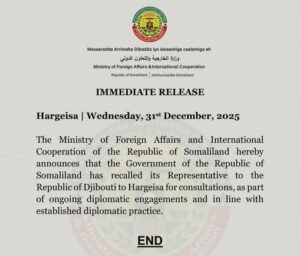
The Republic of Somaliland has formally recalled its ambassador to Djibouti for consultations, signaling a sharp escalation in diplomatic tensions following Israel’s recognition of Somaliland as a sovereign state.
In an official statement released Wednesday, the Ministry of Foreign Affairs and International Cooperation confirmed that Somaliland’s representative to Djibouti has returned to Hargeisa “as part of ongoing diplomatic engagements and in line with established diplomatic practice.”
Officials separately confirmed that Djibouti’s ambassador to Somaliland also departed Hargeisa on Wednesday morning for Djibouti, indicating that both governments have summoned their envoys simultaneously—a classic diplomatic signal of protest short of cutting ties.
Regional analysts say the move is directly linked to Djibouti’s public opposition to Somaliland’s growing international recognition, particularly after Israel became the first UN member state to formally recognize Somaliland’s independence.
“This is a calibrated warning shot,” one regional diplomat said. “Recalling ambassadors for consultations is how states signal deep dissatisfaction without crossing into full diplomatic rupture.”
Djibouti has positioned itself firmly against Somaliland’s recognition drive, aligning with Somalia and other regional actors resisting changes to the Horn of Africa’s political map. That stance has increasingly strained relations between the two neighbors, especially as Somaliland gains new strategic relevance along the Gulf of Aden and Red Sea corridor.
The dual recalls underscore how Israel’s recognition has triggered real-world diplomatic consequences across the Horn, reshaping alliances and forcing regional capitals to choose sides.
For now, channels remain open. But the message from Hargeisa is unmistakable:
Somaliland is no longer absorbing opposition quietly—and it expects its sovereignty to be treated as a political reality, not a theoretical debate.

Ambassador Masoud Ali’s strategic diplomatic initiatives in the UAE position Somaliland for unprecedented economic growth and global recognition under President Irro’s visionary leadership.

In the intricate tapestry of international diplomacy, moments of strategic brilliance often illuminate a nation’s path toward greater recognition and prosperity. Such a moment has recently unfolded for Somaliland, epitomized by the exemplary work of its Ambassador to the United Arab Emirates, Masoud Ali, and the visionary leadership of President Abdirahman Mohamed Abdullahi Irro.
The recent high-level working trip by Somaliland’s Minister of Energy and Minerals, Eng. Ahmed Jamac Barre, to the UAE, meticulously orchestrated by Ambassador Ali, stands as a powerful testament to Somaliland’s readiness to engage with global markets and its significant diplomatic progress.

This visit was far more than a routine official engagement; it was a carefully calibrated demonstration of Somaliland’s economic potential on the world stage. Ambassador Masoud Ali’s instrumental role in facilitating the Minister’s meetings with major companies and international investors in Dubai, Abu Dhabi, and Sharjah cannot be overstated. His deep understanding of the UAE’s business landscape and his ability to forge connections with influential entities like Mubadala, BB Energy, Skyline, Masdar, and Tech City, all renowned for their expertise in oil, gas, and renewable energy, highlight a diplomatic acumen that sets a high bar for all Somaliland’s representatives abroad.
Ambassador Ali’s proactive approach and strategic foresight are a shining example for junior Somaliland ambassadors across the globe, demonstrating how dedicated and knowledgeable diplomatic efforts can directly translate into tangible economic opportunities for the nation.

The choice of the UAE as a destination was itself a strategic masterstroke, reflecting a long-term vision to tap into one of the world’s major business and investment hubs. It signals that Somaliland is consciously seeking financial and technical support from influential countries, moving beyond traditional aid paradigms towards robust economic partnerships.
During these crucial engagements, the Minister of Energy and Minerals presented a compelling case for investment, anchored in Somaliland’s enduring peace, stability, and security since regaining its independence in 1991. He underscored the nation’s proven democratic credentials, evidenced by free elections and peaceful transfers of power, which offer a stark contrast to the volatility often associated with the broader region.
Furthermore, the Minister highlighted Somaliland’s open economic market, attractive investment incentives, and its abundant natural resources. Crucially, he emphasized Somaliland’s strategic geographical location, adjacent to the lucrative Gulf markets, and the transformative development of the Berbera port and the Berbera Corridor road, which are rapidly solidifying its position as a vital regional trade hub.
The transparent presentation of “oil blocks” ready for investment, alongside the Ministry’s commitment to officially regulate the oil and gas sectors while safeguarding national rights, instilled a vital sense of confidence in potential investors.
This successful diplomatic and economic outreach is a direct reflection of President Abdirahman Mohamed Abdullahi Irro’s astute leadership. His administration, characterized by its commitment to action and unity, has clearly prioritized economic growth and the pursuit of full international recognition through pragmatic engagement.
The appointment of Ambassador Masoud Ali to such a critical diplomatic post in the UAE exemplifies President Irro’s judicious ability to place the right person in the right position, leveraging individual expertise for national gain.
This discerning approach inspires confidence that as President Irro prepares to appoint new ambassadors globally, he will continue to select individuals of similar caliber and strategic vision, further strengthening Somaliland’s diplomatic corps and accelerating its journey towards greater international standing and economic self-reliance.
The success in the UAE is not just a win for the energy sector; it is a powerful narrative of a nation confidently stepping onto the global economic stage, guided by effective diplomacy and visionary leadership.

From textiles to coffee diplomacy, Abiy Ahmed courts Vietnam to position Ethiopia as Africa’s rising industrial giant.
Prime Minister Abiy Ahmed’s state visit to Vietnam is not just another diplomatic handshake — it’s a strategic recalibration of Ethiopia’s foreign policy with serious implications for Africa’s economic future. Ambassador Dessie Dalke’s post-visit briefing confirms what insiders are calling Abiy’s Hanoi Gambit: a bold move to tie Ethiopia’s industrial ambitions to Vietnam’s meteoric economic trajectory.
This partnership isn’t about nostalgia for South-South solidarity. It’s about exchanging blueprints for industrial takeoff. Vietnam’s transformation into a manufacturing and export powerhouse — particularly in textiles, footwear, and agri-processing — is precisely the model Ethiopia is desperately trying to emulate under Abiy’s prosperity agenda. Addis Ababa is betting that Vietnam can help plug the knowledge and capacity gaps that have plagued Ethiopia’s ambitions.
But the heart of this alliance lies in coffee diplomacy. Ethiopia and Vietnam rank third and second globally in coffee production, yet Vietnam’s value chain is light years ahead in branding, export sophistication, and global market access. The promise to collaborate on coffee sector development could be a game-changer for Ethiopia’s struggling exporters.
Beyond economics, Abiy’s visit plays into a broader geo-strategic narrative. With Ethiopia pivoting toward Asia, this move signals Addis Ababa’s intent to reduce dependence on Western donors and assert its relevance in a multipolar world. Vietnam, too, gains: a foothold in Africa’s second-most populous country and access to untapped markets.
Crucially, Ambassador Dessie framed Ethiopia and Vietnam as “continental gateways” — Ethiopia to Africa and Vietnam to Asia. That framing isn’t just poetic—it’s geopolitical. As the West retreats and China recalibrates, this emerging Africa-Asia axis could redefine trade corridors and south-south cooperation.
The next step? Implementation. The planned ministerial-level mechanism to track bilateral deals will determine whether this visit marks the dawn of a new era or fades into the fog of diplomatic platitudes. If Abiy gets it right, Vietnam may become Ethiopia’s Singapore dream realized — and Africa’s development model may just get a new eastern playbook.

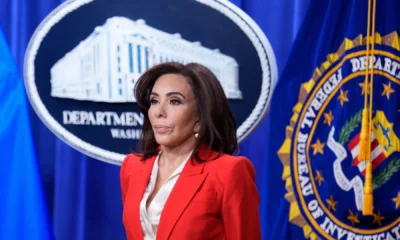
Australia Charges Two Chinese Nationals With Foreign Interference

DOJ Fails to Indict Democrats Over ‘Illegal Orders’ Video

Taiwan’s Lai Presses Opposition to Approve $40 Billion Defence


-
 Interagency Assessment2 months ago
TOP SECRET SHIFT: U.S. MILITARY ORDERED INTO SOMALILAND BY LAW
-

 Somaliland4 months ago
Somaliland Recognition: US, UK, Israel, and Gulf Bloc Poised for Historic Shift
-
 Minnesota1 month ago
Fraud Allegations Close In on Somalia’s Top Diplomats
-

 Middle East2 months ago
Saudi Arabia vs. UAE: How The Gulf Rivalry is Heating Up
-

 American Somali3 months ago
Why Frey Won a Significant Share of the Somali Vote Against a Somali Opponent
-
 Middle East2 months ago
Turkey’s Syria Radar Plan Triggers Israeli Red Lines
-
 Editor's Pick1 month ago
Why India Is Poised to Become the Next Major Power to Recognize Somaliland
-

 The Million-Follower Exile2 months ago
Why America Deported Its Most Famous Somali TikTok Star And Who Paid The Price