Middle East
Saudi Arabia vs. UAE: How The Gulf Rivalry is Heating Up
Saudi Arabia vs. UAE: The Quiet Gulf Rivalry Reshaping Middle East Power Politics.
The once-solid partnership between Saudi Arabia and the United Arab Emirates, long seen as the driving force behind Gulf interventionism, is now showing visible cracks. Both governments still project unity in public. Yet diplomatic exchanges, battlefield choices, and economic decisions reveal growing tension. Riyadh and Abu Dhabi are no longer aligned on several of the region’s most pressing strategic issues.
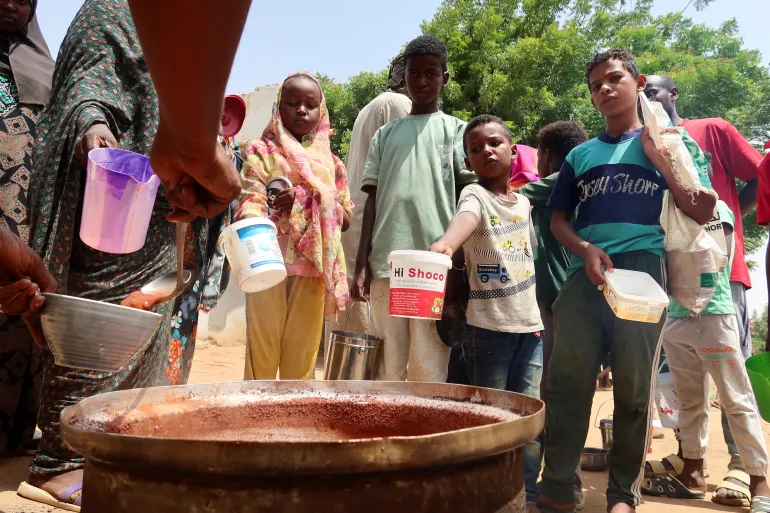
Sudan exposes the rift most clearly. When the 2023 war erupted, Saudi Arabia backed the Sudanese Armed Forces. The UAE, however, faced mounting accusations that it supplied weapons and logistical support to the Rapid Support Forces.
During his recent visit to Washington, Crown Prince Mohammed bin Salman reportedly urged President Donald Trump to pressure Abu Dhabi over its alleged role. That appeal, delivered at the highest diplomatic level, signals a sharp decline in trust.
UAE President Mohammed bin Zayed chose silence, denying involvement while working to keep the dispute from escalating.
Sudan is only one example. The two states split over Yemen when the UAE supported southern separatists, while Saudi Arabia insisted on maintaining a unified Yemeni state.
Energy policy also became a battlefield. In 2021, the UAE resisted Riyadh’s efforts to cut oil production within OPEC.
The disagreement was brief, but it exposed an expanding pattern: each country now prioritizes its national interests, even at the expense of close coordination.
These differences are structural, not accidental. Saudi Arabia’s Vision 2030 and the UAE’s 2031 plan both aim to build diversified, technology-driven economies.
Each country is competing to lead the region in artificial intelligence, logistics, and global investment.
As their ambitions grow, friction becomes harder to avoid. Both are more confident, more assertive, and more committed to independent strategic paths.
The question of Israel adds another layer of strain. The UAE normalized relations in 2020 and prefers to maintain that partnership quietly. Saudi Arabia paused its own negotiations after the October 7 attacks.
Crown Prince Mohammed bin Salman now insists he will recognize Israel only if there is meaningful progress for Palestinians—a position Israel’s leadership rejects.
This divergence places Riyadh and Abu Dhabi on different tracks at a crucial diplomatic moment.
Even with rising tensions, neither country wants a direct confrontation. The Gulf remains vulnerable to shocks from Iran, Israel, and shifting global alliances.
The United States, Turkey, and China all play expanding roles in the region, and both Riyadh and Abu Dhabi recognize that fragmentation would weaken their influence.
Their partnership still stands, built on shared history and overlapping interests. But the era of complete alignment is over. What remains is a managed rivalry—quiet, calculated, and shaped by the evolving power politics of the Middle East.
Middle East
Gaza: Trump Chairs Board as Turkey and Qatar Enter Post-War Governance
White House Confirms Gaza Board of Peace With Turkish and Qatari Representatives as Trump Leads Transition Framework.
The White House has formally unveiled the architecture of a new post-war governance system for Gaza, confirming the creation of a Gaza Board of Peace (BoP) chaired by Donald Trump and supported by a multinational executive and security structure that includes Turkey and Qatar.
The move signals a decisive shift away from interim crisis management toward a long-term, externally supervised transition designed to dismantle Hamas, rebuild Gaza’s institutions, and stabilize daily life in the enclave.
According to the announcement, the BoP will serve as the political authority overseeing Gaza’s reconstruction and demilitarization. Its seven founding executive members include Marco Rubio, Steve Witkoff, Jared Kushner, Tony Blair, Marc Rowan, Ajay Banga, and Robert Gabriel—an unusually corporate-heavy lineup reflecting Washington’s emphasis on technocratic governance and economic reconstruction.
Operational authority inside Gaza will rest with a newly formed National Committee for the Administration of Gaza (NCAG), led by technocrat Ali Sha’ath, tasked with restoring public services, rebuilding civil institutions, and laying the groundwork for self-sustaining governance. Former UN Middle East envoy Nickolay Mladenov will act as High Representative on the ground, linking the political board with the technocratic administration.
Security will be enforced by an International Stabilization Force (ISF) commanded by Jasper Jeffers, whose mandate includes demilitarization, protection of reconstruction efforts, and securing humanitarian corridors.
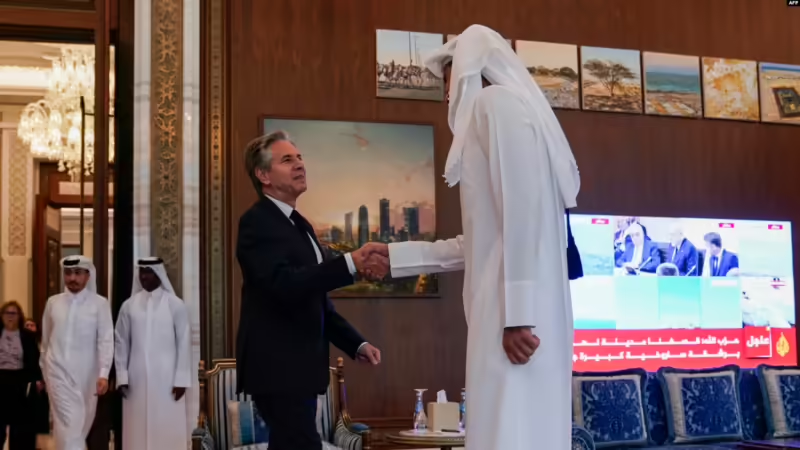
Notably, the Gaza Executive Board introduces regional stakeholders directly into Gaza’s governance framework. Confirmed members include Hakan Fidan, Qatari diplomat Ali Al-Thawadi, Egypt’s General Hassan Rashad, UAE Minister Reem Al-Hashimy, Yakir Gabay, and Sigrid Kaag.
Trump framed the initiative as backing a “Palestinian technocratic government” during Gaza’s transition—language that carefully avoids sovereignty questions while asserting external control over security and reconstruction.
Strategically, the framework reflects three realities: Hamas is being formally removed from governance; Gaza’s future is being internationalized rather than Arabized alone; and Turkey and Qatar—long accused by critics of shielding Hamas politically—are now being absorbed into a US-led structure rather than operating independently.
For the region, this is not merely a rebuilding plan. It is a reordering of power, accountability, and influence in post-war Gaza—designed in Washington, enforced internationally, and managed by technocrats under close supervision.
Middle East
Arab States Pressured Trump to Halt Planned Strikes on Iran
A rare and coordinated intervention by America’s closest Middle Eastern allies helped pull President Donald Trump back from the brink of military strikes against Iran, exposing deep regional fears of a war that could spiral beyond control.
Saudi Arabia, Qatar, Turkey and Oman mounted an intense last-minute lobbying campaign, warning Washington that an attack on Iran would ignite a region-wide conflict with unpredictable consequences. Their message was blunt: escalation would not remain contained, and US bases, shipping lanes and regional stability would all be at risk.
Saudi Arabia’s stance carried particular weight. Riyadh quietly refused to allow US aircraft to use its airspace for any strike, signaling a firm red line despite its historically tense relationship with Tehran. Saudi Foreign Minister Prince Faisal bin Farhan followed up with calls to counterparts in Iran, Oman and Turkey, underscoring a regional push to contain the crisis diplomatically.
The lobbying reflects a broader shift. While Gulf states deeply distrust Iran’s proxy network and regional ambitions, they are equally alarmed by the prospect of chaos triggered by US military action. Disruption to Gulf shipping routes, missile retaliation against US bases, and internal instability across the region remain overriding fears.
Iran, for its part, has worked to soften its isolation. Foreign Minister Abbas Araghchi has intensified outreach to Arab capitals, framing Tehran as a lesser threat to regional stability than Israel and portraying diplomacy as the only viable off-ramp. That message has found cautious listeners, especially after past Israeli strikes risked dragging Gulf states into conflicts not of their choosing.
The episode also exposed US vulnerabilities. As tensions peaked, Washington withdrew key personnel from its Al Udeid airbase in Qatar, highlighting how America’s vast military footprint can become a liability if deterrence fails.
For now, diplomacy has bought time. But the underlying fault lines remain. The Gulf states’ intervention did not signal trust in Iran—it signaled fear of uncontrolled war. And it sent a clear message to Washington: any move against Tehran will no longer be a unilateral decision, but one that reshapes the entire Middle East.
Comment
Iran’s Killing Machine Accelerates as Trump Issues Final Warning
More Than 2,400 Protesters Killed in Iran as Trump Warns Against Executions.
Iran’s crackdown has entered its deadliest phase yet. More than 2,400 protesters have reportedly been killed and over 18,000 arrested as the Islamic Republic intensifies repression under a nationwide internet blackout now stretching into its sixth day. What began as economic protests has evolved into an existential challenge for the regime — and Tehran is responding with speed, secrecy, and the threat of executions.
The immediate concern is the fate of Erfan Soltani, a 26-year-old protester facing imminent execution after what his family and U.S. officials describe as a rushed trial without legal representation. His case has become a symbol of a broader pattern: fast-track death sentences, public trials, and intimidation designed to break the protest movement through fear.
Iran’s judiciary has made its intentions clear. Chief Justice Gholam-Hossein Mohseni-Eje’i announced that protesters accused of violence or “terrorism” will receive priority punishment, signaling that executions may soon become a routine tool of deterrence. Rights groups warn that the real death toll may be far higher as communications remain cut and families are silenced.
President Donald Trump has issued unusually blunt warnings, urging Iranians to keep protesting and cautioning Tehran that executions would trigger “strong action” from the United States. While the White House has not detailed its next steps, the language marks a sharp escalation — moving from condemnation to implied consequences.
Inside Iran, regime figures are attempting to reframe the uprising as foreign-backed “ISIS-style terrorism,” a narrative long used to justify mass repression. But the scale, persistence, and nationwide spread of the protests suggest something deeper: a population no longer deterred by fear, even as the cost in lives continues to rise.
Iran now stands at a dangerous crossroads. Executions may crush individuals, but they risk accelerating the collapse of legitimacy of a system already ruling through force alone. The question is no longer whether the crisis will deepen — but how far the regime is willing to go to survive.
Middle East
Trump Cancels All Meetings With Iran, Urges Protesters to Seize Institutions
President Donald Trump has crossed a decisive rhetorical and strategic line on Iran, canceling all meetings with Iranian officials and openly urging protesters to “take over” the country’s institutions as the regime’s violent crackdown intensifies.
In a series of posts, Trump framed the uprising not as an internal Iranian crisis, but as a moral confrontation between the Iranian people and a ruling system he now treats as illegitimate. By calling on protesters to keep records of “killers and abusers” and promising they will “pay a big price,” Trump signaled that accountability — potentially international and personal — is now central to US policy.
The numbers driving this escalation are staggering. Rights groups say at least 646 protesters have been killed, while Reuters cited an unnamed Iranian official putting the toll as high as 2,000. Internet shutdowns, mass arrests and live fire against demonstrators suggest the regime is fighting for survival rather than stability.
Trump’s decision to freeze diplomacy comes even as his administration confirms military options are actively under review. The White House insists diplomacy remains the preferred path, but the language has shifted sharply: Iran is no longer treated as a negotiating partner, but as a regime on probation.
International reactions underline the gravity of the moment. German Chancellor Friedrich Merz openly predicted the collapse of Ayatollah Ali Khamenei’s rule, arguing that regimes sustained only by violence are already in their final phase. That assessment, once fringe, is now voiced by mainstream Western leaders.
Strategically, Trump’s message is unmistakable. Washington is positioning itself not merely as a critic of Tehran, but as a potential catalyst for regime change — whether through internal collapse, external pressure, or both. The phrase “HELP IS ON ITS WAY” is deliberately ambiguous, keeping Tehran guessing while energizing protesters.
This marks the most direct US endorsement of popular uprising in Iran in decades. The risk is escalation — militarily and regionally. The calculation is that the regime is weaker than it appears.
Iran is now facing its most dangerous convergence: mass unrest at home, diplomatic isolation abroad, and an American president openly inviting the people to finish the job.
Middle East
US War Plans Against Iran Enter Advanced Stage
US Military Planning Against Iran Advances as Protests Intensify and Nuclear Talks Loom.
U.S. military planning for a potential operation against Iran has entered what officials describe as “advanced stages,” underscoring how rapidly the crisis surrounding Tehran is escalating. An anonymous U.S. official told Al Jazeera that American forces across the Middle East are now fully prepared for “any contingency,” as Washington weighs military options alongside collapsing diplomacy.
The warning comes amid Iran’s most serious internal unrest in decades. According to the Human Rights Activists News Agency (HRANA), at least 544 people have been killed in just over two weeks of nationwide protests, including hundreds of demonstrators and several minors. More than 10,600 people have been arrested, with many additional deaths still under investigation. Internet shutdowns and mass detentions suggest the Iranian leadership is bracing for a prolonged confrontation with its own population.
Against this backdrop, diplomacy is moving on two tracks. Iranian Foreign Minister Abbas Araghchi quietly reached out to Trump’s Middle East envoy, Steve Witkoff, to discuss the protests, signaling Tehran’s growing unease. At the same time, President Donald Trump confirmed that Iran has asked to resume negotiations on a new nuclear deal — even as he warned that Washington may “need to act” before any talks take place.
That contradiction defines the current moment. On one hand, Iran is seeking relief through negotiation. On the other, the U.S. is openly signaling readiness to use force. Trump’s blunt assessment — that Iran is “tired of being beaten up by the United States” — reflects a belief in Washington that pressure, not compromise, is driving Tehran back to the table.
The strategic calculation is clear. With Iran distracted by internal revolt, its deterrence weakened, and regional proxies under strain, U.S. planners see a narrowing window in which military action could reshape the balance of power. Tehran’s outreach for talks may be less a diplomatic opening than an attempt to buy time.
Whether this moment ends in negotiations or confrontation now depends on how far the protests spread — and how quickly Washington decides that diplomacy has run out of road. One thing is certain: the U.S.–Iran standoff has entered its most dangerous phase in years.
Middle East
Iran Bleeds as the World Watches: Over 500 Dead, Regime Tightens Grip
Iran Protest Death Toll Surpasses 500 as Trump, Israel Signal Escalating Pressure on Tehran.
Iran’s protest movement has entered its deadliest phase yet, with rights groups reporting that more than 500 people have been killed as security forces intensify a nationwide crackdown. According to the U.S.-based Human Rights Activists News Agency, at least 538 deaths have been documented so far — the vast majority protesters — alongside more than 10,600 arrests. The group warns the true toll is likely higher as Iran enforces near-total internet blackouts and cuts international phone lines.
The numbers point to a regime choosing force over compromise. What began as economically driven unrest has evolved into a direct challenge to clerical rule, met with mass detentions, live fire, and systematic information suppression. Tehran has released no official casualty figures, a familiar tactic during moments of internal crisis.
International pressure is now rising in parallel. President Donald Trump is reportedly weighing options ranging from new sanctions and cyber operations to more direct military measures. Israeli Prime Minister Benjamin Netanyahu added to the pressure by declaring that Israel hopes the “Persian nation will soon be freed from the yoke of tyranny,” a statement that openly frames the unrest as a liberation struggle rather than a domestic disturbance.
Meanwhile, exiled crown prince Reza Pahlavi has stepped forward, signaling readiness to return and oversee a political transition — a move that will further alarm Iran’s leadership, which views alternative centers of authority as existential threats.
The scale of deaths, the regime’s information blackout, and the growing chorus of external voices suggest Iran is approaching a decisive moment. Whether the protests collapse under repression or fracture the system from within may determine not just Iran’s future, but the balance of power across the Middle East.
Middle East
Damascus Pushes Kurds Out, Unity Pledge Tested
Syria’s fragile post-war transition hit a dangerous flashpoint this weekend after the Syrian army announced it had cleared Sheikh Maksoud, the last Kurdish-held district in Aleppo — a claim immediately rejected by Kurdish forces, who insist they are still resisting.
If confirmed, the takeover would mark the end of Kurdish territorial control inside Syria’s second-largest city, closing a chapter that began in 2011 when Kurdish fighters carved out enclaves amid the collapse of central authority. It would also deepen one of the most sensitive fractures facing President Ahmed al-Sharaa’s new government: how to unify a country still divided by arms, identity and mistrust.
The fighting erupted after a U.S.-backed ceasefire earlier this week failed to resolve the standoff. Under the deal, Kurdish forces were expected to withdraw from Sheikh Maksoud. They refused, citing fears over security and political marginalization under an Islamist-led government dominated by former rebel factions. Damascus responded by announcing a ground operation to expel them by force.
By Saturday morning, the Syrian army said it had combed the district, claiming only small pockets of Kurdish fighters remained in hiding. Kurdish forces countered that the area had not fallen and said their units were holding positions. Reuters reporters in Aleppo reported no active clashes, underscoring the uncertainty surrounding control on the ground.
Beyond the tactical dispute lies a strategic warning. Aleppo has become the testing ground for al-Sharaa’s promise to reunify Syria after 14 years of war. Kurdish forces still control vast swathes of northeastern Syria, where they operate a semi-autonomous administration backed for years by the United States. Talks on integrating those forces into the new Syrian state have stalled, and Aleppo’s violence may harden positions on both sides.
The humanitarian cost is already steep. At least nine civilians have been killed since fighting began Tuesday, and more than 140,000 people have fled their homes, according to local estimates.
U.S. envoy Tom Barrack said he met Jordanian officials to reinforce the ceasefire and push for a “peaceful withdrawal” of Kurdish forces from Aleppo — language that suggests Washington is wary of further escalation but short on leverage.
Whether Sheikh Maksoud has truly fallen or not, the message is clear: Syria’s war may have ended on paper, but the battle over who controls the state — and on whose terms — is far from over.
Middle East
Iran Shuts Down Internet as Deadly Crackdown Fails to Stop Nationwide Protests
BLACKOUT & BLOOD — Iran Pulls the Plug as Protesters Defy Khamenei.
Iran’s government has imposed a nationwide internet shutdown as protests continue to spread despite a violent crackdown that rights groups say has killed dozens, exposing deep fractures inside the Islamic Republic and growing fear at the top of the regime.
Demonstrations erupted again Thursday in Tehran and multiple provincial cities, even as security forces intensified their response. Videos posted before the blackout showed shops shuttered in Tehran’s historic bazaar, a powerful signal of unrest in a country already reeling from soaring inflation and a collapsing currency.
What began as protests over economic hardship has now morphed into a direct political challenge. Crowds in Tehran, Mashhad, Isfahan and Kermanshah were heard chanting slogans against Supreme Leader Ayatollah Ali Khamenei — a red line rarely crossed in the Islamic Republic.
By early evening, monitoring group NetBlocks confirmed that Iran had cut off internet access nationwide, a tactic long used by authorities to isolate protesters, slow mobilization and prevent images of violence from reaching the outside world.
The crackdown has been brutal. Amnesty International said security forces have fired live ammunition, metal pellets and tear gas at largely peaceful demonstrators, while beating and arbitrarily arresting hundreds. The Hengaw Human Rights Organization reported at least 42 people killed so far, including six children. Families of victims, Amnesty said, have been threatened into silence, with officials warning of secret burials if they refuse to cooperate.
Inside the government, the response has been fractured. President Masoud Pezeshkian has struck a conciliatory tone, urging dialogue, while hard-liners have vowed zero tolerance. Iran’s judiciary chief warned this week there would be “no leniency” for anyone deemed to be aiding the regime’s enemies.
The unrest is unfolding under growing international pressure. U.S. President Donald Trump has repeatedly warned Tehran that further killings could trigger American intervention — a threat that Iranian leaders are taking seriously after Washington’s recent capture of Venezuela’s Nicolás Maduro.
For now, neither side is backing down. The streets remain tense, the internet is dark, and Iran’s leadership faces a dangerous dilemma: escalate the violence and risk foreign intervention, or ease repression and risk losing control.
-
Analysis11 months agoSaudi Arabia’s Billion-Dollar Bid for Eritrea’s Assab Port
-
Opinion17 years agoSomaliland Needs a Paradigm Change: Now or Never!
-
Interagency Assessment1 month agoTOP SECRET SHIFT: U.S. MILITARY ORDERED INTO SOMALILAND BY LAW
-
Somaliland3 months agoSomaliland Recognition: US, UK, Israel, and Gulf Bloc Poised for Historic Shift
-
EDITORIAL1 year agoDr. Edna Adan Champions the Evolving Partnership Between Somaliland and Ethiopia
-
Top stories2 years ago
Ireland, Norway and Spain to recognize Palestinian state
-
Russia-Ukraine War6 months agoFibre-Optic Drones Shift Ukraine’s Drone Warfare
-
ASSESSMENTS10 months agoOperation Geel Exposes the Truth: International Community’s Reluctance to Embrace Somaliland as a Strategic Ally