
Somaliland
President Irro’s New Year’s Address: A Call for Unity and Progress in Somaliland


Somaliland President Abdirahman Irro pledges inclusivity, accountability, and resilience in 2025 amid national challenges.
President Abdirahman Mohamed Abdullahi Irro’s New Year’s address to the people of Somaliland serves as a rallying cry for unity, resilience, and shared progress. As the nation faces ongoing challenges in security, economic development, and social harmony, Irro’s speech seeks to inspire confidence while underscoring his administration’s dedication to inclusivity, accountability, and nation-building.
The president’s message comes at a pivotal time for Somaliland, as it seeks greater international recognition while navigating domestic challenges. His emphasis on inclusivity and transparency reflects a strategic approach to governance that prioritizes public engagement and mutual accountability. By inviting citizens to provide constructive criticism, Irro signals a departure from autocratic practices and underscores his commitment to democratic principles.
In addressing Somaliland’s foreign policy, Irro reaffirmed the nation’s commitment to peace and cooperation. His focus on peaceful coexistence with neighbors and the international community aims to enhance Somaliland’s credibility on the global stage, particularly as it continues its campaign for recognition as a sovereign state.
The president’s call for unity, coupled with his acknowledgment of the sacrifices and contributions of Somaliland’s armed forces and civil servants, highlights the interconnectedness of security, economic stability, and social cohesion. His emphasis on shared values and moral principles reflects a leadership style rooted in cultural and religious ethos, which resonates deeply with the Somaliland populace.
In summing up his address, President Irro’s optimistic tone is a reminder of Somaliland’s resilience. His call to action for every citizen to prioritize security and uphold shared values is not merely symbolic but a practical step toward achieving national aspirations in 2025 and beyond. The speech strikes a balance between acknowledging challenges and inspiring hope, offering a vision of progress grounded in unity and collective effort.








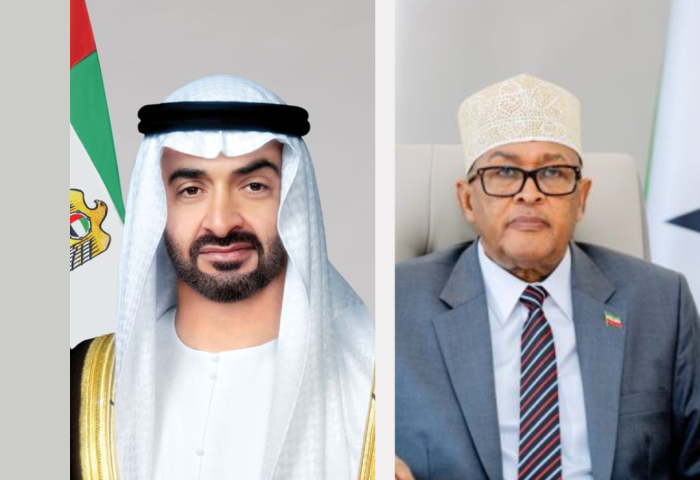
Mogadishu Walks Away, Hargeisa Steps Forward: How Somalia’s UAE Rift Speeds Somaliland Recognition.
Somalia’s decision to formally annul its security and defense agreements with the United Arab Emirates marks more than a routine diplomatic dispute. It signals a structural shift in the Horn of Africa — one that increasingly favors Somaliland’s long campaign for international recognition.
Mogadishu has presented the move as an assertion of sovereignty. In reality, it exposes the limits of that sovereignty. By cutting ties with Abu Dhabi, the Federal Government of Somalia has effectively abandoned the “Mogadishu First” framework that once allowed it to act as the primary gatekeeper for regional partnerships. The result is a widening opening for Somaliland to consolidate its position as a reliable, self-governing state actor.
The contrast between the two administrations is stark. While Somalia’s cabinet framed its decision in defensive terms, Somaliland’s response — led by Minister of the Presidency Khadar Hussein Abdi — projected confidence and continuity. His message was simple but decisive: partnerships are built on trust, delivery, and long-term consistency. Somaliland, not Mogadishu, has provided that consistency.
Nowhere is this clearer than in Berbera. When international actors hesitated, the UAE invested. That investment reshaped Berbera from a marginal port into a strategic maritime hub linking the Gulf, the Red Sea, and East Africa. For Abu Dhabi, Somaliland has evolved from a local partner into a cornerstone of its regional logistics and security strategy.
Israel’s formal recognition of Somaliland has accelerated this trajectory. It has transformed quiet cooperation into open geopolitical momentum. A new strategic triangle — Hargeisa, Abu Dhabi, and Jerusalem — is beginning to take shape, with direct implications for Red Sea security and global shipping lanes.
Several dynamics make UAE recognition of Somaliland increasingly plausible. First is economic reality. With defense ties severed in Mogadishu, the UAE’s multi-billion-dollar interests in Berbera rest entirely on Somaliland’s legal and security framework. Formal recognition would lock in those investments and remove lingering diplomatic ambiguity.
Second is regional alignment. Somaliland’s growing relationship with Israel fits naturally within the broader logic of the Abraham Accords. A Somaliland recognized by both Israel and the UAE would form a stability corridor along the Bab el-Mandeb — a critical chokepoint for global trade.
Third is power redistribution. As Somalia deepens its dependence on Turkey and Saudi Arabia, the UAE is recalibrating. Securing its maritime interests requires partners that control territory, guarantee security, and honor agreements. Somaliland meets all three criteria.
Mogadishu’s claims of authority over Berbera, Bosaso, and Kismayo increasingly ring hollow. In modern diplomacy, legitimacy is measured less by inherited charters and more by effective governance. Somaliland has maintained internal security, held multiple democratic transitions, and governed its territory continuously since 1991.
Somalia’s exit from the UAE defense pact is therefore not a setback for Abu Dhabi — it is a release. It frees the UAE from Somalia’s internal contradictions and redirects its focus toward its most successful Horn of Africa partnership.
As Mogadishu narrows its options, Somaliland expands its horizon. Recognition is no longer a distant aspiration. It is becoming the logical endpoint of a long-running geopolitical realignment. The remaining question is not whether Somaliland will gain further recognition — but how soon the next domino falls.
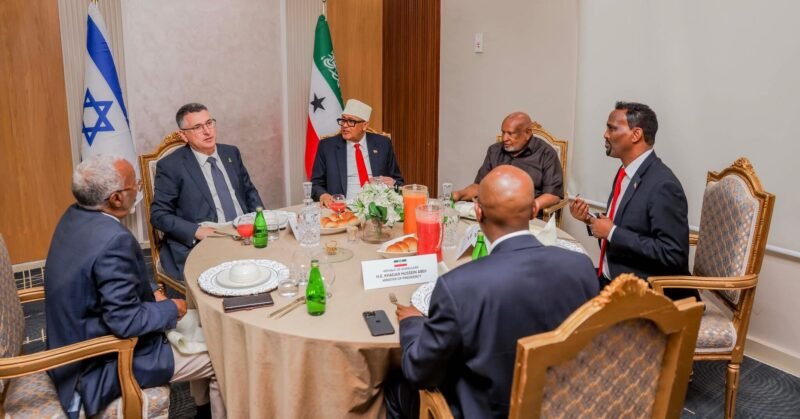
The histories of Israel and Somaliland are etched with the profound trauma of genocide and defined by a continuous struggle for survival against hostile neighbors. Though separated by geography and culture, their historical converge on a stark common ground: both are nations forged in the fires of catastrophic violence, fighting for their very existence against adversaries dedicated to their erasure.
The Shadow of Genocide:
For both peoples, the term “genocide” is not an abstract historical concept but a lived, painful reality that shapes their national identity and geopolitical posture.
Israel and the Holocaust:
The foundation of modern Israel is inextricably linked to the Holocaust, the systematic murder of six million Jews by Nazi Germany and its collaborators. This unparalleled catastrophe demonstrated the existential vulnerability of the Jewish people without a sovereign state, a core motivation for Israel’s establishment and reclaiming the homeland of their ancestors with the determination to ensure “never again.”
Somaliland and the Isaaq Genocide:
Between 1987 and 1989, the regime of Somali dictator Mohamed Siad Barre perpetrated a systematic campaign of annihilation against the Isaaq clan, the majority population of Somaliland. This campaign, officially recognized as a genocide by a United Nations investigation, included the near-total destruction of major cities. Hargeisa, Somaliland’s capital, was approximately 90% destroyed, leading to its grim nickname, “the Dresden of Africa”. The violence was executed with brutal efficiency, involving indiscriminate aerial bombardments. Notably, the Somali regime employed foreign mercenaries, including South African mercenary pilots who conducted airstrikes against civilian areas.
The regime’s propaganda of dehumanising the Isaaq people, labeling them as Jewish with derogatory epithets to justify their extermination.
The Perpetual Threat of Hostile Neighbours:
The trauma of genocide is compounded by an ongoing, fundamental conflict with neighboring entities that reject their right to exist.
Israel’s Regional Adversaries:
Israel’s primary conflict is with Hamas, which is formally dedicated to Israel’s destruction. Hamas launched a large-scale attack on Israel on 7 October 2023 firing thousands of rockets and sending fighters into Israeli towns, killing civilians and soldiers and taking hostages. This conflict is embedded within a broader regional confrontation with state and non-state actors, many backed by Iran, which also openly seeks to eliminate the Jewish state. This includes persistent threats from Hezbollah in Lebanon and the Houthis in Yemen.
Somaliland’s Struggle with Somalia:
Since restoring independence in 1991, Somaliland’s most pressing existential threat is the Federal Republic of Somalia and their Alshabab cohort. These entities are unreasonably against somaliland’s restoration of sovereignty in 1991. Mogadishu wages a relentless diplomatic and, at times, military campaign to undermine Somaliland’s sovereignty. This includes supporting proxy forces within Somaliland’s borders. The Las Anod conflict in 2023 is a prime example, where Somali-backed SSC-Khatumo forces fought against the Somaliland National Army. Mogadishu is constantly fuelling internal strife in Somaliland by providing military hardware to minority clans, viewing it as a strategy to destabilize the breakaway region.
Facing New Existential Fears:
The struggle for recognition and security is a daily reality, with recent developments exacerbating these fears.
For Somaliland, the prospect of a renewed large-scale conflict is a palpable fear. These anxieties were heightened in early 2026 when Somalia’s Defence Minister, Ahmed Moalim Fiqi, appealed to Arab nations, Turkey and Egypt , “especially Saudi Arabia,” to take action against Somaliland’s leadership. While Fiqi’s public comments focused on opposing Somaliland’s independence and its relations with Israel, his rhetoric—calling for international pressure and drawing parallels to other regional conflicts—is interpreted in Hargeisa as a direct threat to its survival, stirring memories of past genocide.
Conclusion: An Unending Fight for Existence
Israel and Somaliland, though vastly different in scale and international standing, are bound by a shared historical arc of suffering and resilience. The Holocaust and the Isaaq genocide are foundational tragedies that inform their unwavering focus on self-preservation. Today, both navigate a complex and hostile regional environment where neighboring powers fundamentally challenge their legitimacy. For Israel, the threats are well-documented and widely recognized. For Somaliland, the fight is for the world to acknowledge its historical trauma and its ongoing battle for survival against a neighbor that once sought to eliminate it and continues to deny its right to exist. Their stories are a sobering reminder of how the scars of genocide shape a nation’s destiny and its perpetual struggle for a secure future.
Mo Saeed
Somaliland legal research (SLR)

Somalia Revives 1988 Rhetoric: Somaliland Condemns Somalia’s Bombing Threats, Citing 1988 Genocide and Violations of International Law.
Somaliland has issued a sharp diplomatic warning after senior Somali officials openly called for military attacks on its territory, reviving rhetoric that many Somalilanders associate with one of the darkest chapters in their history.
In a statement released this week, the Ministry of Foreign Affairs of the Republic of Somaliland condemned remarks by Somalia’s Minister of Defense, Ahmed Moallim Fiqi, who urged Arab countries — particularly Saudi Arabia — to bomb Somaliland “as they did in Yemen.” Hargeisa said the comments violate international law and the United Nations Charter and amount to incitement of war.
For Somaliland, the language is not abstract. Officials drew a direct parallel to 1988, when the Siad Barre regime hired foreign pilots and mercenaries to bombard Hargeisa and Burao, killing 500 of thousands of civilians in what is widely documented as genocide against the Isaaq population. The reference has struck a nerve across Somaliland, where collective memory of the air raids remains central to national identity.
The Foreign Ministry said the threats underscore why Somaliland remains united in defending its sovereignty, just as it did during the SNM-led resistance of the late 1980s. That uprising ultimately led to Somaliland’s withdrawal from the failed union and the restoration of its independence in 1991.
Hargeisa also dismissed Mogadishu’s threats as hollow, noting that Somalia remains heavily dependent on international aid and has failed for more than two decades to fully secure its own capital from Al-Shabaab. Recent Somalia threats against Israel — following Israel’s recognition of Somaliland — were described by officials as further evidence of political desperation rather than strategic capacity.
Adding to tensions, Somaliland pointed to Turkey’s recent delivery of military equipment to Mogadishu, warning that external militarization risks emboldening reckless rhetoric in an already fragile region.
For Somaliland, the message is clear: calls to repeat the crimes of 1988 will not intimidate a society that survived them. Instead, officials argue, such statements reinforce Somaliland’s case as a stable, self-governing state — and highlight Somalia’s continued struggle as one of the world’s most enduring failed states.
The Ghost of Sovereignty: Mogadishu’s Hollow Claim Over Somaliland Exposed

Somaliland President Irro Orders Government Overhaul After Israel Recognition, Demands Accountability and Discipline.
President Abdirahman Mohamed Abdullahi (Irro) has moved swiftly to redefine how Somaliland governs itself in the wake of Israel’s historic recognition, signaling that diplomacy alone will not secure Somaliland’s future — institutions will.
In a high-level meeting with the Chairman of the Civil Service Commission, Directors General of ministries, and heads of independent national institutions, Irro framed recognition not as a symbolic victory, but as a stress test. Somaliland, he made clear, has entered a new strategic, diplomatic and security phase — and the old habits of governance will no longer suffice.
The message was blunt: sovereignty must be earned daily through performance.
Irro told senior officials that competence, transparency, accountability and efficiency are now non-negotiable. The quality of administration, the speed of institutional delivery and the integrity of public service, he said, are the real measures by which both Somaliland’s citizens and the international community will judge the state.
In a pointed directive, the president ordered government leaders to ground their work in justice, good governance, impartiality, rule of law and a zero-tolerance approach to corruption. He warned against internal administrative conflicts, weak coordination and any behavior that could erode public trust at a moment when Somaliland is under unprecedented global scrutiny.
This was not a celebration meeting — it was a recalibration.
Officials responded with open loyalty. Senior civil servants praised Irro’s leadership, crediting him with elevating Somaliland’s international standing in a matter of weeks and handling the Israel recognition talks with exceptional discipline and secrecy. Several described the diplomatic process as a lesson in statecraft they intend to replicate within government institutions.
The undertone was clear: recognition has raised the bar.
By pushing his administration to accelerate national obligations and fully meet their legal mandates, Irro is laying the groundwork for a state that behaves like a recognized country even before universal recognition arrives. The pledge from Directors General to improve transparency and service delivery suggests alignment — at least for now.
This meeting signals the emergence of a governance-first doctrine: Somaliland will not argue for sovereignty through rhetoric alone, but through institutional maturity. In the post-recognition era, Irro is betting that credibility, not applause, will decide Somaliland’s next chapter.

Hargeisa Draws the Line: Somaliland Rejects Ankara’s Patronage Politics.
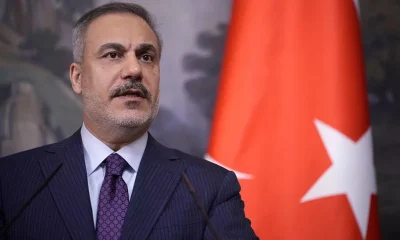
Somaliland’s response to recent remarks by Turkish Foreign Minister Hakan Fidan marks more than a diplomatic spat. It signals a strategic shift — one that places Hargeisa firmly in control of its narrative, its alliances, and its future.
When Fidan attempted to frame Somaliland’s foreign relations as a “religious disaster,” the reaction from Hargeisa was swift and calculated. Rather than engaging in emotional rebuttal, Somaliland’s Minister of the Presidency, Khadar Hussein Abdi, delivered a precise message: Mogadishu has neither the authority nor the capacity to decide Somaliland’s affairs — including who sets foot on its soil.
That statement crystallized what can now be described as the Hargeisa Doctrine: sovereignty is not requested, negotiated, or deferred. It is exercised.
For decades, Somaliland played defense — seeking validation, patiently arguing its case, and tolerating external actors who treated its stability as useful but its sovereignty as inconvenient. This moment represents a clean break from that posture. Abdi’s response did not ask Turkey to understand Somaliland’s position; it asserted it.
Ankara’s appeal to religious solidarity was not lost on Hargeisa. Somaliland’s leadership recognized it as a political tool — one designed to maintain Turkey’s entrenched interests in Mogadishu while sidelining a functioning, democratic polity that has governed itself peacefully for over 35 years. By rejecting that framing, Somaliland exposed the gap between rhetoric and reality.
What makes this episode significant is not confrontation, but confidence. Somaliland is no longer explaining why it deserves partnerships — it is choosing them. Engagements with Israel, the UAE, and other pragmatic actors reflect a foreign policy anchored in maritime security, trade integration, and long-term economic resilience, not ideological loyalty tests.
By calling out Turkey’s decades-long absence from Somaliland’s development while attempting to assert influence today, Hargeisa delivered an uncomfortable truth: strategic importance cannot be invoked selectively. Respect follows consistency.
This is modern sovereignty in action. Somaliland is positioning itself not as a “territory awaiting recognition,” but as a capable authority already delivering governance, security, and growth in one of the world’s most sensitive corridors — the Gulf of Aden and Red Sea basin.
The so-called “anger” noted in international coverage is better understood as discipline. A disciplined refusal to be spoken for. A disciplined insistence that the land belongs to those who govern it, protect it, and build its future.
In that sense, Somaliland’s message to Ankara was not defiance. It was doctrine.

FROM RECOGNITION TO REALITY — Somaliland Heads to Israel in Post-Recognition Breakthrough.
A senior delegation from the Republic of Somaliland is set to arrive in Israel on Sunday, marking the first organized visit of its kind since Israel formally recognized Somaliland as an independent sovereign state last month. The trip follows Israeli Foreign Minister Gideon Sa’ar’s historic visit to Hargeisa and signals a rapid deepening of ties after decades of quiet engagement.
The six-day visit is being facilitated by Sharaka, a regional non-governmental organization that promotes people-to-people diplomacy between Israel and the Arab and Muslim worlds. In a statement released Thursday, Sharaka described the delegation’s arrival as a “significant historical milestone” that moves relations beyond symbolism and toward sustained engagement.
According to the organizers, the Somaliland delegation will receive briefings on Israel’s history, governance structures, civil institutions, academic ecosystem and technological sector. The itinerary also places strong emphasis on Holocaust education and combating antisemitism, themes Sharaka says are central to building durable ties rooted in historical understanding rather than transactional politics.
The delegation is scheduled to visit Yad Vashem, Jerusalem’s Old City, and the Bedouin city of Rahat. It will also travel to the Gaza border region, including the site of the Nova music festival massacre, an inclusion that underscores Israel’s intent to frame the relationship within the context of its security challenges and the global fight against extremism.
The visit comes just days after Sa’ar became the first Israeli foreign minister to travel to Somaliland since Israel’s recognition. During meetings in Hargeisa, Sa’ar held talks with President Abdirahman Mohamed Abdullahi and other senior officials, laying the groundwork for political, economic and strategic cooperation. While no formal agreements were announced, both sides framed the engagement as the beginning of a long-term partnership.
Sharaka’s CEO, Noam Meirov, said the organization was “proud to be part of reshaping the region,” describing the initiative as support for moderate actors confronting extremist ideologies. His remarks reflect a broader Israeli narrative that sees Somaliland as a rare case of stability, democratic practice and secular governance in a volatile region bordering the Red Sea.
For Somaliland, the visit reinforces its effort to translate Israel’s recognition into tangible diplomatic momentum. Officials in Hargeisa have long argued that sustained engagement — rather than formal recognition alone — is key to breaking international isolation and attracting investment, security cooperation and political legitimacy.
For Israel, the delegation’s arrival fits into a wider recalibration of its regional diplomacy, one that prioritizes new partners along critical maritime corridors at a moment of heightened Red Sea instability. Together, the reciprocal visits suggest that the relationship is moving quickly from a breakthrough announcement to a structured, strategic alignment — one likely to attract close scrutiny across the Horn of Africa and beyond.

HISTORY SEALED IN HARGEISA – President Irro Hosts Israeli Foreign Minister Gideon Sa’ar in Landmark Post-Recognition Talks.
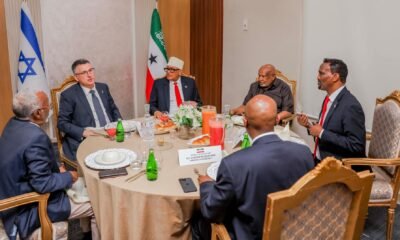
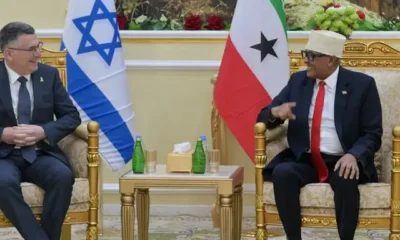
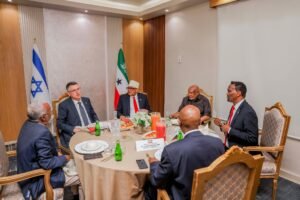
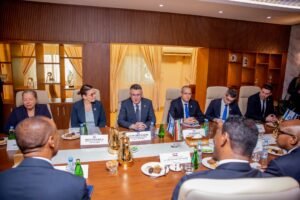
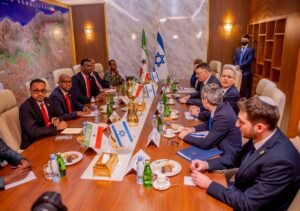
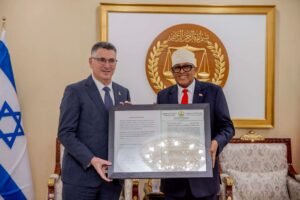
HARGEISA — President Abdirahman Mohamed Abdullahi (Irro) today received Israeli Foreign Minister Gideon Sa’ar and his delegation at the Presidential Palace, marking the highest-level foreign visit to Somaliland in more than three decades and the first since Israel formally recognized Somaliland’s sovereignty.
Speaking on behalf of the nation, President Irro thanked the government and people of Israel for what he described as a “courageous and historic” decision, saying the recognition carries profound diplomatic, economic, and developmental implications not only for Somaliland, but for the Horn of Africa and beyond.
“Today is a great day for the Republic of Somaliland,” the president said, stressing that Israel’s recognition strengthens Somaliland’s role as a pillar of peace, democracy, freedom of expression, and regional stability. He said the move opens wide opportunities in investment, trade, technology, energy, water, minerals, agriculture, and critical economic infrastructure.
President Irro underscored that Somaliland is fully ready to cooperate with Israel across all sectors, framing the relationship as one built on shared strategic interests and mutual respect.
For his part, Foreign Minister Sa’ar said Israel is proud to have granted full recognition to Somaliland and is prepared to establish deep, comprehensive relations that benefit both nations and their peoples. He emphasized that Israel’s decision is grounded in the right of the Somaliland people to self-determination, as well as long-term security and stability in the Horn of Africa.
Sa’ar praised Somaliland’s democratic governance, internal peace, and constructive regional role, calling Somaliland a responsible state that contributes to global security and sustainable development. He added that Israel is committed to presenting Somaliland’s historical and independent statehood to the international community — a history he said has been ignored for far too long.
In a symbolic moment, Sa’ar noted that Israel recognized Somaliland on 26 June 1960, reaffirmed that recognition on 26 December 2025, and “will stand with Somaliland into the future.”
The visit, the first by a foreign minister in 34 years, marks the formal launch of a new political, strategic, and security partnership between Somaliland and Israel — one that signals a decisive shift from diplomatic isolation to global engagement.
President Irro closed by assuring Israel that Somaliland is a reliable partner, strategically located and ready to play a central role in future peace and security across the Horn of Africa and the wider world.
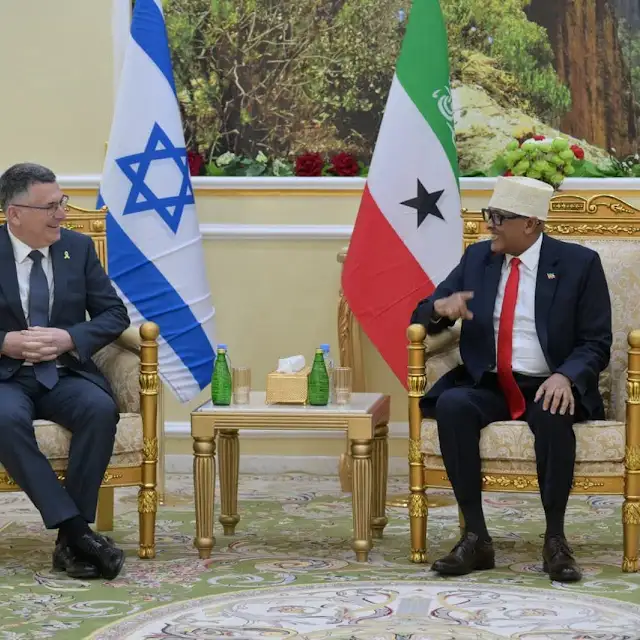
Israeli Foreign Minister Gideon Sa’ar Meets Somaliland President in First Official Visit Since Recognition.
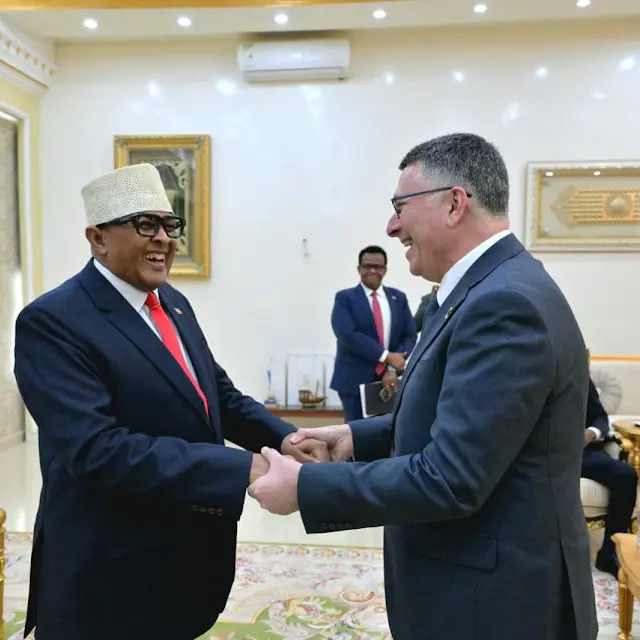
HARGEISA — Israeli Foreign Minister Gideon Sa’ar met Tuesday with Somaliland President Abdirahman Mohamed Abdullahi, marking the first official Israeli visit since Israel formally recognized Somaliland as a sovereign state late last year — a move that followed months of secret diplomacy and has begun reshaping political alignments in the Horn of Africa.
Sa’ar’s arrival in Hargeisa comes nearly two weeks after Israel became the first United Nations member state to recognize Somaliland, ending more than three decades of diplomatic limbo for the self-governing republic. Somaliland’s presidency confirmed that the Israeli delegation was received by senior officials at the airport and held meetings with top government figures, with a joint press engagement expected later in the day.
Israel’s recognition, announced on December 26, was formalized through a joint declaration signed by Prime Minister Benjamin Netanyahu and President Abdullahi. The agreement laid the groundwork for full diplomatic relations, including the exchange of ambassadors and the opening of embassies in both countries.
Behind the public announcement was a long and carefully managed process. According to diplomatic sources, the decision followed months of quiet backchannel talks led by Sa’ar, Mossad officials, and then–national security adviser Tzachi Hanegbi. Joint teams traveled discreetly between Israel and Somaliland, and senior Somaliland officials were hosted in Israel under strict confidentiality. Final approval was granted by Netanyahu in October.
The timing of the recognition was also strategic. Sources say the joint declaration was finalized weeks in advance but deliberately delayed at Somaliland’s request to allow preparations against potential hostile responses, particularly from Yemen’s Houthi rebels across the Gulf of Aden. Only after those security measures were in place did both sides move forward publicly.
Netanyahu, speaking with President Abdullahi by phone after the recognition, invited him to visit Israel “as soon as possible,” an offer Abdullahi accepted. Somaliland has also indicated its intention to join the Abraham Accords, the U.S.-brokered framework that normalized relations between Israel and several Arab states, including the United Arab Emirates and Bahrain.
Israeli officials have framed the new relationship as multidimensional, highlighting potential cooperation in agriculture, health, technology, and trade. Strategically, Somaliland’s location along the Gulf of Aden — directly across from Houthi-controlled areas of Yemen — gives it outsized importance amid Red Sea instability.
Somaliland last week rejected claims by Somalia’s presidency that it had agreed to accept Gazan refugees or host Israeli military bases in exchange for recognition. Both Somaliland and Israel have denied any such quid pro quo, and Israel’s recognition announcement made no reference to conditions.
Diplomatic sources suggest Israel’s move may not stand alone for long. Countries including the United Arab Emirates, Ethiopia, India, Morocco, and Kenya are now widely viewed as potential next movers.
For Somaliland, Sa’ar’s visit is more than symbolism. It is the first visible proof that recognition is no longer theoretical — it has begun to translate into state-to-state diplomacy on the ground.

US War Plans Against Iran Enter Advanced Stage

Somalia Ends UAE Defense Pact, Opening New Diplomatic Path for Somaliland

Greenland: Europe Draws Red Line as Trump Threatens Force


-
 Analysis10 months ago
Saudi Arabia’s Billion-Dollar Bid for Eritrea’s Assab Port
-

 Opinion17 years ago
Somaliland Needs a Paradigm Change: Now or Never!
-
 Interagency Assessment4 weeks ago
TOP SECRET SHIFT: U.S. MILITARY ORDERED INTO SOMALILAND BY LAW
-

 Somaliland3 months ago
Somaliland Recognition: US, UK, Israel, and Gulf Bloc Poised for Historic Shift
-
 EDITORIAL1 year ago
Dr. Edna Adan Champions the Evolving Partnership Between Somaliland and Ethiopia
-
 ASSESSMENTS10 months ago
Operation Geel Exposes the Truth: International Community’s Reluctance to Embrace Somaliland as a Strategic Ally
-
 Somaliland12 months ago
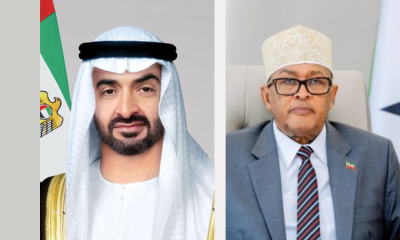
Somaliland and UAE Elevate Ties to Comprehensive Strategic Partnership
-
Top stories2 years ago
Ireland, Norway and Spain to recognize Palestinian state