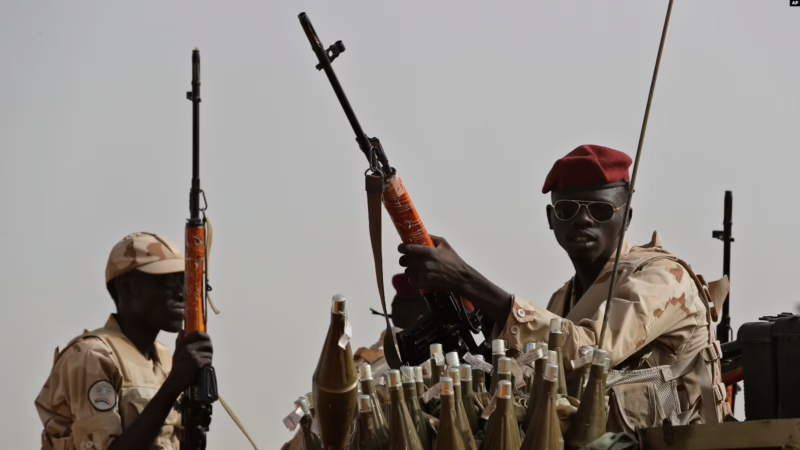
The siege on the Cairo Hotel in Beledweyne by Al-Shabaab militants is a grim reminder of the ongoing security challenges in Somalia. The attack, which tragically killed at least six individuals, was strategically aimed at disrupting a crucial meeting discussing plans to combat the militant group. This brutal act underscores Al-Shabaab’s persistent threat to the region, their continuous efforts to destabilize the Somali government, and their harsh opposition to any form of government structure or intervention that contradicts their extremist views.
Al-Shabaab’s method of using high-impact tactics like car bombs followed by armed assaults on significant targets such as hotels hosting government and military officials, indicates their strategic intent to sow terror and halt progress toward national stability and security. These attacks not only aim to cause immediate disruption and casualties but also to foster a longer-term climate of fear and instability.
The varying reports on the casualties and the unfolding of the attack highlight the chaotic nature of such incidents and the difficulties in obtaining clear and immediate information from conflict zones. Eyewitness accounts like those of shopkeeper Ali Suleiman bring to light the violent and sudden nature of the attacks that civilians in these areas have to endure.
This event is part of a broader pattern of violence by Al-Shabaab, who has for over a decade and a half attempted to enforce their radical interpretation of Islamic law across Somalia. Despite significant efforts by the Somali government and international partners to counteract their influence, Al-Shabaab maintains control over parts of rural Somalia and continues to pose a severe threat not just to Somalia but to regional stability.
The ongoing siege and the resilience of Al-Shabaab illustrate the critical need for continued and enhanced counter-terrorism strategies. This includes not only military actions but also community engagement and initiatives aimed at undermining the support base of Al-Shabaab among local populations. The international community, along with local governments, must intensify their efforts to provide not just military support but also humanitarian aid to rebuild the regions ravaged by years of conflict and to prevent the extremist group from exploiting local grievances.