New African Union Commission leader lauds Mogadishu ties, focuses on regional stability and counterterrorism cooperation.

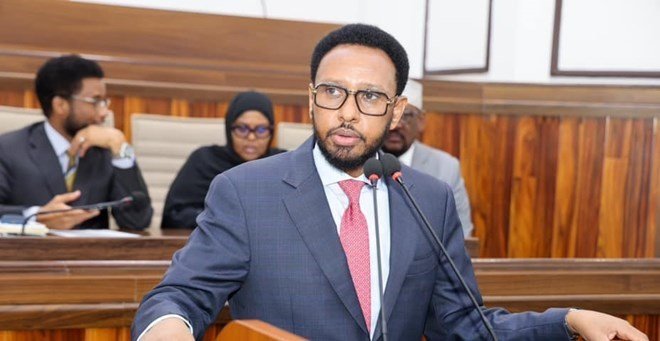
Mahmoud Ali Youssouf’s arrival in Mogadishu marks not only his first official visit to Somalia since becoming Chairperson of the African Union (AU) Commission in February 2025 but also a moment of strategic reaffirmation for AU-Horn of Africa relations. Welcomed with full honors at Aden Adde International Airport by Deputy Prime Minister Salah Ahmed Jama and other senior officials, Youssouf’s visit underscores Somalia’s pivotal role in shaping the future trajectory of the African Union’s engagement in the region.
Somalia’s endorsement of Youssouf’s candidacy—following the withdrawal of its own nominee, Fawzia Yusuf Adam—demonstrates a calculated diplomatic alignment with Djibouti. President Hassan Sheikh Mohamud’s June 2024 decision to back Youssouf reflected a strategic push toward regional solidarity and collective leadership within the Intergovernmental Authority on Development (IGAD) framework.
Youssouf’s long tenure as Djibouti’s foreign minister gives him a deep, nuanced understanding of Somalia’s internal political dynamics, security challenges, and regional entanglements. That experience is likely to shape his approach to AU initiatives such as the drawdown and transformation of the AU Transition Mission in Somalia (ATMIS), the delicate balance between federal and state authorities, and the ongoing insurgency by al-Shabaab.
This visit is expected to involve high-level consultations with both President Mohamud and Prime Minister Hamza Abdi Barre. The timing is critical: Somalia is navigating multiple transitions—political, economic, and security-related—all requiring strong AU support and African-led coordination.
Under Youssouf’s leadership, the AU Commission is expected to promote a more agile and regionally attuned response to these challenges. His diplomatic background and proximity to Somali affairs position him to act as both mediator and mobilizer of resources, especially at a time when the effectiveness and legacy of ATMIS are under scrutiny.
For Somalia, the visit reinforces its renewed diplomatic capital within continental institutions. Mogadishu’s influence in shaping AU leadership—and its willingness to prioritize regional interests over national ambition—may offer it greater leverage in securing political and technical support.
Youssouf’s tenure could signal a shift from continental bureaucracy to localized engagement, where voices from the Horn of Africa drive the agenda. If that momentum holds, Somalia may gain a stronger advocate in Addis Ababa as it works to stabilize governance, advance development, and eventually transition from ATMIS to a fully sovereign national security posture.