Once hunted as an Al-Qaeda commander, Ahmad al-Sharaa could soon be hailed as a world leader. His rise from blood-soaked militancy to potential UN speaker exposes the darkest hypocrisy of global diplomacy.
The United Nations podium has hosted presidents, kings, and revolutionaries. This September, it may also host a man once on the FBI’s most-wanted list: Ahmad al-Sharaa, better known as Julani, the former Al-Qaeda emir of Syria’s Jabhat al-Nusra.
“If the UN hands its podium to a former Al-Qaeda warlord, what hope remains for justice? Terrorists belong in tribunals — not in suits before the world.”
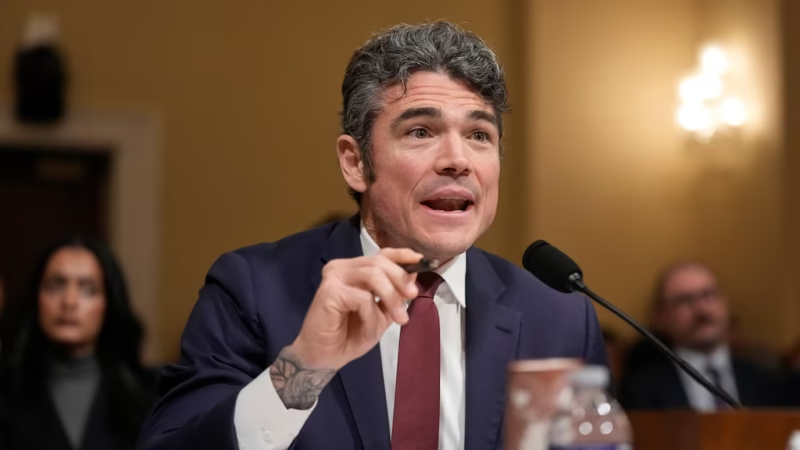
Imagine the scene: a hall packed with diplomats, cameras flashing, and beneath the iconic blue flag, Julani — not in fatigues but in a tailored suit — presenting himself as a statesman. For survivors of his massacres, for families of the disappeared, it would be a grotesque betrayal. Instead of standing trial at The Hague, the architect of jihadist terror would be repackaged as a political leader.
This is not pragmatism. It is capitulation. The West, desperate for shortcuts in a region it never understood, has often flirted with the rehabilitation of killers. But elevating Julani is something far worse: it legitimizes the Kalashnikov as a steppingstone to diplomacy, rewriting the rules of power in blood.
What message does this send to the youth of the Middle East? That building schools, reforming peacefully, or negotiating diplomatically is futile — and that the real path to power runs through suicide bombings, sectarian cleansing, and the torching of cities. The vow of “Never Again” would ring hollow, the institutions built after 1945 exposed as empty theater.
The consequences would ripple far beyond Syria. Rewarding terror with microphones dismantles the global campaign against ISIS and its affiliates. If Al-Qaeda’s men can rebrand into politicians, then extremism is no longer shameful. It becomes a shortcut to international prestige.
This September is a test not just for the UN, but for every democracy still claiming to uphold human rights. The line must be drawn: war criminals cannot be partners, and terrorists cannot be statesmen. Civil society must take its stand too. Protestors should be outside the UN in New York before the opening speeches begin, holding signs that tell the world plainly: Julani is a butcher, not a diplomat.
History will not forgive the cynics who let terror wear a suit and take the stage. The UN’s blue flag cannot be allowed to cover the bloodstains of Al-Qaeda.
From Cell to Summit: The Prisoner Who Became Syria’s President