Somalia has denied reports of secret contacts with Israel after WARYATV investigations exposed arms trafficking routes, Houthi–Al-Shabaab links, and covert security communications. Intelligence evidence tells a different story.
Somalia’s categorical denial of any relationship with Israel is no longer a simple diplomatic position. It is a forced posture—shaped by regional pressure, internal insecurity, and mounting intelligence exposure—that increasingly conflicts with documented reality.
This week, Somalia’s State Minister for Foreign Affairs, Ali Mohamed Omar (Ali Balcad), rejected WARYATV reports detailing covert communications between Mogadishu and Israel. He insisted Somalia has neither initiated nor planned diplomatic engagement with Tel Aviv, calling the reports false despite their circulation in Israeli media and confirmation by Israeli Deputy Foreign Minister Sharren Miriam Haskel.
The denial did not emerge in isolation. According to diplomatic sources familiar with the matter, Qatar and several Arab governments pressured Mogadishu to publicly disavow the Israeli disclosure, fearing political backlash across the Arab League and the OIC. Somalia’s position, therefore, reflects regional coercion rather than strategic autonomy.
Haskel’s statement to Israeli media—that Israel has held discussions with several African states, including Somalia—was not speculative language. It was carefully calibrated confirmation.
Combined with historical reporting that Somali President Hassan Sheikh Mohamud previously held a secret meeting with Prime Minister Benjamin Netanyahu, the claim fits a well-established pattern: Mogadishu engages Israel quietly while denying it loudly.
This contradiction mirrors Somalia’s broader credibility crisis.
Only weeks earlier, the same foreign minister denied that arms were flowing through Somali territory to Yemen’s Houthis—despite overwhelming maritime intelligence, UN reporting, and regional security assessments identifying Somalia’s southern coastline as a primary smuggling corridor.
That denial collapsed under scrutiny, particularly as Somali defense officials simultaneously held talks in Cairo with Yemeni counterparts on curbing illegal weapons movement.
The pattern is now unmistakable. Mogadishu denies realities that it cannot politically afford to admit.
The strategic context explains why. Somalia sits at the center of a rapidly evolving security convergence linking the Houthis, Al-Shabaab, Iranian logistics networks, and opportunistic Russian involvement.
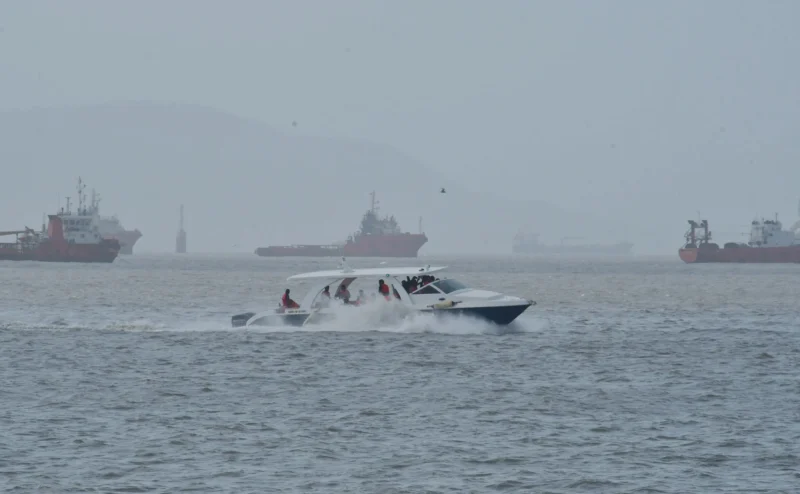
Intelligence assessments—some first revealed by WARYATV in late 2024—confirm that Somali coastal routes are being used to move weapons, fighters, and technical expertise across the Gulf of Aden. This hybrid network has transformed the Red Sea into a frontline of proxy warfare.
Faced with this escalating threat, Somalia lacks the maritime capacity, intelligence infrastructure, and territorial control to respond independently. Israel, by contrast, possesses unmatched Red Sea surveillance capabilities. Quiet engagement with Jerusalem is therefore a strategic necessity—not an ideological shift—but one Mogadishu cannot acknowledge without alienating Gulf patrons and Arab allies.
This explains the political theatre now unfolding: public denials paired with private coordination.
The irony is severe. Somalia insists no trafficking corridors exist while seeking assistance from the one state capable of mapping and dismantling those corridors. It denies Israeli engagement while benefiting from Israeli intelligence visibility. This duality is not diplomacy—it is survival management.
For international actors, the implications are significant. Somalia’s denials are not reliable indicators of conditions on the ground. They are defensive narratives designed to preserve aid flows, diplomatic legitimacy, and regional alignment. Meanwhile, the real security architecture of the Red Sea is being shaped through informal, covert, and increasingly unstable partnerships.
The contrast with Somaliland is impossible to ignore. While Mogadishu struggles to conceal ungoverned coastlines and clandestine dependencies, Somaliland has demonstrated consistent maritime control, transparency, and strategic reliability—without denial or duplicity. This divergence is now central to U.S., European, and Red Sea security calculations.
Somalia’s Israel denial is therefore not the end of the story. It is evidence that the story has already moved beyond public diplomacy. The Horn of Africa has entered a phase where political taboos collapse under operational pressure—and where denial itself becomes an intelligence signal.
In that environment, Mogadishu’s loudest insistence may be its clearest admission.
Mogadishu Caught Lying: Intelligence Exposes Massive Arms Pipeline to Houthis
Israel Breaks the Silence: Mogadishu’s Secret Plea for Help Exposed
The Secret Maritime Corridor Linking Yemen’s Houthis to Somalia’s Militants