
Real Danger
From Cultural Figure to Extremist Inciter: The Yusuf Shaacir Case Explained

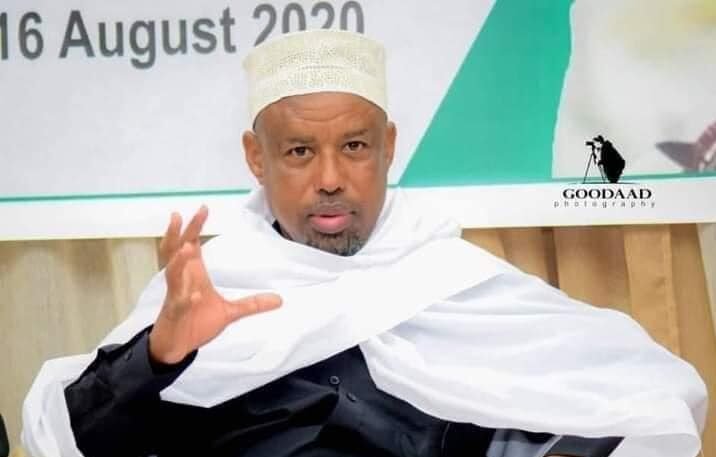
Inside the Rise of Yusuf Shaacir and the Growing Threat of Extremist Incitement in Somaliland.
For years, Somaliland has sold itself—credibly—as an island of stability in a volatile region. That reputation now faces a quieter but more insidious test: the rise of ideological inciters who weaponize religion, social media, and institutional proximity to intimidate civil society and normalize extremism. Few figures illustrate this danger more clearly than Yusuf Osman Abdulleh, publicly known as Yusuf Shaacir.
Once associated with cultural programming in Hargeisa, Yusuf’s public trajectory shifted sharply after professional disputes and dismissal from those spaces. What followed was not withdrawal, but escalation. He recast himself as a self-appointed “fighter” for Islam, deploying a rhetoric that frames artists, educators, women’s rights advocates, and civic institutions as enemies of faith.
No evidence has been produced to substantiate his claims of conspiracies or anti-Islamic agendas. Their function appears political: to mobilize anger, delegitimize targets, and silence dissent.
The method matters. Yusuf repeatedly employs takfir—branding opponents as apostates or “anti-Islamic.” In the Horn of Africa, such labels are not abstract insults; they are signals that can place individuals at real risk of violence.
Women’s rights activists have been singled out, with some privately warning they fear attack after being publicly denounced online. This is how intimidation scales—through repetition, amplification, and plausible deniability.
His rhetoric goes further. Yusuf has circulated antisemitic claims about Jewish visitors in Hargeisa, language that security observers say heightened risk assessments and forced emergency departures.
He also attacks secular education, especially where girls are enrolled, misrepresenting science and biology as assaults on religion. Analysts note the ideological overlap with transnational extremist narratives that treat education itself as a threat.
What elevates concern is proximity to institutions. Yusuf has publicly cited advisory roles linked to legislative and education bodies, a claim that—if left unaddressed—provides a legitimacy shield for extremist messaging. Security reviewers warn that this normalization is precisely how radical ideas migrate from the margins to the mainstream.
Investigators are also examining credible leads suggesting external influence and possible alignment with Al-Shabaab propaganda methods, including youth mobilization and social-media recruitment. These remain investigative findings, not judicial conclusions. But the pattern—incitement, target selection, and digital amplification—fits a known playbook.
Somaliland’s strength has always been governance discipline. The test now is whether institutions act early—lawfully and transparently—to enforce constitutional limits on incitement, protect those targeted, and deny extremists the oxygen of legitimacy.
This is not about policing belief. It is about drawing a clear line between faith and fear, criticism and coercion.
Words, when repeated with intent, can become weapons. Somaliland has the tools to prevent that transformation. The question is whether it will use them in time.
Digital Footprint and Evidence
Yusuf utilizes social media platforms to disseminate his hate speech, reaching audiences far beyond Somaliland.
Primary Channels:
Facebook Page: Abw.YuusufShaacir
Facebook Account: Yuusuf Shaacir Personal
Video Evidence of Extremist Speeches (Somali Language):
Speech 1: Declaration of War on Secularism
Speech 2: Incitement Against Civil Society
Speech 5: Targeting Individuals
Speech 6: Antisemitic Commentary
Facebook Video: Mobilization Call
A Clear and Present Danger
Yusuf Shaacir represents a critical threat to the peace and tolerance that are the hallmarks of Somaliland society. He is not merely a conservative critic; he is an active agent of radicalization, using the cover of state employment to legitimize a campaign of terror and incitement.
His actions violate Article 10 of the Somaliland Constitution and align with the UN definition of violent extremism. Immediate containment and legal action are required to dismantle the platform of this self-appointed “fighter” before his rhetoric converts into lethal action.
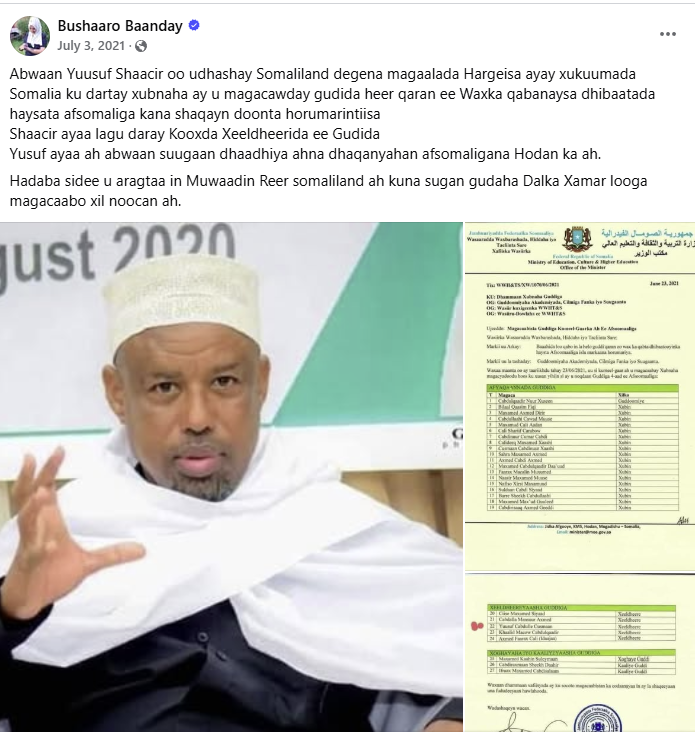
Profiling Yusuf Shaacir: The Anatomy of an Extremist Inciter















Why Arab Security Dreams Collapse Under Reality

Peace Talks Collapse—Iran Rejects US Demands

Putin and Erdogan Push Ceasefire as Energy Risks Rise


-

 TECH2 weeks ago
China Bets on an AI-Powered Military Future
-

 US-Israel war on Iran2 weeks ago
Waves of Mystery Drones Breach U.S. Nuclear Base Airspace
-
 Terrorism6 days ago
Egypt Uncovers Alleged Plan to Down Presidential Plane
-
 US-Israel war on Iran2 weeks ago
Saudi Arabia Warns of Military Action After Iranian Missile Strike
-
 US-Israel war on Iran2 weeks ago
Former CIA Chief Blames White House for Escalating Iran War Crisis
-

 Top stories1 week ago
Saudi Arabia Deepens Defense Ties with Ukraine
-
 US-Israel war on Iran2 weeks ago
Iran’s Guard Leadership Hit Hard in Escalating Strikes
-
 Analysis2 weeks ago
Inside the IRGC’s Quiet Rebuild of Hezbollah