
Editor's Pick
Why the U.S. Is Turning Abandoned Prisons into ICE Detention Centers

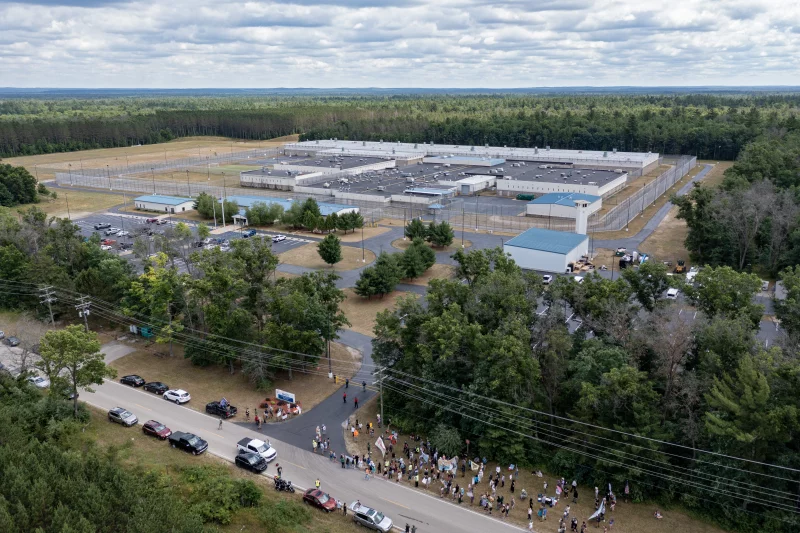
Across the United States, long-shuttered prisons — some with histories of abuse, neglect, and civil rights violations — are being quietly reopened to serve as new detention centers for immigrants under the custody of U.S. Immigration and Customs Enforcement (ICE). What had once been facilities closed by local authorities for failing basic standards are now being repurposed amid a historic surge in immigration enforcement.
The Trump administration has dramatically expanded immigration detention as part of its effort to accelerate deportations and “secure the border,” creating a demand for tens of thousands of additional beds beyond the federal government’s existing infrastructure. To meet that demand, ICE has reportedly turned to private prison companies to reactivate previously inactive facilities that had been mothballed — despite troubling past records.
According to El País, facilities such as the North Lake Correctional Facility in Michigan and the Midwest Regional Reception Center (MRRC) in Kansas have been reopened or are being pressed into service to house migrants, with private operators CoreCivic and GEO Group securing no-bid federal contracts to run them. Those companies have histories of civil rights complaints and oversight failures, raising alarms among activists and human rights groups who say the expansion risks repeating past abuses under a new designation. EL PAÍS English
Critics note that these facilities were closed for reasons including systemic understaffing, dangerous conditions, and, in some cases, documented violence and neglect — conditions that civil liberties organizations fear will resurface once inmates are again confined behind their walls. El País reports that reopening such centers has boosted stocks for CoreCivic and GEO Group even as advocacy groups warn that “cashing in” on immigrant detention escalates a system already under heavy scrutiny.
Local Governments Left in the Dark
In some communities, local officials say they have little information about whether or how these closed prisons might be repurposed. In Colorado, KUNC reported that mayors and county administrators in several towns learned only through news coverage that ICE had expressed interest in reopening shuttered private prisons to detain immigrants. Contracts with private operators, they said, would not require local approval, leaving communities unsure about what might come.
Officials in towns like Walsenburg and Hudson noted they had no direct notice of federal plans, and that private prison companies had approached ICE about potential contracts, but the details remained unclear. In some instances, companies had begun advertising for detention staff positions contingent on facilities being revived — a sign that momentum toward reopening is building even without clear community buy-in.
A Broader Pattern of Expansion
This push to reopen old facilities fits into a larger federal strategy of rapidly expanding detention capacity. ICE has historically relied on private prison companies to provide space beyond what the government operates directly, but the sheer scale of reopened sites and the speed with which they are being repurposed have alarmed advocates. Public records and reporting suggest that ICE already detains most immigrants in facilities run by for-profit contractors with longstanding criticisms for poor treatment and oversight, according to the Brennan Center for Justice and other watchdog organizations.
Civil liberties groups argue that rather than investing in humane alternatives to detention or addressing root causes of migration, the federal government is doubling down on a punitive model that echoes the broader U.S. carceral system. The specter of reopening prisons that had been closed due to poor conditions or community opposition raises questions about whether lessons from past failures have been learned — or simply ignored in the rush to expand capacity.
Human Rights and Policy Implications
With immigration arrests and detention numbers far outpacing historical norms, reopening old prisons signals a shift toward scaling up enforcement infrastructure at a time of sharp debate over immigration policy. Critics worry that the human cost of detention — including inadequate medical care, isolation, and limited oversight — will be repeated if new safeguards are not implemented. Meanwhile, many communities remain largely unaware of how federal decisions will affect local resources and social dynamics.
At the core of the controversy lies a broader question about American values and civil liberties: can a system that expands detention capacity without robust accountability, transparency, and respect for human dignity truly claim to protect the rule of law?
In the process of reopening these shuttered prisons for ICE use, some fear the answer is slipping further away.












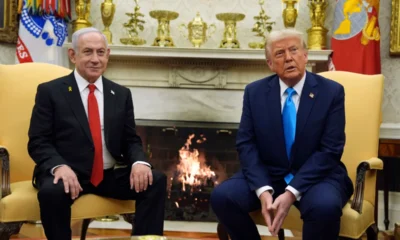


A European vote on Tibet just triggered a sharp response from Beijing — and reignited a global dispute over religion and power.
Tensions between China and the Czech Republic have escalated after Prague’s Senate passed a resolution supporting the Tibetan people’s right to choose the next Dalai Lama—a move Beijing has condemned as interference in its internal affairs.
The dispute centers on one of the most sensitive issues in Chinese politics: succession in Tibetan Buddhism. The resolution urges the Czech government to back the “free choice” of the 15th Dalai Lama, directly challenging Beijing’s longstanding claim that it holds ultimate authority over the process.
Chinese officials reacted swiftly.
In a statement, Beijing’s embassy in Prague accused Czech lawmakers of disregarding China’s “solemn position” on Tibet, insisting that Tibetan affairs are strictly domestic matters. The response reflects how deeply the issue cuts into China’s broader concerns about sovereignty and territorial integrity.
At the heart of the disagreement is the future of Dalai Lama, the exiled spiritual leader who fled Tibet in 1959 following a failed uprising. While widely regarded internationally as a religious figure and symbol of nonviolent resistance, Beijing views him as a political actor advocating separatism.
That divergence has only sharpened under Xi Jinping, whose administration has expanded state control over religious institutions in Tibet. Policies now require Tibetan Buddhism to align with the Chinese political system, reinforcing the government’s position that it will oversee the selection of the next Dalai Lama.
The Czech resolution challenges that framework.
By endorsing Tibetan autonomy in the succession process, Prague is aligning itself with a broader international view that religious leadership should remain independent of state control. The move follows a series of actions by Czech officials—including meetings with the Dalai Lama—that have already strained relations with Beijing.
For China, the implications go beyond symbolism.
Control over the Dalai Lama’s succession is seen as critical to maintaining long-term stability in Tibet. Any external support for alternative mechanisms is viewed as a threat to that objective—and, by extension, to national unity.
For Europe, the episode reflects a familiar dilemma.
Balancing economic ties with China against political commitments to human rights and religious freedom has become increasingly complex. The Czech Senate’s decision signals a willingness, at least in some capitals, to take a more assertive stance—even at the risk of diplomatic fallout.
What emerges is more than a bilateral dispute.
It is part of a broader contest over who defines legitimacy: a state asserting sovereignty over religious institutions, or a global community advocating for autonomy and self-determination.
As the question of succession looms, that contest is likely to intensify—well beyond the borders of Tibet.

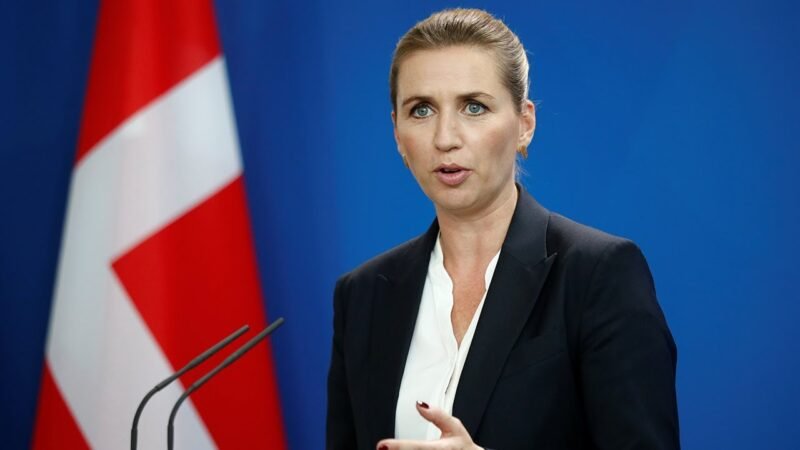
Trump, Greenland, global tension—but Danish voters care about one thing: their bills.
As Denmark heads into a closely contested election, the campaign has been shaped by a paradox: global tensions dominate headlines, but domestic concerns are driving voter decisions.
Prime Minister Mette Frederiksen has framed her bid for a third term around stability, highlighting her handling of international crises—from the war in Ukraine to tensions with Donald Trump over Greenland. Her message, “safe through uncertain times,” aims to capitalize on a moment when geopolitical risks feel unusually close.
That strategy has had some effect. After months of declining support, Frederiksen’s Social Democrats have recovered modestly in the polls, aided in part by a rally-around-the-flag response to renewed disputes over Greenland.
But inside Denmark, the political conversation is far more grounded.
Voters are focused on rising living costs, housing affordability, and inequality. Debates over energy policy—including the country’s long-standing ban on nuclear power—and immigration rules have also taken center stage. Even niche issues, from agricultural policy to animal welfare, have found space in the campaign.
The result is an election where global crises shape the backdrop, but not the ballot.
Frederiksen faces a fragmented field. Troels Lund Poulsen, leader of the center-right Venstre party, has campaigned on tax cuts and tighter immigration controls, while Alex Vanopslagh has pushed a similar economic message alongside promises to reduce bureaucracy. Polling suggests a tight race within the right-leaning bloc, even as internal controversies have complicated campaigns.
Denmark’s political system adds another layer of uncertainty. With multiple parties competing, coalition-building is inevitable—and small shifts can have outsized consequences.
That is where Greenland enters the equation.
As a self-governing territory, Greenland sends two representatives to Denmark’s parliament. In a close election, those seats can help determine which bloc forms a government.
This year, the stakes are higher. Greenland’s own political trajectory—marked by a gradual push toward greater autonomy and eventual independence—means its representatives may use their leverage to secure concessions.
The tensions surrounding Greenland have been amplified by U.S. interest in the territory, but they also reflect deeper historical and political dynamics between Copenhagen and Nuuk.
For Frederiksen, the outcome could be significant. Current projections suggest her “Red Bloc” may remain the largest grouping, though possibly without a clear majority. A third term would cement her as one of Denmark’s longest-serving leaders—but also potentially at the head of a weaker coalition.
For voters, however, the decision appears less about geopolitics and more about everyday realities.
In a world defined by instability, Denmark’s election offers a reminder that even amid global crises, domestic pressures—prices, wages, and public services—often carry the greatest political weight.
And in this race, those pressures may ultimately decide who governs.
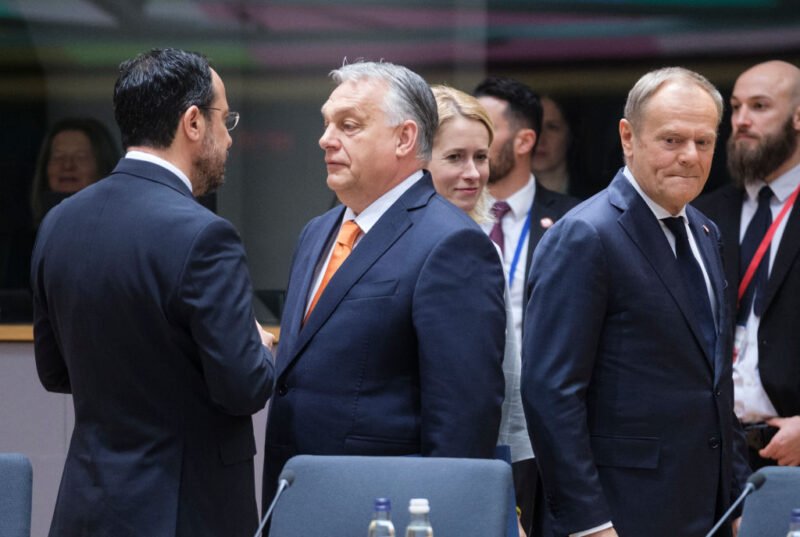
EU Demands Answers From Hungary Over Alleged Russia Leaks Amid Growing Trust Crisis.
A political storm is building inside the European Union after allegations that Hungary’s foreign minister may have shared confidential EU discussions with Russia, raising urgent questions about trust, loyalty, and the integrity of the bloc’s decision-making.
The European Commission has formally called on Budapest to clarify what it described as “concerning” reports that Foreign Minister Péter Szijjártó was in regular contact with Russian Foreign Minister Sergei Lavrov during closed-door EU Council meetings.
According to reports, the communication allegedly took place during breaks in high-level sessions in Brussels, where sensitive policy discussions are typically held under strict confidentiality.
Hungary has denied the claims, dismissing them as false. But the reaction from European officials suggests the issue goes beyond a routine diplomatic dispute.
At stake is a foundational principle of the European Union: trust among member states. EU Council meetings are designed to allow governments to speak candidly, negotiate policy, and align strategies—particularly on issues as sensitive as sanctions, security, and relations with Russia. If those discussions are being relayed externally, even partially, it would undermine the very mechanism that allows the bloc to function cohesively.
The concern is not theoretical. Tensions with Moscow remain high following Russia’s invasion of Ukraine, and the EU has worked to maintain a united front through sanctions and coordinated policy responses. Hungary, however, has increasingly positioned itself as an outlier.
Prime Minister Viktor Orbán’s government has maintained closer ties with the Kremlin than most European capitals, continuing to import Russian energy and engaging in regular diplomatic contact. Szijjártó himself has visited Moscow multiple times since the start of the war in Ukraine, including a recent meeting with President Vladimir Putin.
Those ties have long raised eyebrows in Brussels. The latest allegations have now sharpened those concerns into a potential institutional crisis.
European officials have stopped short of confirming whether any rules were formally breached, but both the Commission and the Council of the EU have acknowledged the seriousness of the claims. Internal assessments are underway, and officials emphasize that “sincere cooperation” among member states is essential to the bloc’s credibility and effectiveness.
Political reactions have been swift. Polish Prime Minister Donald Tusk publicly criticized the reports, suggesting that suspicions about Hungary’s conduct have existed for some time. Within Hungary, opposition figures have gone further, framing the allegations as a potential betrayal of national and European interests.
The timing adds another layer of sensitivity. Hungary is approaching a closely contested parliamentary election, with opposition leader Péter Magyar gaining ground against Orbán’s long-dominant Fidesz party. The controversy could become a central issue in the campaign, particularly if further evidence emerges.
Beyond domestic politics, the implications for the EU are significant. If trust erodes between member states, collective decision-making becomes more difficult—especially on security and foreign policy, where unity is often the bloc’s most powerful tool.
The unfolding situation leaves Brussels facing a delicate balance: pressing for accountability without deepening divisions within the union.
For now, the Commission is demanding answers. But the broader question lingers—whether this is an isolated controversy, or a sign of deeper fractures within Europe at a moment when unity is already under strain.

For eight years, the torches were lit in secret. This time, they burned in the open.
Return to Afrin Marks First Public Celebration Since Displacement and Recognition of Kurdish Rights
For the first time in eight years, Abdul Rahman Omar climbed the hills above his village in Afrin carrying a torch — not in fear, but in celebration.
Omar fled Afrin in 2018 as Turkish forces and allied Syrian factions pushed Kurdish fighters from the district in a sweeping offensive. Like thousands of others, he spent years displaced, watching from afar as his hometown changed hands and many Kurdish families lost their homes.
This spring, he returned.
On Friday evening, he joined hundreds of neighbors to celebrate Nowruz, the ancient Persian new year observed widely across the Kurdish world. For the first time in decades, the festival was not only tolerated but officially recognized by Syria’s new government as a national holiday.
Nowruz, meaning “new year” in Farsi, dates back roughly 3,000 years and is rooted in Zoroastrian tradition. It is celebrated by Kurds in Syria, Turkey, Iraq and Iran, as well as by diverse communities across faiths and in the diaspora.
In Afrin, the festivities included traditional line dances, Kurdish flags and torch-bearing processions winding into the mountains.
As flames flickered against the night sky, celebrants spelled out the word “raperin” — uprising — in fire.
The return of displaced Kurds follows a political shift in Damascus. After clashes earlier this year between government forces and the Kurdish-led Syrian Democratic Forces (SDF), an agreement was reached to integrate the SDF into the national army and restore central government authority over parts of northeastern Syria.
As part of the deal, authorities pledged to facilitate the return of Kurdish families to Afrin. Hundreds have already made the journey back, including convoys from Hassakeh province.
Interim President Ahmad al-Sharaa issued a decree recognizing Kurdish identity, granting Kurdish official language status alongside Arabic and reinstating citizenship to thousands stripped of it decades ago. Under the Assad dynasty, which ended with the ouster of Bashar al-Assad in 2024, public Nowruz celebrations were banned and Kurdish cultural expression was often suppressed.
For many returnees, the homecoming is layered with emotion. Omar said the village feels emptier than before; many friends remain abroad. Yet lighting a torch openly, without fear of arrest, carried profound meaning.
“This is the first time I go to the mountain and light the flame and I’m not afraid,” he said. “I’m celebrating my holiday and speaking in my own tongue without being afraid.”
In Afrin, the fire this year was not just symbolic of spring. It marked a fragile new beginning.
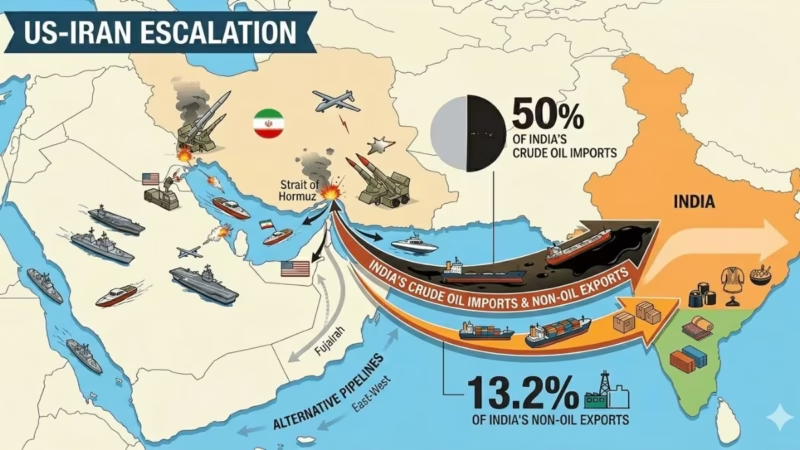
As Strait Risks Surge and Brent Spikes, New Delhi Leans on Russian Crude, Diversification and Strategic Buffers.
Forty percent of India’s oil passes through Hormuz. Brent touched $119. Russia fills the gap. Can New Delhi outmaneuver a world of chokepoints?
When Brent crude surged above $100 and briefly touched $119 amid escalating tensions around the Strait of Hormuz, India’s energy strategy faced its most serious stress test in years.
For New Delhi, the challenge is stark. Roughly 40% of India’s crude imports typically move through the Strait of Hormuz — a chokepoint that handles about one-fifth of global petroleum flows. With oil imports covering nearly 88% of domestic demand and monthly petroleum consumption hovering around 20 million tonnes, even modest spikes in freight, insurance or benchmark prices can ripple quickly through inflation, fiscal balances and household budgets.
Yet the shock has not translated immediately into higher fuel prices at the pump. State-run oil marketing companies are absorbing part of the volatility, drawing on financial buffers built during earlier periods of lower crude prices. That cushion buys time — not immunity.
India’s deeper response has been structural rather than reactive: diversification.
Before 2022, Russian crude accounted for about 2% of India’s imports. By mid-2023, it had climbed to roughly 40% at times, as discounted Urals barrels improved refinery margins and softened the import bill. Bilateral trade between New Delhi and Moscow expanded sharply, with energy at the core. Crucially, this shift did not displace Gulf suppliers. Iraq, Saudi Arabia, Kuwait and the UAE still make up a substantial share of India’s crude basket, alongside purchases from the United States, West Africa and Latin America.
The result is not reduced dependence, but greater optionality — the ability to pivot when one corridor tightens.
Recent reports suggest Indian refiners have secured additional Russian cargoes to offset Middle Eastern disruptions. Some of these flows bypass Hormuz entirely, traveling via longer Atlantic or Arctic routes. They are costlier and slower, but they diversify risk.
Strategic petroleum reserves — roughly 5.33 million tonnes in capacity — and commercial stocks offer limited but meaningful breathing room. New Delhi has so far judged them sufficient, opting not to join coordinated emergency releases under the International Energy Agency.
Instead, officials appear to be betting on supply flexibility and diplomatic maneuvering.
That diplomacy is deliberately broad. India maintains engagement with Gulf producers, deepens ties with Moscow, works within the G20 framework and expands renewable investments at home. The objective is not alignment with one bloc, but insulation from systemic shocks.
The episode underscores a shift in oil geopolitics. Today’s risk is less about absolute scarcity and more about route insecurity — shipping lanes, war-risk premia and sanctions compliance. Insurance costs have climbed; tanker routes have grown unpredictable.
At the same time, India’s importance to global oil demand is rising. The International Energy Agency projects that India will account for more than one-third of net global oil demand growth this decade, adding roughly 1 to 1.2 million barrels per day by 2030.
That demand weight gives New Delhi leverage — but also exposure.
In a fragmented energy order defined by sanctions, maritime chokepoints and geopolitical rivalry, India is not seeking ideological alignment. It is practicing risk management at scale. Between Hormuz and Moscow, the strategy is simple: keep the barrels flowing, keep prices contained, and avoid being trapped by any single corridor or coalition.
Editor's Pick
Minnesota Police Chief Intervenes After Masked ICE Agents Detain U.S. Citizen at Gunpoint

When armed men with no badges pull guns on a citizen, the line between law enforcement and lawlessness collapses.
A Minnesota police chief was forced into an extraordinary intervention after masked federal immigration agents detained a U.S. citizen at gunpoint in what critics are calling an unlawful and deeply dangerous roadside operation—an incident now fueling nationwide outrage over ICE conduct.
Dashcam footage obtained by local media shows three unidentified, masked men in an unmarked vehicle swerving to block a lone woman driving in Minnesota, forcing her to stop. The men immediately exited their car with weapons drawn, shouting commands while failing to identify themselves as law enforcement or present any warrant. The woman was dragged from her vehicle, pinned to the ground, handcuffed, and detained. She was not read her Miranda rights.
The woman, who requested anonymity, told reporters she suffered cuts and bruises during the encounter. The footage, later shared with MPR News, shows a scene indistinguishable from a violent abduction—masked men, no visible insignia, guns drawn in public traffic.
The situation began to unravel when the woman’s husband arrived and challenged the legality of the detention. One federal agent reportedly dismissed the concern outright: “I’m not getting into the legality of everything.”
The turning point came after the husband contacted his attorney and spoke with Matt Grochow, the police chief of St. Peter, whom he had known for years. Shortly afterward, the federal agents abruptly reversed course while transporting the woman toward the Twin Cities.
“ICE returned the female to our police department,” Grochow later confirmed in a statement. “I saw her, and I gave her a ride home.”
The City of St. Peter was careful to state that it did not interfere in federal enforcement actions, but acknowledged that Grochow ensured the resident’s safety and transport—an unusually direct local response to federal conduct.
The Department of Homeland Security issued a sharply contrasting account, labeling the woman an “agitator” who was allegedly stalking and obstructing law enforcement. DHS claimed officers attempted a routine traffic stop using emergency lights, and that the woman drove recklessly, ran stop signs, and attempted to ram law enforcement vehicles—assertions not clearly supported by the publicly released footage.
Public reaction was swift and unforgiving, especially given the context. The incident follows the recent fatal shootings of U.S. citizens Renee Good and Alex Pretti during federal immigration operations in Minneapolis.
Commentators across the political spectrum condemned the tactics. Technology journalist Charles Arthur wrote that the scene was “indistinguishable from a kidnapping.” Author Seth Abramson described the agents as “masked highwaymen,” warning that nothing about the footage resembled modern American policing. Science fiction writer Ramez Naam called ICE a “rogue and criminal agency,” urging its dismantling.
In response to mounting backlash, border czar Tom Homan assumed direct control of ICE operations in Minnesota last week, promising “massive changes.” Federal commander Gregory Bovino was suspended following Pretti’s killing. President Donald Trump initially pledged to de-escalate tensions—then reversed course, insisting there would be “no pullback.”
Homan has since emphasized professionalism and accountability, but the Minnesota incident has sharpened a central question now confronting Congress, courts, and the public: when federal agents operate masked, unmarked, and unaccountable, who protects citizens from the state itself?
The footage does more than expose a single encounter. It crystallizes a broader crisis of legitimacy—one in which immigration enforcement, once framed as policy, is increasingly perceived as coercive power untethered from constitutional restraint.
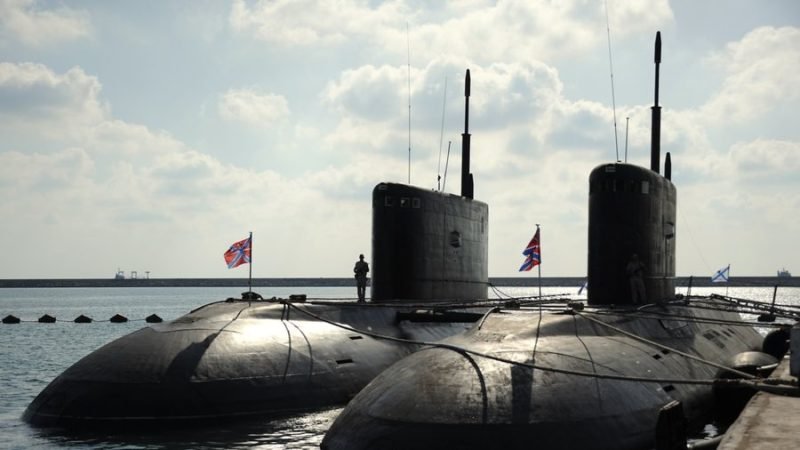
Horn of Africa’s Lawless Seas: Piracy, Smuggling and the New Scramble for Strategic Ports.
In the waters stretching from the Red Sea to the western Indian Ocean, an old threat is resurfacing just as a new contest for influence accelerates. A recent study by the International Institute for Strategic Studies argues that the Horn of Africa is entering a volatile maritime moment where piracy, weapons trafficking and geopolitical rivalry are converging rather than fading.
For years, heavy international naval patrols and tighter security on commercial vessels pushed Somali piracy into decline. That lull bred complacency. Warships redeployed to other crises, shipping companies relaxed costly protective measures, and global attention shifted to missile and drone attacks farther north in the Red Sea. Into that gap stepped a new generation of Somali pirate networks, exploiting familiar weaknesses on land and at sea.
This revival is not simply a criminal flare-up. It is rooted in Somalia’s unfinished state-building project. Political fragmentation, armed insurgency and weak coastal governance continue to deny many coastal communities lawful livelihoods and effective policing. As long as those land-based drivers persist, the report suggests, piracy will keep finding oxygen, even if it never returns to its dramatic peaks of the past.
Running parallel to piracy is a quieter but potentially more dangerous trade across the Gulf of Aden. Smuggling routes linking the Horn of Africa and Yemen have thickened into a dense commercial web moving weapons, components and dual-use technology. State-backed shipments blend with purely profit-driven trafficking. Ideology matters less than access and margins. The result is that armed groups on both sides of the water gain not only hardware but know-how, especially in missiles and unmanned systems. Techniques migrate along the same routes as parts.
At the same time, the region’s ports have become objects of intense courtship. Global powers, Gulf monarchies and ambitious regional states all seek footholds along these coasts. Yet the study cautions against a simple great-power chessboard narrative. The United States and China largely coexist uneasily rather than clash directly. Many announced projects remain tentative for years. Deals materialize only when local authorities see advantage.
That local leverage is the report’s central insight. Somalia, Somaliland and Djibouti are not passive arenas. Their leaders actively play suitors against each other to extract investment, security guarantees and political support. Port politics is therefore layered and transactional, not a straightforward foreign takeover of strategic harbors.
This balancing act is getting harder. Turkey’s growing maritime role in Somalia, Russian interest in a regional naval presence, and Ethiopia’s renewed push for sea access all add friction. Internal Somali politics, including tensions around upcoming national elections and the persistent fight against al-Shabaab, feed directly into maritime risk. Disputes on land spill outward to the shoreline.
Two late developments underline how fast the ground is shifting. Israel’s recognition of Somaliland and Somalia’s subsequent cancellation of security and port agreements with the United Arab Emirates promise to redraw parts of the maritime map. Their full impact is still unfolding, but they illustrate how diplomatic moves on land can instantly ripple across docks and sea lanes.
The picture that emerges is not a single looming showdown but a crowded, fluid contest. Piracy’s return exposes unresolved governance failures. Smuggling networks knit together distant wars. External powers probe for access but must bargain with local gatekeepers. In the Horn of Africa, the sea is not lawless because no one cares. It is lawless because too many actors, near and far, care at once, and none can impose order alone.

War Enters Dangerous New Phase as Oil Surges, Alliances Strain

Beyond the Bombs: The Real War Is Radicalism vs. Stability

Ukraine’s War Expertise Becomes Gulf’s Shield


-

 Terrorism2 months ago
America Pulls Back From Somalia but Doubles Down Next Door
-

 Top stories2 months ago
Rubio Signals Preemptive Military Option as U.S. Tightens Pressure on Iran
-

 Analysis2 months ago
How Chinese Speculators Set the Stage for the Gold and Silver Crash
-

 Russia-Ukraine War1 month ago
Russian General Boasted of Torture and Killing of Ukrainian Prisoners
-

 US-Israel war on Iran1 month ago
UK Refuses Iran Strike Access, Trump Fires Back
-
 Russia-Ukraine War1 month ago
Europe’s Spies Challenge Trump’s Ukraine Peace Optimism
-
 Top stories4 weeks ago
War Expands Across Region as Iranian Militias Join Fight
-
 US-Israel war on Iran4 weeks ago
Iran Pledges ‘Never, Ever’ to Hold Bomb-Grade Material