
Middle East
Jordan Strikes Drug, Arms Smugglers in Syria Border Region


Jordan’s military has carried out targeted strikes against drug and weapons smuggling networks operating along its northern border with Syria, escalating a campaign that reflects growing regional impatience with the narcotics trade that flourished during Syria’s long war.
According to Jordan’s state news agency, Petra, the strikes on Wednesday hit sites described as “launch points” used by trafficking groups to move arms and drugs into Jordanian territory.
The military said the operation neutralized several traffickers and destroyed factories and workshops linked to organized smuggling networks. The attacks were conducted on the basis of what Petra described as “precise intelligence” and in coordination with regional partners, though no countries were named.
Jordan’s armed forces issued a blunt warning alongside the announcement, saying they would continue to confront threats “with force at the appropriate time and place,” signaling that the operation was not an isolated action but part of a sustained security doctrine along the Syrian frontier.
On the Syrian side, state broadcaster Al-Ikhbariah reported that Jordanian air strikes hit locations in the southern and eastern countryside of Suwayda province, a sparsely governed border region long associated with smuggling routes.
A resident of the area told AFP that the bombardment was “extremely intense,” targeting farms and corridors used to move illicit goods. The Syrian Observatory for Human Rights said jets and helicopters were involved and that damage was visible at an abandoned military barracks once used by the former Assad regime.
There were no immediate reports of casualties, and authorities in Damascus offered no official response.
Independent Syrian outlet Zaman Al Wasl reported that at least one farm believed to be used as a drug storage site was struck. The outlet noted that Jordan has carried out similar operations in the past, underscoring Amman’s growing willingness to act unilaterally when cross-border trafficking is perceived as a direct national security threat.
At the center of the conflict is captagon, an addictive amphetamine-type stimulant that became synonymous with Syria’s war economy. Before the removal of President Bashar al-Assad in December 2024, captagon production had evolved into the regime’s most lucrative export, generating billions of dollars for Assad, his inner circle, and allied militias, according to analysts.
Although Damascus consistently denied involvement, the drug flooded markets across the Middle East, particularly in Gulf states, prompting record seizures and diplomatic pressure on Syria and Lebanon.
Jordan, positioned directly along key trafficking routes, has increasingly framed the drug trade as a form of asymmetric warfare—one that fuels criminal networks, destabilizes border communities, and undermines state authority. The latest strikes suggest that, even after Assad’s fall, Amman sees little evidence that the smuggling infrastructure has disappeared.
Instead, Jordan’s message appears clear: as long as trafficking networks survive in Syria’s borderlands, the battle against captagon and arms smuggling will not stop at the frontier.

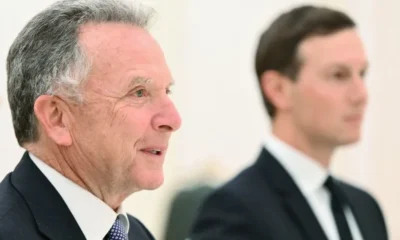








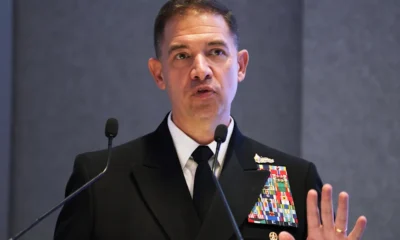

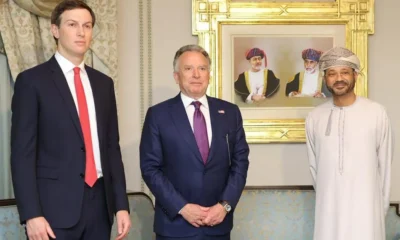

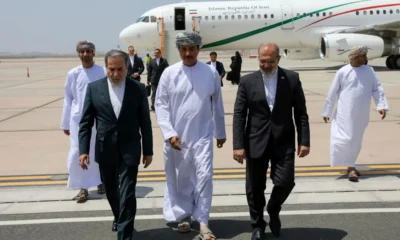

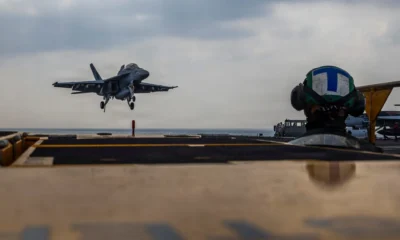

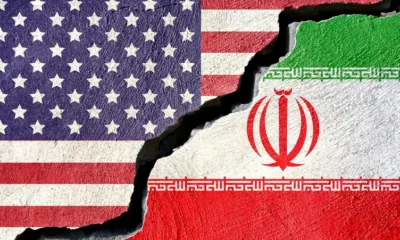

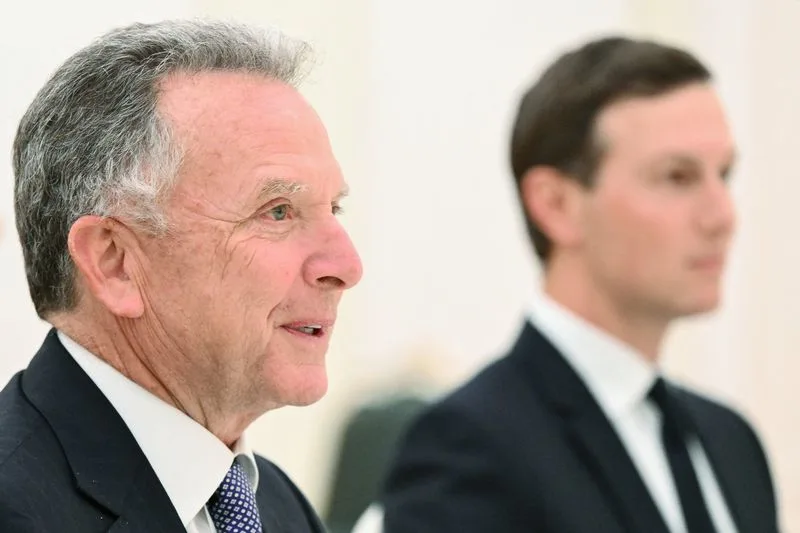
One city. Two crises. U.S. envoys head to Geneva for high-stakes talks on Iran and the Ukraine war.
Two separate rounds of high-level diplomacy — focused on Iran and the war in Ukraine — are scheduled to take place Tuesday in Geneva, according to a source briefed on the matter.
A U.S. delegation that includes special envoys Steve Witkoff and Jared Kushner is expected to meet Iranian representatives in the morning session. Officials from Oman will mediate the discussions, continuing Muscat’s role as an intermediary between Washington and Tehran.
The talks come as President Donald Trump intensifies pressure on Iran following its crackdown on domestic protests and amid an expanded U.S. naval presence in the region.
Later in the day, Witkoff and Kushner are scheduled to join trilateral negotiations involving representatives from Russia and Ukraine. The discussions are part of ongoing efforts to explore potential pathways toward ending Russia’s four-year invasion of Ukraine.
While the two diplomatic tracks are separate, their convergence in Geneva underscores the breadth of U.S. foreign policy engagement at a moment of heightened global tension.
Neither the White House nor the governments involved have publicly detailed the scope or expected outcomes of the meetings. However, the simultaneous talks highlight Washington’s attempt to manage two major geopolitical crises through parallel diplomatic channels.
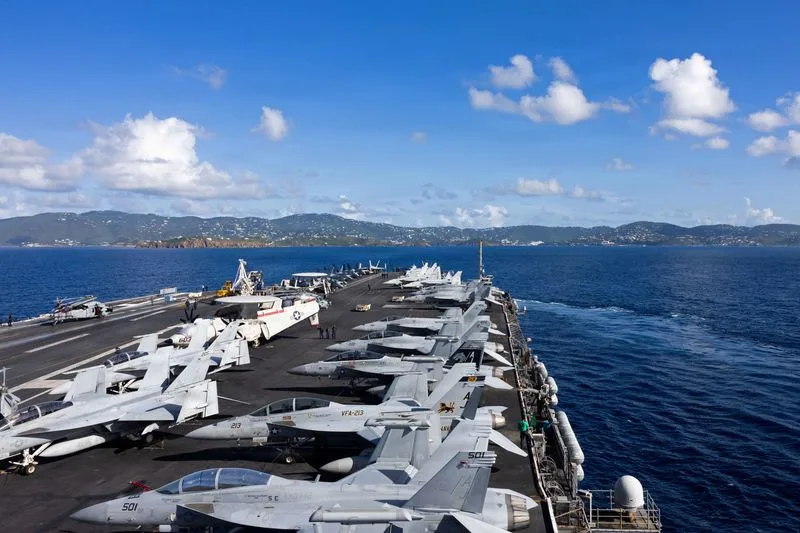
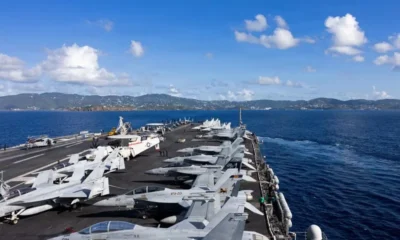
The U.S. is moving its largest aircraft carrier into the Middle East — a strategic signal as diplomacy with Tehran edges toward crisis.
The Pentagon is sending the USS Gerald R. Ford — the U.S. Navy’s newest and largest aircraft carrier — from the Caribbean to the Middle East, boosting American naval presence as tensions with Iran escalate, according to two U.S. officials familiar with the decision.
The redeployment will place two U.S. carriers in the region alongside the USS Abraham Lincoln and a broader constellation of guided-missile destroyers, fighter jets and surveillance aircraft that have moved in recent weeks amid the standoff.
Officials speaking on condition of anonymity told Reuters that the Gerald R. Ford’s journey from the Caribbean — where it has been operating with escort ships and participated in activities including operations near Venezuela — will take at least a week. Carriers are scarce assets in the U.S. fleet of 11 and their schedules are typically set well in advance.
The move follows comments this week from President Donald Trump, who said he was considering deploying an additional carrier to the Gulf if a diplomatic deal with Iran is not reached, while also stating that an agreement could still be possible within the next month.
The Gerald R. Ford has been at sea since June 2025, longer than the typical nine-month deployment, and was earlier repositioned from Europe to the Caribbean. U.S. Navy officials have previously warned that prolonged deployments can strain morale among crews.
The carrier’s capabilities include more than 75 military aircraft and advanced radar systems, supported by a strike group equipped for surface, air and undersea operations.
The redeployment underscores Washington’s efforts to reinforce deterrence in the Middle East as indirect talks with Tehran continue, with the risk of military escalation still loomin
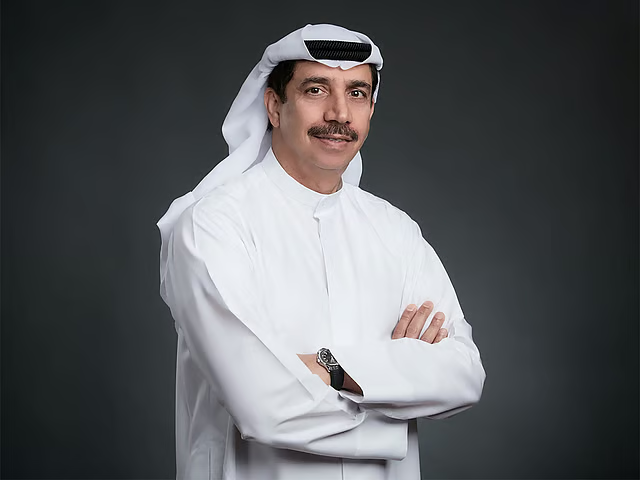
A major reshuffle at one of the world’s largest port operators — DP World names new leadership as it eyes long-term growth.
DP World announced Friday the appointment of Essa Kazim as chairman of its board of directors and Yuvraj Narayan as group chief executive officer, marking a significant leadership transition at the global logistics and port operator.
Kazim, who currently serves as governor of the Dubai International Financial Centre and chairman of Borse Dubai, brings decades of experience in financial and economic policy. He has also held senior roles within Dubai’s regulatory and fiscal institutions, including deputy chairman of the Supreme Legislation Committee and member of the Securities and Exchange Higher Committee.
His career began at the UAE Central Bank in 1988 before moving to the Dubai Department of Economic Development. He later served as director-general and then chairman of the Dubai Financial Market, playing a central role in shaping the emirate’s capital markets.
Narayan, who has been with DP World since 2004 and served as group chief financial officer since 2005, takes the helm after overseeing key strategic and financial initiatives that supported the company’s global expansion. The company credited him with strengthening financial resilience and operational efficiency across international markets.
Before joining DP World, Narayan held senior finance roles at ANZ Group and served as chief financial officer at Salalah Port Services in Oman.
DP World said the appointments align with its long-term strategy for sustainable growth and reinforce its position as an integrated global supply chain provider.
In a related move, Mohammed bin Rashid Al Maktoum issued a decree appointing Abdulla bin Damithan as chairman of the Ports, Customs and Free Zone Corporation, further reshaping leadership within Dubai’s trade and logistics sector.
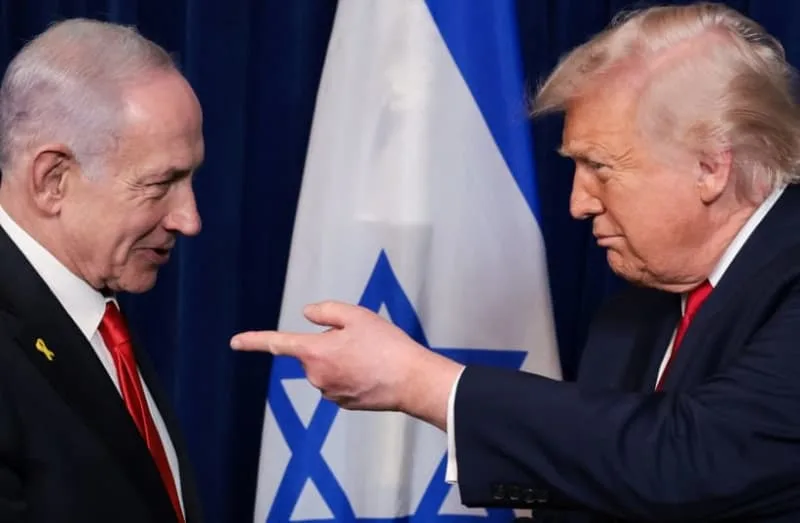
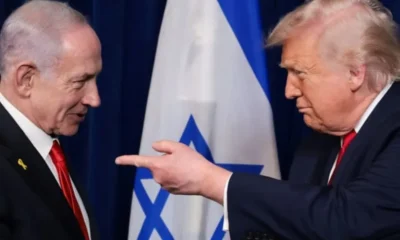
A mid-air moment of diplomacy: Trump calls for Netanyahu’s pardon — Herzog answers at 30,000 feet.
Israeli President Isaac Herzog pushed back Thursday after U.S. President Donald Trump publicly urged him to pardon Prime Minister Benjamin Netanyahu, saying Israel’s decisions are governed by its own laws.
Trump made the remarks during a White House event while Herzog was returning from a four-day visit to Australia. “He should give it,” Trump said, referring to a pardon for Netanyahu. “The people of Israel should really shame him. He’s disgraceful for not giving it.”
According to Israeli officials, Herzog was informed of Trump’s comments mid-flight and convened advisers aboard the plane to craft a response. In a statement issued from the aircraft, the President’s Residence said that any pardon request submitted by Netanyahu is currently under review by Israel’s Justice Ministry for a legal opinion.
“Only after the process is concluded will the president examine the request in accordance with the law, the good of the state, and his conscience — and without any influence from external or internal pressures of any kind,” the statement said.
The statement also expressed appreciation for Trump’s support of Israel’s security but emphasized that Israel is “a sovereign state governed by the rule of law.”
Pressed by reporters traveling with him for a personal reaction, Herzog replied tersely: “To the best of my recollection, I am the president of Israel.”
Netanyahu has been facing ongoing legal proceedings in Israel, and the question of a presidential pardon has drawn intense domestic debate. Herzog has previously said any such request would be handled strictly according to established legal procedures.
The exchange highlights the delicate balance between Israel’s close relationship with Washington and the independence of its judicial and constitutional processes.
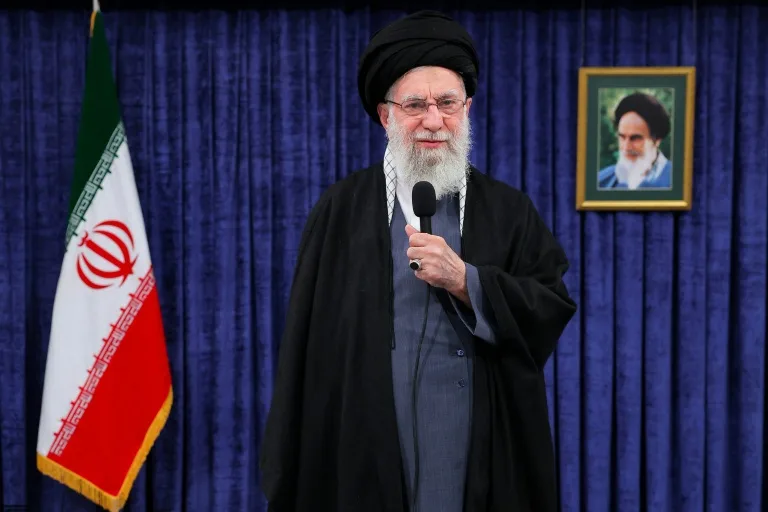
Iran intensified arrests of political figures and activists on Monday even as it signaled continued openness to nuclear negotiations with the United States, underscoring Tehran’s dual strategy of internal repression and external diplomacy.
The latest detentions followed recent indirect talks between Iranian and U.S. officials in Oman that both sides described as constructive. Among those arrested was Javad Emam, spokesman for the Reformist Front coalition, along with several other reformist figures, activists and filmmakers accused of backing protest statements. The Revolutionary Guards were reported to be behind the arrests.
The crackdown comes weeks after mass protests — among the most serious challenges to the Islamic Republic since 1979 — were violently suppressed. Authorities have branded the unrest “riots” allegedly orchestrated by foreign enemies, including Israel and the United States.
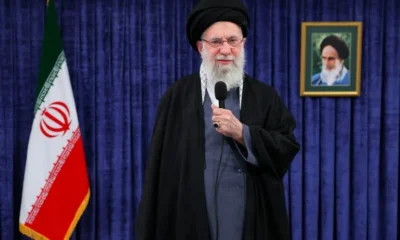
At the same time, Iran’s leadership has kept the diplomatic channel with Washington open. Supreme leader Ayatollah Ali Khamenei urged Iranians to show resolve against outside pressure, framing national strength as a matter of popular will rather than military hardware.
In parallel, Iran hinted at possible concessions on its nuclear programme. State media quoted atomic energy chief Mohammad Eslami as saying Tehran could dilute uranium enriched to 60 percent if sanctions were lifted — a step that would lengthen the time needed to produce weapons-grade material. Iran insists its programme is peaceful, a claim disputed by the U.S., Israel and other Western governments.
The arrests have drawn renewed attention to the fate of prominent dissidents. Nobel Peace Prize laureate Narges Mohammadi was recently sentenced to additional prison time on national security and propaganda charges, despite longstanding health concerns. Hussein Karoubi, son of veteran opposition leader Mehdi Karoubi, was also detained.
The reformist camp, which largely backed President Masoud Pezeshkian in last year’s election, has been hit particularly hard, with several of its senior figures now jailed.
While Washington has focused talks on Iran’s nuclear activities — and potentially its missile programme and regional alliances — it has so far shown little public reaction to the internal crackdown. President Donald Trump has warned of severe consequences if diplomacy fails, even as negotiations continue.
Official figures put the protest death toll at just over 3,100, mostly security personnel, while international groups say the true number of civilian deaths and arrests is far higher. As Iran presses ahead with arrests at home and diplomacy abroad, the contrast highlights a regime seeking relief from sanctions without loosening its grip on dissent.
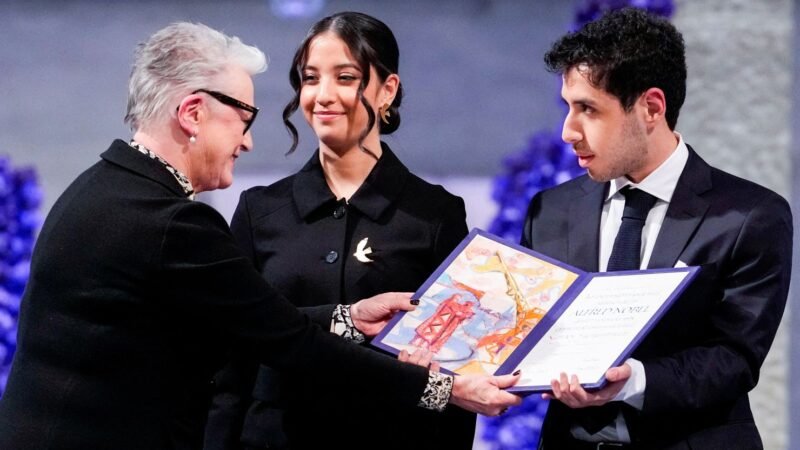
An Iranian court has sentenced Nobel Peace Prize laureate and prominent human rights activist Narges Mohammadi to six years in prison on charges of “gathering and collusion to commit crimes,” her lawyer said Sunday, in a ruling that has drawn renewed international concern over Tehran’s treatment of dissenters.
According to her lawyer, Mostafa Nili, Mohammadi was also given an additional 18-month sentence for alleged propaganda activities, a two-year ban on leaving Iran, and ordered into two years of internal exile in the eastern city of Khosf. Under Iranian law, the prison sentences will run concurrently. The verdict can be appealed.
Nili said Mohammadi, who has serious health issues following surgery for a tumour and a bone graft, may seek temporary release on bail to receive medical treatment. Another of her lawyers, Chirinne Ardakani, said the trial was conducted without proper notification and described it as “unfair.”
Mohammadi, 53, has spent much of the past decade in and out of prison for her activism against Iran’s use of the death penalty and compulsory hijab laws. She was last arrested in December in Mashhad after speaking at a memorial ceremony for a lawyer who had been found dead.
Even while incarcerated, Mohammadi has continued to protest, staging demonstrations inside prison and undertaking hunger strikes. She won the Nobel Peace Prize in 2023 for her long-standing advocacy for human rights, with her children accepting the award on her behalf while she remained behind bars.
Human rights groups say the latest sentence underscores Iran’s ongoing crackdown on activists and critics, as the country continues to rank among the world’s leading executioners.
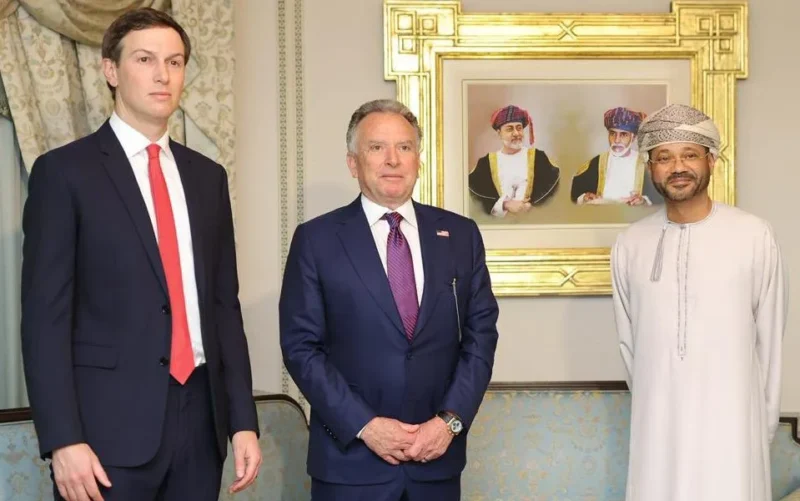
WASHINGTON / MUSCAT — The United States has urged its citizens to leave Iran immediately, citing rising security risks as Washington and Tehran resume high-stakes talks over Iran’s nuclear programme.
The warning came as Steve Witkoff, President Donald Trump’s special envoy, held face-to-face talks with Iranian Foreign Minister Abbas Araghchi in Muscat, Oman, on Friday. The meeting marked the first direct engagement between the two sides since last summer’s 12-day conflict involving Iran, Israel and the United States.
Ahead of the talks, the U.S. virtual embassy in Iran issued a security alert telling Americans to “leave Iran now,” as Washington continues a visible military buildup in the region — a deployment Trump has repeatedly described as an “armada.”
Trump has warned that the U.S. could take military action unless Iran agrees to a new nuclear deal. His administration is pressing for what officials describe as “zero nuclear capacity,” including an end to uranium enrichment and the disposal of Iran’s existing stockpile. Talks are also expected to cover Iran’s ballistic missile programme and its support for regional armed groups such as Hamas and Hezbollah.
White House press secretary Karoline Leavitt said the president has “many options at his disposal,” emphasizing U.S. military power while leaving the door open to diplomacy.
Iran, for its part, said it was prepared to defend itself against what it called “excessive demands or adventurism” by Washington, while insisting it would not miss the opportunity for diplomacy. China, a key Iranian ally, voiced support for Tehran and condemned what it described as U.S. “unilateral bullying.”
The talks come against the backdrop of recent nationwide protests in Iran, which human rights groups say were met with a violent crackdown that killed thousands. Trump initially threatened action over the repression but has since refocused his rhetoric on Iran’s nuclear ambitions.
Vice President JD Vance said the administration would pursue non-military options where possible, but stressed that military force remains on the table.
Iran maintains that its uranium enrichment programme halted after U.S. and Israeli strikes last June, which reportedly caused severe damage to its nuclear facilities and set the programme back by years.

Bombed reactors. Nationwide protests. Open threats of war. Now Iran and the US meet again in Oman — with the nuclear clock ticking.
DUBAI — Iran and the United States are set to hold nuclear talks on Friday in Oman, renewing high-stakes diplomacy over Tehran’s nuclear program following a brief war with Israel and a violent internal crackdown that has left thousands dead and tens of thousands detained.
The talks come amid renewed pressure from Donald Trump, who has warned that the United States could strike Iran if executions of protesters escalate or if Tehran accelerates its nuclear activities. The negotiations revive a diplomatic track that was disrupted in June, when Israel launched a 12-day war against Iran, prompting U.S. airstrikes on Iranian nuclear facilities.
Trump’s Letter and Renewed Pressure
The current round of diplomacy traces back to a letter Trump sent on March 5, 2025, to Iran’s Supreme Leader Ayatollah Ali Khamenei, urging negotiations while warning of severe consequences if talks failed.
“I hope you’re going to negotiate,” Trump said in a televised interview the following day, adding that military action would be “a terrible thing” if diplomacy collapsed.
While Trump has intensified sanctions since returning to office, he has also framed negotiations as a last chance to avert further conflict. Khamenei, however, has repeatedly warned that Iran would retaliate against any attack, particularly as the Islamic Republic faces its gravest internal crisis in decades.
Oman’s Mediation Role
The talks will again be mediated by Oman, a longtime diplomatic intermediary between Washington and Tehran. Previous discussions involved Iran’s Foreign Minister Abbas Araghchi and U.S. Middle East envoy Steve Witkoff, including rare face-to-face meetings.
Negotiations stalled last year over uranium enrichment. U.S. officials insist Iran must abandon enrichment entirely, while Tehran maintains it will not surrender what it calls its sovereign right to peaceful nuclear technology. That impasse was overtaken by the outbreak of war in June.
War, Protests and Nuclear Setbacks
Israel’s June offensive, followed by U.S. strikes, targeted Iranian nuclear facilities. In November, Tehran acknowledged it had halted uranium enrichment after the attacks, though inspectors from the International Atomic Energy Agency have not been able to fully assess the damage.
Soon after, Iran was engulfed by nationwide protests triggered by the collapse of its currency. The demonstrations escalated into a broader uprising, met by a sweeping security crackdown that human rights groups say killed thousands.
Nuclear Concerns Persist
Iran insists its nuclear program is peaceful, but Western governments remain deeply concerned. Tehran is currently enriching uranium to 60% purity, close to weapons-grade levels — an unprecedented step for a country without declared nuclear weapons.
Under the 2015 nuclear deal, Iran was limited to 3.67% enrichment and a stockpile of 300 kilograms. The IAEA now estimates Iran’s stockpile at nearly 9,870 kilograms, including material enriched to high levels.
U.S. intelligence agencies say Iran has not yet launched a weapons program but has taken steps that could allow it to build a nuclear device if it chooses.
Decades of Hostility
Relations between Iran and the United States have been hostile since the 1979 Islamic Revolution, which toppled the U.S.-backed Shah and led to the 444-day hostage crisis at the American embassy in Tehran. Since then, relations have oscillated between confrontation and cautious diplomacy, peaking with the 2015 nuclear agreement before Trump withdrew from it in 2018.
Friday’s talks in Oman reopen a diplomatic channel at a moment of extreme volatility — with Iran weakened militarily and politically, the United States escalating pressure, and the prospect of wider conflict still looming over the region.

Former Israeli Prime Minister Says He Regrets Ties to Jeffrey Epstein

China’s Top Diplomat Warns Against ‘Knee-jerk’ Calls For Decoupling

Guterres: Climate Target Slipping, Africa Demands Fair Financing


-
 Interagency Assessment2 months ago
TOP SECRET SHIFT: U.S. MILITARY ORDERED INTO SOMALILAND BY LAW
-

 Somaliland4 months ago
Somaliland Recognition: US, UK, Israel, and Gulf Bloc Poised for Historic Shift
-
 Minnesota2 months ago
Fraud Allegations Close In on Somalia’s Top Diplomats
-
 Middle East2 months ago
Saudi Arabia vs. UAE: How The Gulf Rivalry is Heating Up
-

 American Somali3 months ago
Why Frey Won a Significant Share of the Somali Vote Against a Somali Opponent
-
 Middle East2 months ago
Turkey’s Syria Radar Plan Triggers Israeli Red Lines
-
 Editor's Pick2 months ago
Why India Is Poised to Become the Next Major Power to Recognize Somaliland
-
 The Million-Follower Exile2 months ago
Why America Deported Its Most Famous Somali TikTok Star And Who Paid The Price