
US-Israel war on Iran
Trump Pauses Iran Strikes After Allies Warn

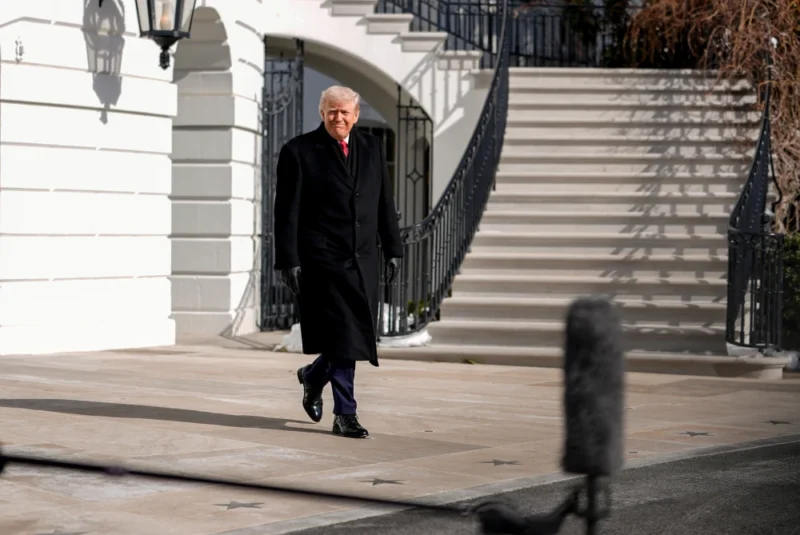
Behind the scenes, allies warned: this war could collapse the region. Trump stepped back—but for how long?
President Donald Trump’s sudden decision to delay strikes on Iran’s power infrastructure did not emerge in isolation. It followed urgent warnings from allies and regional partners who feared that the war was approaching a dangerous tipping point—one that could destabilize not just Iran, but the broader Middle East.
According to officials familiar with private discussions, Gulf states and U.S. partners cautioned that destroying Iran’s civilian energy systems could trigger a cascade of unintended consequences. The most alarming scenario: a post-war Iran fractured into instability, with weakened governance, economic collapse, and prolonged regional chaos.
That warning appears to have landed.
Trump’s announcement of a five-day pause, paired with renewed talk of negotiations, offered a temporary release valve. The timing was telling. Markets, rattled by the threat of escalation, reacted immediately—oil prices dropped, equities rebounded, and investor anxiety eased. For a president facing rising domestic economic pressure, the financial dimension was impossible to ignore.
But the pause also reflects a deeper strategic recalibration.
The original ultimatum—to “obliterate” Iran’s power infrastructure if the Strait of Hormuz remained restricted—risked crossing a threshold that many allies viewed as both legally and politically hazardous.
Targeting civilian-linked energy systems could have widened the conflict, invited retaliation against critical infrastructure across the Gulf, and drawn in additional global powers with direct stakes in the region.
Diplomatic channels, meanwhile, have quietly intensified. Countries including Turkey, Egypt, Pakistan, and Oman are acting as intermediaries, passing messages between Washington and Tehran. European governments have signaled cautious support for talks, while maintaining skepticism about their prospects.
Yet even here, uncertainty dominates.
Iranian officials have publicly denied that negotiations are underway, dismissing U.S. claims as misinformation. That divergence highlights a recurring challenge in the conflict: competing narratives, shifting signals, and limited clarity about what is actually being discussed behind closed doors.
For Trump, the pause creates both opportunity and risk.
On one hand, it opens space for diplomacy and reduces immediate escalation pressure. On the other, it may reinforce a perception—particularly in Tehran—that threats can be blunted through counter-pressure, especially when energy markets and regional stability are at stake.
Analysts warn that this dynamic could strengthen Iran’s deterrence posture rather than weaken it. If Tehran concludes that escalation compels restraint from Washington, it may be emboldened to continue leveraging the Strait of Hormuz and regional tensions.
At the same time, the war itself is not slowing. Israeli operations continue, including strikes inside Tehran and expanded ground activity in southern Lebanon. U.S. forces remain deployed across the region, and no formal ceasefire framework has emerged.
The result is a fragile pause layered over an active conflict.
Trump’s approach—shifting between escalation, diplomacy, and economic maneuvering—has left allies and adversaries alike trying to interpret his next move. The five-day window may provide temporary stability, but it does not resolve the underlying strategic dilemma: how to end a war that has already expanded beyond its initial scope.
For now, the escalation has been delayed, not defused.
And as the deadline resets, the same question returns with greater urgency: is this a path toward negotiation—or simply a pause before a more dangerous phase begins?

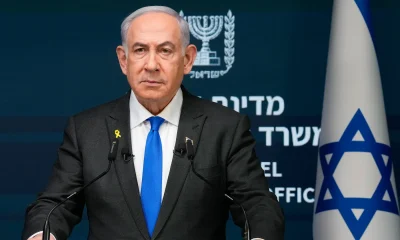
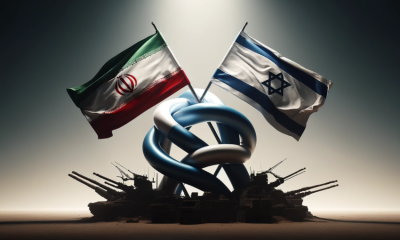

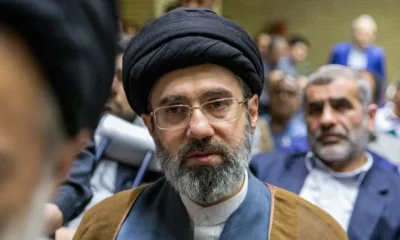










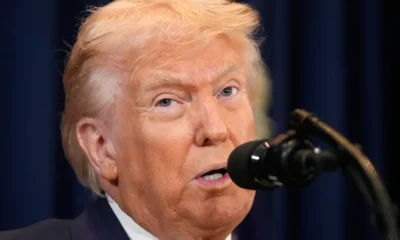

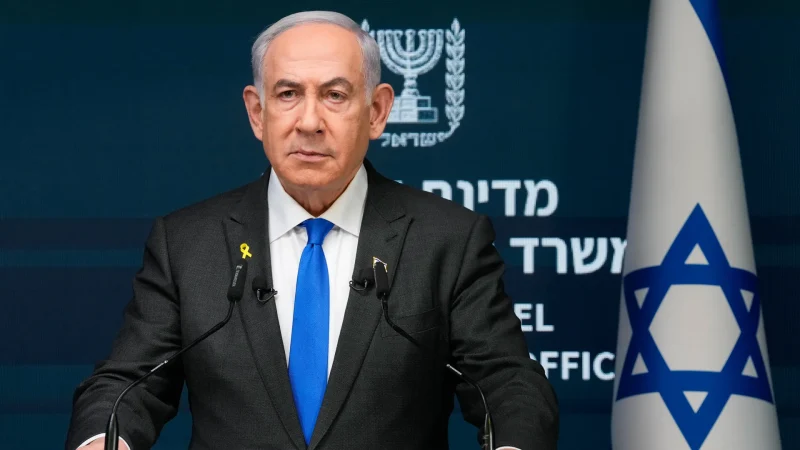
Talks or tactics? Washington says progress. Tehran says retreat. The truth may decide the war.
A fragile diplomatic opening is emerging in the fourth week of the Iran war—but even that possibility is clouded by conflicting narratives and deep mistrust.
Israeli Prime Minister Benjamin Netanyahu said President Donald Trump now sees a potential path to a negotiated settlement, suggesting that recent military gains could be leveraged into a broader agreement with Tehran.
The comment followed what Trump described as “productive” conversations with Iranian representatives, prompting a five-day pause on planned U.S. strikes against Iran’s energy infrastructure.
The shift marks a notable turn in tone. After days of escalating threats—including warnings to “obliterate” Iranian power plants—Washington is now signaling that diplomacy may offer a way to achieve its objectives without further widening the conflict.
But the picture remains far from clear.
Trump insists that discussions are underway and progressing, even hinting at a possible “complete and total resolution” of hostilities. Yet Iranian officials are publicly rejecting that account.
A senior security figure in Tehran said no such talks are taking place, framing the U.S. pause not as a diplomatic breakthrough, but as a retreat driven by military pressure and market instability.
That divergence highlights a recurring feature of the conflict: parallel narratives aimed at shaping perception as much as reality.
For Netanyahu, the moment presents an opportunity. His statement suggests Israel is prepared to translate battlefield momentum into political outcomes—provided any agreement secures its core security interests.
At the same time, Israeli operations continue, indicating that military pressure remains part of the broader strategy.
For Trump, the stakes are both strategic and domestic. A negotiated outcome could stabilize energy markets, ease economic pressure at home, and offer a pathway to declare success. But it also risks appearing inconsistent after a series of escalating threats and rapid policy shifts.
The absence of direct contact with Iran’s new supreme leader, Mojtaba Khamenei, adds another layer of uncertainty. Without clear engagement at the highest level, it remains unclear whether any discussions—formal or indirect—can produce a binding agreement.
Meanwhile, regional dynamics continue to evolve. Gulf states remain wary of escalation, while global markets react sharply to each signal of either conflict or compromise. The five-day pause has temporarily eased tensions, but it has not resolved the underlying standoff over the Strait of Hormuz or the broader strategic rivalry.
The central question now is whether this moment represents a genuine opening—or a tactical pause in a conflict that is still expanding.
If talks materialize into concrete terms, the war could pivot toward de-escalation. If not, the competing narratives from Washington and Tehran may only deepen mistrust, setting the stage for renewed escalation once the temporary reprieve expires.
For now, diplomacy and confrontation are unfolding side by side.
And in that narrow space between them, the outcome of the war may ultimately be decided.

The Iran war is no longer regional. Ukraine now wants strikes inside Russia. Here’s why.
The war surrounding Iran is beginning to reshape conflicts far beyond the Middle East, with Ukraine now urging a dramatic expansion of the battlefield—into Russia itself.
At a United Nations session, Ukraine’s ambassador Andriy Melnyk argued that Russian drone production facilities should be considered “legitimate targets,” citing Moscow’s growing military cooperation with Tehran. According to Ukrainian officials, Russia has supplied Iran with modernized versions of the Shahed drones—systems originally developed by Iran and widely used by Russian forces in Ukraine since 2022.
The message was clear: the wars are no longer separate.
Melnyk framed the Iran conflict as directly intertwined with Russia’s invasion of Ukraine, describing Moscow as a key enabler of Tehran’s military capabilities. By providing technology, production licenses, and reportedly even attack helicopters, Russia has, in Kyiv’s view, become an active participant in a broader network of conflict stretching from Eastern Europe to the Gulf.
That framing carries significant implications.
If accepted by Western partners, it could justify expanded military support to Ukraine—not only for defensive operations, but for deeper strikes into Russian territory targeting drone factories and supply chains.
Kyiv has already conducted limited strikes on such facilities, but officials argue that more advanced long-range weapons would increase their effectiveness.
The argument is strategic as much as tactical. By disrupting Russia’s drone production, Ukraine believes it can simultaneously weaken Moscow’s war effort at home and reduce the flow of technology that could empower Iran in the Middle East.
There is also an economic dimension.
Rising oil prices, driven in part by instability in the Strait of Hormuz, are providing Russia with a financial boost, offsetting some of the economic strain caused by sanctions. Ukrainian officials warn that the Iran war risks becoming a “lifeline” for Moscow, strengthening its ability to sustain operations in Ukraine.
This convergence of interests is reshaping how the conflict is perceived.
What once appeared as distinct regional crises—Ukraine on one side, the Middle East on the other—is increasingly viewed as a connected strategic environment. Military technologies, economic shocks, and geopolitical alliances are linking these theaters in ways that complicate efforts to contain escalation.
Melnyk’s call for strikes inside Russia reflects that shift. It suggests that Ukraine sees the Iran war not just as a distant conflict, but as part of a broader struggle that directly affects its own security.
Whether Western governments accept that argument remains uncertain. Expanding the scope of military operations into Russian territory carries obvious risks, including further escalation between NATO and Moscow.
But the fact that such proposals are now being openly discussed at the United Nations underscores how quickly the boundaries of the conflict are changing.
The Iran war is no longer confined to the Middle East. It is feeding into a wider geopolitical contest—one where actions in one region are increasingly shaping outcomes in another.
And as those connections deepen, the line between regional war and global confrontation continues to blur.
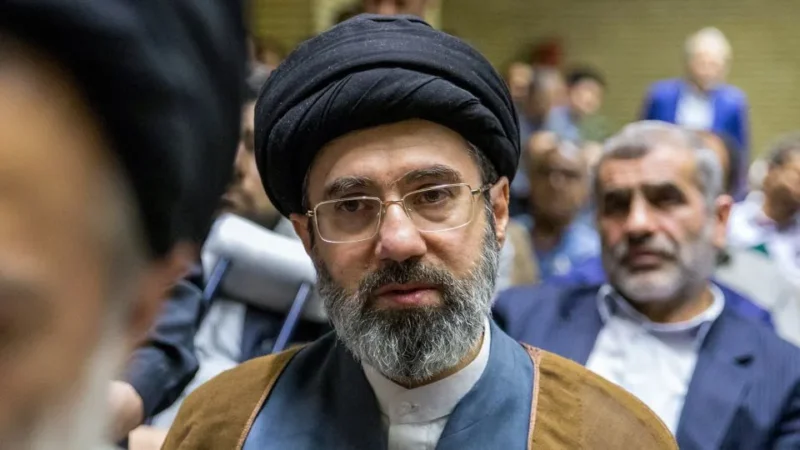
Missiles can shake Iran. Only its own elites can bring it down. Here’s why.
For all the firepower unleashed in the current war, the survival of Iran’s regime will not be decided in the skies. It will be decided inside the regime itself.
History offers a consistent lesson: authoritarian systems rarely collapse because of external pressure alone. They fall when the inner circle—military commanders, political elites, economic power brokers—begins to fracture.
In Iran’s case, that inner circle is anchored by the Islamic Revolutionary Guard Corps (IRGC), clerical leadership, and a network of state-linked economic interests. As long as that coalition holds, the system is likely to endure.
Military escalation can still matter—but its impact is indirect. Strikes on infrastructure, command centers, or strategic assets create what analysts call an “informational shock.” They expose vulnerabilities, challenge deterrence, and can trigger public unrest. Yet such shocks, on their own, rarely produce regime collapse.
In fact, they often do the opposite.
External attacks tend to generate a rally-around-the-flag effect, reinforcing national unity and strengthening the regime’s claim to legitimacy.
Iran’s leadership has long prepared for this dynamic, framing conflict as resistance against foreign aggression. In the short term, that narrative can stabilize rather than weaken the system.
The turning point comes only if that informational shock evolves into something deeper: an “incentive shock.” This is the moment when elites begin to question whether staying loyal still guarantees their survival.
Three pathways could push Iran toward that threshold.
The first is fragmentation within the coercive apparatus. If divisions emerge between the IRGC and the regular military—or within the Guard itself—enforcement capacity weakens. Without a unified security structure, regimes struggle to maintain control.
The second is economic breakdown. Prolonged war can strain state finances, erode patronage networks, and make loyalty more costly. When elites are no longer confident that the system can sustain them, their calculations begin to shift.
The third is strategic isolation. If Iran’s regional influence diminishes and external support from partners like Russia or China weakens, the perception of long-term viability may erode. Elites do not need certainty of collapse—only doubt about the future.
Even then, collapse is not guaranteed.
Iran’s system has structural advantages that raise the threshold for breakdown. Its dual power structure—combining religious authority with a powerful security apparatus—creates overlapping networks of control. The IRGC is not just a military force; it is deeply embedded in the economy and political system, increasing the cost of defection. The Basij and other internal security forces reinforce that architecture.
Comparative cases underscore this resilience. Syria’s regime survived years of conflict because its core elites remained cohesive. By contrast, Tunisia and Egypt unraveled quickly when military leaders withdrew support. Iran, for now, resembles the former more than the latter.
This leaves three plausible trajectories.
The most likely is resilience: the regime absorbs military pressure, maintains elite cohesion, and survives. A second scenario involves prolonged instability—economic strain, limited fractures, but no decisive break. The least likely, though not impossible, is a full collapse triggered by cascading elite defections.
The critical variable is not the intensity of the war, nor the scale of public protest. It is whether those at the center of power begin to believe that the system can no longer protect them.
Until that shift occurs, bombs may shake Iran—but they will not break it.
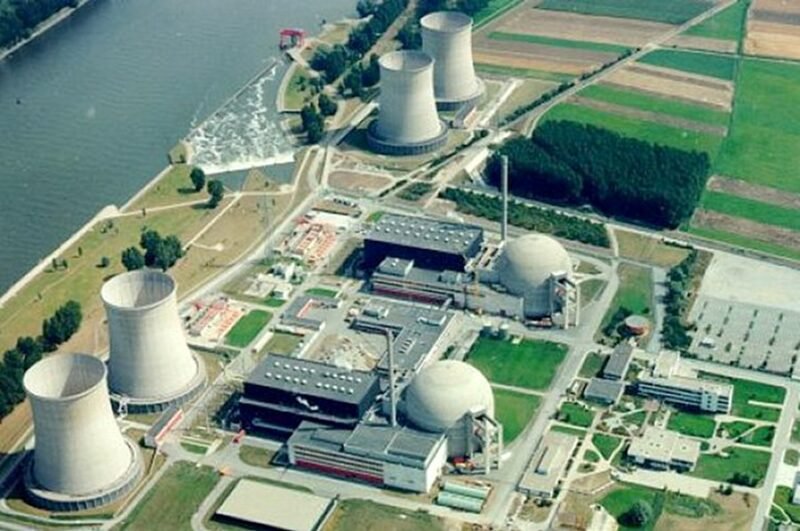
Ultimatum Walked Back: Trump Blinks as Iran Holds the Oil Lifeline.
President Donald Trump has stepped back from the brink—at least for now.
After issuing a stark 48-hour ultimatum threatening to strike Iran’s power infrastructure, Trump announced he has ordered a five-day postponement of any such attacks. The reversal comes as the war enters its fourth week, with both sides escalating militarily while global markets absorb the shock of a disrupted energy supply.
The delay underscores a growing tension at the heart of U.S. strategy: how to apply pressure without triggering a wider regional crisis.
Iran’s response to the original threat was swift and explicit. Officials warned that any attack on their energy grid would be met with strikes on critical infrastructure across the Middle East, including water and energy systems in Gulf states. The message was clear—escalation would not remain contained.
At the center of the standoff is the Strait of Hormuz. Since the start of the war, Iran has effectively restricted passage for vessels linked to the United States and Israel, disrupting a route that carries roughly one-fifth of the world’s oil supply.
The result has been immediate: rising crude prices, tightening supply chains, and mounting fears of a prolonged global energy shock.
While Iranian forces have targeted some tankers, Tehran has also pointed to rising insurance costs as a factor limiting maritime traffic, complicating efforts to restore normal shipping flows.
Trump’s decision to delay strikes may reflect an attempt to buy time—whether for diplomatic maneuvering, military recalibration, or coordination with allies. Yet it also raises questions about consistency.
The rapid shift from ultimatum to postponement adds to a pattern of changing signals that has defined Washington’s approach to the conflict.
On the ground, there is little sign of de-escalation. Trump has ruled out a ceasefire, arguing that U.S. operations are close to significantly degrading Iran’s missile and nuclear capabilities. Tehran, for its part, remains defiant, signaling it is prepared for a prolonged confrontation.
The conflict is also expanding geographically. Israel has indicated it will intensify ground operations against Hezbollah in southern Lebanon, widening the scope of the war beyond Iran itself.
The human toll continues to rise. Iranian authorities report more than 1,400 deaths and over 18,000 injuries since the conflict began, while retaliatory strikes have killed civilians in Israel and U.S. service members stationed across the region.
Diplomatic tensions are also sharpening. Saudi Arabia has expelled Iranian diplomatic staff, citing security concerns tied to the conflict—a move that reflects the broader regional strain.
For now, the five-day pause creates a narrow window. It delays a potentially explosive escalation targeting civilian-linked infrastructure, but it does not resolve the underlying standoff over Hormuz or the broader trajectory of the war.
The question is what happens when that window closes.
If the Strait remains restricted and the ultimatum returns, the next decision could determine whether the conflict stabilizes—or moves into a far more dangerous phase, where the infrastructure that sustains entire societies becomes the primary battlefield.
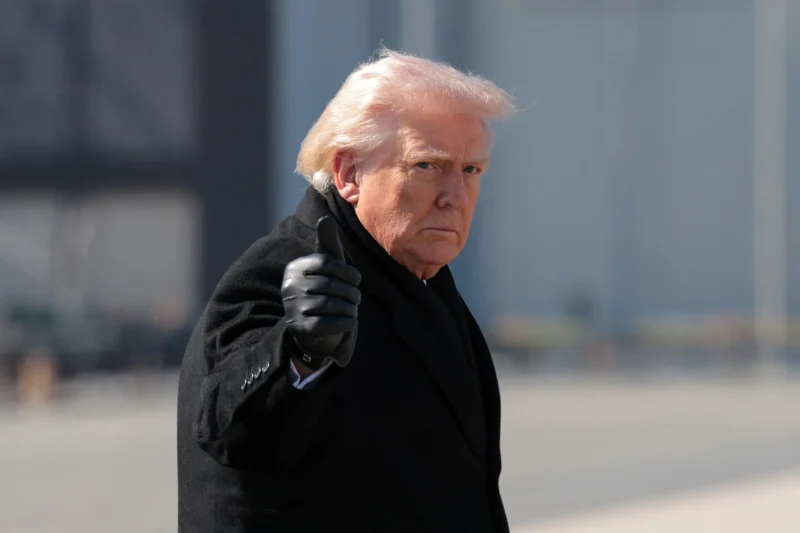
Countdown to Catastrophe: Inside the 48-Hour Threat That Could Ignite a Regional Collapse.
This isn’t just a military threat. It’s a warning aimed at the survival systems of an entire region.
The most dangerous moment in the U.S.-Iran war has not arrived through missiles or troop movements, but through a deadline.
By issuing a 48-hour ultimatum tied to the reopening of the Strait of Hormuz—and threatening to “obliterate” Iran’s power plants—Washington has shifted the conflict into a far more perilous domain: the targeting of civilian infrastructure that underpins daily life.
This is not a marginal escalation. It is a strategic transformation.
Power plants are not simply industrial facilities; they are the backbone of a modern state. In Iran, a nation of more than 80 million people, the electrical grid sustains hospitals, water systems, food distribution, and communications.
To strike at that system is not just to degrade capacity—it is to risk cascading humanitarian consequences. The language of “obliteration” suggests not limited disruption, but systemic collapse, what humanitarian law experts describe as “reverberating effects” that extend far beyond the initial target.
Iran’s response has mirrored that logic with precision. By signaling potential attacks on desalination plants and critical infrastructure in Gulf states, Tehran has effectively drawn a line of equivalence: if energy systems are targeted in Iran, water systems—equally essential for survival—may be targeted elsewhere.
The implications are stark. In parts of the Gulf, desalination provides the majority of freshwater. Disruptions would not merely inconvenience populations; they would threaten the basic viability of daily life in some of the world’s most water-scarce environments.
What is emerging is a form of strategic symmetry built around civilian vulnerability. Electricity in Iran. Water in the Gulf. Each side now holds the other’s essential systems at risk.
This dynamic creates what analysts describe as a “credibility trap” for Washington. The ultimatum leaves little room for ambiguity.
If the United States follows through, it risks triggering a chain reaction: a sharp spike in global energy prices, widespread humanitarian fallout, and the potential involvement of other major powers with direct economic stakes in the region.
If it does not follow through, the consequences are different but no less significant. A missed deadline could weaken the perceived credibility of U.S. threats, signaling to adversaries that red lines are negotiable. In a geopolitical environment already shaped by competition with China and Russia, such signals carry weight far beyond the Middle East.
The timing deepens the dilemma. The ultimatum came shortly after indications that Washington might seek to de-escalate.
The abrupt shift from restraint to maximal threat has reinforced concerns about strategic coherence—whether the war is being guided by a defined objective or by reactive escalation.
As the deadline approaches, the question is no longer limited to whether the Strait of Hormuz will reopen. It is whether the conflict has crossed into a phase where the infrastructure that sustains civilian life becomes a central battleground.
If that threshold is breached, the consequences will extend well beyond Iran or the Gulf. It would mark a turning point in how modern wars are fought—and how far states are willing to go when conventional pressure fails.
In that sense, the 48-hour ultimatum is more than a tactical move. It is a test of limits—military, political, and moral—in a conflict that is rapidly redefining them.
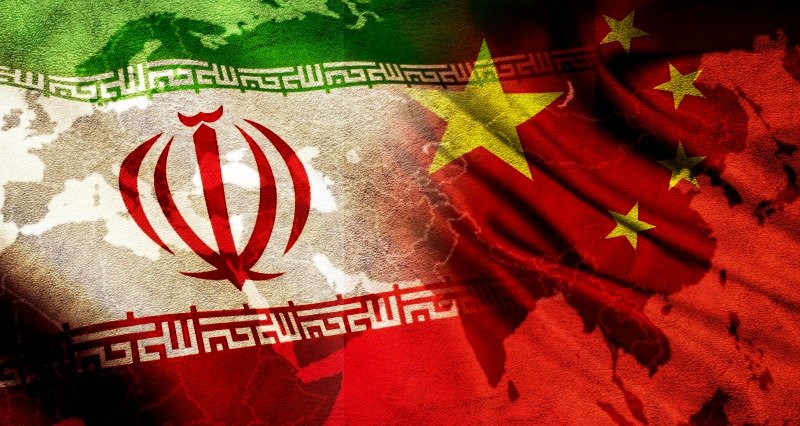
Beijing Sounds Alarm: Iran War Could Spiral Beyond Control After U.S. Ultimatum.
China has issued one of its starkest warnings yet on the escalating war in the Middle East, cautioning that further military action—particularly U.S. strikes on Iran’s energy infrastructure—could push the region into an “uncontrollable situation.”
Speaking in Beijing, foreign ministry spokesman Lin Jian directly addressed President Donald Trump’s 48-hour ultimatum to Tehran, which threatens to target Iranian power facilities unless the Strait of Hormuz is reopened. The warning reflects growing concern that the conflict is entering a phase where escalation may outpace control.
“The use of force will only lead to a vicious cycle,” Lin said, underscoring Beijing’s view that military pressure risks triggering broader retaliation rather than resolution.
At stake is not only regional stability but global energy security. The Strait of Hormuz remains one of the world’s most critical chokepoints, carrying roughly a fifth of global oil supplies. For China—the world’s largest energy importer—the disruption poses immediate economic risks, making the conflict both a geopolitical and domestic concern.
Beijing’s position is carefully calibrated. While China maintains close ties with Iran, it has also distanced itself from Tehran’s reported attacks on Gulf states hosting U.S. military bases. At the same time, Chinese officials have consistently called for a ceasefire, emphasizing diplomacy over confrontation.
That balancing act reflects a broader strategic posture: avoiding direct entanglement while positioning China as a mediator.
In recent days, Beijing has dispatched its Middle East envoy, Zhai Jun, across the region to push for de-escalation. Foreign Minister Wang Yi has gone further, stating that the war “should never have happened”—a pointed critique that implicitly challenges the decisions leading to the current crisis.
The timing of China’s warning is significant. Trump had urged Beijing to help secure the Strait of Hormuz, but China has so far avoided committing to any military role. Its reluctance highlights a widening gap between Washington’s expectations and Beijing’s approach, which favors political mediation and economic stability over force.
The broader implication is a shifting global dynamic. As the United States escalates its rhetoric and military posture, other major powers are signaling caution, wary of a conflict that could disrupt energy markets, trade routes, and regional balances.
China’s warning, in that sense, is not just about Iran or the Middle East. It is about the risk of a chain reaction—where each escalation invites another, and where the conflict gradually expands beyond its original boundaries.
For now, Beijing is urging restraint. But its message carries an unmistakable undertone: if the current trajectory continues, the consequences may extend far beyond the region—and beyond the control of any single power.
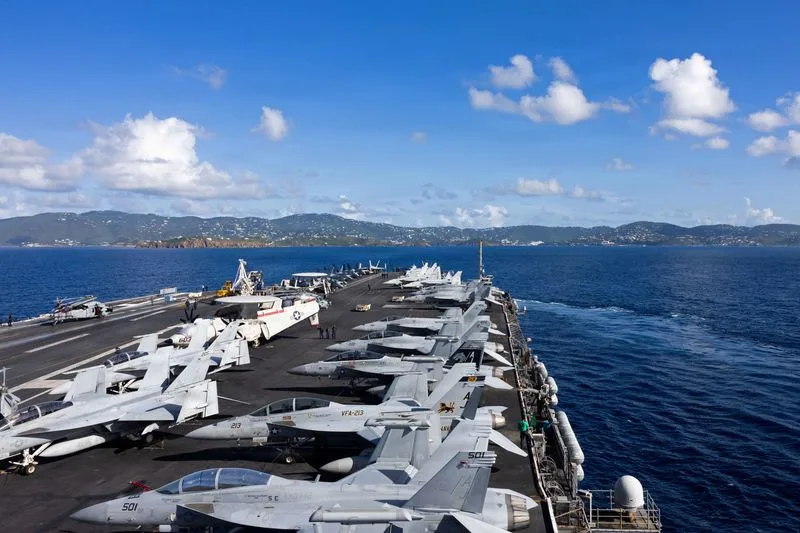
America’s Most Powerful Warship Pulls Back: Trouble on USS Ford Signals Deeper Strain.
The world’s largest warship just stepped back from the front lines. Is this a routine stop—or a warning sign?
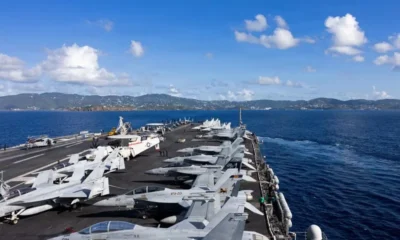
The return of the USS Gerald R. Ford to a naval base in Crete may appear routine on the surface—but in the context of an intensifying war with Iran, it raises deeper questions about strain, readiness, and the limits of U.S. military endurance.
The $13 billion aircraft carrier, the most advanced and largest warship ever built, has been central to U.S. operations in the Middle East. Its arrival at Souda Bay follows a non-combat fire aboard the ship earlier this month, which injured crew members and damaged living quarters.
While officials have emphasized that the vessel remains operational, the incident is only the latest in a series of challenges during what has become an unusually long deployment—now stretching close to nine months and potentially longer than typical U.S. Navy rotations.
That extended deployment is beginning to show signs of strain.
Reports indicate that nearly 200 sailors were treated for smoke-related injuries after the fire, with damage affecting key sections of the ship’s internal infrastructure. Combined with persistent technical issues—ranging from maintenance problems to basic onboard systems—the situation has fueled concerns about crew morale and overall readiness.
This matters far beyond the ship itself.
Aircraft carriers like the Ford are not just military platforms; they are symbols of U.S. power projection. Each carrier strike group represents a floating airbase capable of launching sustained operations across entire regions. When such a platform temporarily withdraws—even for repairs—it creates a potential gap in operational capacity.
U.S. officials have indicated that other assets may fill that gap, but the timing is notable. The redeployment comes as tensions with Iran escalate, maritime routes face disruption, and Washington considers more aggressive military options.
The broader issue is sustainability.
Modern warfare—especially one spanning multiple regions, from the Middle East to previous operations in the Caribbean—places enormous pressure on personnel and equipment. The Ford’s extended mission, which included earlier operations near Venezuela before its Middle East deployment, highlights how rapidly U.S. forces are being stretched across theaters.
For sailors onboard, the impact is personal. Long deployments, operational stress, and unexpected incidents like onboard fires can erode morale, even as missions continue. For military planners, the question is more strategic: how long can high-tempo operations be sustained without affecting readiness?
The Pentagon has not signaled any immediate reduction in operations. But the optics of the Navy’s flagship carrier stepping back, even briefly, come at a moment when the war is expanding and expectations of U.S. military dominance remain high.
In modern conflict, perception matters as much as capability.
And the image of America’s most powerful warship returning to port—amid reports of strain and extended deployment—offers a subtle but significant reminder: even the strongest military systems have limits.

No direct threat—but no blind support either. Britain is drawing a line in the Iran war.
British Prime Minister Keir Starmer sought to lower tensions on Monday, saying there is no current evidence that Iran is targeting the United Kingdom directly, even as the broader conflict with the United States and Israel continues to intensify.
“We carry out assessments all the time… and there’s no assessment that we’re being targeted in that way,” Starmer told reporters, addressing concerns raised after reports that Iranian missiles had been fired toward the joint U.S.-UK military base on Diego Garcia in the Indian Ocean.
The remarks reflect a careful balancing act by London—acknowledging the risks of escalation while avoiding a deeper military commitment to a conflict that is already widening across the region.
Starmer’s emphasis, officials say, is on de-escalation.
He stressed that any effort to reopen the Strait of Hormuz—a critical artery for global energy flows—must be approached with caution and backed by a clear, workable strategy. His priority, he added, is to protect British interests while avoiding actions that could further inflame the situation.
That stance places the United Kingdom in a subtly different position from Washington. While the United States has issued ultimatums and signaled willingness to expand its targeting to Iranian infrastructure, Britain appears focused on limiting exposure and preventing the conflict from spiraling into a broader confrontation.
The difference is not trivial. As tensions rise around Hormuz, allies are being forced to weigh the risks of involvement against the consequences of inaction. For the UK, the calculation appears rooted in both security and economic considerations.
Any prolonged disruption to the strait would reverberate through global energy markets, affecting fuel prices, supply chains, and domestic stability.
At the same time, direct military engagement carries its own dangers. Iranian officials have warned that retaliation could extend beyond immediate adversaries, potentially targeting infrastructure and assets across the region.
Starmer’s comments suggest that London is not prepared to assume that risk without a clearly defined objective and coordinated international approach.
The broader implication is a growing divergence within Western allies over how to handle the crisis. While the United States has taken a more aggressive posture, European partners—including the UK—are signaling caution, emphasizing diplomacy and risk management over rapid escalation.
For now, Britain’s message is measured but firm: there is no immediate threat at home, and any next steps must be deliberate, coordinated, and aimed at preventing a wider war.
In a conflict where each move carries global consequences, that restraint may prove as significant as any military action.

Netanyahu Signals Opening for Iran Deal

How Iran’s History Explains Its Present Crisis

Ukraine Urges Strikes on Russian Drone Sites


-

 Terrorism2 months ago
America Pulls Back From Somalia but Doubles Down Next Door
-

 Analysis2 months ago
How Chinese Speculators Set the Stage for the Gold and Silver Crash
-

 Top stories2 months ago
Rubio Signals Preemptive Military Option as U.S. Tightens Pressure on Iran
-

 Top stories2 months ago
France Blocks EU Push to Let Ukraine Buy British Storm Shadow Missiles
-
 Russia-Ukraine War1 month ago
Russian General Boasted of Torture and Killing of Ukrainian Prisoners
-
 US-Israel war on Iran1 month ago
UK Refuses Iran Strike Access, Trump Fires Back
-
 Russia-Ukraine War1 month ago
Europe’s Spies Challenge Trump’s Ukraine Peace Optimism
-
 Analysis2 months ago
Iran Warns, Qatar Mediates, Washington Deploys: A Crisis Managed in Public and Private