
US-Israel war on Iran
Iran Opens Oil Route as U.S. Pushes Secret Peace Plan

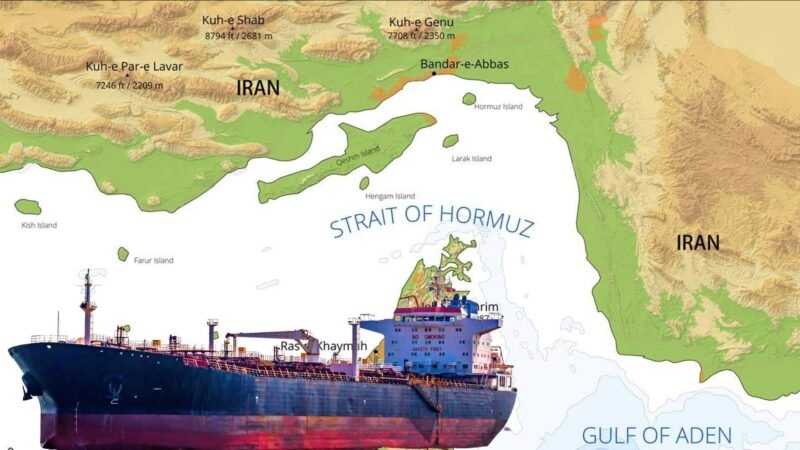
Missiles still flying—but oil is moving again. Is this the first real sign of a deal?
A fragile opening is emerging in the war between the United States, Israel, and Iran—one shaped as much by economic pressure as by battlefield dynamics.
According to multiple reports, Washington has sent a detailed peace proposal to Tehran, even as Iran signaled a partial easing of its blockade on the Strait of Hormuz, allowing “non-hostile” vessels to pass through one of the world’s most critical energy corridors.
The move immediately rattled markets—in reverse. Oil prices fell sharply, reflecting renewed hopes that the conflict may be edging, however cautiously, toward diplomacy.
The timing is not accidental.
For weeks, the Strait of Hormuz has been at the center of the crisis, with Iran’s restrictions disrupting a route that carries roughly a fifth of global oil supply. The resulting price surge has placed pressure not only on global economies but also on the political standing of leaders directly involved in the war.
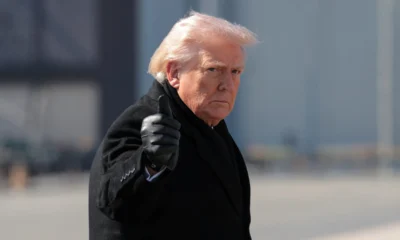
President Donald Trump, who has alternated between threats of escalation and declarations of imminent peace, described the latest development as a “very big” signal that negotiations are on track. Yet as with previous statements, clarity remains elusive.
Iranian officials have not confirmed formal talks, maintaining a public posture of denial even as indirect diplomacy appears to intensify.
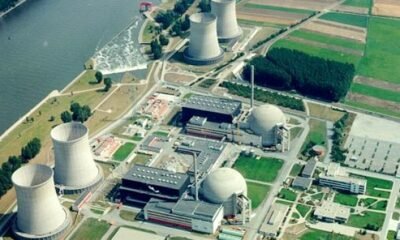
The reported U.S. proposal, said to include multiple points, outlines a potential pathway: a temporary ceasefire, limits on Iran’s nuclear and missile programs, and guarantees of maritime security. In return, Iran could see sanctions lifted and receive support for civilian nuclear development, including at key facilities such as Bushehr.
If accurate, the framework would represent a significant shift—from open conflict to negotiated containment.
But the obstacles remain formidable.
On the ground, the war shows no signs of slowing. Iranian missiles continue to strike Israeli cities, while Israel has expanded its air campaign across Iran and deepened operations in Lebanon against Hezbollah.
Civilian casualties are rising, infrastructure is under strain, and regional tensions continue to spill across borders, with Gulf states intercepting drones and missiles linked to the conflict.
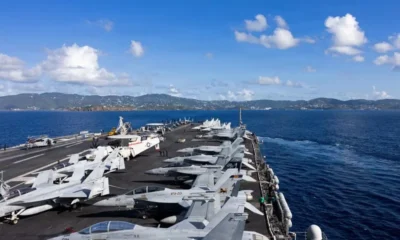
Even as diplomacy unfolds, military preparations continue. Reports indicate that additional U.S. forces are being deployed to the region, underscoring a dual-track strategy: negotiation backed by sustained pressure.
That duality defines the current moment.
For Iran, allowing limited passage through Hormuz may be a tactical move—easing pressure without conceding strategic leverage. For Washington, the peace plan offers a potential off-ramp from a conflict that has already strained global markets and alliances.
Yet mistrust runs deep. Previous negotiations have collapsed under similar conditions, and both sides appear to be testing each other’s intentions while preserving their own bargaining positions.
The central question is whether these early signals can evolve into a structured agreement—or whether they represent another brief pause in a war that continues to expand.
For now, the shift is subtle but significant: oil is flowing again, and proposals are being exchanged.
In a conflict defined by escalation, even that is enough to change the equation—if only temporarily.













Former MI6 Chief Says U.S. Lost Initiative in War – Airstrikes didn’t decide this war. Strategy did—and Iran may be ahead.
A stark assessment from one of Britain’s most experienced intelligence figures is reshaping how the Iran war is being understood: not as a contest of firepower, but of strategy—and one in which Iran may now hold the advantage.
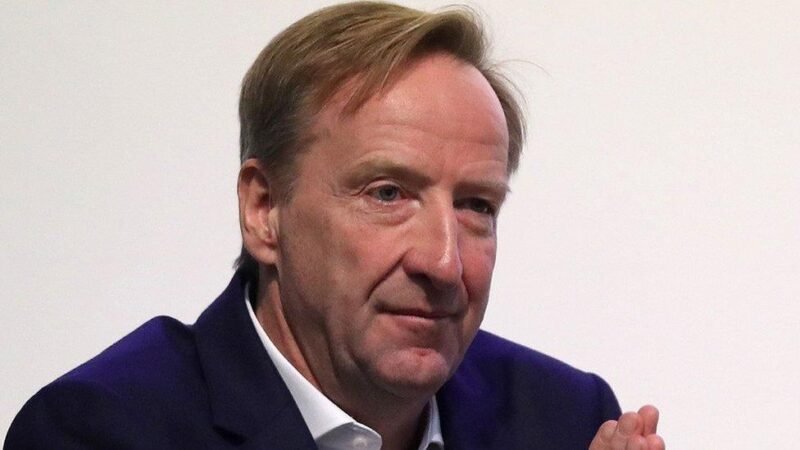
Sir Alex Younger, the former head of MI6, argues that the United States has already lost the initiative. His conclusion rests on a simple but unsettling observation: Iran has turned a regional conflict into a global one—and done so deliberately.
“Iran has the upper hand,” Younger said, pointing to a series of calculated moves that have allowed Tehran to offset its conventional military disadvantages. Despite early setbacks, including the loss of senior leadership, the Iranian system has proven more resilient than many expected.
Part of that resilience, he suggests, was built long before the war began.
Iran’s decision to disperse key military assets reduced the effectiveness of sustained airstrikes, limiting the damage of one of Washington’s primary advantages.
At the same time, Tehran adopted what military analysts describe as “horizontal escalation”—expanding the conflict beyond its immediate front lines by targeting a wider set of actors across the region.
What initially appeared reckless, Younger argues, has proven effective.
By increasing the number of participants and pressure points, Iran has forced the United States and its partners to absorb rising costs—not just militarily, but economically and politically. The most consequential move, however, has been the use of energy as leverage.
The disruption of the Strait of Hormuz transformed the conflict from a regional confrontation into a global economic crisis. With a significant share of the world’s oil supply passing through that narrow corridor, even partial restrictions have reverberated across markets, raising prices and intensifying pressure on governments far from the battlefield.
In Younger’s view, that shift was decisive.
It allowed Iran to redefine the terms of the war. Rather than competing directly with superior U.S. military power, Tehran expanded the battlefield into areas where it could impose indirect costs—energy markets, shipping routes, and regional stability.
The result is a conflict shaped by asymmetry.
The United States, Younger argues, is fighting a war of choice—one where domestic political pressures, alliance dynamics, and economic considerations constrain its options. Iran, by contrast, sees the conflict in existential terms, a perception that often translates into greater endurance.
That difference matters.
Wars are not only won by capability, but by willingness to absorb cost. If one side views survival as the stake, it may outlast an opponent that seeks limited objectives or faces internal constraints.
Younger also points to messaging as a factor. U.S. rhetoric framing the conflict as existential for Iran may have inadvertently reinforced Tehran’s resolve, strengthening internal cohesion at a critical moment.
None of this suggests a clear or final outcome. The war remains fluid, with ongoing negotiations, shifting military dynamics, and unpredictable escalation risks.
But the broader implication is clear: advantage in modern conflict is not always defined by battlefield dominance.
It can emerge from the ability to shape the environment in which the war is fought.
And by that measure, Younger’s conclusion is sobering: despite weaker initial conditions, Iran may have played its hand more effectively—turning pressure into leverage, and leverage into strategic momentum.
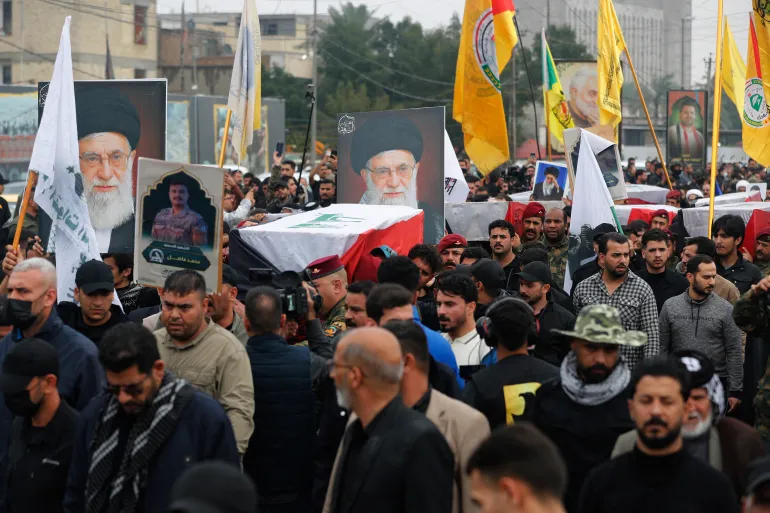
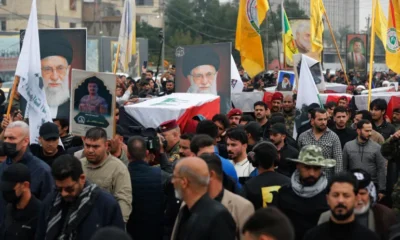
Iraq is being pulled into the war—and now it’s pushing back. But can it stay out of the fight?
Iraq is once again at the center of a dangerous geopolitical storm—caught between the United States and Iran as their escalating conflict spills across its borders.
Baghdad’s decision to summon both the U.S. charge d’affaires and the Iranian ambassador marks a rare dual protest, underscoring the country’s precarious position. Iraqi officials are attempting to send a clear message: the country does not want to become the next frontline in a war it did not start.
But events on the ground suggest that may no longer be a choice.
Deadly strikes in recent days have intensified tensions. A U.S.-linked attack reportedly killed a senior commander and multiple fighters from the Popular Mobilization Forces (PMF), a state-integrated network that includes Iran-backed groups.
In northern Iraq, Kurdish authorities blamed Iran for a ballistic missile strike that killed several peshmerga fighters—the first such deadly attack on Kurdish forces since the war began.
Neither Washington nor Tehran has confirmed responsibility, but the ambiguity is part of the problem.
Iraq has long functioned as a proxy arena for U.S.-Iran rivalry. What is different now is the scale and frequency of strikes, and the formal response from Baghdad.
By granting certain armed factions within its security structure the “right to respond” to attacks, the Iraqi government is walking a fine line—seeking to assert sovereignty while risking further escalation.
That decision reflects internal pressures. The PMF, originally formed to fight ISIS, has evolved into a powerful political and military force with deep ties to Iran. Its leaders have openly accused the United States of carrying out “treacherous” attacks and are calling for retaliation. At the same time, Iraq’s ruling coalition has emphasized that only the state should control decisions of war, highlighting divisions over how to respond.
The contradiction is difficult to manage.
On one hand, Iraq seeks to maintain balanced relations with both Washington and Tehran. On the other, it faces growing pressure from armed groups and political factions that see neutrality as increasingly untenable.
The risk is escalation by accumulation.
As strikes continue—whether by drones, aircraft, or missiles—each incident increases the likelihood of retaliation, miscalculation, or a broader confrontation on Iraqi soil.
The presence of U.S. forces, Iran-linked militias, and competing regional interests creates a volatile mix where even limited actions can trigger wider consequences.
The sound of fighter jets over Baghdad is becoming more frequent. That alone signals how close the conflict is moving toward Iraq’s core.
For now, the government is trying to hold the line—protesting both sides, calling for restraint, and emphasizing sovereignty. But the space for neutrality is narrowing.
Iraq’s experience over the past two decades offers a sobering precedent: when larger powers clash, local stability often becomes the first casualty.
The question now is whether Baghdad can contain the spillover—or whether it will once again become the battleground where others settle their conflicts.
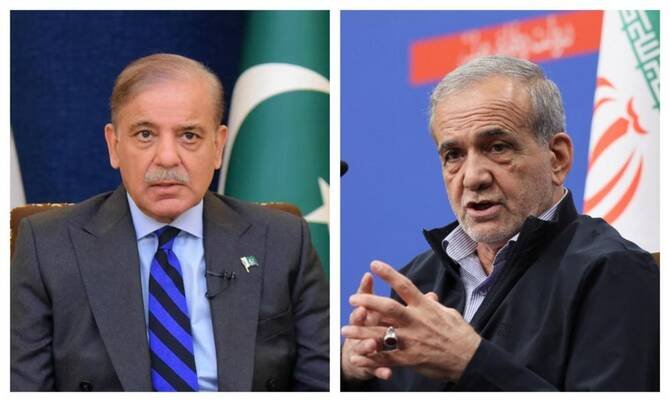
Missiles are still flying—but Pakistan is offering a way out. The question is: will anyone take it?
As the war between the United States, Israel, and Iran grinds into its fourth week, a new diplomatic channel is emerging—one that underscores both the urgency of de-escalation and the deep uncertainty surrounding any path to peace.
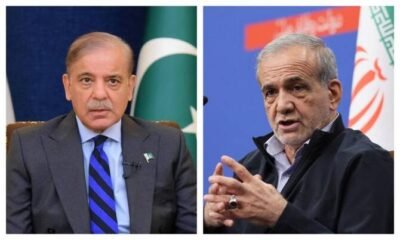
Pakistan’s Prime Minister Shehbaz Sharif has publicly offered to host talks between Washington and Tehran, positioning Islamabad as a potential mediator at a moment when backchannel diplomacy is gaining traction but remains fragile. The proposal follows President Donald Trump’s decision to delay planned strikes on Iranian energy infrastructure, citing what he described as “productive” conversations aimed at resolving the conflict.
Behind the scenes, officials suggest that exploratory discussions about a possible meeting are already underway, though no agreement has been reached. Even if talks materialize, diplomats caution, they would face formidable obstacles.
The most immediate challenge is a basic one: whether talks are happening at all.
While Trump has repeatedly claimed that negotiations have begun—describing them as constructive and ongoing—Iranian officials have flatly denied any direct engagement. Tehran’s leadership has dismissed the reports as misinformation, reflecting either a strategic effort to control the narrative or a deeper disconnect between the two sides.
That ambiguity is not unusual in high-stakes diplomacy, but it complicates efforts to build momentum toward a ceasefire.
On the battlefield, there is no sign of a pause. Iranian missile strikes continue to reach Israeli territory, including Tel Aviv, where recent attacks have damaged residential areas and tested the limits of Israel’s air defense systems. In response, Israeli forces have intensified strikes across Iran, targeting military and intelligence facilities linked to the Revolutionary Guard.
The conflict is also expanding geographically. In Lebanon, Israeli operations against Hezbollah are ongoing, while an Iranian missile was intercepted over Lebanese airspace—an indication of how the war is spilling across borders.
At the same time, the economic fallout is accelerating. Iran’s disruption of the Strait of Hormuz—through which roughly one-fifth of global oil and liquefied natural gas flows—has triggered sharp volatility in energy markets. Oil prices surged above $110 per barrel before easing slightly, but remain elevated amid fears of prolonged supply disruption.
This is the context in which Pakistan’s offer gains significance.
Islamabad has historically maintained channels with both Washington and Tehran, giving it a degree of credibility as a potential intermediary. Other countries, including Oman, Turkey, and Egypt, are also quietly facilitating communication, creating a patchwork of diplomatic efforts aimed at containing the conflict.
Yet the gap between the two sides appears wide.
U.S. officials are expected to push for limits on Iran’s nuclear program and ballistic missile development. Iranian sources, however, suggest that the country’s position has hardened under the influence of the Revolutionary Guard, with demands likely to include significant concessions from Washington.
That divergence raises a central question: is diplomacy being pursued as a genuine path to resolution, or as a tactical pause within an ongoing war?
For now, Pakistan’s proposal represents one of the clearest openings for structured talks. But it arrives at a moment when trust is low, positions are entrenched, and military operations continue unabated.
In that sense, the offer is less a breakthrough than a test.
A test of whether the parties involved are prepared to shift from escalation to negotiation—or whether the window for diplomacy is narrowing as the conflict deepens.
Because as missiles continue to fly and markets remain on edge, the cost of delay is rising—for the region, and for the world.
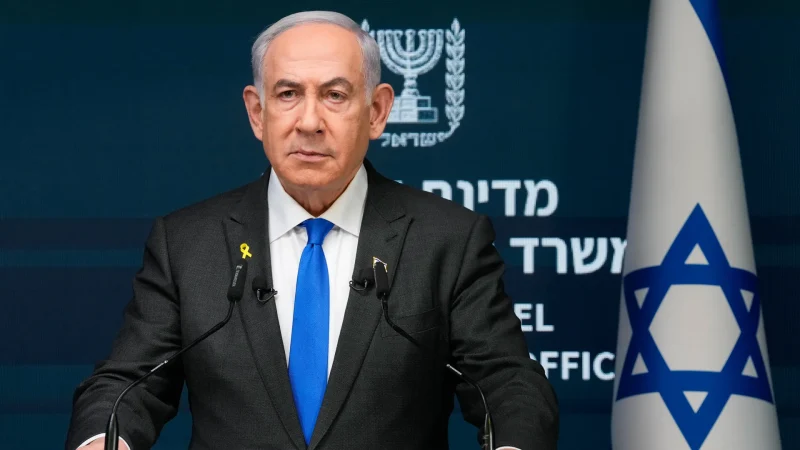
Talks or tactics? Washington says progress. Tehran says retreat. The truth may decide the war.
A fragile diplomatic opening is emerging in the fourth week of the Iran war—but even that possibility is clouded by conflicting narratives and deep mistrust.
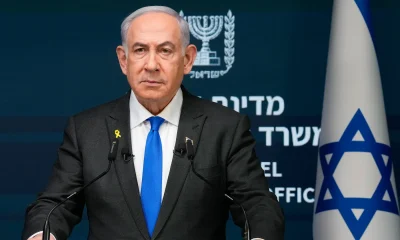
Israeli Prime Minister Benjamin Netanyahu said President Donald Trump now sees a potential path to a negotiated settlement, suggesting that recent military gains could be leveraged into a broader agreement with Tehran.
The comment followed what Trump described as “productive” conversations with Iranian representatives, prompting a five-day pause on planned U.S. strikes against Iran’s energy infrastructure.
The shift marks a notable turn in tone. After days of escalating threats—including warnings to “obliterate” Iranian power plants—Washington is now signaling that diplomacy may offer a way to achieve its objectives without further widening the conflict.
But the picture remains far from clear.
Trump insists that discussions are underway and progressing, even hinting at a possible “complete and total resolution” of hostilities. Yet Iranian officials are publicly rejecting that account.
A senior security figure in Tehran said no such talks are taking place, framing the U.S. pause not as a diplomatic breakthrough, but as a retreat driven by military pressure and market instability.
That divergence highlights a recurring feature of the conflict: parallel narratives aimed at shaping perception as much as reality.
For Netanyahu, the moment presents an opportunity. His statement suggests Israel is prepared to translate battlefield momentum into political outcomes—provided any agreement secures its core security interests.
At the same time, Israeli operations continue, indicating that military pressure remains part of the broader strategy.
For Trump, the stakes are both strategic and domestic. A negotiated outcome could stabilize energy markets, ease economic pressure at home, and offer a pathway to declare success. But it also risks appearing inconsistent after a series of escalating threats and rapid policy shifts.
The absence of direct contact with Iran’s new supreme leader, Mojtaba Khamenei, adds another layer of uncertainty. Without clear engagement at the highest level, it remains unclear whether any discussions—formal or indirect—can produce a binding agreement.
Meanwhile, regional dynamics continue to evolve. Gulf states remain wary of escalation, while global markets react sharply to each signal of either conflict or compromise. The five-day pause has temporarily eased tensions, but it has not resolved the underlying standoff over the Strait of Hormuz or the broader strategic rivalry.
The central question now is whether this moment represents a genuine opening—or a tactical pause in a conflict that is still expanding.
If talks materialize into concrete terms, the war could pivot toward de-escalation. If not, the competing narratives from Washington and Tehran may only deepen mistrust, setting the stage for renewed escalation once the temporary reprieve expires.
For now, diplomacy and confrontation are unfolding side by side.
And in that narrow space between them, the outcome of the war may ultimately be decided.

The Iran war is no longer regional. Ukraine now wants strikes inside Russia. Here’s why.
The war surrounding Iran is beginning to reshape conflicts far beyond the Middle East, with Ukraine now urging a dramatic expansion of the battlefield—into Russia itself.
At a United Nations session, Ukraine’s ambassador Andriy Melnyk argued that Russian drone production facilities should be considered “legitimate targets,” citing Moscow’s growing military cooperation with Tehran. According to Ukrainian officials, Russia has supplied Iran with modernized versions of the Shahed drones—systems originally developed by Iran and widely used by Russian forces in Ukraine since 2022.
The message was clear: the wars are no longer separate.
Melnyk framed the Iran conflict as directly intertwined with Russia’s invasion of Ukraine, describing Moscow as a key enabler of Tehran’s military capabilities. By providing technology, production licenses, and reportedly even attack helicopters, Russia has, in Kyiv’s view, become an active participant in a broader network of conflict stretching from Eastern Europe to the Gulf.
That framing carries significant implications.
If accepted by Western partners, it could justify expanded military support to Ukraine—not only for defensive operations, but for deeper strikes into Russian territory targeting drone factories and supply chains.
Kyiv has already conducted limited strikes on such facilities, but officials argue that more advanced long-range weapons would increase their effectiveness.
The argument is strategic as much as tactical. By disrupting Russia’s drone production, Ukraine believes it can simultaneously weaken Moscow’s war effort at home and reduce the flow of technology that could empower Iran in the Middle East.
There is also an economic dimension.
Rising oil prices, driven in part by instability in the Strait of Hormuz, are providing Russia with a financial boost, offsetting some of the economic strain caused by sanctions. Ukrainian officials warn that the Iran war risks becoming a “lifeline” for Moscow, strengthening its ability to sustain operations in Ukraine.
This convergence of interests is reshaping how the conflict is perceived.
What once appeared as distinct regional crises—Ukraine on one side, the Middle East on the other—is increasingly viewed as a connected strategic environment. Military technologies, economic shocks, and geopolitical alliances are linking these theaters in ways that complicate efforts to contain escalation.
Melnyk’s call for strikes inside Russia reflects that shift. It suggests that Ukraine sees the Iran war not just as a distant conflict, but as part of a broader struggle that directly affects its own security.
Whether Western governments accept that argument remains uncertain. Expanding the scope of military operations into Russian territory carries obvious risks, including further escalation between NATO and Moscow.
But the fact that such proposals are now being openly discussed at the United Nations underscores how quickly the boundaries of the conflict are changing.
The Iran war is no longer confined to the Middle East. It is feeding into a wider geopolitical contest—one where actions in one region are increasingly shaping outcomes in another.
And as those connections deepen, the line between regional war and global confrontation continues to blur.
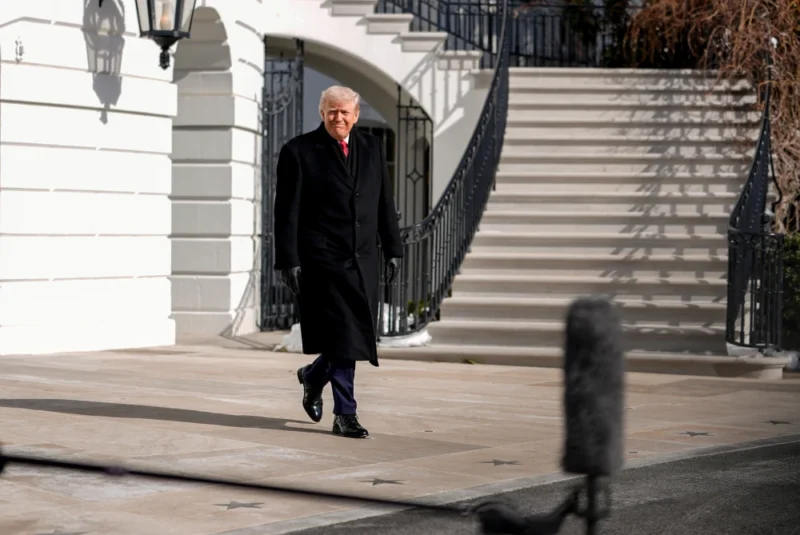
Behind the scenes, allies warned: this war could collapse the region. Trump stepped back—but for how long?
President Donald Trump’s sudden decision to delay strikes on Iran’s power infrastructure did not emerge in isolation. It followed urgent warnings from allies and regional partners who feared that the war was approaching a dangerous tipping point—one that could destabilize not just Iran, but the broader Middle East.
According to officials familiar with private discussions, Gulf states and U.S. partners cautioned that destroying Iran’s civilian energy systems could trigger a cascade of unintended consequences. The most alarming scenario: a post-war Iran fractured into instability, with weakened governance, economic collapse, and prolonged regional chaos.
That warning appears to have landed.
Trump’s announcement of a five-day pause, paired with renewed talk of negotiations, offered a temporary release valve. The timing was telling. Markets, rattled by the threat of escalation, reacted immediately—oil prices dropped, equities rebounded, and investor anxiety eased. For a president facing rising domestic economic pressure, the financial dimension was impossible to ignore.
But the pause also reflects a deeper strategic recalibration.
The original ultimatum—to “obliterate” Iran’s power infrastructure if the Strait of Hormuz remained restricted—risked crossing a threshold that many allies viewed as both legally and politically hazardous.
Targeting civilian-linked energy systems could have widened the conflict, invited retaliation against critical infrastructure across the Gulf, and drawn in additional global powers with direct stakes in the region.
Diplomatic channels, meanwhile, have quietly intensified. Countries including Turkey, Egypt, Pakistan, and Oman are acting as intermediaries, passing messages between Washington and Tehran. European governments have signaled cautious support for talks, while maintaining skepticism about their prospects.
Yet even here, uncertainty dominates.
Iranian officials have publicly denied that negotiations are underway, dismissing U.S. claims as misinformation. That divergence highlights a recurring challenge in the conflict: competing narratives, shifting signals, and limited clarity about what is actually being discussed behind closed doors.
For Trump, the pause creates both opportunity and risk.
On one hand, it opens space for diplomacy and reduces immediate escalation pressure. On the other, it may reinforce a perception—particularly in Tehran—that threats can be blunted through counter-pressure, especially when energy markets and regional stability are at stake.
Analysts warn that this dynamic could strengthen Iran’s deterrence posture rather than weaken it. If Tehran concludes that escalation compels restraint from Washington, it may be emboldened to continue leveraging the Strait of Hormuz and regional tensions.
At the same time, the war itself is not slowing. Israeli operations continue, including strikes inside Tehran and expanded ground activity in southern Lebanon. U.S. forces remain deployed across the region, and no formal ceasefire framework has emerged.
The result is a fragile pause layered over an active conflict.
Trump’s approach—shifting between escalation, diplomacy, and economic maneuvering—has left allies and adversaries alike trying to interpret his next move. The five-day window may provide temporary stability, but it does not resolve the underlying strategic dilemma: how to end a war that has already expanded beyond its initial scope.
For now, the escalation has been delayed, not defused.
And as the deadline resets, the same question returns with greater urgency: is this a path toward negotiation—or simply a pause before a more dangerous phase begins?
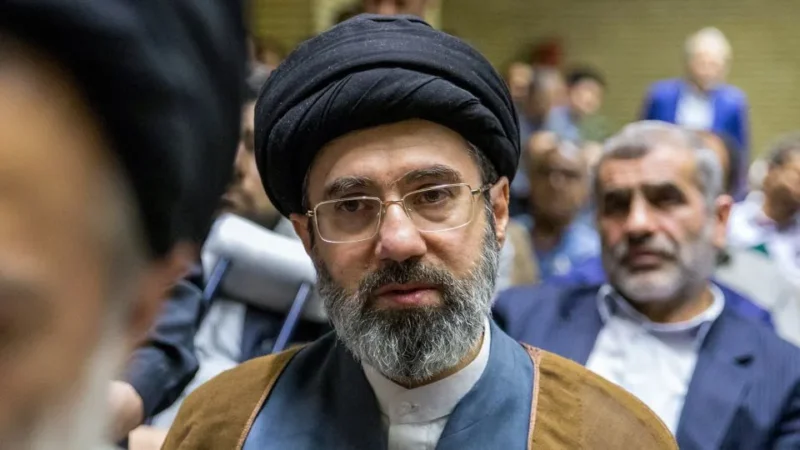
Missiles can shake Iran. Only its own elites can bring it down. Here’s why.
For all the firepower unleashed in the current war, the survival of Iran’s regime will not be decided in the skies. It will be decided inside the regime itself.
History offers a consistent lesson: authoritarian systems rarely collapse because of external pressure alone. They fall when the inner circle—military commanders, political elites, economic power brokers—begins to fracture.
In Iran’s case, that inner circle is anchored by the Islamic Revolutionary Guard Corps (IRGC), clerical leadership, and a network of state-linked economic interests. As long as that coalition holds, the system is likely to endure.
Military escalation can still matter—but its impact is indirect. Strikes on infrastructure, command centers, or strategic assets create what analysts call an “informational shock.” They expose vulnerabilities, challenge deterrence, and can trigger public unrest. Yet such shocks, on their own, rarely produce regime collapse.
In fact, they often do the opposite.
External attacks tend to generate a rally-around-the-flag effect, reinforcing national unity and strengthening the regime’s claim to legitimacy.
Iran’s leadership has long prepared for this dynamic, framing conflict as resistance against foreign aggression. In the short term, that narrative can stabilize rather than weaken the system.
The turning point comes only if that informational shock evolves into something deeper: an “incentive shock.” This is the moment when elites begin to question whether staying loyal still guarantees their survival.
Three pathways could push Iran toward that threshold.
The first is fragmentation within the coercive apparatus. If divisions emerge between the IRGC and the regular military—or within the Guard itself—enforcement capacity weakens. Without a unified security structure, regimes struggle to maintain control.
The second is economic breakdown. Prolonged war can strain state finances, erode patronage networks, and make loyalty more costly. When elites are no longer confident that the system can sustain them, their calculations begin to shift.
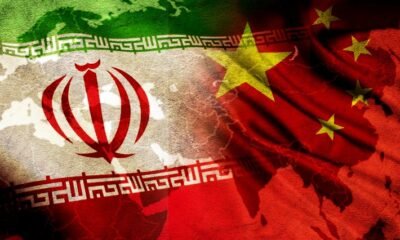
The third is strategic isolation. If Iran’s regional influence diminishes and external support from partners like Russia or China weakens, the perception of long-term viability may erode. Elites do not need certainty of collapse—only doubt about the future.
Even then, collapse is not guaranteed.
Iran’s system has structural advantages that raise the threshold for breakdown. Its dual power structure—combining religious authority with a powerful security apparatus—creates overlapping networks of control. The IRGC is not just a military force; it is deeply embedded in the economy and political system, increasing the cost of defection. The Basij and other internal security forces reinforce that architecture.
Comparative cases underscore this resilience. Syria’s regime survived years of conflict because its core elites remained cohesive. By contrast, Tunisia and Egypt unraveled quickly when military leaders withdrew support. Iran, for now, resembles the former more than the latter.
This leaves three plausible trajectories.
The most likely is resilience: the regime absorbs military pressure, maintains elite cohesion, and survives. A second scenario involves prolonged instability—economic strain, limited fractures, but no decisive break. The least likely, though not impossible, is a full collapse triggered by cascading elite defections.
The critical variable is not the intensity of the war, nor the scale of public protest. It is whether those at the center of power begin to believe that the system can no longer protect them.
Until that shift occurs, bombs may shake Iran—but they will not break it.
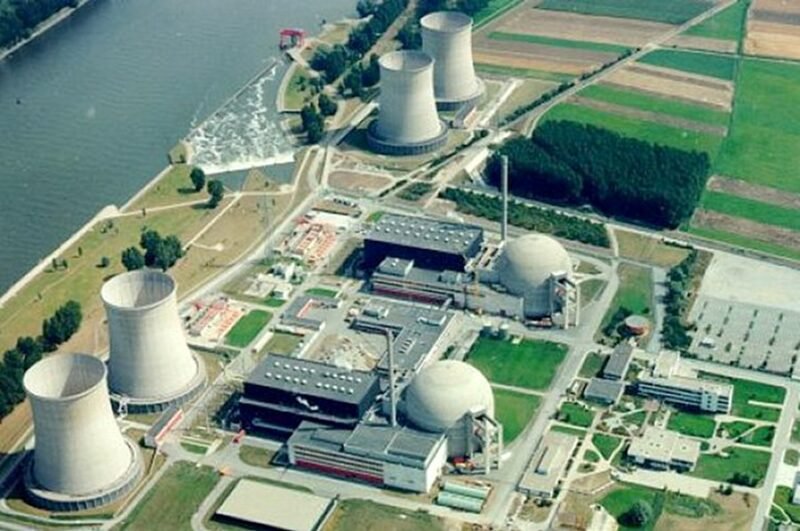
Ultimatum Walked Back: Trump Blinks as Iran Holds the Oil Lifeline.
President Donald Trump has stepped back from the brink—at least for now.
After issuing a stark 48-hour ultimatum threatening to strike Iran’s power infrastructure, Trump announced he has ordered a five-day postponement of any such attacks. The reversal comes as the war enters its fourth week, with both sides escalating militarily while global markets absorb the shock of a disrupted energy supply.
The delay underscores a growing tension at the heart of U.S. strategy: how to apply pressure without triggering a wider regional crisis.
Iran’s response to the original threat was swift and explicit. Officials warned that any attack on their energy grid would be met with strikes on critical infrastructure across the Middle East, including water and energy systems in Gulf states. The message was clear—escalation would not remain contained.
At the center of the standoff is the Strait of Hormuz. Since the start of the war, Iran has effectively restricted passage for vessels linked to the United States and Israel, disrupting a route that carries roughly one-fifth of the world’s oil supply.
The result has been immediate: rising crude prices, tightening supply chains, and mounting fears of a prolonged global energy shock.
While Iranian forces have targeted some tankers, Tehran has also pointed to rising insurance costs as a factor limiting maritime traffic, complicating efforts to restore normal shipping flows.
Trump’s decision to delay strikes may reflect an attempt to buy time—whether for diplomatic maneuvering, military recalibration, or coordination with allies. Yet it also raises questions about consistency.
The rapid shift from ultimatum to postponement adds to a pattern of changing signals that has defined Washington’s approach to the conflict.
On the ground, there is little sign of de-escalation. Trump has ruled out a ceasefire, arguing that U.S. operations are close to significantly degrading Iran’s missile and nuclear capabilities. Tehran, for its part, remains defiant, signaling it is prepared for a prolonged confrontation.
The conflict is also expanding geographically. Israel has indicated it will intensify ground operations against Hezbollah in southern Lebanon, widening the scope of the war beyond Iran itself.
The human toll continues to rise. Iranian authorities report more than 1,400 deaths and over 18,000 injuries since the conflict began, while retaliatory strikes have killed civilians in Israel and U.S. service members stationed across the region.
Diplomatic tensions are also sharpening. Saudi Arabia has expelled Iranian diplomatic staff, citing security concerns tied to the conflict—a move that reflects the broader regional strain.
For now, the five-day pause creates a narrow window. It delays a potentially explosive escalation targeting civilian-linked infrastructure, but it does not resolve the underlying standoff over Hormuz or the broader trajectory of the war.
The question is what happens when that window closes.
If the Strait remains restricted and the ultimatum returns, the next decision could determine whether the conflict stabilizes—or moves into a far more dangerous phase, where the infrastructure that sustains entire societies becomes the primary battlefield.

Ex-MI6 Chief Warns Iran Is Winning the Strategic War

Iran Opens Oil Route as U.S. Pushes Secret Peace Plan

Baghdad Protests as U.S.-Iran Strikes Turn Country Into Battlefield


-
 Terrorism2 months ago
America Pulls Back From Somalia but Doubles Down Next Door
-

 Analysis2 months ago
How Chinese Speculators Set the Stage for the Gold and Silver Crash
-
 Top stories2 months ago
Rubio Signals Preemptive Military Option as U.S. Tightens Pressure on Iran
-

 Top stories2 months ago
France Blocks EU Push to Let Ukraine Buy British Storm Shadow Missiles
-
 Russia-Ukraine War1 month ago
Russian General Boasted of Torture and Killing of Ukrainian Prisoners
-
 Russia-Ukraine War1 month ago
Europe’s Spies Challenge Trump’s Ukraine Peace Optimism
-
 US-Israel war on Iran1 month ago
UK Refuses Iran Strike Access, Trump Fires Back
-
 Analysis2 months ago
Iran Warns, Qatar Mediates, Washington Deploys: A Crisis Managed in Public and Private