Islamabad Becomes War’s Nerve Center as Iran Demands One Thing: Trust.
A quiet diplomatic shift is underway as Iran signals conditional openness to talks—placing “trust” at the center of any potential breakthrough.
President Masoud Pezeshkian conveyed that message directly to Shehbaz Sharif during an extended call, according to Islamabad. The conversation, which focused on the escalating Middle East conflict, underscores a growing reality: the path to de-escalation is being shaped far from the battlefield.
At the center of this effort is Islamabad, which is rapidly emerging as the primary diplomatic hub of the crisis.
Pakistan’s role is not accidental. It occupies a rare position—maintaining longstanding ties with Tehran while also engaging closely with Gulf states and Washington. That combination has turned it into a critical intermediary, carrying messages, proposals, and responses between adversaries who are not speaking directly.
The next phase of this diplomacy is already taking shape.
Foreign ministers from Saudi Arabia, Turkey, Egypt, and Pakistan are set to convene in Islamabad for high-level talks aimed at reducing tensions. The gathering reflects a widening regional effort to contain a conflict that has already spilled across borders and disrupted global markets.
Behind the scenes, messages continue to flow.
Iran has reportedly passed a response to a U.S. ceasefire proposal through Pakistani channels, even as it publicly denies direct negotiations. This dual-track approach—public resistance paired with private engagement—is a familiar feature of high-stakes diplomacy, allowing all sides to preserve political leverage while testing the ground for compromise.
But Tehran’s emphasis on “trust” highlights the central obstacle.
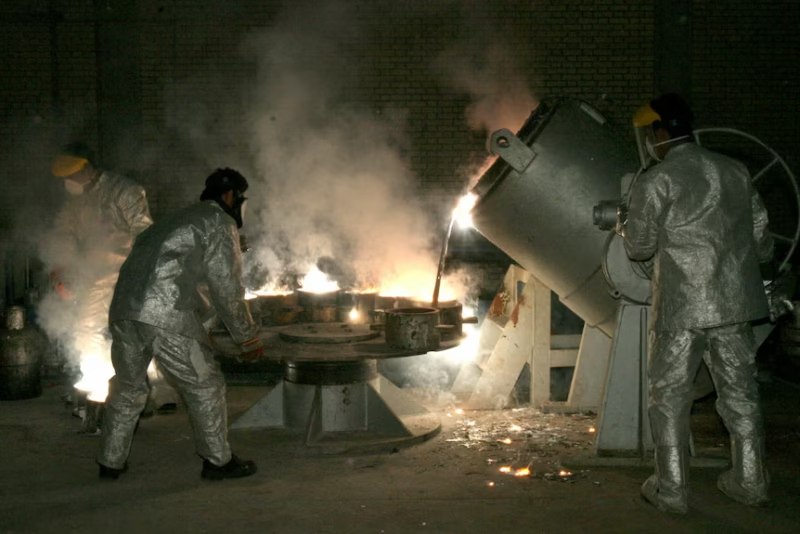
From Iran’s perspective, previous negotiations—particularly over its nuclear program—were undermined by shifting commitments and abrupt reversals. Any new agreement, therefore, must address not only immediate military concerns but also long-term guarantees. Without that, diplomacy risks collapsing before it begins.
For Pakistan, the stakes are equally significant.
Success would elevate its status as a global diplomatic broker, echoing its historic role in facilitating major geopolitical shifts. Failure, however, could reinforce skepticism about whether mediation can keep pace with rapidly escalating military dynamics.
The broader picture is clear.
While missiles continue to fly across the region, the architecture of a potential settlement is quietly being assembled elsewhere—through intermediaries, backchannels, and carefully calibrated messaging.
Whether that effort succeeds may depend less on the details of any proposal and more on a single, elusive factor: trust between adversaries who have spent decades preparing for conflict, not compromise.