
US-Israel war on Iran
US Sends Third Carrier—War Pressure Mounts on Iran

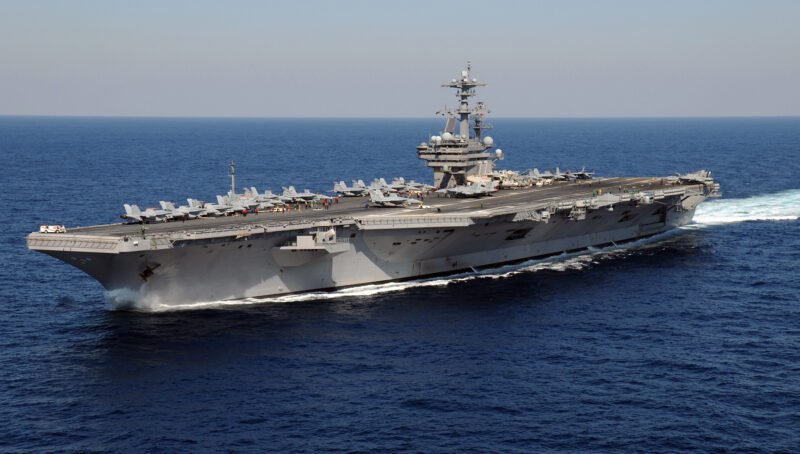
Three US aircraft carriers now moving toward the same war zone. Is this deterrence—or preparation for something bigger?
The United States is reinforcing its military posture in the Middle East, dispatching a third aircraft carrier as tensions with Iran continue to escalate and the conflict enters a more uncertain phase.
According to officials familiar with the deployment, the USS George H.W. Bush has departed U.S. waters and is en route to the region. It is expected to rotate in for one of the two carriers already operating near the conflict zone—the USS Abraham Lincoln and the USS Gerald R. Ford—both of which have been central to sustained U.S.-Israeli air operations.
The presence of multiple carrier strike groups underscores the scale and flexibility of American military options. Each carrier brings a floating airbase capable of launching dozens of sorties per day, supported by escort vessels, missile defense systems, and surveillance assets.
Together, they provide the United States with the ability to project force across the Gulf, the Arabian Sea, and the broader Middle East without relying on fixed bases.
This latest deployment comes alongside a broader buildup that includes amphibious assault ships, advanced fighter aircraft, and thousands of additional Marines and sailors.
The layered reinforcement suggests Washington is preparing for a range of scenarios—from sustained air campaigns to potential maritime or limited ground operations.
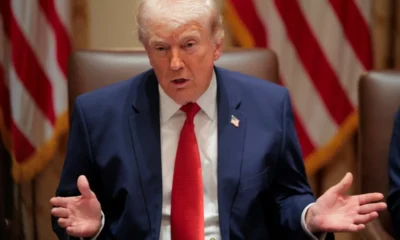
President Donald Trump has continued to signal that further escalation remains on the table if Tehran refuses to meet U.S. demands related to its nuclear program, missile capabilities, and regional alliances.
The movement of additional naval power appears designed both to sustain current operations and to increase pressure on Iran ahead of any potential diplomatic breakthrough.
At the same time, the deployment reflects a strategic balancing act. While Washington has indicated it may scale down operations in the coming weeks, the arrival of another carrier suggests that de-escalation is not yet assured—and that the United States is keeping its military options firmly open.
In practical terms, three carriers in or near the same theater represent one of the most significant U.S. naval concentrations in recent years.
Whether it serves primarily as deterrence or as preparation for expanded operations may depend on decisions made in the days ahead—both in Washington and in Tehran.

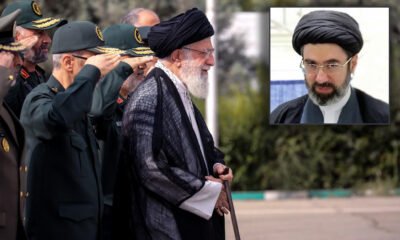















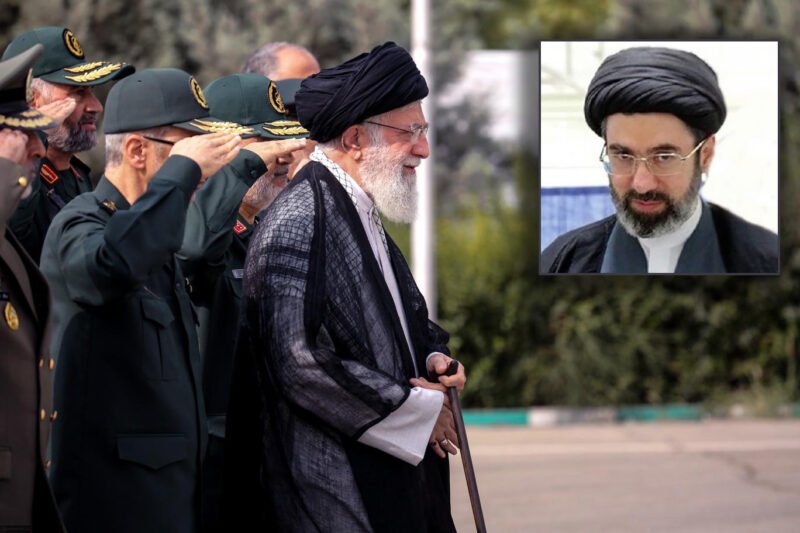
Is Iran changing—or just replacing one face with the same system?
The rise of Mojtaba Khamenei is often framed as a potential turning point for Iran. In reality, it may signal the opposite: not transformation, but consolidation.
What appears on the surface as a dynastic transition is better understood as the maturation of a system built over decades by Ali Khamenei. The defining feature of that system—what can be described as “Khameneism”—is not tied to an individual. It is institutional, embedded, and designed to reproduce itself.
Over nearly four decades, Iran’s power structure was not merely maintained but engineered. Constitutional authority concentrated in the office of the Supreme Leader was expanded in practice through a network of parallel institutions, informal mechanisms, and ideological enforcement bodies.
Structures like the Supreme Council of the Cultural Revolution and the Guardian Council evolved from advisory or supervisory roles into instruments of control, shaping not just political outcomes but the boundaries of acceptable thought and participation.
This transformation fundamentally altered the nature of governance. Elections became managed processes rather than open contests. Institutional autonomy narrowed.
Reformist currents were gradually neutralized. What emerged was a system calibrated to eliminate unpredictability—where outcomes are increasingly preconfigured rather than negotiated.
Within this architecture, Mojtaba Khamenei’s rise is not an anomaly. It is a byproduct of institutional design. The traditional markers of leadership legitimacy—religious authority, broad political consensus—have been superseded by structural alignment with the system itself.
The succession process reflects this shift: less a moment of choice than the execution of a long-prepared outcome. The deeper implication is that the question of succession has become secondary.
The system now constrains the leader more than the leader defines the system. Any successor operates within a fixed framework shaped by priorities that have become structurally entrenched—regime preservation, centralized authority, and a strategic posture defined by resistance to Western influence and confrontation with Israel.
This is the paradox at the heart of Khameneism. Its strength lies in its ability to ensure continuity and suppress internal disruption. But that same rigidity limits adaptability.
A system built to prevent deviation struggles to accommodate change. Over time, the mechanisms that guarantee survival—control, exclusion, and ideological uniformity—can also erode flexibility, public trust, and long-term resilience.
Mojtaba Khamenei, therefore, does not represent a new phase in Iran’s political trajectory. He represents its culmination. The system has reached a point where leadership transitions matter less than the structure itself.
The real question is no longer who leads Iran—but whether a system designed to avoid change can sustain itself indefinitely without it.
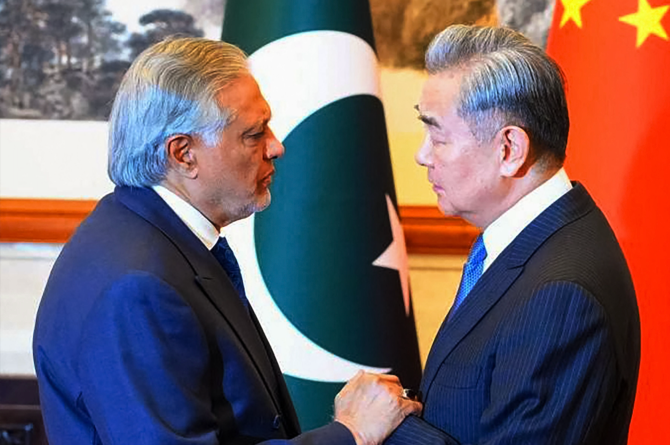
Two major powers step in as mediators. Can China and Pakistan stop a war shaking global energy?
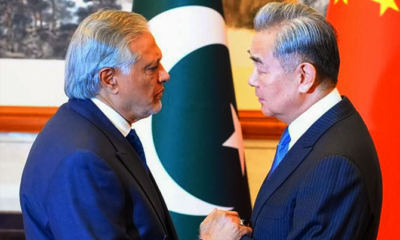
China and Pakistan have jointly called for an immediate ceasefire and the launch of peace negotiations to end the escalating war involving Iran, positioning themselves as key diplomatic actors as the conflict enters its fifth week.
The appeal came during high-level talks in Beijing between Chinese Foreign Minister Wang Yi and his Pakistani counterpart Ishaq Dar. In a coordinated five-point initiative, both countries emphasized that dialogue—not military escalation—remains the only viable path to resolving the crisis.
Central to their proposal is the urgent need to restore stability in the Strait of Hormuz, where ongoing hostilities have severely disrupted global shipping and energy flows. The two sides called for immediate measures to ensure the safe passage of commercial vessels and to normalize navigation through one of the world’s most critical maritime chokepoints.
Pakistan’s role has become increasingly prominent. With a long border and established ties to Iran, as well as growing engagement with Washington, Islamabad has positioned itself as a rare intermediary capable of communicating with all sides.
Officials have indicated readiness to host or facilitate direct talks between the United States and Tehran, a diplomatic channel that has gained urgency as the conflict widens.
The joint statement also underscored broader principles aimed at stabilizing the region. Both countries called for the protection of civilian lives and infrastructure, respect for national sovereignty, and safeguards for peaceful nuclear facilities—signaling concern over the expanding scope of military targets.
For Beijing, the initiative reflects its strategic interest in preserving global trade routes and preventing further economic disruption. For Islamabad, it reinforces its emerging role as a regional mediator at a time when traditional diplomatic channels are strained.
The timing is critical. With the Strait of Hormuz partially restricted and energy markets under pressure, the stakes extend far beyond the Middle East. A prolonged disruption risks triggering wider economic consequences, particularly for Asian economies heavily dependent on Gulf energy supplies.
Whether this diplomatic push gains traction remains uncertain. But the entry of China and Pakistan into active mediation highlights a shifting dynamic: as Western military pressure intensifies, alternative power centers are stepping forward to shape the path toward de-escalation.
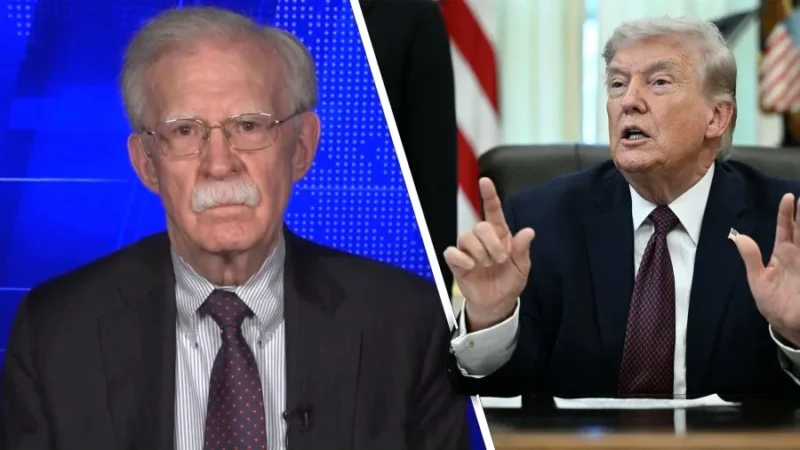
The war may end—but who actually wins? Bolton says an early exit could hand victory to Iran.
Former U.S. National Security Adviser John Bolton has issued a stark warning over plans by Donald Trump to wind down military operations in Iran within weeks, arguing that a premature withdrawal could turn battlefield gains into a strategic loss.
Speaking in a televised interview, Bolton challenged the administration’s narrative that the campaign has achieved its core objectives. While acknowledging the scale of military damage inflicted on Iran, he said the broader strategic picture remains unresolved—particularly the absence of regime change or a lasting shift in Tehran’s behavior.
Bolton dismissed suggestions that Iran’s leadership has fundamentally changed, arguing instead that the current structure reflects continuity in ideology and intent. He likened the regime to a “wounded animal,” warning that if it regains stability, it will resume its previous policies, including regional intervention and confrontation with the West.
His central concern is the timing of a potential U.S. exit. If Washington withdraws before securing key objectives—especially reopening the Strait of Hormuz—Bolton argues it would signal to Iran that it can disrupt global trade and withstand military pressure without lasting consequences.
“This tells the leadership in Tehran they can do it again,” he warned, framing the risk not just in regional terms but as a precedent for future conflicts.
Bolton also criticized the administration’s handling of alliances, pointing to a lack of coordination with European partners and warning of long-term damage to NATO cohesion. He argued that fractures within the Western alliance could reshape global power dynamics in ways that benefit U.S. adversaries.
The debate reflects a broader divide within U.S. strategic thinking. On one side is the administration’s apparent push to declare success and limit prolonged engagement. On the other is a more traditional view that military action must translate into durable political outcomes—or risk undermining its own objectives.
As fuel prices rise and domestic pressure grows, the White House appears increasingly focused on ending the conflict quickly. But Bolton’s warning underscores a critical question that now hangs over the war’s final phase:
Ending a war is one thing. Ensuring it does not return—stronger—is another.
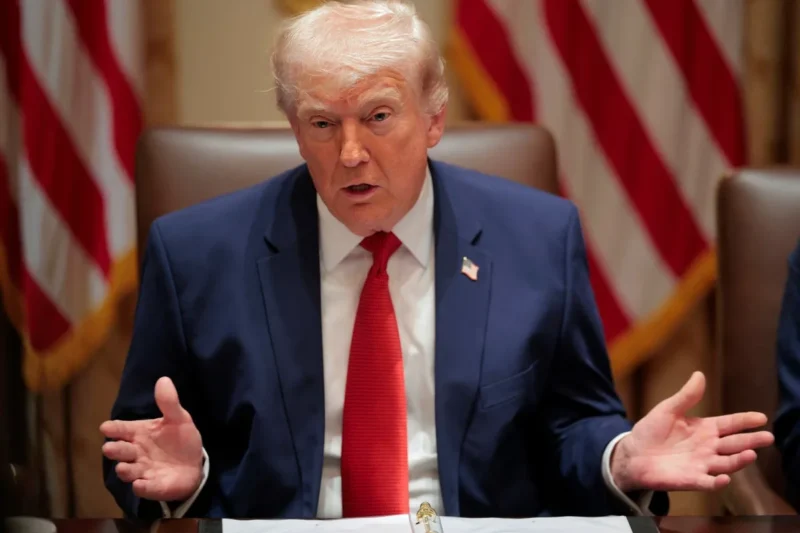
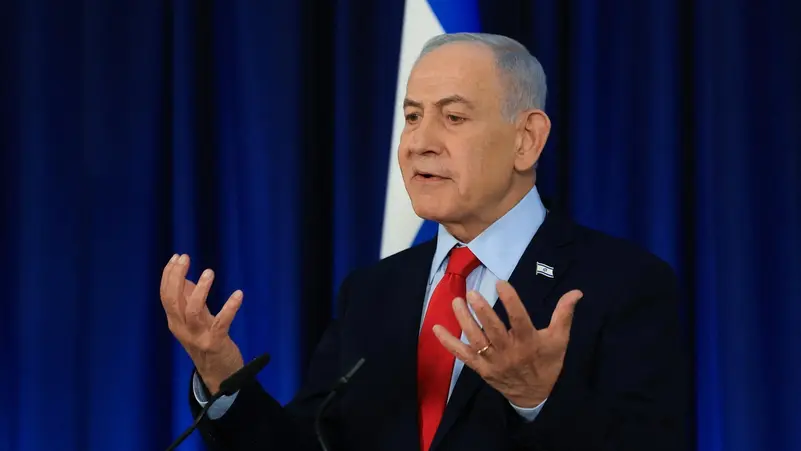
Even if a deal is reached with Iran, Israel says Lebanon is still a battlefield. What does that mean for the region?
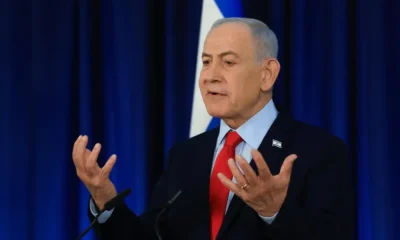
Israeli Prime Minister Benjamin Netanyahu has made clear to Washington that any future agreement with Iran will not limit Israel’s military operations in Lebanon, effectively drawing a sharp line between the two fronts of the expanding conflict.
According to Israeli officials cited in local reporting, Netanyahu told U.S. counterparts that Israel will continue its campaign against Hezbollah regardless of any diplomatic outcome between Washington and Tehran. The message directly rejects Iranian efforts to link a broader ceasefire to the Lebanese theater, where fighting has intensified in recent weeks.
The position reflects a strategic calculation inside Israel that the war in Lebanon is not a secondary front, but a central battlefield tied to long-term security concerns. Netanyahu is said to view the current moment as an opportunity to push Hezbollah forces north of the Litani River, a longstanding Israeli objective aimed at creating a buffer zone along its northern border.
Israeli Defense Minister Israel Katz has reinforced that approach, signaling that Israeli forces will not withdraw from southern Lebanon and may establish a sustained security presence extending to the Litani. The plan reportedly includes dismantling infrastructure in border villages and reshaping the security landscape in a manner similar to previous operations in Gaza.
The United States, under Donald Trump, appears to have accepted Israel’s position, according to a senior Israeli official, suggesting that Washington is prioritizing a potential agreement with Tehran over managing parallel conflicts involving Hezbollah.
Iran, however, has attempted to expand the scope of negotiations, signaling through intermediaries that any ceasefire framework should include Lebanon. That proposal has been firmly rejected by Israel, which insists on maintaining operational freedom against Iranian-backed forces in the country.
Since early March, Israeli airstrikes and ground operations in southern Lebanon have escalated following cross-border attacks by Hezbollah. Lebanese authorities report more than 1,200 fatalities and thousands of injuries, underscoring the human cost of a conflict that is increasingly detached from diplomatic efforts elsewhere.
The divergence in positions highlights a deeper reality shaping the war’s trajectory. Even if Washington and Tehran move toward a deal, the region is unlikely to see a comprehensive ceasefire. Instead, the conflict is fragmenting into parallel wars—each driven by its own strategic logic, and each capable of continuing independently.
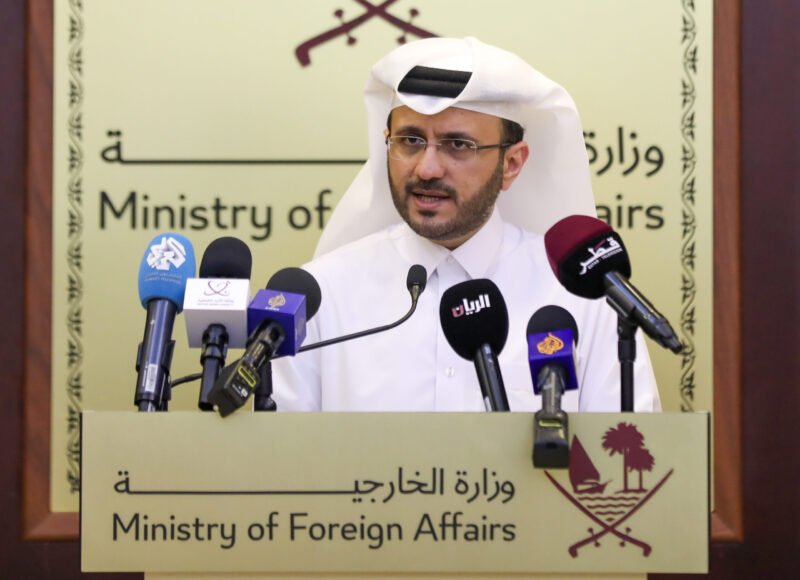
Missiles hit the Gulf—but the response isn’t war. It’s unity. Why are Gulf states pushing back against escalation?
Gulf Arab states are presenting a rare show of unity, calling for an immediate de-escalation of the war as tensions with Iran continue to rise and regional infrastructure comes under sustained attack.
Speaking in Doha, a spokesperson for Qatar said Gulf nations share a “very unified position” on the need to end the conflict, even as Iranian missile and drone strikes have targeted energy facilities across the region over the past month.
The attacks are part of Tehran’s response to ongoing US and Israeli military operations, which began in late February and have since expanded across multiple fronts.
The pressure point remains the Strait of Hormuz, a critical global shipping lane through which roughly one-fifth of the world’s oil typically flows. Iran’s effective closure of the strait has disrupted energy markets and triggered alarm among both regional governments and global powers.
Iranian lawmakers have gone further, signaling potential escalation by proposing tolls on vessels transiting the strait and a complete ban on ships linked to the United States and Israel.
While Qatari officials described the closure as a consequence of ongoing military operations, they emphasized that the strait’s future must be determined collectively by regional states and international partners.
The emerging Gulf consensus reflects a shift in strategic thinking. Rather than responding militarily to Iranian strikes, countries in the region appear focused on containing the conflict and preventing it from spiraling into a broader war that could destabilize global energy supplies and regional economies.
At the same time, there are signs that unity does not necessarily mean uniformity in long-term objectives. The United Arab Emirates has indicated that a simple ceasefire may not be sufficient.
Its ambassador in Washington argued that any resolution must address the full spectrum of Iranian capabilities, including its missile program, drone operations, proxy networks, and maritime disruption tactics.
That position suggests a dual-track approach emerging in the Gulf: immediate de-escalation to stabilize the region, coupled with longer-term pressure to constrain Iran’s strategic reach.
For now, however, the priority is clear. With energy infrastructure under threat and shipping lanes disrupted, Gulf states are signaling that the cost of continued escalation is too high—not just for the region, but for the global economy.

A NATO ally just said no to US war flights. Is the Western alliance starting to crack?
Italy has quietly refused to allow the United States to use a key air base in Sicily for operations linked to the widening Middle East war, signaling growing unease inside Europe over deeper military involvement.
According to a source familiar with the matter, Rome denied permission for US military aircraft to land at the Naval Air Station Sigonella before continuing onward to the conflict zone. The reported request, first revealed by Corriere della Sera, involved American bombers seeking logistical access to the strategically positioned base in eastern Sicily.
The refusal appears to hinge less on outright opposition to Washington and more on procedural and political concerns. Italian authorities were reportedly not formally consulted in advance, a requirement under bilateral agreements governing the use of US military facilities on Italian soil. Without that authorization, the request could not proceed.
The decision comes at a sensitive moment for Italy and its leadership under Giorgia Meloni. While Rome remains a committed NATO ally, domestic political pressure is mounting. Opposition parties have warned against allowing Italian territory to be used in a conflict that risks spiraling into a broader regional war, urging the government to maintain distance from direct military engagement.
Meloni’s government has signaled caution, stating that any future requests involving operational use of Italian bases would require parliamentary approval. That position reflects a balancing act between alliance commitments and domestic political realities, particularly as the war involving Iran continues to expand across multiple fronts.
The implications extend beyond a single airbase. Sigonella has long served as a critical logistical hub for US and NATO operations across the Mediterranean, North Africa, and the Middle East. Restricting access, even temporarily, underscores emerging fractures in how Western allies are approaching the conflict.
At the same time, developments on the battlefield continue to intensify. Israel confirmed additional troop losses in southern Lebanon, with 10 soldiers killed since the start of its ground operations and hundreds more wounded.
The expanding scope of fighting—from Iran to Lebanon and the Red Sea—has heightened concerns that the war is moving toward a prolonged, multi-front confrontation.
Italy’s decision, though procedural on the surface, reflects a deeper strategic hesitation now visible across parts of Europe. As the conflict grows more complex and costly, even close allies are beginning to draw quiet lines around how far they are willing to go.
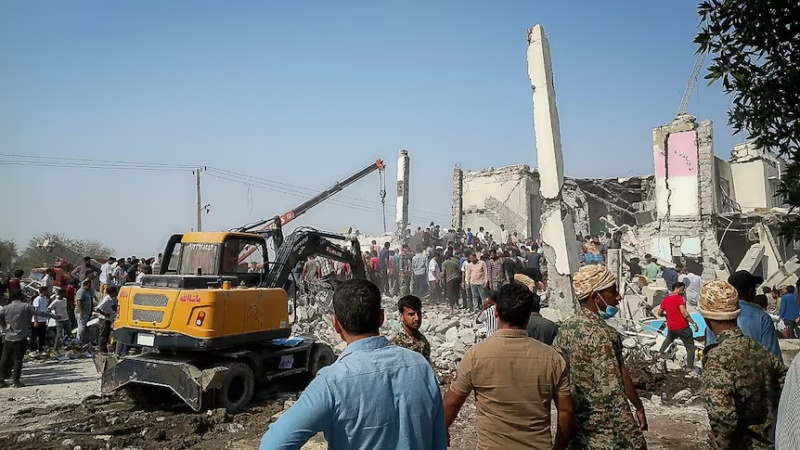
Schools, hospitals, mosques—turned into military sites. What does this mean for civilians caught in the war?
Iranian military and security forces have reportedly deployed personnel, weapons, and equipment across a wide network of civilian sites during the ongoing conflict with the United States and Israel, according to investigative findings covering early March 2026.
The reported activity spans at least 70 locations across 17 provinces, including 28 cities and two villages, indicating a coordinated and geographically dispersed pattern rather than isolated incidents.
Nearly half of these sites—34 in total—were identified as primary or secondary schools, with additional deployments documented in hospitals, mosques, universities, stadiums, parks, and government facilities.
The timing of these movements coincided with sustained airstrikes and a near-total domestic internet shutdown, which limited the flow of verifiable imagery and communication.
Despite these constraints, visual evidence from multiple locations was successfully geolocated, reinforcing the credibility of at least part of the reporting. Eyewitness accounts describe military vehicles positioned within school courtyards, weapons transported under concealment, and units relocating into civilian infrastructure following strikes on known military installations.
The operational logic appears consistent with dispersal and concealment strategies typically employed under conditions of sustained aerial pressure. By embedding assets within populated environments, Iranian forces may be attempting to complicate adversary targeting, reduce the effectiveness of precision strikes, and increase the political and humanitarian cost of attacks.
This approach aligns with broader asymmetric warfare tactics observed in previous regional conflicts, where state and non-state actors leverage civilian proximity as both shield and deterrent.
The legal implications are significant. Under international humanitarian law, civilian infrastructure retains protected status unless it is used for military purposes. Once such use occurs, those sites may become legitimate military targets, though attacking forces remain obligated to adhere to principles of distinction, proportionality, and precaution.
The reported deployments therefore risk transforming protected civilian zones into contested military objectives while simultaneously increasing the likelihood of civilian harm.
Hospitals and religious sites carry additional legal sensitivities. Reports indicating military presence near or within medical facilities and mosques raise concerns about the erosion of enhanced protections typically afforded to such locations.
Even when protection is lost due to military use, international law requires clear warnings and strict limitations on the use of force, creating operational constraints for any responding military action.
Iranian authorities have rejected allegations of using civilian spaces for military purposes and have instead accused opposing forces of deliberately targeting civilian infrastructure.
In contrast, U.S. and Israeli officials have publicly warned that Iranian deployments within civilian areas place noncombatants at heightened risk and may alter the legal status of those sites in the context of ongoing operations.
The broader strategic effect is a compression of the battlefield into civilian life. Urban and public spaces are increasingly integrated into military operations, reducing the distinction between combat and non-combat environments.
This dynamic complicates targeting decisions, amplifies humanitarian risk, and reinforces a cycle in which military necessity and civilian vulnerability become deeply intertwined.

Khameneism After Khamenei: No New Iran

US Sends Third Carrier—War Pressure Mounts on Iran

Why Going Back to the Moon Is Harder Than It Looks


-

 US-Israel war on Iran1 month ago
UK Refuses Iran Strike Access, Trump Fires Back
-
 Russia-Ukraine War1 month ago
Europe’s Spies Challenge Trump’s Ukraine Peace Optimism
-
 Top stories1 month ago
War Expands Across Region as Iranian Militias Join Fight
-
 Top stories1 month ago
India Turns to Brazil in Strategic Minerals Push Against China
-
 US-Israel war on Iran1 month ago
Iran Pledges ‘Never, Ever’ to Hold Bomb-Grade Material
-
 US-Israel war on Iran1 month ago
Syria Under Fire on Two Fronts
-
 Russia-Ukraine War1 month ago
Estonia Warns NATO Would Strike Deep Inside Russia if Baltics Are Invaded
-
 Terrorism1 month ago
Regional Army Moves Against Expanding Armed Groups