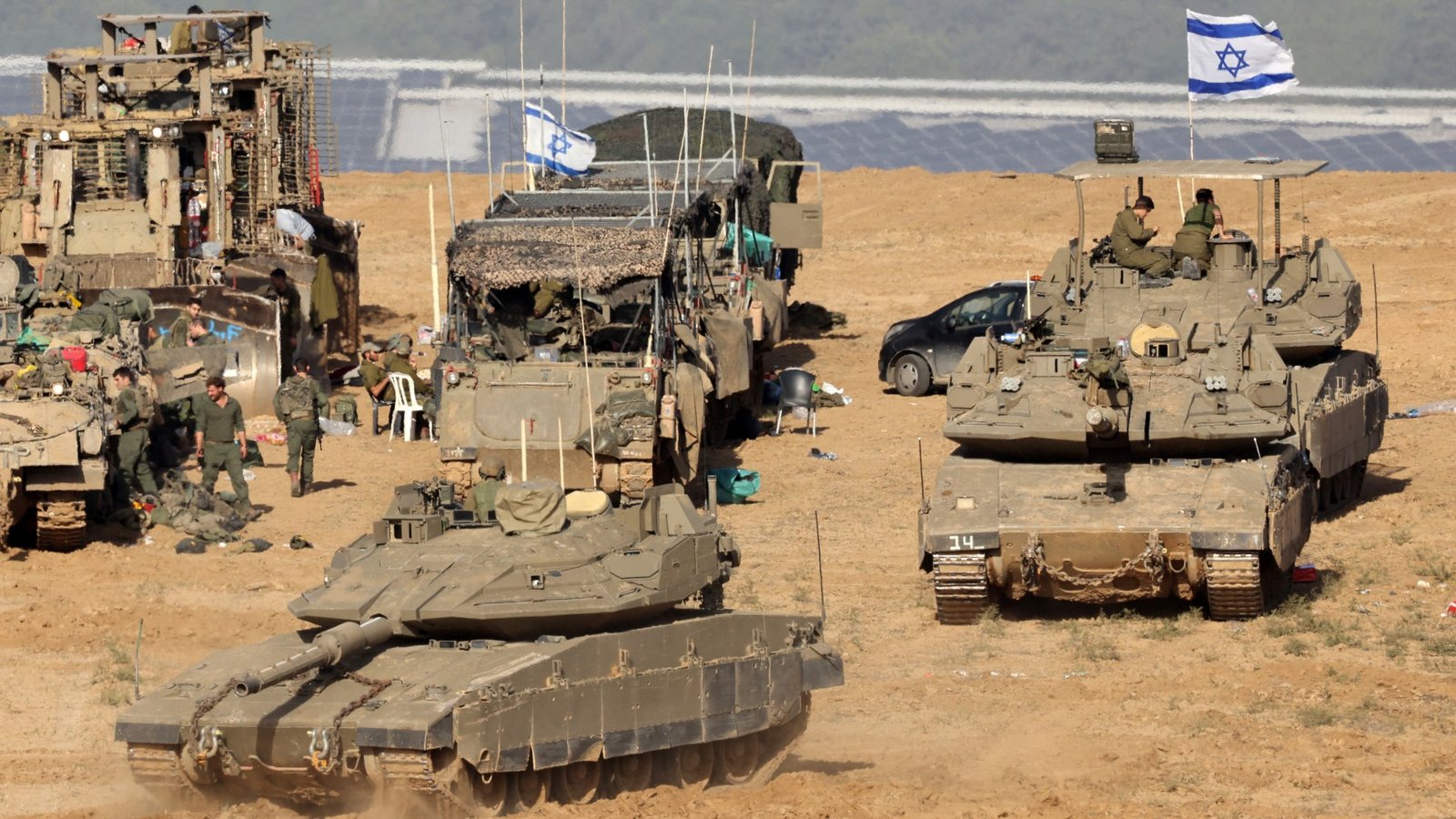
Iran’s latest strikes hit the Gulf where it is most vulnerable: water, airports, bases and oil routes. The war is no longer only military — it is becoming infrastructure warfare.
Iran Opens the Gulf Infrastructure Front
Iran’s latest attacks on Gulf states show that the war with the United States is moving into a more dangerous phase: not only military bases and shipping lanes, but the infrastructure that keeps Gulf societies functioning.
After a seventh straight night of U.S. strikes on Iranian military sites, Iran launched renewed attacks on Washington’s Gulf allies, with Kuwait suffering sustained missile and drone threats. Reuters reported that a Kuwaiti power generation and water desalination facility was hit, while operations at Kuwait International Airport were suspended because of repeated threats.
Iran’s Revolutionary Guards said they struck a U.S. military support center at Camp Arifjan and destroyed a radar facility at Ali Al Salem Air Base, though Reuters said it could not independently verify all Iranian claims.
The attacks were not limited to Kuwait. Iranian state media said the IRGC targeted Bahrain’s Sheikh Isa Air Base, where U.S. combat aircraft were reportedly gathered, as well as an intelligence data center. Iranian state television also claimed that missiles and drones hit the U.S. base at Al Azraq in Jordan and destroyed aircraft there, but those claims also remain unverified.
This matters because the battlefield is no longer clearly separated between military and civilian infrastructure. AP reported that U.S. Central Command said its seventh night of strikes hit Iranian surveillance sites, military logistics infrastructure, underground weapons storage and maritime capabilities. Kuwait, meanwhile, said it intercepted Iranian missiles and drones and that a desalination plant was struck, causing a fire — the second such attack in two days.
In the Gulf, desalination is not ordinary infrastructure. It is national survival. Kuwait depends on desalination for about 90% of its drinking water, according to AP. That means an attack on water facilities is not only economic pressure; it is a direct threat to civilian resilience, public confidence and state stability.
Iran is also reporting damage inside its own territory. Iranian media said U.S. strikes hit power facilities and desalination pumps in the southern city of Jask, leaving thousands of people across nearby villages without water. AP reported that overnight strikes damaged two tunnels and a bridge, disrupting a main highway toward Bandar Abbas near the narrowest part of the Strait of Hormuz.
This is the central danger of the new phase: both sides are now testing the boundary between military necessity and civilian vulnerability.
The U.S. says its strikes are designed to degrade Iran’s ability to threaten maritime traffic, military assets and commercial vessels. Iran says it is retaliating against American attacks and warning Gulf states that hosting U.S. forces carries a direct cost. The result is an expanding target map: radar systems, air bases, logistics sites, bridges, ports, desalination plants, airports, power networks and shipping routes.
Oil markets are already reacting. Reuters reported that oil prices climbed more than 4% on Friday to their highest level in more than a month, adding political pressure on President Donald Trump as the U.S. moves toward congressional elections.
That price movement is not only about barrels. It reflects fear that the conflict is becoming harder to contain. On Friday, both sides also took aim at shipping traffic, with Washington saying it was enforcing a naval blockade while Tehran said it targeted vessels that violated its rules for navigating the Strait of Hormuz. Reuters noted that Hormuz remains the vital waterway for roughly one-fifth of the world’s oil supply.
The Gulf states are now exposed in three ways.
First, they host U.S. military infrastructure. Bases in Kuwait, Bahrain, Qatar, Jordan and elsewhere are central to American regional power. Iran is trying to make those bases politically expensive for host governments.
Second, Gulf states depend on critical infrastructure that is difficult to fully defend. Desalination plants, power grids, airports, ports and fuel facilities cannot simply be moved. They are visible, fixed and essential.
Third, the region’s wealth depends on uninterrupted energy flows. If Hormuz remains unstable and Red Sea routes face new threats from Iran-aligned forces in Yemen, the Gulf’s export model faces pressure from two directions.
This is why attacks on desalination facilities are so strategically serious. They show that the war is moving from deterrence signaling into infrastructure coercion. Iran does not need to defeat the United States militarily to pressure its allies. It can instead raise the cost of partnership by threatening water, electricity, airports and shipping.
For Washington, this creates a policy trap. More strikes may degrade Iranian capabilities, but they may also provoke Tehran to hit vulnerable Gulf infrastructure harder. Less action may be interpreted by Iran as weakness. Either path carries risk.
For Gulf governments, the lesson is uncomfortable. Hosting U.S. power brings protection, but it also brings exposure. The old assumption that American bases deter attacks is being tested. Iran is trying to prove that Gulf states cannot support U.S. operations without paying a price.
For the wider region, including the Horn of Africa, the implications are direct. If Gulf infrastructure and Hormuz remain under threat, alternative maritime routes, Red Sea ports, Bab el-Mandeb, Berbera, Djibouti and Gulf of Aden logistics will become more strategically valuable — but also more militarized.
The United Nations has already signaled concern. U.N. Secretary-General António Guterres is worried about escalation, particularly attacks on civilian infrastructure across Iran and the wider region, his spokesperson said.
That concern is justified. Once power and water systems become targets, the war enters a more dangerous moral and legal zone. Military escalation becomes humanitarian pressure. Civilian resilience becomes part of the battlefield.
The Gulf war is no longer only about missiles, ships and airbases. It is about the systems that allow modern states to function under extreme heat, energy pressure and political fear.
Strategic Assessment: Iran’s renewed attacks on Gulf states after another night of U.S. strikes mark a dangerous expansion of the war. The conflict is moving from military retaliation into infrastructure warfare, with desalination plants, airports, radar systems, logistics bases, bridges and shipping routes all exposed.
Kuwait’s water vulnerability shows how civilian systems can become strategic pressure points. For the United States, deeper strikes may strengthen tactical options but also invite wider retaliation against Gulf allies.
For Iran, infrastructure pressure offers a way to punish Washington’s partners without directly matching U.S. military power. The risk is a regional war where energy, water and transport systems become the real battlefield.
By WARYATV Intelligence Desk | waryatv@waryatv.com
Strategic Assessments examine major geopolitical developments, separating events from implications and identifying the forces shaping what comes next.