WASHINGTON / MUSCAT — The United States has urged its citizens to leave Iran immediately, citing rising security risks as Washington and Tehran resume high-stakes talks over Iran’s nuclear programme.
The warning came as Steve Witkoff, President Donald Trump’s special envoy, held face-to-face talks with Iranian Foreign Minister Abbas Araghchi in Muscat, Oman, on Friday. The meeting marked the first direct engagement between the two sides since last summer’s 12-day conflict involving Iran, Israel and the United States.
Ahead of the talks, the U.S. virtual embassy in Iran issued a security alert telling Americans to “leave Iran now,” as Washington continues a visible military buildup in the region — a deployment Trump has repeatedly described as an “armada.”
Trump has warned that the U.S. could take military action unless Iran agrees to a new nuclear deal. His administration is pressing for what officials describe as “zero nuclear capacity,” including an end to uranium enrichment and the disposal of Iran’s existing stockpile. Talks are also expected to cover Iran’s ballistic missile programme and its support for regional armed groups such as Hamas and Hezbollah.
White House press secretary Karoline Leavitt said the president has “many options at his disposal,” emphasizing U.S. military power while leaving the door open to diplomacy.
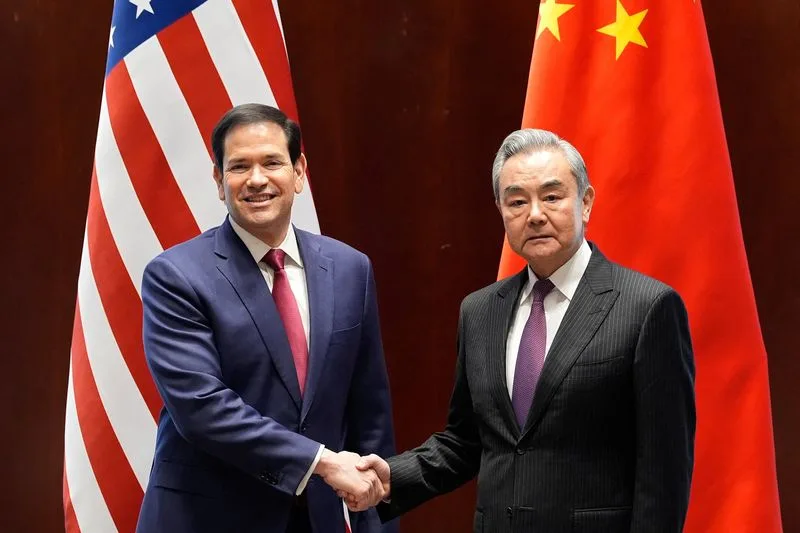
Iran, for its part, said it was prepared to defend itself against what it called “excessive demands or adventurism” by Washington, while insisting it would not miss the opportunity for diplomacy. China, a key Iranian ally, voiced support for Tehran and condemned what it described as U.S. “unilateral bullying.”
The talks come against the backdrop of recent nationwide protests in Iran, which human rights groups say were met with a violent crackdown that killed thousands. Trump initially threatened action over the repression but has since refocused his rhetoric on Iran’s nuclear ambitions.
Vice President JD Vance said the administration would pursue non-military options where possible, but stressed that military force remains on the table.
Iran maintains that its uranium enrichment programme halted after U.S. and Israeli strikes last June, which reportedly caused severe damage to its nuclear facilities and set the programme back by years.