
US-Israel war on Iran
White House Warns of Imminent Iran Attack on Israel Amid Rising Tensions


Escalation Threatens to Ignite Full-Scale Conflict as U.S. Reinforces Military Presence in the Middle East
The White House has issued a stark warning: Iran could be gearing up for a significant military strike against Israel, potentially within days. The specter of a full-scale conflict looms large, as the U.S. scrambles to shore up its military presence in the volatile region. This isn’t just a war of words; it’s a prelude to what could become one of the most explosive confrontations in recent history.
The warning comes amid a flurry of developments that have sent shockwaves through global capitals. On Monday, Hamas militants, who have long been the face of anti-Israel resistance, claimed responsibility for the death of an Israeli hostage. According to Abu Obaida, a spokesperson for Hamas, the killing was a direct response to what he labeled as Israel’s “massacre” of Palestinians. In a chilling aside, he also confirmed that two other Israeli female hostages were injured in a separate incident. The message was clear: the stakes are climbing, and the repercussions could be catastrophic.
As the situation in Gaza continues to deteriorate, the White House is ringing alarm bells. National Security Spokesperson John Kirby delivered a blunt assessment, stating that Israel and its allies must brace for what he described as “a significant set of attacks” from Iran. The timing? Potentially as soon as this week. The implications? A rapid spiral into a broader regional conflict that could draw in multiple nations.
In a move that underscores the seriousness of these threats, U.S. Secretary of Defense Lloyd Austin has ordered the USS Georgia, a guided missile submarine, to the Middle East. Additionally, the USS Abraham Lincoln aircraft carrier strike group has been directed to accelerate its transit to the region. The Pentagon isn’t just posturing; it’s sending a message loud and clear. “Absolutely,” said Pentagon Press Secretary Maj. Gen. Pat Ryder when asked if this military buildup was meant to warn Iran. The U.S. wants Tehran to know it’s not just watching but is ready to act in defense of Israel.
The strategy behind this deployment is anything but subtle. Barbara Starr, a senior fellow at the University of Southern California, noted the significance of the submarine’s presence in the region. “The U.S. actually wants to ensure Iran KNOWS it’s there and ready to strike in defense of Israel,” she asserted. This isn’t about de-escalation anymore; it’s about positioning for a possible showdown.
Meanwhile, President Joe Biden has been working feverishly behind the scenes to manage the crisis. On Monday, he held a critical discussion with the leaders of the United Kingdom, France, Germany, and Italy. Their joint statement was one of solidarity but also of caution. They expressed full support for ongoing efforts to negotiate a cease-fire in Gaza and secure the release of hostages. Yet, there was an unmistakable edge to their message: should Iran launch an attack, the consequences for regional security would be severe and far-reaching.
Inside the Pentagon, anxiety is mounting. U.S. defense officials, speaking anonymously due to the sensitive nature of the intelligence, have reported that Iranian troops and weapons are moving into striking positions. The pattern is all too familiar. Just months ago, similar movements preceded Iran’s direct military strike on Israel, which saw over 300 drones and missiles launched. While the damage was limited, it was a stark reminder of the firepower Tehran commands.
Israeli Defense Minister Yoav Gallant is not waiting for the worst to happen. In a tense call with Austin, the two discussed preparations for what could become a large-scale military attack on Israel. Austin’s message was unequivocal: the United States will do everything in its power to defend its ally.
The drumbeats of war have been growing louder ever since July when an Iranian Revolutionary Guards official claimed that Supreme Leader Ayatollah Ali Khamenei had ordered a harsh retaliation against Israel. The trigger? The assassination of a Hamas leader in Tehran, which Israel has neither confirmed nor denied but which has stoked the flames of vengeance in Iran.
As tensions soar, Israel is resolute in its mission to dismantle Hamas, vowing retribution for the brutal October 7 attack that left 1,200 Israelis dead and led to the capture of 250 hostages. The bloodshed has been relentless. According to the Hamas-controlled Gaza Health Ministry, nearly 40,000 people have been killed in Gaza, mostly women and children. Israel, however, maintains that the toll includes thousands of Hamas fighters, underscoring the complexities of this grisly conflict.
As the world holds its breath, the question remains: will the warnings and military posturing be enough to stave off an all-out war, or is the Middle East hurtling toward a catastrophic clash?
The answer may come sooner than anyone expects, and when it does, the repercussions will be felt far beyond the region’s borders.










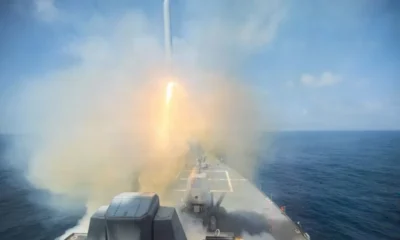

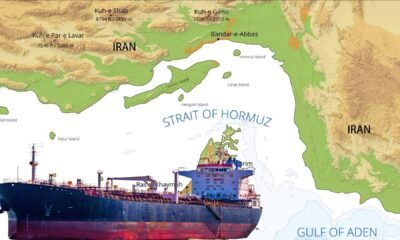

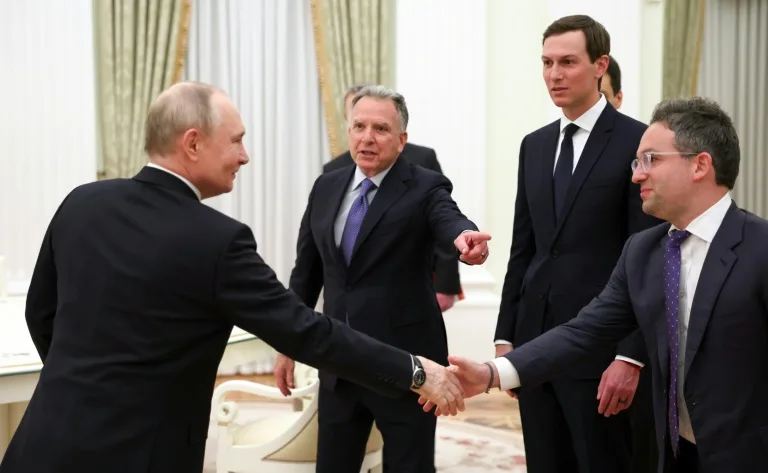
How Much Is Russia Really Helping Iran? Intelligence Support Matters More Than Weapons.
Russia isn’t saving Iran—but it may be helping it survive.
As the war intensifies, a central question is quietly shaping the battlefield: how far is Russia willing to go to support Iran?
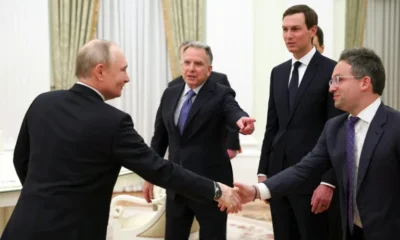
Publicly, the answer appears modest. Donald Trump described Moscow’s role as “a bit” of help. Even Iranian officials have kept their language cautious. But beneath that ambiguity lies a more strategic reality—Russia’s support is limited in scale, yet carefully calibrated for impact.
At the core of that support is intelligence.
Western and Ukrainian sources suggest Moscow is sharing satellite data on U.S. naval movements, likely through its Liana surveillance system—designed specifically to track aircraft carriers and naval groups.
In a conflict where maritime control, particularly around the Strait of Hormuz, is decisive, such information can sharpen Iran’s targeting without requiring Russian boots on the ground.
This is not about volume. It is about precision.
Russia’s contribution also extends into technology and expertise. Its earlier role in launching Iran’s Khayyam satellite—and its experience upgrading Iranian-designed Shahed drones during the Ukraine war—has created a feedback loop. Some of those battlefield improvements, including anti-jamming navigation systems, are now reportedly appearing in Iranian operations.
In effect, Iran is absorbing lessons from Ukraine’s frontlines.
Yet the limits of this partnership are just as important as its capabilities. Despite years of military cooperation, Moscow and Tehran do not share a mutual defense pact. Russia has not intervened directly, nor has it delivered its most advanced systems, such as the S-400 air defense platform.
That restraint is deliberate.
For Vladimir Putin, the war offers strategic advantages without requiring escalation. Rising oil prices—driven by disruptions in Gulf shipping—are boosting Russian revenues, easing the economic pressure of the Ukraine war. A prolonged Middle East crisis also diverts Western attention and resources.
In that sense, instability works in Moscow’s favor.
There is also a deeper calculation: Russia does not necessarily need Iran to win. It needs Iran to endure. A weakened but resilient Tehran can continue to challenge U.S. influence, stretch regional alliances, and maintain pressure on global markets—all without forcing Russia into direct confrontation.
Analysts describe the current support as symbolic but functional—a “goodwill gesture” that sustains the partnership while preserving Russia’s flexibility.
For Iran, that reality is well understood. Facing overwhelming military pressure from Israel and the United States, Tehran is not relying on Moscow for victory. Instead, it is leaning on asymmetric tactics—missiles, drones, and economic disruption—to level the playing field.
The partnership, then, is not about alliance in the traditional sense.
It is about convergence.
Russia provides just enough intelligence, technology, and political backing to keep Iran in the fight. Iran, in turn, sustains a conflict that reshapes global energy markets and stretches Western strategy.
In modern warfare, that may be all either side needs.
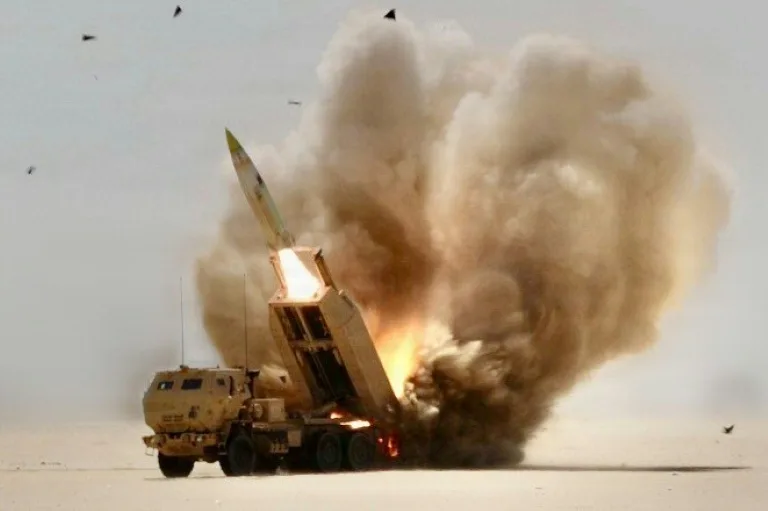
Invisible War: Spyware, AI, and Cyber Attacks Turn Iran Conflict into Digital Battlefield – Missiles hit cities—but hackers hit your phone. This war is now in your pocket.
The war involving Iran, Israel and the United States is no longer confined to airstrikes and missiles. It has quietly expanded into a relentless digital battlefield—one that reaches civilians in real time, often at their most vulnerable moments.
In one recent incident, Israelis fleeing missile attacks received text messages on Android phones offering directions to nearby bomb shelters. The messages appeared credible. But the link embedded inside installed spyware, granting attackers access to cameras, locations, and personal data.
Cybersecurity experts say the timing—coinciding precisely with incoming strikes—marks a new level of coordination between physical and digital warfare.
This is not an isolated tactic. Analysts tracking the conflict report nearly 5,800 cyberattacks linked to Iran-aligned groups, targeting companies and infrastructure across the U.S., Israel, and Gulf states. The scale is vast, even if many attacks are low-impact.
The strategy is clear: overwhelm, intimidate, and exploit weak points.
Unlike traditional warfare, cyber operations are cheap, deniable, and continuous. They allow actors with limited military reach to project power globally—targeting not just governments, but private companies, hospitals, and data centers.
Healthcare systems have emerged as a particularly troubling target. In one case, hackers deployed ransomware against a medical company, locking staff out of critical systems without even demanding payment.
The goal, experts say, was disruption—not profit. Another breach targeted a U.S.-based medical technology firm, underscoring a pattern: essential civilian sectors are now fair game.
At the same time, cyberattacks are increasingly psychological. Iran-linked groups recently claimed responsibility for breaching the personal email of Kash Patel, releasing photos and documents online. The material was not strategically valuable—but it was symbolic, designed to signal reach and sow doubt.
That psychological dimension is amplified by artificial intelligence. Deepfake images, fabricated battle footage, and manipulated narratives are flooding social media. Some false images—such as staged naval losses—have reached tens of millions of viewers, blurring the line between reality and propaganda.
Governments are struggling to keep pace. New agencies and cyber defense units are racing to adapt, but the battlefield is evolving faster than regulation or protection systems can respond.
What makes this digital front especially dangerous is its persistence. Even if a ceasefire emerges, cyber operations are unlikely to stop. They require fewer resources, carry less political risk, and offer continuous leverage.
The result is a war without clear boundaries.
It unfolds in the background of daily life—inside phones, networks, and information systems—where the objective is not just to destroy, but to infiltrate, confuse, and control perception.
And in this conflict, the most powerful weapon may not be a missile.
It may be a message.
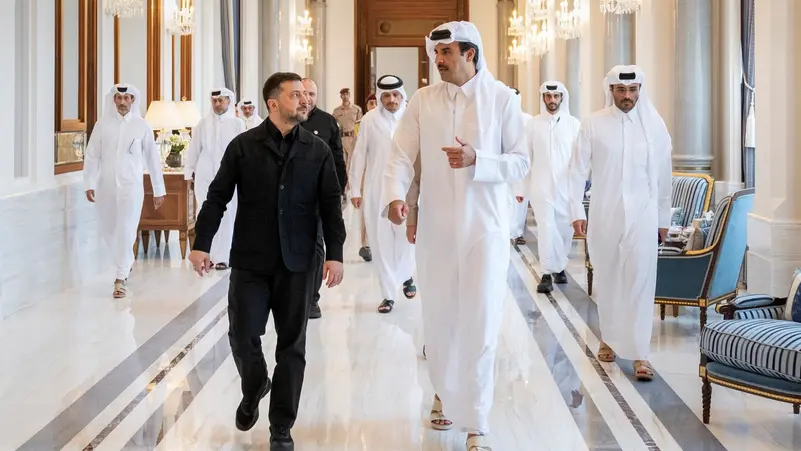
Qatar and Ukraine Sign Defense Pact to Counter Missiles and Drones Amid Iran War.
From Kyiv to Doha: Ukraine isn’t just fighting a war—it’s exporting the blueprint to survive one.
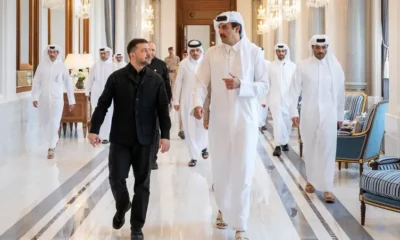
In a striking sign of how the Iran war is reshaping global security alliances, Qatar and Ukraine have signed a defense agreement focused on countering missiles and drones—two of the most disruptive weapons defining today’s conflicts.
The deal, announced during a visit by Ukrainian President Volodymyr Zelenskyy, reflects a growing convergence between battle-tested expertise and emerging threats. Ukraine, after years of defending itself against Russian missile barrages and drone warfare, is now exporting that experience to Gulf states facing similar risks.
At its core, the agreement centers on three pillars: technological collaboration, joint investments, and the exchange of operational knowledge in air defense systems—particularly against unmanned aerial systems and precision strikes.
The timing is not accidental.
As the war involving Iran intensifies, Gulf states have come under sustained missile and drone attacks targeting energy infrastructure, airports, and strategic facilities.
Traditional air defense systems—designed for conventional warfare—are increasingly strained by the scale, speed, and unpredictability of these threats.
Ukraine offers something different: real-world adaptation.
Over the past three years, Kyiv has developed layered defense strategies combining radar, electronic warfare, mobile interceptors, and decentralized command systems.
These lessons are now highly valuable to Gulf states seeking to protect both military and civilian infrastructure from low-cost, high-impact aerial threats.
The agreement also signals a broader shift in global defense dynamics.
Security partnerships are no longer defined strictly by geography or alliance blocs. Instead, they are shaped by shared threat environments. In this case, the same drone and missile technologies used in Eastern Europe are now being deployed across the Middle East—creating a common battlefield logic.
Zelenskyy’s broader Gulf tour, including meetings in the United Arab Emirates, suggests Ukraine is positioning itself not only as a recipient of military aid but as a provider of specialized defense solutions.
For Qatar, the move strengthens its defensive posture without direct military escalation—aligning with a broader Gulf strategy of enhancing resilience while avoiding deeper entanglement in the conflict.
For Ukraine, it opens new strategic and economic channels at a time when global attention is divided.
The deeper message is clear: modern warfare is becoming transferable.
What is learned in one conflict zone no longer stays there. It spreads—reshaping alliances, doctrines, and the balance of power far beyond the original battlefield.
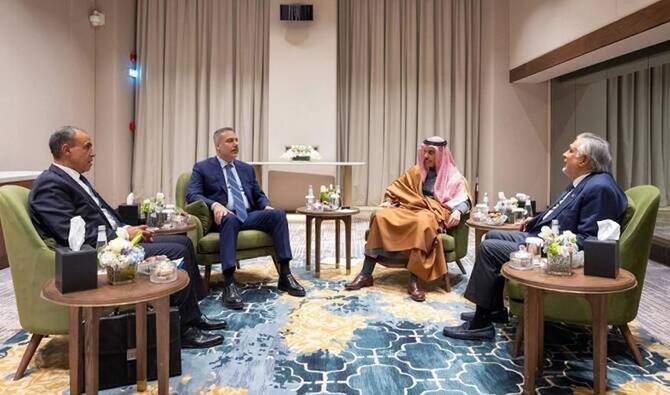
Islamabad Becomes War’s Nerve Center as Iran Demands One Thing: Trust.
A quiet diplomatic shift is underway as Iran signals conditional openness to talks—placing “trust” at the center of any potential breakthrough.
President Masoud Pezeshkian conveyed that message directly to Shehbaz Sharif during an extended call, according to Islamabad. The conversation, which focused on the escalating Middle East conflict, underscores a growing reality: the path to de-escalation is being shaped far from the battlefield.
At the center of this effort is Islamabad, which is rapidly emerging as the primary diplomatic hub of the crisis.
Pakistan’s role is not accidental. It occupies a rare position—maintaining longstanding ties with Tehran while also engaging closely with Gulf states and Washington. That combination has turned it into a critical intermediary, carrying messages, proposals, and responses between adversaries who are not speaking directly.
The next phase of this diplomacy is already taking shape.
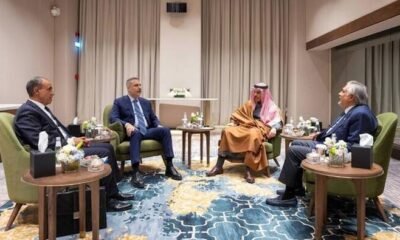
Foreign ministers from Saudi Arabia, Turkey, Egypt, and Pakistan are set to convene in Islamabad for high-level talks aimed at reducing tensions. The gathering reflects a widening regional effort to contain a conflict that has already spilled across borders and disrupted global markets.
Behind the scenes, messages continue to flow.
Iran has reportedly passed a response to a U.S. ceasefire proposal through Pakistani channels, even as it publicly denies direct negotiations. This dual-track approach—public resistance paired with private engagement—is a familiar feature of high-stakes diplomacy, allowing all sides to preserve political leverage while testing the ground for compromise.
But Tehran’s emphasis on “trust” highlights the central obstacle.
From Iran’s perspective, previous negotiations—particularly over its nuclear program—were undermined by shifting commitments and abrupt reversals. Any new agreement, therefore, must address not only immediate military concerns but also long-term guarantees. Without that, diplomacy risks collapsing before it begins.
For Pakistan, the stakes are equally significant.
Success would elevate its status as a global diplomatic broker, echoing its historic role in facilitating major geopolitical shifts. Failure, however, could reinforce skepticism about whether mediation can keep pace with rapidly escalating military dynamics.
The broader picture is clear.
While missiles continue to fly across the region, the architecture of a potential settlement is quietly being assembled elsewhere—through intermediaries, backchannels, and carefully calibrated messaging.
Whether that effort succeeds may depend less on the details of any proposal and more on a single, elusive factor: trust between adversaries who have spent decades preparing for conflict, not compromise.
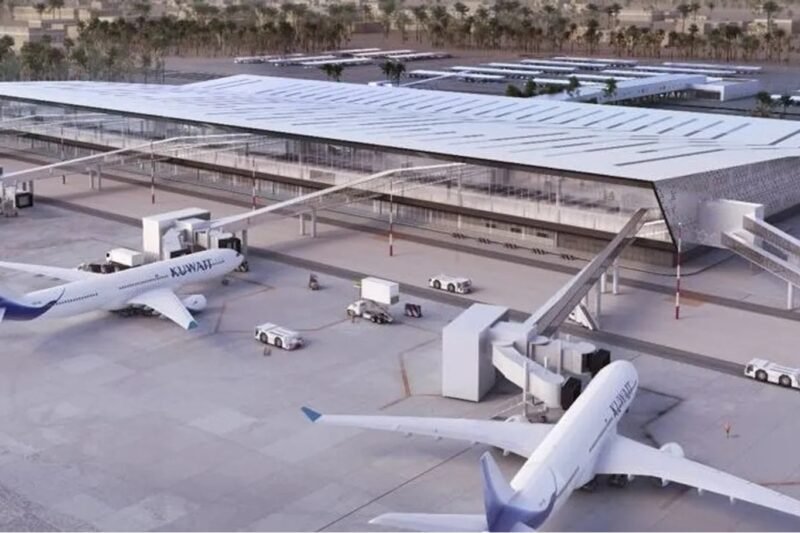
Airports are no longer safe. The war is now targeting the systems that keep the sky alive.
A coordinated drone attack has struck Kuwait International Airport, damaging its radar systems and exposing a new vulnerability at the heart of Gulf infrastructure.
According to Kuwait’s Civil Aviation Authority, the strike caused “significant technical damage” to critical radar equipment used for air traffic control. While no casualties were reported, the impact is far from minor.
Radar systems are the backbone of aviation safety—responsible for tracking aircraft, coordinating landings, and preventing mid-air collisions.
Their disruption sends an unmistakable signal: the battlefield is expanding beyond military targets into civilian systems that sustain everyday life.
Authorities have not identified the source of the drones or explained how they penetrated restricted airspace. An investigation is underway, while emergency efforts are focused on restoring full operational capacity and ensuring the safety of flights.
But the strategic implications are already clear.
This attack fits a broader pattern emerging across the region—where drones are increasingly used not just to inflict damage, but to undermine confidence in state control.
Airports, like oil facilities and ports, represent high-value targets not because of their immediate destruction, but because of the cascading disruption they can cause.
In the Gulf, where economies depend heavily on connectivity, logistics, and global movement, even temporary paralysis can carry outsized consequences.
The timing is critical. The strike comes as the wider conflict involving Iran continues to spill across borders, with missile and drone attacks already reported against multiple Gulf states. Civilian infrastructure—once considered off-limits—is increasingly part of the equation.
This reflects a shift in the nature of warfare.
Rather than decisive battlefield victories, the goal is pressure: degrade systems, create uncertainty, and stretch defenses across multiple fronts. Drones, inexpensive and hard to detect, are ideally suited for this kind of strategy.
For Gulf states, the challenge is immediate and complex. Air defense systems must now protect not only military installations, but also civilian nodes that are far more numerous and harder to secure.
The question is no longer whether such attacks will continue—but how far they will go.
If critical infrastructure becomes a sustained target, the region faces a new phase of conflict—one defined not by frontlines, but by the fragility of the systems that keep modern states functioning.
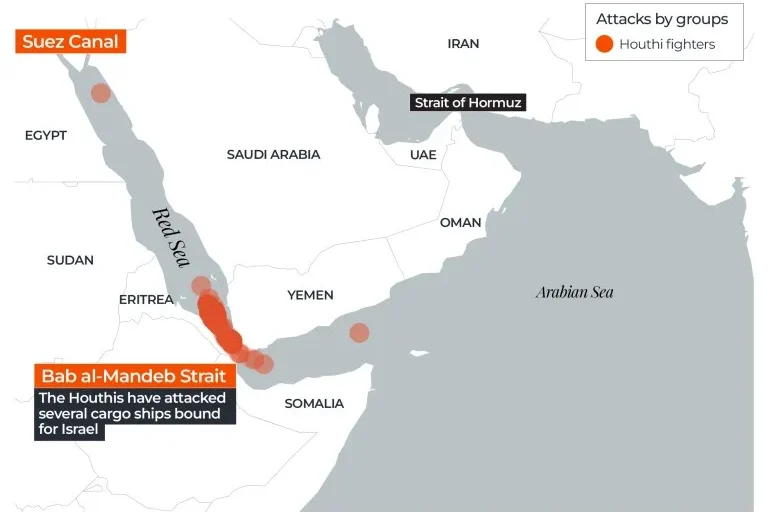
First Hormuz—now Bab al-Mandeb. The war is moving from land to the world’s shipping arteries.
The war surrounding Iran has entered a more dangerous phase, as Yemen’s Houthi movement opens a new front—one that could shift the conflict from regional warfare to global economic disruption.
The Houthis launched a barrage of ballistic missiles toward Israel, marking their first direct involvement since the U.S.-Israeli campaign began. While Israeli defenses intercepted at least one missile, the strategic significance lies not in the immediate damage, but in what the attack signals: escalation across multiple theaters.
More consequential than the missiles themselves is the threat tied to them.
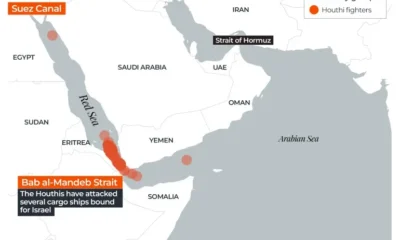
Houthi officials have openly warned that closing the Bab al-Mandeb Strait remains “an option.” This narrow waterway connects the Red Sea to the Gulf of Aden and carries a substantial share of global trade—including a significant portion of Israel’s imports.
If Hormuz is the artery of oil, Bab al-Mandeb is the artery of commerce.
Together, they form a dual chokepoint system. One under pressure is disruptive. Two under threat is systemic.
The Houthis have already demonstrated their capability. Between late 2023 and early 2025, they targeted over 100 commercial vessels, sinking ships and forcing global shipping routes to reroute around Africa—adding time, cost, and risk to international trade. A renewed campaign, now synchronized with a broader regional war, would multiply those effects.
The implications extend far beyond Israel.
A shutdown—or even partial disruption—of Bab al-Mandeb would reverberate through the Suez Canal, European supply chains, and Asian energy markets. Insurance costs would spike. Shipping delays would intensify. Prices of goods—from fuel to food—would rise globally.
Strategically, this marks a turning point.
Iran’s broader approach—leveraging geography and allied actors—appears to be expanding westward. Where the Strait of Hormuz has already been used to pressure energy markets, Bab al-Mandeb offers leverage over trade itself. The battlefield is no longer confined to territory or airspace—it now includes the world’s economic lifelines.
For Israel, the opening of a Yemeni front complicates an already stretched military posture, as it continues operations against both Iran and Hezbollah. For the United States and its allies, it raises a more urgent question: how many fronts can be contained at once?
The risk is no longer hypothetical.
If both chokepoints are disrupted simultaneously, the war will no longer be defined by missiles or strikes—but by who controls the flow of global commerce.
And at that point, the conflict ceases to be regional. It becomes global.
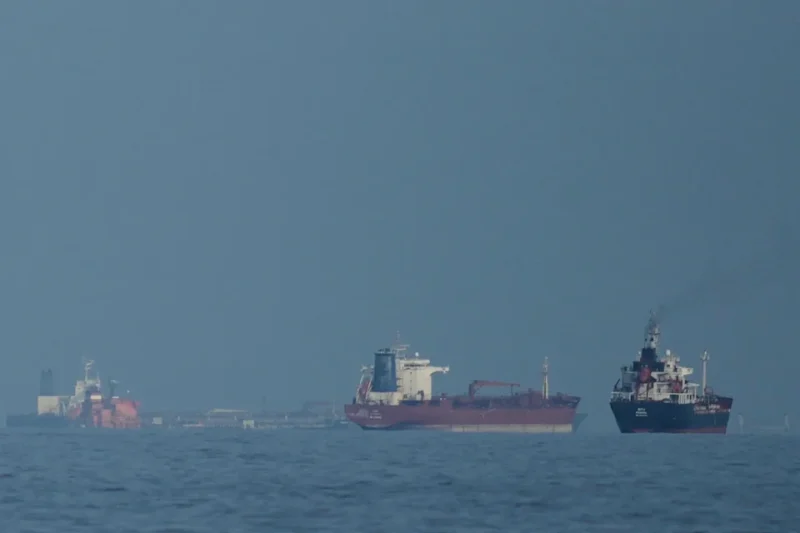
Iran isn’t trying to win the war—it’s trying to outlast it. And the world is paying the price.
One month into the war, the United States and Israel are confronting a paradox: a heavily damaged Iran that is still dictating the tempo of the conflict—and, increasingly, the global economy.
At the center of this strategy lies the Strait of Hormuz, the narrow maritime corridor through which a significant share of the world’s energy supply once flowed. By restricting access and threatening shipping, Tehran has transformed a regional war into a global economic shock.
Oil prices have surged, supply chains have tightened, and inflation pressures are re-emerging across multiple continents.
What makes this moment strategically significant is not Iran’s conventional strength—but its adaptation.
Rather than fighting as a traditional state, Iran is operating with the logic of an insurgency. It relies on dispersed assets, mobile missile launchers, underground facilities, and what military analysts describe as “shoot-and-scoot” tactics.
Even after sustained airstrikes, these methods allow Tehran to maintain a persistent, if limited, capacity to strike—and to threaten.
This asymmetry explains the current imbalance. While Washington and Tel Aviv dominate the battlefield in terms of firepower, Iran is shaping the strategic environment. By targeting economic pressure points rather than military parity, it raises the cost of war for everyone involved.
The objective is not victory in the conventional sense. It is survival.
As long as Iran can endure, it can claim success—particularly if the war continues to strain global markets and political stability in rival states. This logic echoes patterns seen in Iran-aligned groups across the region, from Yemen to Iraq, where persistence has often outweighed firepower.
Yet this strategy is not without risk.
Internally, Iran faces mounting pressure. Economic hardship, leadership uncertainty, and a population still scarred by recent crackdowns create vulnerabilities that prolonged conflict could deepen. Reports of recruitment drives, including among younger populations, suggest strain within its security apparatus.
Externally, the stakes are rising. The United States is weighing whether to escalate further—potentially forcing open Hormuz—or to pursue a negotiated exit. Each path carries consequences. Escalation risks widening the conflict. De-escalation risks validating Iran’s approach.
The war has therefore entered a new phase—less about territory, more about endurance and leverage.
The central question is no longer who can strike harder, but who can sustain pressure longer without breaking.
For now, Iran has found a way to fight a stronger adversary without matching its strength—by turning geography, economics, and time into weapons.
And in doing so, it has shifted the battlefield from the skies of the Middle East to the foundations of the global economy.

Putin’s Shadow War: Limited Aid, Maximum Impact in Iran Conflict

Cyber Warfare Intensifies in Iran Conflict as Spyware, Hospital Hacks

War Enters Dangerous New Phase as Oil Surges, Alliances Strain


-

 Terrorism2 months ago
America Pulls Back From Somalia but Doubles Down Next Door
-

 Top stories2 months ago
Rubio Signals Preemptive Military Option as U.S. Tightens Pressure on Iran
-

 Analysis2 months ago
How Chinese Speculators Set the Stage for the Gold and Silver Crash
-

 Russia-Ukraine War1 month ago
Russian General Boasted of Torture and Killing of Ukrainian Prisoners
-

 US-Israel war on Iran1 month ago
UK Refuses Iran Strike Access, Trump Fires Back
-
 Russia-Ukraine War1 month ago
Europe’s Spies Challenge Trump’s Ukraine Peace Optimism
-

 Top stories4 weeks ago
War Expands Across Region as Iranian Militias Join Fight
-

 US-Israel war on Iran4 weeks ago
Iran Pledges ‘Never, Ever’ to Hold Bomb-Grade Material