Connect with us

Top stories

Nile Waters Divide Widens as Egypt and Sudan Reject New Basin Agreement

Published

on

The longstanding dispute over the Nile River has deepened, as Egypt and Sudan rejected the recently ratified Nile River Basin Cooperative Framework Agreement (CFA), raising tensions with upstream countries. The CFA, which officially came into force on October 13, following ratification by six Nile Basin states, has widened the rift over water rights in the region, with Cairo and Khartoum voicing strong opposition.

In a joint statement following a meeting of the Egyptian-Sudanese Permanent Joint Technical Commission for the Nile Waters (PJTC) on October 11-12, the two countries criticized the CFA as a threat to the region’s delicate balance. They underscored the need for a more inclusive framework, calling for the restoration of the 1999 Nile Basin Initiative (NBI) and opposing what they described as the unilateral actions of upstream nations. “The six-state commission based on the incomplete CFA cannot represent the interests of the entire Nile Basin,” the statement declared, casting doubt on the legitimacy of the new Nile River Basin Commission established by the agreement.

The CFA’s ratification by Ethiopia, Kenya, Tanzania, Rwanda, Burundi, and Uganda marks a significant shift in regional dynamics. The agreement aims to promote equitable water sharing through the new commission, but Egypt and Sudan view it as a direct challenge to their historical rights over the Nile’s waters, which were enshrined in colonial-era treaties from 1929 and 1959. Those treaties granted Egypt and Sudan the lion’s share of the Nile’s flow, and both countries continue to assert that these agreements remain binding under international law.

Egypt’s resistance to the CFA is tied to its heavy dependence on the Nile, which supplies 98% of the country’s water needs. Egyptian President Abdel Fattah Al-Sisi, speaking at the recent Cairo Water Week, reiterated that water security is Egypt’s top priority. “We cannot afford to lose a single drop of water,” he emphasized, alluding to the existential threat posed by Ethiopia’s Grand Ethiopian Renaissance Dam (GERD), a massive hydropower project that has raised alarms in both Egypt and Sudan. While Ethiopia regards the dam as crucial for its development, Egypt views it as a threat to its control over a river it has relied on for millennia.

Sudan shares many of Egypt’s concerns, particularly over the potential impact of the GERD on water flow. The two downstream nations argue that the dam and the CFA undermine the principle of consensus among all riparian states, which they see as critical to managing the river’s resources.

For upstream nations like Ethiopia, however, the CFA represents a step toward more equitable development. Ethiopian Prime Minister Abiy Ahmed has hailed the agreement’s ratification as a milestone in efforts to share the Nile’s resources fairly, stating, “We stand united in our vision for sustainable development, where all Nile Basin countries benefit.” Yet, his words have done little to alleviate concerns in Egypt and Sudan, where the prospect of diminished water control is fueling broader geopolitical tensions.

The ratification of the CFA is not only about water but also about shifting alliances and strategic interests in the region. Egypt, in response to Ethiopia’s rising influence, has been bolstering its ties with other African nations, particularly Somalia. In August, Cairo and Mogadishu signed a military cooperation agreement aimed at countering Ethiopia’s growing regional power. Egypt has also committed to sending peacekeepers as part of the African Union Mission to Support Stabilization in Somalia (AUSSOM), following the conclusion of the ATMIS mission later this year. This agreement came on the heels of a trilateral summit in Asmara, Eritrea, where Egyptian, Somali, and Eritrean leaders pledged closer security cooperation.

Egypt’s increased military presence in Somalia, including arms shipments and peacekeepers, is viewed as part of a broader strategy to check Ethiopia’s influence, especially in light of Ethiopia’s efforts to secure a naval base in Somaliland. Ethiopia has voiced concerns over Egypt’s deepening role in the Horn of Africa, fearing that Cairo’s actions could destabilize the region and threaten Ethiopia’s own strategic interests, including its access to the Red Sea and the GERD project.

As the Nile waters debate escalates, the broader geopolitical landscape in the Horn of Africa and beyond is becoming increasingly fraught. The division over the CFA not only highlights the enduring complexities of water politics in the region but also the intertwining of security, development, and strategic interests that are shaping alliances and rivalries across East Africa. With no immediate resolution in sight, the dispute over the Nile’s waters is poised to remain a focal point of tension, influencing both regional stability and international diplomatic efforts in the years ahead.


Top stories

Xi to Europe: Choose Stability Over Chaos

Published

on

Xi Urges Stronger China-Spain Ties Amid Global ‘Chaos’ and Strained US Alliances.

As Washington fights wars, Beijing builds alliances. Europe is being forced to choose.

Chinese President Xi Jinping called for closer economic and strategic ties with Spain on Tuesday, warning that global instability risks pushing international relations toward a “law of the jungle.”

Speaking during talks in Beijing with Spanish Prime Minister Pedro Sánchez, Xi framed the current geopolitical moment as a test of competing worldviews—one based on cooperation and international law, the other on raw power.

“China and Spain should strengthen communication, consolidate mutual trust, and cooperate closely,” Xi said, according to state media, urging both countries to resist what he described as a regression toward disorder in global affairs.

The meeting, held at Beijing’s Great Hall of the People, comes as Spain seeks to position itself as a bridge between China and the European Union at a time of growing tension with the United States. Washington’s recent foreign policy moves—including tariffs and its handling of the Iran conflict—have unsettled traditional allies and opened space for Beijing to deepen engagement.

Sánchez welcomed China’s role in supporting diplomatic efforts to resolve the Middle East crisis, saying Beijing could play a “significant” role in advancing peace and stability. He also pointed to the need for reforms in global institutions to better reflect what he described as a “multipolar reality.”

The visit marks Sánchez’s fourth trip to China in as many years and reflects a broader trend of European leaders seeking to diversify economic partnerships. Spanish officials say a key goal is to expand market access for agricultural and industrial exports while exploring joint ventures in energy and technology.

At the same time, Madrid has acknowledged tensions in its economic relationship with Beijing. Sánchez described the trade imbalance between China and the EU as “unsustainable,” signaling that deeper ties will likely come with calls for fairer market conditions.

The diplomatic push comes against the backdrop of strained transatlantic relations. U.S. President Donald Trump has threatened trade measures against Spain after Madrid refused to allow U.S. military operations from its bases during the Iran conflict—an issue that has further complicated Western unity.

For Beijing, the moment presents an opportunity. By positioning itself as a partner for stability and economic cooperation, China is attempting to strengthen its influence in Europe while avoiding direct confrontation with Washington.

For Spain—and much of Europe—the challenge is more delicate: balancing economic opportunity with China against long-standing political and security ties to the United States.

As global power centers shift, the meeting in Beijing underscores a growing reality: alliances are no longer fixed, and strategic flexibility is becoming a necessity rather than a choice.

Continue Reading

Top stories

Russia and UAE Call for Permanent Ceasefire

Published

on

While others escalate, Russia and the UAE are calling for calm. Will anyone listen?

Sergei Lavrov and Abdullah bin Zayed Al Nahyan held talks on Tuesday as concerns mount over escalating tensions in the Gulf, urging an immediate and lasting ceasefire alongside renewed diplomatic engagement.

According to Russia’s Foreign Ministry, the discussion focused on the volatile situation following recent U.S.-Iran negotiations in Islamabad, which failed to produce a breakthrough despite raising hopes for de-escalation.

Both sides emphasized the urgency of preventing further deterioration, calling for a permanent ceasefire to stabilize the region and protect global economic interests. The ministers also stressed the importance of continued dialogue, signaling a shared preference for diplomacy over confrontation as military risks intensify.

The exchange reflects growing international concern that the fragile pause in hostilities between Washington and Tehran could collapse, particularly as tensions rise in the Strait of Hormuz—a critical artery for global energy supplies.

For the United Arab Emirates, the stakes are immediate. As a key Gulf state with major ports and energy infrastructure, any escalation threatens both national security and economic stability. Russia, meanwhile, has positioned itself as a diplomatic actor seeking to balance its regional relationships while advocating for de-escalation.

The call highlights a broader trend: as major powers and regional players weigh their options, diplomatic channels remain active—even as the risk of renewed conflict continues to loom.

For now, Moscow and Abu Dhabi are sending a clear message—dialogue must continue. Whether that message translates into tangible progress on the ground remains uncertain.

Continue Reading

Top stories

Iran Confronts US Navy in Hormuz Showdown

Published

on

Iran Issues ‘Final Warning’ to US Warships During Strait of Hormuz Mine-Clearing Mission.

One radio message. Two navies. And a ceasefire that may not hold.

Tensions in the Strait of Hormuz escalated sharply after Iranian forces reportedly issued a direct warning to U.S. naval vessels during ongoing mine-clearing operations, underscoring the fragile state of the ceasefire between Washington and Tehran.

According to reports, Iran’s Islamic Revolutionary Guard Corps (IRGC) Navy radioed a U.S. destroyer with a stark message: “This is the last warning.” The exchange occurred as American warships moved through the strategic waterway as part of efforts to clear sea mines and reopen shipping lanes disrupted by weeks of conflict.

The U.S. vessel responded cautiously, emphasizing that its transit complied with international law and the terms of the temporary ceasefire. “No challenge is intended,” the ship reportedly replied, signaling an attempt to avoid escalation while continuing operations.

Despite the encounter, Iran publicly denied that any U.S. warships had entered the strait. In a statement, the IRGC insisted it maintains full control over the passage and asserted that only non-military vessels are permitted under its current regulations. The message was clear: any military presence would be met with force.

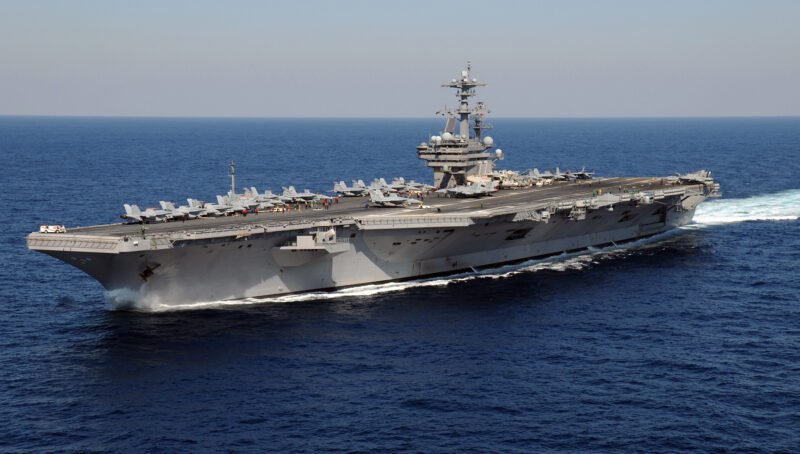
Meanwhile, US Central Command confirmed that two guided-missile destroyers—USS Frank E. Petersen Jr. and USS Michael Murphy—had transited the strait as part of a broader mission to establish safe maritime routes. The operation aims to remove mines laid during the conflict and restore the free flow of global trade.

Admiral Brad Cooper said the U.S. has begun creating a secure corridor for commercial vessels, a critical step in stabilizing global energy markets. The strait, which carries a significant share of the world’s oil supply, has seen traffic plummet amid fears of attack.

The exchange highlights a dangerous reality: while open war has paused, confrontation continues at sea. Both sides are testing boundaries—Washington through military operations, and Tehran through warnings and assertions of control.

For now, neither side appears ready to escalate further. But the incident reveals just how thin the line is between deterrence and conflict in one of the world’s most volatile chokepoints.

The ceasefire may still hold—but in the waters of Hormuz, the war is far from over.

Continue Reading

Top stories

Erdogan vs Netanyahu — A New Front Opens in the Middle East

Published

on

Turkey-Israel Tensions Surge as Iran War Reshapes Regional Rivalries.

This isn’t just rhetoric anymore. Turkey and Israel are drifting toward a dangerous collision.

The sharp escalation in tensions between Recep Tayyip Erdogan and Benjamin Netanyahu marks one of the most volatile geopolitical shifts emerging from the aftermath of the Iran war. What began as a war of words is now revealing deeper strategic fractures that could reshape power dynamics across the Middle East.

At the center of the confrontation is a widening clash of regional visions. Ankara has positioned itself as a defender of Palestinian interests and a vocal critic of Israeli military operations in Gaza and Lebanon. Erdogan’s recent statements—warning that Turkey could act militarily if necessary—reflect not just outrage, but ambition. Turkey is signaling that it intends to play a decisive role in the post-war regional order.

Israel, however, sees something more threatening. Officials in Tel Aviv increasingly view Turkey not as a difficult partner, but as a potential strategic rival. Accusations from Israeli leaders that Ankara is aligning with Iran’s broader regional network—even if overstated—underscore a growing perception shift. In this framing, Turkey is no longer peripheral to Israel’s security calculus; it is becoming central.

Nowhere is this rivalry more visible than in Syria. Turkey supports the emerging post-Assad political order and maintains a military footprint on the ground. Israel, by contrast, has intensified strikes aimed at preventing hostile entrenchment near its borders.

The risk is not direct confrontation—at least not yet—but overlapping spheres of influence that could trigger escalation through miscalculation.

Lebanon and Gaza add further friction. Turkey’s condemnation of Israeli operations contrasts sharply with Israel’s determination to continue its campaign against Hezbollah and other groups. Each side views the other’s position not as political disagreement, but as strategic obstruction.

Yet for all the heated rhetoric, constraints remain. Trade links and economic interdependence still tie the two countries together. Neither side appears eager for open conflict, particularly amid the broader instability created by the U.S.-Iran confrontation. What is unfolding is a calibrated escalation—strong language designed to project power without crossing into direct military engagement.

But that balance is fragile.

History offers a warning. Relations between Turkey and Israel have swung dramatically over the past decades, from close military cooperation to repeated diplomatic crises. The current moment feels different—not because of immediate war risk, but because of the structural shift it represents. Both countries are recalibrating their roles in a region where old alliances are weakening and new rivalries are emerging.

The danger lies not in what is being said, but in what it signals. In a Middle East already destabilized by war, even rhetorical escalation can create its own momentum.

For now, this is a conflict of narratives and influence. But in today’s environment, that may be how real conflicts begin.

After Iran, Is Turkey Next?

Continue Reading

Top stories

Orbán Falls — Trump’s Model Cracks

Published

on

Orbán’s Defeat Sends Shockwaves Through Trump’s Political Orbit and Global Conservative Movement.

A political titan falls in Europe—and Washington feels the tremor.

The electoral defeat of Viktor Orbán after 16 years in power is reverberating far beyond Hungary, shaking the political imagination of conservatives in the United States and raising new questions about the durability of populist strongman models in democratic systems.

For Donald Trump and his allies, Orbán had long stood as both partner and prototype—a leader who fused nationalism, anti-immigration policies, and institutional control into a durable political system. His loss to opposition leader Péter Magyar now complicates that narrative.

The timing is particularly striking. Trump had openly backed Orbán’s reelection and dispatched Vice President JD Vance to campaign in Budapest just days before the vote, even as the United States remained deeply engaged in the Iran conflict. The intervention, intended to reinforce ideological alignment, instead underscored the limits of political influence across borders.

Analysts say the outcome reflects a broader global pattern: rising voter fatigue with entrenched incumbents, regardless of ideology. Economic strain, inflation, and geopolitical instability—exacerbated by the Middle East war—appear to have outweighed Orbán’s long-standing grip on Hungary’s political machinery.

“Oppositions can win despite a tilted playing field,” said political scientist Steven Levitsky, noting that even systems designed to entrench power remain vulnerable when public dissatisfaction reaches a tipping point.

Orbán’s political legacy remains significant. Over more than a decade, he reshaped Hungary’s institutions—tightening control over the judiciary, media, and electoral system while promoting what he called an “illiberal democracy.” His model inspired a generation of right-wing movements globally, particularly within segments of the American conservative base.

Yet his defeat exposes a critical vulnerability: structural control cannot fully insulate leaders from economic pressures and shifting public sentiment.

The implications for Washington are immediate. Trump’s alignment with Orbán now risks becoming a political liability, particularly as critics draw parallels between the Hungarian model and concerns about democratic institutions in the United States. Some Republicans have already distanced themselves, warning against overt interference in foreign elections.

At the same time, Orbán’s loss weakens a key European ally who had often blocked European Union initiatives, including support for Ukraine. His departure could reshape EU dynamics and reduce friction between Brussels and Budapest.

Still, the broader lesson is more complex than a simple rejection of populism. Orbán conceded defeat quickly, reinforcing the resilience of electoral systems even under strain. For both supporters and critics, the message is clear: political dominance, no matter how entrenched, remains contingent.

For Trump and his movement, the Hungarian result offers both a warning and a test. If Orbán’s system could be undone at the ballot box, the question now echoes across the Atlantic—how durable is the model when voters decide it’s time for change?

Continue Reading

Top stories

Pope Leo Says He Has ‘No Fear’ of Trump

Published

on

The Pope speaks peace. Trump fires back. A rare global clash unfolds.

A rare and highly public clash between the Vatican and Washington has unfolded, as Pope Leo declared he has “no fear” of the Trump administration following a sharp personal attack from Donald Trump over his criticism of the Iran war.

Speaking to reporters aboard a flight to Algeria, the pontiff made clear he would not retreat from his message. His role, he said, is not political confrontation but moral clarity. Still, he underscored his determination to continue speaking out against war and what he described as the human cost of escalating conflict.

“I have no fear… of speaking out loudly,” he said, emphasizing that too many civilians are suffering and that global leaders must seek alternatives to violence.

The exchange marks an unusual escalation in rhetoric. While popes have historically commented on global conflicts, direct rebuttals to sitting U.S. presidents remain rare. The tension intensified after Trump launched a scathing social media attack, calling the Pope “weak” and “terrible for foreign policy,” and later doubling down in remarks to reporters.

At the center of the dispute is the war with Iran. Pope Leo has repeatedly condemned the conflict, describing Trump’s earlier threat to destroy Iranian civilization as “unacceptable” and urging an immediate diplomatic “off-ramp.” His position aligns with a long-standing Vatican emphasis on de-escalation, humanitarian protection, and negotiated peace.

Trump, by contrast, framed the Pope’s stance as dangerously naïve, arguing that a softer approach risks empowering adversaries pursuing nuclear capabilities. The president also suggested—without evidence—that the Pope’s election carried political implications tied to U.S. leadership, further inflaming the dispute.

The clash has drawn strong reactions globally, particularly among Catholic communities. Analysts note that such direct criticism of a pope by a major world leader is highly unusual in modern times, underscoring how deeply polarized the geopolitical moment has become.

The tension also highlights a broader divide: moral authority versus strategic power. While Washington focuses on deterrence and military leverage, the Vatican continues to frame the conflict in humanitarian and ethical terms.

For Pope Leo, the message is consistent. He has avoided engaging in a personal debate with Trump, instead returning to a broader appeal for peace.

But the confrontation itself signals something larger. As the Iran conflict reshapes global alliances and rhetoric hardens, even traditionally cautious institutions like the Vatican are stepping more directly into the geopolitical arena.

And in this moment, the language of diplomacy is being challenged not just between nations—but between fundamentally different visions of leadership.

Continue Reading

Top stories

Sixteen years of power—gone in one night. Europe just shifted.

Published

on

Hungary’s Orbán Ousted After 16 Years as Péter Magyar Secures Landslide Victory.

In a political upset with global implications, Hungary’s long-serving prime minister Viktor Orbán has conceded defeat, ending a 16-year hold on power after a sweeping victory by opposition leader Péter Magyar and his Tisza party.

With nearly all votes counted, Tisza secured a commanding parliamentary supermajority—138 out of 199 seats—giving it the power not only to govern but to rewrite key laws and potentially dismantle elements of Orbán’s political system. Orbán’s Fidesz party was reduced to 55 seats, marking one of the most decisive electoral reversals in modern Hungarian history.

In a brief but telling concession speech, Orbán acknowledged what he called a “painful but unambiguous” result, pledging to continue serving from the opposition. For a leader who reshaped Hungary’s political landscape—tightening control over media, judiciary, and electoral rules—the moment signals more than a loss. It marks the collapse of a political model that had come to define Europe’s illiberal turn.

Magyar, 45, struck a sharply different tone. Addressing tens of thousands of supporters in Budapest, he framed the result as a national reset. His campaign centered on restoring ties with the European Union, tackling corruption, and reinvesting in public services neglected during years of centralized rule. The scale of his victory suggests voters were not merely seeking change—but a reversal.

The implications stretch far beyond Hungary. Orbán had long positioned himself as a leading figure in the global populist movement, drawing support from allies such as Donald Trump and Marine Le Pen. Days before the vote, JD Vance traveled to Budapest in a show of support—underscoring how closely the election was watched in Washington.

European leaders were quick to respond. Ursula von der Leyen hailed the outcome as a return to “Europe’s path,” while Keir Starmer called it a “historic moment for European democracy.” The result is widely expected to unlock frozen EU funds and reset relations between Budapest and Brussels after years of confrontation.

Yet the transition will not be simple. Analysts warn that Orbán’s network of loyalists—embedded across state institutions, media, and business—remains intact. Dismantling that system will take time, and expectations for rapid change are high.

Still, the message from voters was unmistakable. Record turnout, driven in part by younger voters, signaled a decisive rejection of the status quo. For many, the vote was less about ideology than accountability.

Hungary has not just changed governments. It has entered a new political era—one that could reshape both its domestic trajectory and its place in Europe.

Continue Reading

Top stories

Trump Orders Hormuz Blockade After Failed Iran Talks

Published

on

The war just escalated again—this time, through the world’s most critical oil artery.

In a dramatic escalation following failed peace talks in Islamabad, Donald Trump has ordered the United States Navy to begin a blockade of the Strait of Hormuz—one of the most consequential moves of the war so far.

“Effective immediately,” Trump announced, U.S. forces will interdict “any and all ships” entering or leaving the strategic waterway. The declaration comes just hours after negotiations led by JD Vance collapsed without agreement, leaving the fragile ceasefire hanging by a thread.

The Strait of Hormuz is not just another maritime corridor. Roughly one-fifth of the world’s oil and liquefied natural gas passes through it under normal conditions. Even partial disruption has already driven prices sharply higher. A full blockade risks something far more severe: a sustained global energy shock.

Trump’s strategy appears aimed at cutting off Iran’s economic lifeline—its oil exports—while forcing Tehran back to the negotiating table. But the move carries immediate and far-reaching consequences. By targeting all shipping, including vessels that comply with Iran’s controversial toll system, Washington is effectively expanding the conflict beyond a bilateral confrontation into a broader challenge to global trade flows.

The risks are not theoretical. Enforcing a blockade in or near the strait could place U.S. naval assets within range of Iranian missiles and drones. While Washington could attempt enforcement farther out in the Arabian Sea, the message remains the same: the United States is prepared to escalate economic warfare to secure strategic leverage.

Allies appear cautious. Despite Trump’s suggestion of coordinated action, British officials have signaled they will not participate directly in the blockade, limiting their role to potential mine-clearing operations if a broader international plan emerges.

For Iran, the stakes are equally high. The country has managed to sustain oil exports near pre-war levels, benefiting from surging prices even as regional rivals saw production disrupted. A blockade threatens to reverse that advantage—yet it also reinforces Tehran’s narrative that global energy flows are now a battlefield.

The timing underscores a deeper shift. What began as a military campaign has evolved into a contest over economic control and maritime dominance. The failed talks in Pakistan exposed how far apart the two sides remain—not only on nuclear issues, but on the fundamental question of who controls the Strait.

Trump framed the move in absolute terms: “all in and all out.” But such clarity in rhetoric may mask growing strategic ambiguity. A blockade could pressure Iran—but it could just as easily strain alliances, disrupt markets, and widen the conflict.

The ceasefire, already fragile, now faces its most serious test. The next phase of the war may not be decided by missiles alone, but by who can endure—and control—the global consequences of economic escalation.

Continue Reading

Most Viewed

error: Content is protected !!