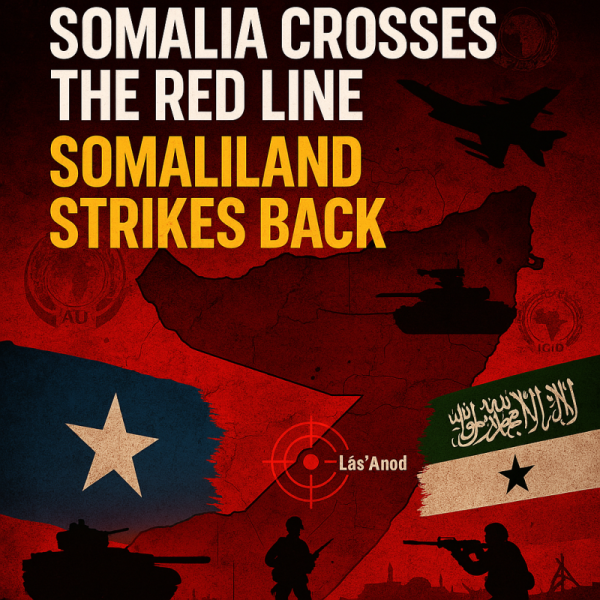
Tensions explode as Jubaland locks down borderlands, preparing for a decisive showdown with Mogadishu-backed forces and Al-Shabaab insurgents.
Jubaland isn’t just securing its borders—it’s preparing for war. The recent meeting between Vice President Mahmoud Sayid Adan, IGAD, and IOM in Dolow was more than diplomatic posturing. It was a clear warning that Jubaland is consolidating power while Mogadishu-backed forces and Al-Shabaab lurk in the shadows.
This is a battle for survival. Federal troops are already clashing with Jubaland’s forces in contested areas, and the terror group Al-Shabaab is waiting to strike. The so-called humanitarian discussions mask the reality—Jubaland is moving to control trade, movement, and military positioning in the Gedo region. This is about who rules and who falls.
Adan’s message was blunt: Jubaland will decide who moves, who trades, and who dominates this region. No faction—whether Al-Shabaab or Mogadishu—will dictate its fate. The game has changed. Any force that threatens Jubaland’s authority will be eliminated.
The terror group thrives on weak governments and divided leadership. But as Jubaland moves to fortify its hold on Gedo, the noose is tightening. The old power dynamics are collapsing. If Jubaland fully secures its borders, Al-Shabaab will lose its last safe corridor—and the war will take a brutal turn.
Mogadishu is watching, and so are foreign powers. A Jubaland that fully controls Gedo means less federal influence, stronger regional autonomy, and a shifting balance of power in Somalia. With Kenya and Ethiopia in the mix, the stakes are global.
Jubaland is not asking for permission. It is taking control. Federal forces, Al-Shabaab, and any rivals in the region have a choice: step back or get crushed. War is on the horizon, and the frontline is shifting fast.