Saudi Arabia inaugurates US-made THAAD system, boosting air defense alongside Israel’s recent deployment amid Iran threat.
Saudi Arabia activates its first US THAAD missile defense battery purchased during Trump’s presidency, joining regional missile defense efforts that include Israel’s recent THAAD deployment to counter Iran’s ballistic missile threats.
Saudi Arabia Joins Missile Shield as US THAAD System Goes Live Amid Iran Threat
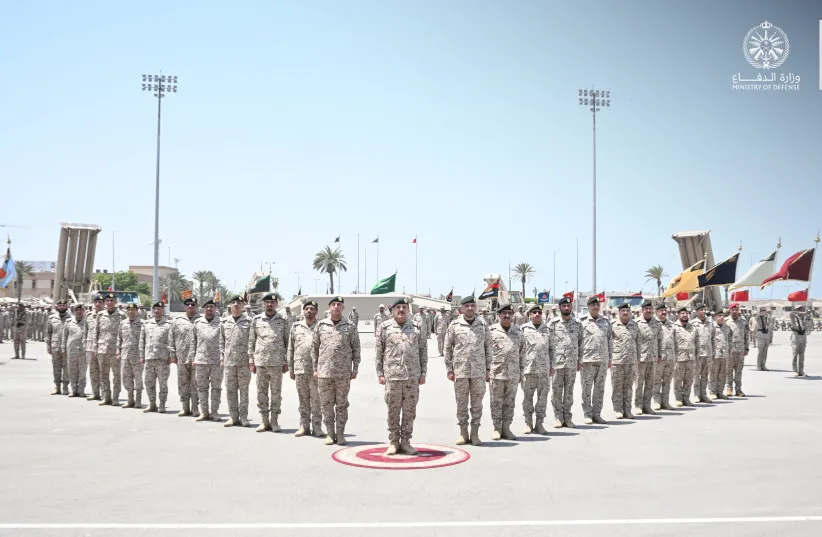
Saudi Arabia has officially inaugurated its first THAAD (Terminal High Altitude Area Defense) missile battery, a critical milestone in the Kingdom’s effort to fortify its air defenses against missile threats — especially from Iran. This system, acquired in a landmark arms deal under President Trump’s administration, marks Riyadh’s entry into the elite club of nations equipped with America’s most advanced missile interception technology.
Built by Lockheed Martin, THAAD is designed to detect, track, and destroy short- and medium-range ballistic missiles at altitudes up to 150 kilometers, using a precision “hit-to-kill” method—colliding with targets to neutralize them without explosives. The battery’s activation follows rigorous testing and training within Saudi territory, demonstrating the Kingdom’s commitment to localizing defense manufacturing as part of its Vision 2030 plan. Significantly, Saudi Arabia has begun producing THAAD components domestically, a move that strengthens both its industrial base and the resilience of the US defense supply chain.
This development parallels a similar US deployment of THAAD to Israel in October 2024 amid escalating tensions with Iran. The Pentagon described that deployment as a clear signal of America’s “ironclad commitment” to protect Israel and American personnel from ballistic missile attacks by Tehran or its proxies. The US simultaneously inked multi-billion-dollar arms deals and expanded military infrastructure in Israel to buttress its regional ally.
Saudi Arabia’s activation of THAAD comes at a pivotal moment as Iran’s missile threats loom large over the Middle East. Riyadh’s enhanced missile defense capability not only safeguards its own airspace but also signals a growing regional alignment against Iranian aggression. With Turkey’s ambitions waning and Iran’s nuclear program under international scrutiny, the Kingdom’s THAAD inauguration is a concrete step in bolstering a collective missile shield—one where Israel and Saudi Arabia increasingly stand as frontline defenders.
In this volatile theater, the United States’ strategic arms partnerships underscore an unmistakable message: Israel and its Gulf allies are gearing up for a long, high-stakes contest with Iran — and the missile defense race is just the opening salvo.