
DIGITAL BLACKOUT
Australia Bans Social Media for Millions of Children


Australia Cuts Off Millions of Children From Social Media in Unprecedented National Ban. Will It Work?
Australia has launched one of the most sweeping digital safety experiments in modern democratic history, cutting off millions of children under 16 from all major social media platforms.
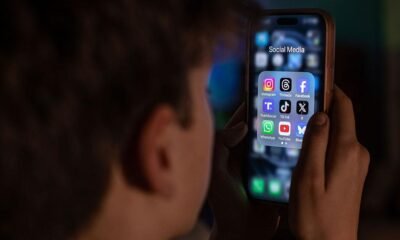
When the ban took effect Wednesday, young users discovered that their accounts—on Instagram, TikTok, YouTube, Snapchat, X, Reddit, and others—had been suspended or were about to be deactivated.
Overnight, an entire generation disappeared from mainstream social media.
No other country has attempted such a broad shutdown. Legislators from Europe to the United States are watching closely, weighing whether Australia’s model might become a global template—or a cautionary tale.
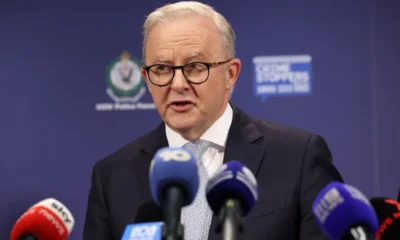
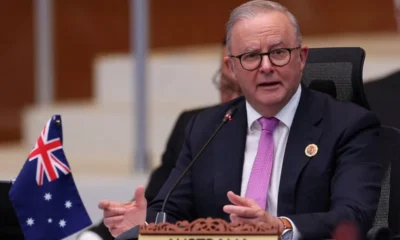
Prime Minister Anthony Albanese called it “a proud day,” framing the ban as a long-overdue rebalancing of power between families and tech conglomerates. Yet the implementation challenge is vast.
Platforms must prove they took “reasonable steps” to block under-16 users or face fines of up to AUD 49.5 million ($32 million).
Enforcement hinges on aggressive age-verification systems—many relying on video selfies or facial analysis—raising immediate concerns about privacy and accuracy.
Each company is taking a different approach. Snapchat will lock youth accounts for three years. YouTube will sign children out and hide their channels, though their data will remain archived.
TikTok, using its own age-estimation tools, promises to deactivate all underage accounts and make their content vanish from public view.
Meta has already begun removing Instagram, Facebook, and Threads accounts belonging to teens under 16. Twitch users have until January 9 before enforcement begins. Meanwhile, platforms like X protest the ban outright.
The list of banned platforms is not exhaustive, which has opened a parallel race among unregulated alternatives. Yope and Lemon8 have already surged in popularity, prompting warnings from regulators who fear that displaced teens will simply migrate to lesser-known, less-policed digital spaces.
Roblox’s exclusion from the ban—despite repeated safety controversies—has generated confusion, though regulators say new age-gating features are being implemented.
Critics warn the government has created a digital “whack-a-mole” scenario: millions of children seeking new online homes faster than regulators can respond.
Mental health experts also caution that social displacement—particularly for teens who rely on online communities for support—may drive some toward riskier corners of the internet.
The coming months will determine whether the ban improves well-being or merely reshapes online behavior. Officials plan to track everything from sleep patterns to antidepressant use to time spent outdoors.
Stanford University’s Social Media Lab is partnering with Australia to study outcomes, with findings intended for global review.
For now, the world is watching one of the boldest digital policy experiments ever attempted—and waiting to learn whether Australia has pioneered a new era of child-centred internet regulation, or merely pushed millions of young people further into the shadows.















Why Arab Security Dreams Collapse Under Reality

Peace Talks Collapse—Iran Rejects US Demands

Putin and Erdogan Push Ceasefire as Energy Risks Rise


-

 TECH2 weeks ago
China Bets on an AI-Powered Military Future
-
 US-Israel war on Iran2 weeks ago
Waves of Mystery Drones Breach U.S. Nuclear Base Airspace
-
 Terrorism6 days ago
Egypt Uncovers Alleged Plan to Down Presidential Plane
-
 US-Israel war on Iran2 weeks ago
Saudi Arabia Warns of Military Action After Iranian Missile Strike
-
 US-Israel war on Iran2 weeks ago
Former CIA Chief Blames White House for Escalating Iran War Crisis
-

 Top stories1 week ago
Saudi Arabia Deepens Defense Ties with Ukraine
-
 US-Israel war on Iran2 weeks ago
Iran’s Guard Leadership Hit Hard in Escalating Strikes
-

 Analysis2 weeks ago
Inside the IRGC’s Quiet Rebuild of Hezbollah