
Leadership Profile
The Rise of Mukhtaar Booshadde — Architect of Hargeisa’s Next Era

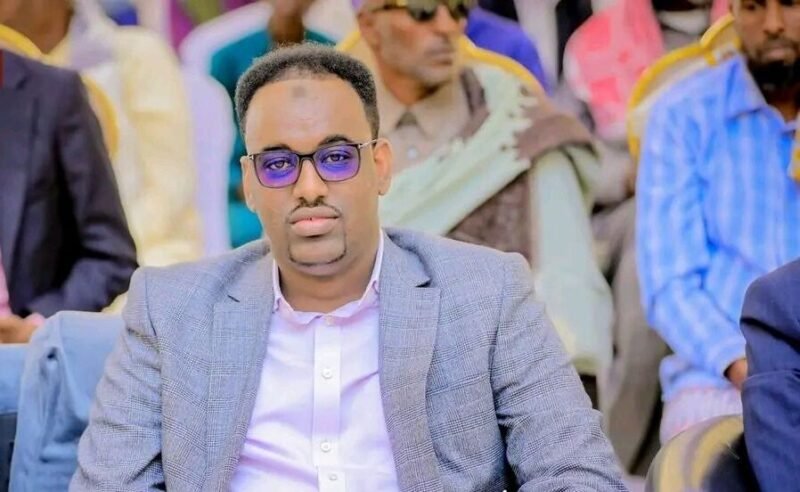
HARGEISA — The appointment of Mukhtaar Mohamed Gaaxnuug, widely known as “Booshadde,” as Executive Secretary of the Hargeisa Local Government marks a defining moment in the political and administrative evolution of Somaliland’s capital.
More than a routine reshuffle, the decision signals a deliberate pivot toward institutional memory, professional competence, and generational leadership at a time when Hargeisa stands on the brink of structural transformation.
Executed by the Minister of Local Government and Urban Development, Hassan Ahmed Duale (Maalin), the appointment has triggered an unusually broad wave of public approval.
Across social media and political circles, the reaction has been swift and emphatic, reflecting a rare consensus that this is a leader whose credentials are rooted not in proximity to power, but in decades of service to the city itself.
For the first time in the capital’s history, the executive engine of the municipality is being led by a figure who combines deep bureaucratic experience with political legitimacy and strong grassroots ties.
Mukhtaar Booshadde’s ascent is a textbook case of meritocratic progression. His career began at the lowest operational tier of the Hargeisa Local Government, where he served as the youngest employee in the Security Department.
That early exposure gave him a granular understanding of how the city functions under pressure—knowledge few senior officials possess.
He later became one of the founding architects of Hargeisa’s fire department, a role that expanded into shaping Somaliland’s national fire service. As Deputy Chief of Logistics, he helped build systems that now form the backbone of emergency response across the country.
This operational background has endowed him with what insiders describe as “institutional muscle memory”—the ability to anticipate problems before they surface.
At the strategic level, Mukhtaar has also served on the Higher Education Commission and played a central role within the ruling Waddani Party. This dual track—technical governance and political strategy—has positioned him as a rare bridge between policy design and on-the-ground implementation.
Political analyst Khadar Nasir captured this sentiment succinctly in comments to WARYATV: “He is a friend to the people of Hargeisa. This is a politician who has found his natural position.” The observation reflects a broader reality: Mukhtaar is not being imposed on the city; he is emerging from it.
His appointment also carries unmistakable political significance. Mukhtaar was one of the principal architects of President Abdirahman Mohamed Abdullahi (Irro)’s successful 2024 campaign, mobilizing resources and, more importantly, energizing Hargeisa’s youth. His role in translating political momentum into electoral victory is widely acknowledged within Waddani’s inner circles.
As analyst Khadra Yusuf Osman noted, Mukhtaar’s contribution to the campaign was decisive, and his return to municipal leadership is less a reward than a strategic deployment. The expectation is clear: he is now tasked with executing the urban vision he helped sell to voters.
That task comes at a pivotal juncture. The Hargeisa Local Government is advancing a landmark Capital Law aimed at formalizing the separation of powers, modernizing revenue systems, and clearly defining municipal authority and boundaries. At the same time, large-scale infrastructure projects are accelerating.
Mayor Abdikarim Ahmed Mooge has confirmed that the World Bank is financing the $19 million Road 150 project, a critical artery that will reshape mobility and commerce in the city.
With Mukhtaar Booshadde as Executive Secretary, Hargeisa gains a manager capable of navigating international financing mechanisms while retaining the confidence of local communities.
His appointment aligns institutional experience with political momentum, and administrative discipline with generational ambition.
For a capital city entering a phase of legal, infrastructural, and demographic expansion, the message is unmistakable: Hargeisa is no longer experimenting with leadership. It is investing in it.













Intel Disputes Trump’s Claim Iran Can Soon Strike US

Hillary Clinton Clashes With GOP in Heated Epstein Testimony

Young Woman Killed in Balcad Sparks Outrage


-
 Minnesota2 months ago
Fraud Allegations Close In on Somalia’s Top Diplomats
-

 Somaliland1 month ago
F-35s Over Hargeisa: The Night Somaliland’s Sovereignty Went Supersonic
-

 Somalia1 month ago
Aid Destroyed, Trust Shattered: Somalia Loses U.S. Support for Good
-
 Somaliland2 months ago
UAE, Bahrain, Morocco and Kazakhstan Hold Recognition Talks With Netanyahu
-
 Terrorism1 month ago
Foreign ISIS Pipeline Exposed: Puntland Captures Dozens of Non-Somali Fighters
-

 Somaliland1 month ago
Somaliland at Davos: The Moment Somaliland Entered the World’s Inner Circle
-
 Comment2 months ago
Qatar Push Mediation With Al-Shabaab as Mogadishu Cornered
-
 Terrorism4 weeks ago
America Pulls Back From Somalia but Doubles Down Next Door