
Minnesota
Ilhan Omar Says ICE Briefly Detained Her Son Amid Minnesota Immigration Crackdown


They Are Hunting Faces: Omar Says ICE Stopped Her Son in Minneapolis. From Mosque to Target Parking Lot.
MINNEAPOLIS — Congresswoman Ilhan Omar said U.S. immigration agents briefly detained her son over the weekend in Minnesota, an incident she described as emblematic of what she called racially targeted enforcement as the Trump administration intensifies immigration operations in Somali-majority neighborhoods.
In an interview with Minneapolis broadcaster WCCO on Sunday, Omar said her son was pulled over by Immigration and Customs Enforcement agents after leaving a Target store. She said he was released once he presented his U.S. passport.
“Once he was able to produce his passport ID, they did let him go,” Omar said, adding that her son routinely carries identification because of heightened anxiety within the community.
Omar also said that earlier in the day, ICE agents entered a mosque where her son had been praying, before leaving without making arrests. She said the encounter reinforced her concerns that federal agents are engaging in racial profiling under an operation known as Operation Metro Surge, which has deployed immigration officers across the Twin Cities.
“I told him how worried I am,” Omar said. “They are racially profiling. They are looking for young men who look Somali that they think are undocumented.”
The Democratic lawmaker, who has represented Minnesota’s Fifth Congressional District since 2019, is the first Somali American elected to the U.S. Congress and a frequent target of political attacks by President Donald Trump. In recent remarks, Trump referred to Somali immigrants as “garbage” and suggested Omar should be expelled from the country — comments that civil rights groups and local officials have condemned as openly racist.
The Trump administration has framed the Minnesota operation as part of a broader effort to remove undocumented immigrants with criminal records. However, Omar and other critics argue the tactics being used — including traffic stops and visible enforcement near mosques and commercial centers — are creating fear among law-abiding residents, many of whom are U.S. citizens or lawful permanent residents.
Last week, Omar sent a formal letter to Homeland Security Secretary Kristi Noem and acting ICE Director Todd Lyons, accusing the agency of “blatant racial profiling” and conduct “designed for social media rather than befitting a law enforcement agency.” She said reports from constituents describe unnecessary force and intimidation, particularly toward young men.
Minnesota is home to the largest Somali diaspora in the United States, with tens of thousands of Somali Americans concentrated in Minneapolis and surrounding suburbs. Many families arrived as refugees during the civil war of the 1990s and have since built businesses, civic institutions, and political influence. Local officials, including Minneapolis Mayor Jacob Frey, have defended the community, noting that most Somali residents are U.S. citizens and contribute significantly to the city’s economy and cultural life.
Civil liberties advocates warn that aggressive enforcement strategies risk undermining trust between immigrant communities and law enforcement, particularly at a time when national rhetoric around immigration has grown increasingly hostile.
For Omar, the encounter involving her son has personal and political resonance. “No one should have to carry their passport just to go about their daily life,” she said. “That is not what equal protection under the law looks like.”
The Department of Homeland Security has not publicly commented on Omar’s account of the incident. ICE has previously said its operations are intelligence-driven and not based on race or ethnicity.
As enforcement activity continues, community leaders say the broader impact may extend beyond immigration policy — reshaping how Somali Americans perceive their place in the country and how visible they feel they can safely be.
















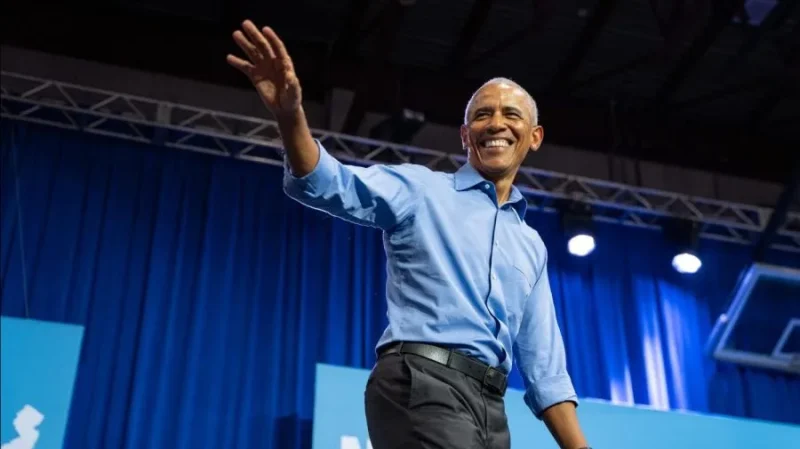
“We’re going to live up to those values.” Obama sides with protesters as Minnesota becomes flashpoint in immigration fight.
Former President Barack Obama publicly expressed support for anti-immigration enforcement demonstrators in Minneapolis, criticizing what he described as aggressive tactics by federal agents during recent operations.
Speaking about ongoing protests in the Twin Cities, Obama said the American public is ultimately responsible for holding government accountable. “The answer is going to come from the American people,” he said. “We just saw this in Minnesota, in Minneapolis.”
He described federal actions carried out by U.S. Immigration and Customs Enforcement (ICE) in Minneapolis and St. Paul as “unprecedented,” alleging that agents were deployed without clear guidelines and engaged in tactics that included pulling people from their homes and dispersing crowds with tear gas.
The protests intensified following the fatal shootings of two Minnesota residents during encounters with federal agents. After the incidents, Tom Homan, the administration’s border enforcement chief, said federal immigration operations in the state would be scaled back.
Obama suggested that the shift demonstrated the impact of public pressure. “Right now, we’re being tested,” he said. “What we saw in Minneapolis and St. Paul … has been the American people saying no.”
In a joint statement last month, Obama and former First Lady Michelle Obama described one of the deaths as “a heartbreaking tragedy” and called for federal law enforcement to operate in a lawful and accountable manner. They argued that certain enforcement tactics appeared designed to intimidate residents.
The remarks add the former president’s voice to a growing national debate over immigration enforcement practices, as protests continue in Minnesota and other cities.
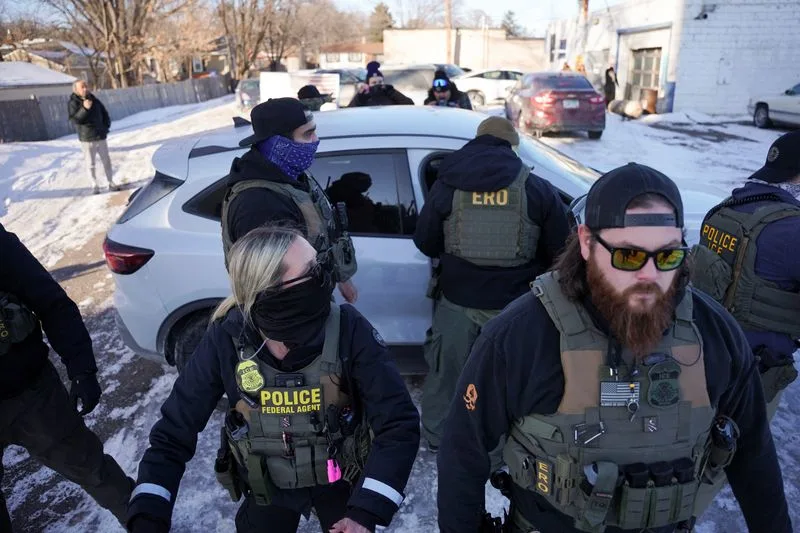
Rapid transfers. Blocked phone calls. A federal judge says detainees’ constitutional rights were pushed to the brink.
A federal judge in Minnesota has ordered U.S. Immigration and Customs Enforcement to guarantee detainees meaningful access to their attorneys, finding that the agency’s recent enforcement surge effectively cut thousands of people off from legal counsel.
In a sharply worded ruling, U.S. District Judge Nancy Brasel concluded that ICE’s actions during “Operation Metro Surge” — including rapidly transferring detainees out of state and limiting phone access — “all but extinguish a detainee’s access to counsel.” Brasel, appointed during the first term of Donald Trump, issued a temporary order requiring the government to halt the rapid transfers and ensure private attorney-client visits and phone calls. The directive will remain in effect for 14 days as the case proceeds.
The lawsuit, filed in late January by the nonprofit Democracy Forward on behalf of a class of noncitizen detainees, alleges that ICE held individuals in conditions that obstructed legal representation. According to the ruling, many detainees were initially processed at the Bishop Henry Whipple Federal Building in Minneapolis before being transferred without notice, sometimes so quickly and frequently that even ICE lost track of their whereabouts.
Brasel wrote that while ICE does not formally deny detainees the right to counsel, its operational decisions isolated thousands from their lawyers in practice. She rejected the agency’s argument that limited resources hindered compliance, noting that ICE had mobilized substantial personnel and logistics to carry out the enforcement operation.
“Defendants allocated substantial resources to sending thousands of agents to Minnesota, detaining thousands of people and housing them in their facilities,” the judge wrote. “Defendants cannot suddenly lack resources when it comes to protecting detainees’ constitutional rights.”
ICE did not dispute that detainees are entitled to legal representation but denied maintaining any policy to block access. A White House spokesperson did not immediately respond to requests for comment.
Advocates argue the ruling underscores a basic constitutional principle: access to counsel is not discretionary. Whether the order leads to broader changes in ICE’s detention practices could hinge on how the case unfolds in the weeks ahead.
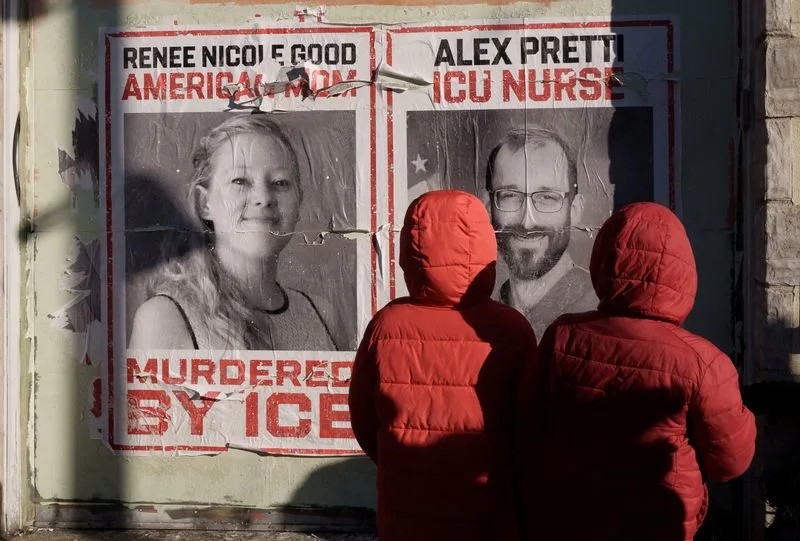
Top U.S. immigration officials are set to testify before lawmakers on Tuesday in the first congressional hearing since two U.S. citizens were killed during federal immigration operations in Minnesota, intensifying scrutiny of President Donald Trump’s hardline enforcement push.
The hearing follows the deaths of Renee Good and Alex Pretti in Minneapolis, incidents that have fueled public anger and political backlash. Trump administration officials initially described both victims as “domestic terrorists,” but video evidence later contradicted those claims, prompting renewed calls for accountability.
Appearing before the Republican-controlled House Homeland Security Committee are Todd Lyons, acting director of Immigration and Customs Enforcement; Rodney Scott, commissioner of Customs and Border Protection; and Joe Edlow, director of U.S. Citizenship and Immigration Services.
Democratic lawmakers are expected to press the officials on enforcement tactics, including the use of masks, lack of body cameras, and raids that have swept up non-criminal migrants, families and children. They are also demanding reforms that would refocus immigration enforcement on serious criminal offenders.
The controversy stems from Trump’s intensified enforcement campaign in Minneapolis launched in January, which triggered clashes between masked federal officers and local residents. As criticism mounted, Trump’s border czar Tom Homan took direct control of Minnesota operations, sidelining Border Patrol commander Gregory Bovino and pledging a more targeted approach.
Despite internal guidance urging agents to avoid confrontations with protesters, incidents have continued, including arrests of U.S. citizens accused of following immigration officers.
Tuesday’s testimony is expected to be a flashpoint in the broader debate over immigration enforcement, civil liberties and the political fallout from the Minnesota killings.
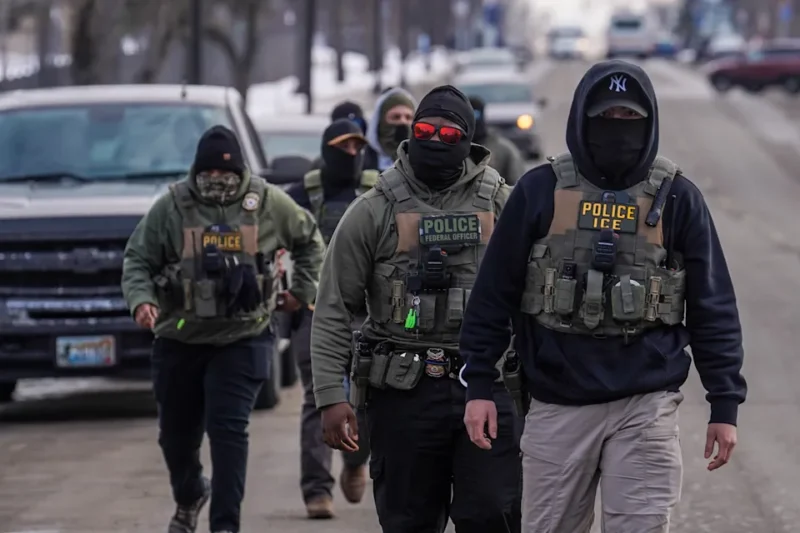
Reports of federal immigration agents using deceptive tactics have heightened fear and confusion across Minnesota, as the state continues to see an intensified immigration crackdown.
In suburban Minneapolis, restaurant worker Luis Ramirez said he confronted two men dressed as utility workers who had been lingering outside his family’s business for days. The men wore high-visibility vests and hard hats, but Ramirez said their behavior and vehicle raised suspicions. He filmed the encounter, accusing them of surveilling his restaurant under false pretenses. Federal authorities declined to confirm whether the men were immigration officers.
Legal advocates and immigrant rights groups say similar reports are increasing, with alleged federal agents posing as construction workers, delivery drivers, or even anti-ICE activists. While not all incidents have been verified, they have amplified anxiety in immigrant communities and drawn criticism from civil liberties groups.
Naureen Shah of the American Civil Liberties Union warned that such tactics undermine public trust. “When people fear that a utility worker or delivery driver could be an immigration agent, it creates dangerous confusion and erodes confidence in basic institutions,” she said.
Activists in Minneapolis claim they have observed agents leaving federal buildings in unmarked vehicles, sometimes displaying symbols meant to blend into immigrant communities. Organizers also report agents appearing at construction sites in worker attire, though many of these encounters have not resulted in arrests.
State officials, including Governor Tim Walz, have raised concerns about agents allegedly swapping or using improper license plates, a potential violation of state law. In one case, a Minneapolis antiques dealer said two men attempted to buy recent license plates from her shop, prompting her to alert authorities.
Supporters of the crackdown argue that increased scrutiny from activists has forced federal agents to adapt their tactics. Former ICE official Scott Mechkowski said agents are responding to what he described as unprecedented levels of public interference.
For residents like Ramirez, the effect has been constant unease. “Everyone is on edge,” he said. “It feels like they’re everywhere.”

Health officials in Minnesota are struggling to contain a measles outbreak that has disproportionately affected the state’s large Somali community, amid persistent fears linking childhood vaccines to autism.
Since February, 14 confirmed measles cases have been reported statewide. Seven of those cases involved Somali children, most of whom were unvaccinated. State health authorities say all but one case can be traced to an unvaccinated Somali infant who returned from Kenya earlier this year. Minnesota typically records zero or one measles case annually.
Eight patients required hospitalization, though no deaths have been reported.
Public health efforts have been complicated by lingering distrust of the measles-mumps-rubella (MMR) vaccine within parts of the Somali community, driven by concerns that vaccination could cause autism. Those fears resurfaced after visits by Andrew Wakefield, the former British doctor whose claims linking vaccines to autism were discredited and retracted by medical authorities.
Local health leaders warn that Wakefield’s presence has deepened confusion, even as his supporters insist he encourages informed decision-making rather than outright vaccine refusal.
Medical experts stress that extensive global research has found no scientific link between vaccines and autism. Nevertheless, autism diagnoses among Somali children in Minneapolis schools have fueled anxiety for years, though officials say higher enrollment in autism programs does not by itself prove higher prevalence.
Minnesota health officials, the Centers for Disease Control and Prevention, and the National Institutes of Health are now involved in broader research efforts alongside advocacy groups to better understand autism trends.
Vaccination clinics, however, have seen limited turnout. A recent clinic in Minneapolis prepared 600 doses but vaccinated only 24 people.
Community leaders and Somali physicians are urging parents to vaccinate, warning that measles—once nearly eradicated in the U.S.—can be deadly and highly contagious.
“Parents are searching for answers, but misinformation is putting children at risk,” said one Minneapolis-based Somali doctor.
Health officials say rebuilding trust will be critical to preventing further spread as outreach efforts continue.
Health officials in Minnesota are struggling to contain a measles outbreak that has disproportionately affected the state’s large Somali community, amid persistent fears linking childhood vaccines to autism.
Since February, 14 confirmed measles cases have been reported statewide. Seven of those cases involved Somali children, most of whom were unvaccinated. State health authorities say all but one case can be traced to an unvaccinated Somali infant who returned from Kenya earlier this year. Minnesota typically records zero or one measles case annually.
Eight patients required hospitalization, though no deaths have been reported.
Public health efforts have been complicated by lingering distrust of the measles-mumps-rubella (MMR) vaccine within parts of the Somali community, driven by concerns that vaccination could cause autism. Those fears resurfaced after visits by Andrew Wakefield, the former British doctor whose claims linking vaccines to autism were discredited and retracted by medical authorities.
Local health leaders warn that Wakefield’s presence has deepened confusion, even as his supporters insist he encourages informed decision-making rather than outright vaccine refusal.
Medical experts stress that extensive global research has found no scientific link between vaccines and autism. Nevertheless, autism diagnoses among Somali children in Minneapolis schools have fueled anxiety for years, though officials say higher enrollment in autism programs does not by itself prove higher prevalence.
Minnesota health officials, the Centers for Disease Control and Prevention, and the National Institutes of Health are now involved in broader research efforts alongside advocacy groups to better understand autism trends.
Vaccination clinics, however, have seen limited turnout. A recent clinic in Minneapolis prepared 600 doses but vaccinated only 24 people.
Community leaders and Somali physicians are urging parents to vaccinate, warning that measles—once nearly eradicated in the U.S.—can be deadly and highly contagious.
“Parents are searching for answers, but misinformation is putting children at risk,” said one Minneapolis-based Somali doctor.
Health officials say rebuilding trust will be critical to preventing further spread as outreach efforts continue.
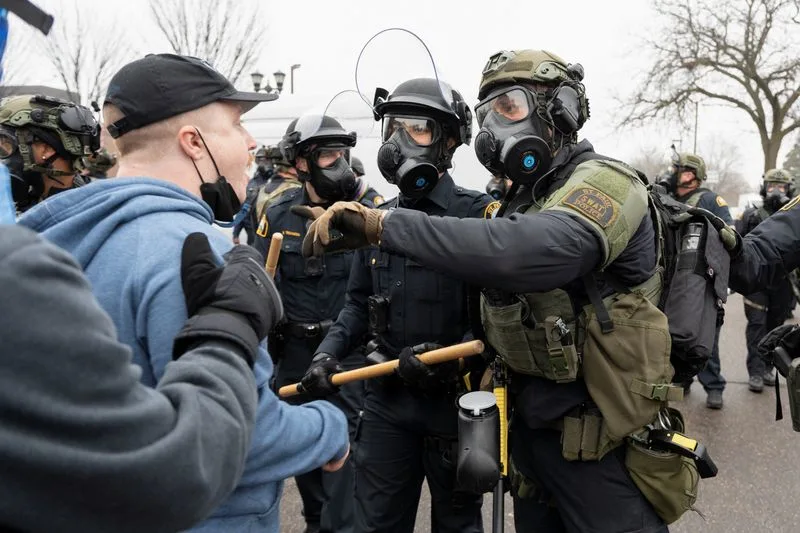
After weeks of protests and national backlash, the White House signals a tactical retreat in Minnesota.
MINNEAPOLIS — The Trump administration will reduce the number of federal immigration agents operating in Minnesota by 700, marking a significant shift after months of heavy enforcement deployments that sparked protests across the state.
The announcement was made Wednesday by White House border czar Tom Homan, who said the drawdown would affect federal immigration personnel deployed in and around the Minneapolis–Saint Paul area.
President Donald Trump has sent thousands of armed immigration agents to Minnesota since the start of the year as part of an aggressive enforcement campaign, a move that drew widespread criticism from local officials, civil rights groups, and residents. The operations triggered repeated demonstrations, particularly after several controversial encounters between federal agents and civilians.
Homan did not provide a detailed timeline for the reduction but said the administration was adjusting its operational posture while maintaining its broader immigration enforcement objectives. He stressed that the drawdown does not signal an end to federal operations in the state, but rather a recalibration of resources.
The federal surge had placed Minnesota at the center of a national debate over immigration enforcement tactics, accountability, and the role of federal agents operating without close coordination with local authorities. Community leaders have accused federal agencies of escalating tensions through highly visible, militarized operations.
While the White House has framed the reduction as a tactical decision, critics view it as a response to mounting political pressure and public backlash. Minnesota lawmakers from both parties have called for clearer oversight, transparency, and limits on the conduct of federal immigration officers.
No immediate response was issued by the Department of Homeland Security regarding whether additional policy changes — such as new rules on identification, use of force, or coordination with local police — would accompany the reduction in personnel.
The drawdown comes as Congress continues to debate funding and oversight of federal immigration agencies, with Minnesota frequently cited as a flashpoint in the broader national struggle over enforcement, civil liberties, and public trust.
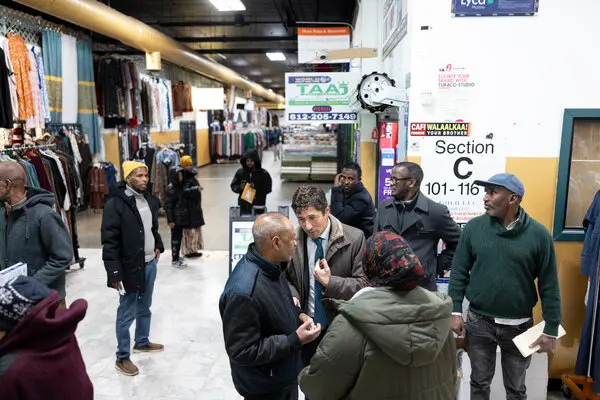
Fear Empties the Mall: How Trump’s ICE Crackdown Is Strangling Somali America.
At Karmel Mall in south Minneapolis, the heart of Somali-American commerce, silence has replaced the usual rhythm of trade.
Once crowded corridors now echo with Quran recitation and the hum of heaters, not customers. Clothing shops sit open but empty. Food stalls prepare meals no one comes to buy. Travel agencies cancel bookings that once sustained families. For three weeks, fear — not winter — has become the dominant economic force.
This is not an abstract immigration debate. It is a localized economic shock.
“Early afternoons used to bring 15 to 20 customers,” said Abdi Wahid. Now, he waits hours for one. Across the complex, dozens of businesses have stopped opening altogether. Workers stay home. Customers stay away. Even U.S. citizens avoid public spaces, carrying passports in their pockets as if they were foreign visitors in their own city.
The trigger is not crime. It is perception.
Trump’s “Operation Metro Surge” has turned visibility itself into a risk. The Somali community, already under political scrutiny after a fraud case, has become a rhetorical target. When a president describes a community as “garbage” and claims it “contributes nothing,” enforcement quickly becomes collective punishment in practice, even if not in law.
The fear now cuts across legal status. Citizens cancel travel. Families avoid mosques. Employees refuse to come to work. Bashir Garad, who runs a travel and accounting firm, has lost nearly all clients — not because they are undocumented, but because they no longer trust the system to protect them.
“They are citizens,” he said. “But they are afraid they won’t be allowed back.”
That is the deeper damage: the collapse of confidence.
ICE insists enforcement is based on “reasonable suspicion,” not race. But on the ground, suspicion has become visual. Wahid says the killing of Renee Good and the raid at Roosevelt High School convinced many that race itself is now enough.
The economic cost is immediate and measurable. Ibrahim Dahiye says his electronics business is down $20,000 a month. Employees stay home. Rent becomes a shared burden. Survival becomes a prayer.
This is not simply immigration enforcement. It is market disruption.
Karmel Mall is not only a shopping center. It is a financial engine, a religious center, a housing complex, and a social institution for the largest Somali community in the United States. When it slows, an entire ecosystem weakens.
There is a larger lesson here.
Targeted rhetoric reshapes behavior faster than any law. Even when enforcement claims neutrality, public signals determine economic outcomes. Once fear enters the market, legality becomes irrelevant.
What is unfolding in Minneapolis is not deportation policy. It is economic deterrence by atmosphere.
And the price is being paid not by criminals — but by shopkeepers, accountants, and citizens who now treat their own neighborhood as hostile territory.
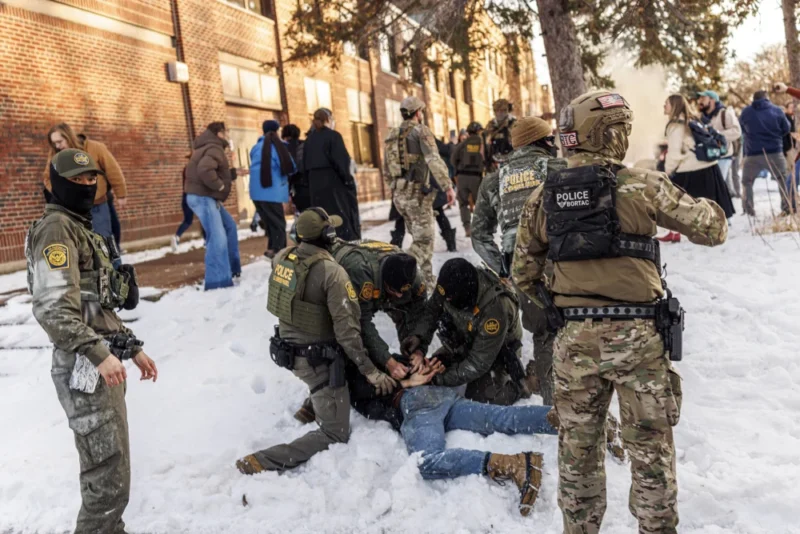
Minneapolis officials moved swiftly Thursday to close all public schools after a confrontation between federal immigration agents, teachers and community members erupted at a city high school — just hours after an ICE officer fatally shot Renee Nicole Good, a 37-year-old mother, during an immigration enforcement operation elsewhere in the city.
The clash unfolded Wednesday afternoon at Roosevelt High School, less than three miles from where Good was killed on a snow-covered street. According to the Department of Homeland Security, Border Patrol agents arrived at the school after a five-mile vehicle chase involving a suspect who allegedly rammed a government vehicle during an enforcement action. The pursuit ended as students were being dismissed, drawing agents onto school grounds at a moment of heightened tension across the city.
Witnesses described a chaotic scene. Armed federal agents poured out of unmarked SUVs near the school entrance as hundreds of students exited the building. Teachers and school staff attempted to block the agents from entering school property, urging them to stay away from students, according to multiple accounts. At least one educator was tackled and briefly detained, witnesses said.
“They came in like this was a military operation,” said Carol, a neighborhood resident who asked that her last name be withheld out of fear of retaliation. She said residents rushed outside blowing whistles and shouting at agents to leave the school. Video she recorded shows demonstrators chanting “Shame!” as officers pushed back the crowd.
The incident drew the attention of Gregory Bovino, a senior Border Patrol commander who has overseen enforcement operations in several major U.S. cities. Witnesses said Bovino stood at a school entrance as an agent appeared to film him, a moment that many residents said deepened their sense that the operation was meant to project force rather than restore order.
DHS, in a statement, said agents were assaulted by an individual who identified himself as a teacher and that members of the crowd threw objects and paint at officers. The agency said agents used “targeted crowd control” but denied deploying tear gas — a claim disputed by the Minneapolis Federation of Teachers, which said chemical agents were used. The union confirmed that an educator was arrested and later released.
Parents and local officials expressed alarm that federal agents entered a school environment during dismissal. “School property should be off-limits,” said Kate Winkel, a nearby resident who witnessed the confrontation. “Kids need to feel safe at school.”
The episode unfolded against the backdrop of mounting anger over Good’s killing earlier the same day. Her death, captured on video later analyzed by national media, has sparked protests and renewed scrutiny of the Trump administration’s aggressive immigration crackdown in Minnesota, particularly in neighborhoods with large immigrant and Somali-American populations.
By Thursday evening, Minneapolis Public Schools announced that all classes would be canceled through Friday, citing safety concerns and the need to assess the situation. “This incident involved federal law enforcement agents and is currently under investigation,” the district said, adding that schools would reopen Monday.
For many in Minneapolis, the back-to-back events — a fatal shooting followed by federal agents clashing with teachers at a public high school — have crystallized fears that immigration enforcement has crossed a line, turning neighborhoods and now schools into flashpoints in a rapidly escalating national confrontation.

2,000 Ships Held Hostage—Iran Turns Global Oil Route Into a Controlled Gate

UK Leads 35-Nation Push to Reopen Strait of Hormuz

Trump Considers Replacing Attorney General Pam Bondi


-

 US-Israel war on Iran1 month ago
UK Refuses Iran Strike Access, Trump Fires Back
-
 Russia-Ukraine War1 month ago
Europe’s Spies Challenge Trump’s Ukraine Peace Optimism
-
 Top stories1 month ago
India Turns to Brazil in Strategic Minerals Push Against China
-
 Top stories1 month ago
War Expands Across Region as Iranian Militias Join Fight
-

 US-Israel war on Iran1 month ago
Iran Pledges ‘Never, Ever’ to Hold Bomb-Grade Material
-

 US-Israel war on Iran1 month ago
Syria Under Fire on Two Fronts
-
 Russia-Ukraine War1 month ago
Estonia Warns NATO Would Strike Deep Inside Russia if Baltics Are Invaded
-

 Top stories3 weeks ago
Meloni Breaks Ranks: Italy Warns on Iran War