
Analysis
How Russia Is Bleeding Western Security Without Firing a Shot

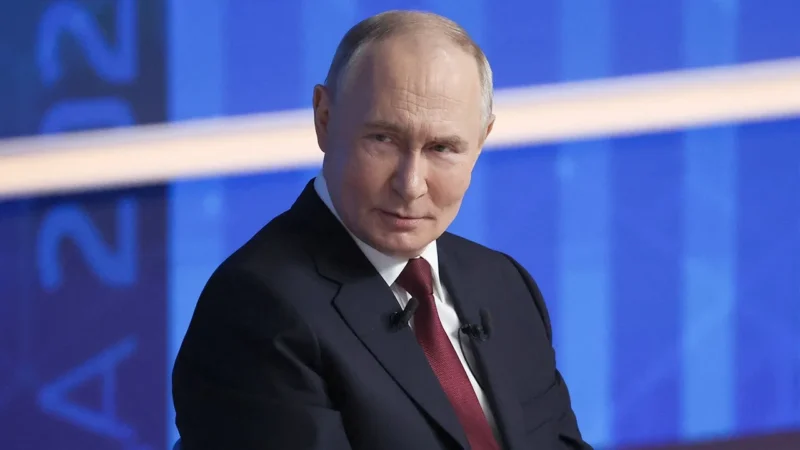
A broken train line in Poland. Fires in Estonia. Balloons from Belarus. None of it is random — and all of it is costing Europe more than Moscow ever pays.
Europe is confronting a form of warfare that leaves no craters, no front lines and few public acknowledgments — yet steadily drains its security capacity. Western intelligence officials say Russia is deliberately overwhelming European states through a sustained campaign of sabotage designed to be cheap for Moscow and exhausting for everyone else.
The evidence is mounting. In eastern Poland, a passenger train carrying nearly 500 people was forced to stop after an overhead line collapsed, smashing windows and damaging tracks. Elsewhere on the same route, explosives detonated beneath a freight train. No one was killed, but Warsaw reacted as if the warning was unmistakable: 10,000 troops were deployed to protect critical infrastructure. Polish authorities blamed Russia’s intelligence services.
That incident is one of at least 145 cases logged in an Associated Press database that Western officials link to Russia, its proxies or its ally Belarus since the invasion of Ukraine in 2022. The acts range from arson and explosives plots to cyberattacks, vandalism and warehouse fires. Most cause limited physical damage. That is precisely the point.
European intelligence officials say the real cost lies in the response. Every incident triggers multinational investigations, intelligence sharing and surveillance operations. One senior intelligence chief told AP that Russian interference now consumes as much agency time as counterterrorism. From Moscow’s perspective, tying up Europe’s security machinery is already a strategic win.
The scale is accelerating. AP data shows arson and explosives plots jumping from one documented case in 2023 to 26 in 2024, with several more already recorded in 2025. Poland and Estonia — both bordering Russia and among Ukraine’s strongest backers — are the most frequently targeted, followed by Germany, France, the U.K. and Latvia.
Officials believe Moscow briefly slowed the campaign late last year, likely to avoid antagonizing the incoming Trump administration in Washington. That pause is over. “They are back to business,” one European official said.
Russia’s method is calculated. Rather than risking trained intelligence officers, Moscow outsources operations to criminals, smugglers and foreign nationals with little to lose. Recruits are often found in prisons or through organized crime networks. One suspect linked to sabotage of Polish railways had worked for Russia’s GRU while moving across borders unnoticed, exploiting gaps in intelligence sharing.
Even failed plots serve a purpose. In Lithuania, a cache of drone parts and explosives hidden in a cemetery was uncovered before an attack could occur — but only after months of surveillance and coordination. In Latvia and Estonia, foreign operatives with no local ties have forced authorities into cross-border manhunts stretching from the Baltics to Italy.
The strategy is brutally efficient. Europe spends millions to stop attacks that cost Moscow almost nothing to organize.
Yet the pressure has produced one unintended effect: deeper cooperation. Baltic prosecutors have formed joint investigation teams. British police are training officers to recognize state-backed sabotage. Intelligence sharing is improving, even as Russia tests new methods — from arson to weather balloons drifting from Belarus that repeatedly shut down airports.
For now, the damage remains limited. But officials warn the campaign is evolving. What carries cigarettes today, they note, could carry something far more dangerous tomorrow.
This is not chaos. It is a system — and Europe is learning, belatedly, that the quiet wars can be the most corrosive of all.










While the Middle East burns, the real power game is moving east—and history is repeating itself.
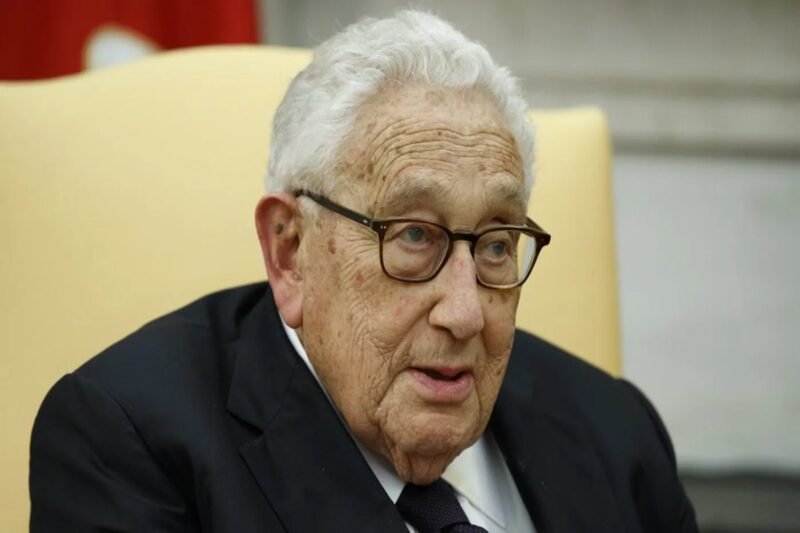
In the summer of 1971, a quiet diplomatic maneuver reshaped the world. Henry Kissinger slipped into Islamabad under the pretext of illness, only to secretly open a channel to China. The result was a geopolitical earthquake: Washington and Beijing aligned, and the Soviet Union found itself strategically isolated.
More than half a century later, the echoes are unmistakable.
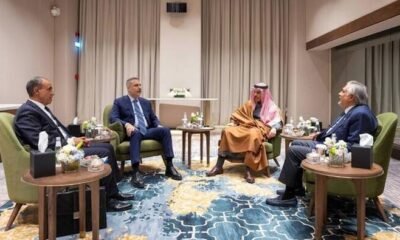
As war engulfs Iran and tensions ripple across the Middle East, a quieter, more consequential shift is unfolding—once again involving Pakistan, once again tied to backchannel diplomacy, and once again centered on Asia.
The reappearance of Pakistan as a diplomatic intermediary in U.S.–Iran contacts is not coincidence. It signals the reactivation of an old geopolitical axis—one where Asia serves as both the stage and the broker of global power realignments.
What is different today is scale.
In 1971, the objective was to rebalance Cold War dynamics. Today, the transformation is structural. Asia is no longer a theater of competition; it is becoming the center of gravity. Economically, technologically, and demographically, the axis of global influence is shifting eastward—toward a complex interplay between China and India.
Both nations, despite ideological differences, now operate within a global capitalist framework, driving innovation, manufacturing, and digital transformation at unprecedented levels. Their rivalry is real, but so is their shared trajectory: central players in a system no longer dominated solely by the West.
Against this backdrop, the Middle East—despite its volatility—appears less like the future and more like a pressure zone within a larger transition.
Even recent developments reinforce this pivot. Indian Prime Minister Narendra Modi’s high-profile engagement with Israel reflects Asia’s growing diplomatic reach into traditionally Western-aligned regions. Meanwhile, shifting tensions between Pakistan and Bangladesh hint at deeper realignments across South Asia itself.
The strategic game has widened.
Corridors of trade, energy, and influence—stretching from the Indian Ocean to Central Asia—are once again becoming decisive. Pakistan’s position, long defined by geography and its nuclear capability, is being re-evaluated in this broader contest. It is not merely a regional actor; it is a hinge between competing spheres of influence.
This is why today’s developments feel familiar.
Like in Kissinger’s era, the most important moves are not always visible. They unfold through intermediaries, quiet negotiations, and seemingly peripheral actors. The headlines may focus on war, but the deeper story is about positioning for what comes after.
The question, then, is not whether the world is changing—but whether the change has already happened.
If 1971 marked the opening of China to the world, today may mark the moment the world fully pivots to Asia.
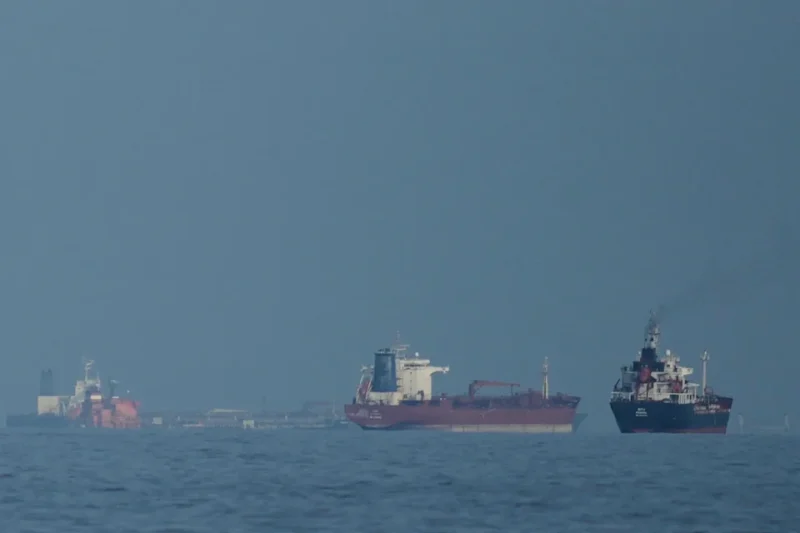
Iran isn’t trying to win the war—it’s trying to outlast it. And the world is paying the price.
One month into the war, the United States and Israel are confronting a paradox: a heavily damaged Iran that is still dictating the tempo of the conflict—and, increasingly, the global economy.
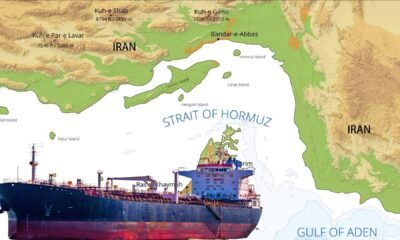
At the center of this strategy lies the Strait of Hormuz, the narrow maritime corridor through which a significant share of the world’s energy supply once flowed. By restricting access and threatening shipping, Tehran has transformed a regional war into a global economic shock.
Oil prices have surged, supply chains have tightened, and inflation pressures are re-emerging across multiple continents.
What makes this moment strategically significant is not Iran’s conventional strength—but its adaptation.
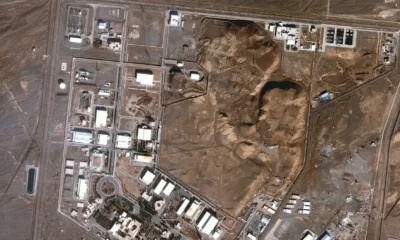
Rather than fighting as a traditional state, Iran is operating with the logic of an insurgency. It relies on dispersed assets, mobile missile launchers, underground facilities, and what military analysts describe as “shoot-and-scoot” tactics.
Even after sustained airstrikes, these methods allow Tehran to maintain a persistent, if limited, capacity to strike—and to threaten.
This asymmetry explains the current imbalance. While Washington and Tel Aviv dominate the battlefield in terms of firepower, Iran is shaping the strategic environment. By targeting economic pressure points rather than military parity, it raises the cost of war for everyone involved.
The objective is not victory in the conventional sense. It is survival.
As long as Iran can endure, it can claim success—particularly if the war continues to strain global markets and political stability in rival states. This logic echoes patterns seen in Iran-aligned groups across the region, from Yemen to Iraq, where persistence has often outweighed firepower.
Yet this strategy is not without risk.
Internally, Iran faces mounting pressure. Economic hardship, leadership uncertainty, and a population still scarred by recent crackdowns create vulnerabilities that prolonged conflict could deepen. Reports of recruitment drives, including among younger populations, suggest strain within its security apparatus.
Externally, the stakes are rising. The United States is weighing whether to escalate further—potentially forcing open Hormuz—or to pursue a negotiated exit. Each path carries consequences. Escalation risks widening the conflict. De-escalation risks validating Iran’s approach.
The war has therefore entered a new phase—less about territory, more about endurance and leverage.
The central question is no longer who can strike harder, but who can sustain pressure longer without breaking.
For now, Iran has found a way to fight a stronger adversary without matching its strength—by turning geography, economics, and time into weapons.
And in doing so, it has shifted the battlefield from the skies of the Middle East to the foundations of the global economy.

Energy shocks, political fractures—Europe is rethinking everything as wars collide.
The widening war involving Iran is forcing a hard reassessment across Europe—exposing the limits of solidarity, the fragility of energy security, and the growing appeal of neutrality in an era of overlapping conflicts.
At the center of the crisis is energy.
As instability disrupts supply routes and drives oil above $100 a barrel, European economies are once again under strain. Countries that pivoted away from Russian energy after the invasion of Ukraine now face a difficult reality: alternatives are neither stable nor cheap.
The result is a political dilemma that is becoming harder to ignore.
Some governments are quietly reconsidering their stance toward Russia. Calls to ease sanctions on Russian energy—once politically unthinkable—are now resurfacing, exposing fractures within the European Union.
While leaders in Germany and Brussels warn against empowering Moscow, others argue that domestic economic pressures are becoming unsustainable.
This tension reflects a broader shift.
The Iran war has revealed how interconnected global conflicts have become. What happens in the Strait of Hormuz reverberates through European gas markets; decisions in Kyiv affect energy flows from Moscow; and political choices in Washington reshape both.
In this environment, the traditional model of bloc-based alignment is under stress.
A growing number of policymakers are turning toward a more state-centered approach—prioritizing national economic stability over ideological commitments.
The argument is pragmatic: governments are ultimately accountable to their own citizens, particularly when energy prices surge and living costs rise.
This is where neutrality re-enters the conversation.
Not as isolationism, but as strategy.
Neutrality, in this context, allows states to navigate competing pressures without fully committing to one side of a geopolitical divide.
It opens space for what analysts call “niche diplomacy”—focusing on specific areas such as mediation, humanitarian engagement, or economic stabilization, rather than direct confrontation.
For Europe, this could mean leveraging its influence as a regulatory and diplomatic power rather than a military one.
Yet the shift is neither simple nor risk-free.
Moving toward neutrality could weaken collective responses to aggression, strain alliances, and embolden adversaries. At the same time, maintaining current commitments without adjusting to economic realities risks domestic backlash and political instability.
The Iran war has accelerated this debate, but it did not create it.
It has simply made visible a deeper truth: in a multipolar world, alignment is costly, and neutrality—once seen as passive—is increasingly being reconsidered as a form of strategic flexibility.
The question now is not whether Europe can remain fully aligned across multiple conflicts.
It is whether it can afford not to rethink its position.
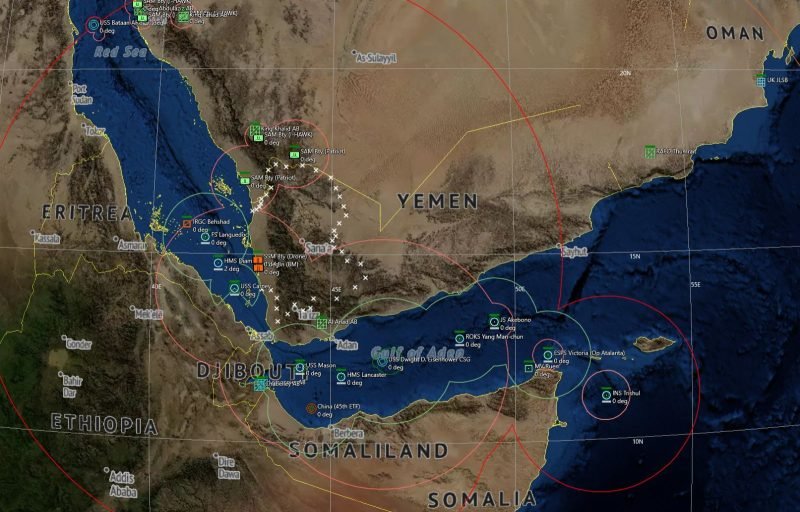
First Hormuz. Now the Red Sea. The world’s trade arteries are turning into battlefields.
The war centered on Iran is no longer confined to the Gulf. It is redrawing the map of global trade—pushing the Red Sea from a secondary theater into a critical frontline of economic and geopolitical competition.
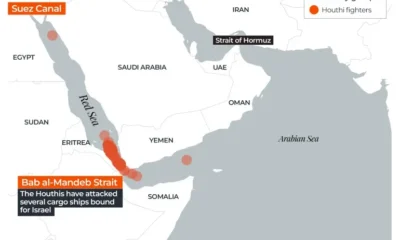
At the heart of this shift lies a simple reality: as the Strait of Hormuz becomes increasingly unstable, the world is turning westward. The Bab el-Mandeb Strait—linking the Red Sea to the Gulf of Aden—is rapidly emerging as an alternative artery for energy and trade.
But what was once a backup route is now becoming a pressure point.
The risk is not theoretical. Iran has already signaled that escalation could extend into the Red Sea, while Yemen’s Houthi movement—armed with drones, mines, and anti-ship missiles—has hinted at entering the conflict. Even limited attacks could sharply raise insurance costs, reroute shipping, and strain already fragile supply chains.
For Africa, the consequences could be immediate and severe.
Countries along the Red Sea basin—Egypt, Djibouti, Eritrea, and Sudan—are already embedded in a dense web of military bases and foreign interests. Djibouti alone hosts forces from the United States, China, France, and Japan, making it one of the most militarized nodes in global trade.
Layer onto this an intensifying rivalry among regional powers.
United Arab Emirates have spent years expanding influence across the Horn of Africa through investment and port infrastructure. Companies like DP World have turned ports into instruments of geopolitical leverage—a strategy now colliding with local resistance and legal disputes.
Meanwhile, new actors—and new risks—are entering the equation.
Speculation about Israeli strategic positioning near Berbera and reported cooperation between Houthi forces and Somalia-based militants such as al-Shabaab add layers of volatility. Even informal coordination between non-state actors could transform piracy, drone warfare, and smuggling into a coordinated threat to maritime security.
Two trajectories now define the near future.
In the first, escalation spreads—linking the Gulf and Red Sea into a single, continuous conflict zone. Under that scenario, global energy flows face severe disruption, and the Red Sea becomes the last viable corridor under immense strain.
In the second, major powers and regional actors prioritize containment—securing shipping lanes even as broader rivalries persist. The Red Sea, in this case, becomes a zone of uneasy cooperation rather than open confrontation.
But either way, stability is no longer the baseline.
What the Iran crisis has exposed is not just the vulnerability of a single chokepoint—but the fragility of the entire global trade architecture. As pressure shifts from Hormuz to Bab al-Mandab, the battlefield is expanding from territory to transit routes.
And in modern geopolitics, control of those routes can matter as much as control of land itself.
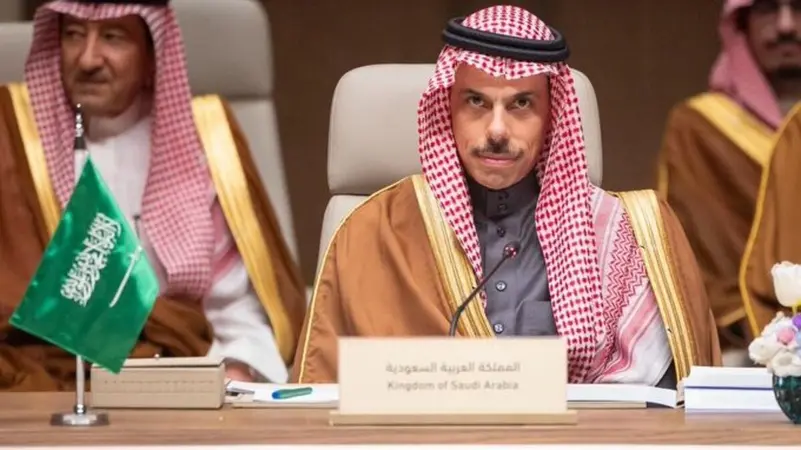
Saudi Arabia isn’t fighting the war — it’s waiting to win it. Here’s how.
In a region defined by escalation, Saudi Arabia is choosing something far more deliberate: restraint.
As the war between the United States, Israel, and Iran enters a dangerous phase, Riyadh has resisted the gravitational pull of direct confrontation. Instead, it is executing a strategy built on patience, selective engagement, and calculated distance—an approach that reflects not weakness, but discipline.
At the center of this strategy lies a fundamental tension. Iran’s revolutionary model poses a direct ideological and geopolitical challenge to the Kingdom’s monarchical system and its alignment with Western security structures.
Yet Saudi Arabia has concluded that outright war would be self-defeating. Any large-scale escalation—especially one targeting energy infrastructure or maritime routes—would strike at the heart of its economic transformation.
That transformation, anchored in Vision 2030, is no longer theoretical. Non-oil sectors now account for a majority share of economic output, while tourism and investment flows have accelerated beyond early expectations. Megaprojects like NEOM and the Red Sea initiative are not just prestige ventures; they are pillars of a post-oil future that depends on stability above all else.
War threatens that stability.
This is why Riyadh’s approach is less about confrontation and more about positioning. Saudi Arabia benefits when its rivals are contained, distracted, or weakened—but it seeks those outcomes indirectly.
A prolonged conflict that drains Iran’s capacity, tests U.S. commitments, and constrains Israeli dominance can shift the regional balance without requiring Saudi Arabia to absorb the costs.
Recent diplomacy reflects this logic. Despite deep rivalry, Saudi officials have maintained communication channels with Tehran, reinforcing the détente brokered by China in 2023.
These contacts are not signs of reconciliation, but tools of risk management—designed to prevent spillover into Saudi territory and keep escalation within limits.
At the same time, Riyadh’s relationship with United States is evolving. While security ties remain essential, the Kingdom is no longer operating as a passive partner. It is diversifying its alliances, expanding engagement with China and Russia, and asserting greater independence in energy and foreign policy decisions.
This recalibration reflects a broader reality: the Middle East is no longer shaped by a single dominant power. In this emerging multipolar landscape, influence accrues not only through force, but through flexibility.
Saudi Arabia is adapting accordingly.
Its stance toward Israel illustrates this balance. Tactical alignment against Iranian threats coexists with strategic caution. Riyadh has avoided full normalization, linking any progress to credible steps toward Palestinian statehood—preserving both domestic legitimacy and regional leverage.
The result is a strategy that operates in the background rather than the battlefield.
It is not without risk. A miscalculation—whether by Iran, Israel, or Washington—could still draw Saudi Arabia into a wider conflict.
Attacks on energy facilities, shipping routes, or critical infrastructure would have immediate and severe consequences. But Riyadh appears to be betting that disciplined restraint, combined with active diplomacy, can contain those risks.
In doing so, Saudi Arabia is redefining what power looks like in the modern Middle East.
Not dominance through force, but influence through timing. Not escalation, but endurance.
As others exhaust themselves in confrontation, Riyadh is positioning for what comes next—quietly, deliberately, and with an eye on a future where survival depends less on military victories and more on strategic patience.
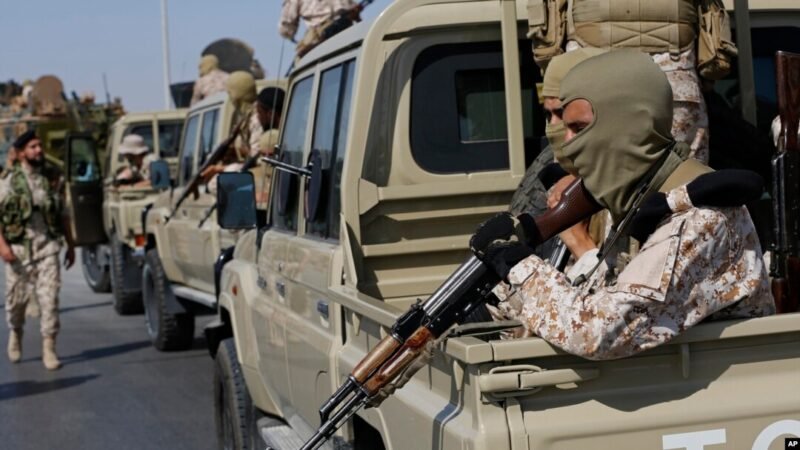
Libya doesn’t lack resources or people — it lacks one thing: unity. Here’s why the system keeps failing.
Fifteen years after the fall of Muammar Gaddafi, Libya remains trapped in a cycle of political paralysis, where elite rivalries and fragmented authority continue to block the emergence of a functioning state.
At the core of the crisis is a breakdown in consensus. Competing factions—often operating through parallel institutions—have prioritized narrow political and economic interests over national cohesion. The result is a system defined less by governance than by veto power, where progress is routinely stalled and compromise remains elusive.
This dysfunction is not merely institutional; it is structural.
Libyan society, deeply rooted in tribal affiliations, has struggled to adapt to externally promoted models of partisan democracy. Following the 2011 revolution, elections produced a proliferation of political parties—many lacking real constituencies or organizational depth. What emerged was not a competitive democratic system, but a fragmented political landscape where labels often masked informal networks of influence.
The consequences have been profound.
Instead of fostering representation, the party system has contributed to institutional duplication, weakened legitimacy, and prolonged instability. More than a hundred parties now exist on paper, yet few command meaningful public trust. In practice, political authority remains dispersed across tribal, regional, and militia-based structures that operate outside formal frameworks.
External prescriptions have further complicated the picture.
Western-backed proposals have consistently emphasized party-based governance as the path forward. But political theory—and Libya’s own experience—suggests that democracy cannot be transplanted wholesale into a social fabric that has not undergone the necessary cultural and institutional transformation. Without that foundation, electoral processes risk reinforcing division rather than resolving it.
The absence of a finalized constitution has deepened the impasse.
Repeated delays have allowed transitional arrangements to persist indefinitely, enabling political actors to maintain access to state resources without accountability. This has fueled public frustration and eroded confidence in the political process itself.
Yet the challenge is not the presence of disagreement—it is its nature.
In stable democracies, competing views generate policy alternatives and institutional balance. In Libya, disagreement has hardened into entrenched antagonism, often exploited by elites to consolidate power. The shift from constructive pluralism to zero-sum conflict has prevented the emergence of a shared national project.
Some analysts now argue that Libya may require a more consensual model of governance—one that prioritizes inclusion and gradual institution-building over ideological competition. Such an approach would acknowledge the country’s social realities while creating space for a transition from fragmented authority to a unified state.
The path forward remains uncertain.
What is clear, however, is that Libya’s crisis is not solely the product of external intervention or internal division. It is the result of a political system that has yet to align its structures with its society—and of elites who have struggled, or declined, to place national interest above factional gain.
Until that balance shifts, Libya’s state-building project will remain incomplete, suspended between the promise of unity and the persistence of division.
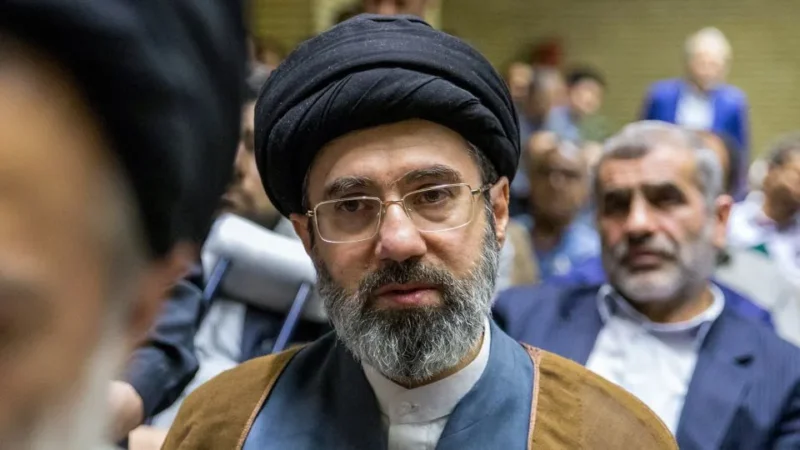
Airports, oil sites, malls—these aren’t accidents. They’re signals. Here’s what Iran is really trying to do.
The pattern is too consistent to dismiss as error. Airports, energy facilities, and civilian infrastructure across Gulf states are being struck—and then described as “military targets.” The contradiction is not confusion. It is strategy.
At its core, Iran’s approach reflects a doctrine of coercive escalation: expand the battlefield until the cost of continuing the war becomes intolerable for everyone involved.
By targeting critical infrastructure in Gulf countries—many of which have explicitly stayed out of the conflict—Tehran is not misidentifying targets. It is redefining them.
The message is blunt: the regime survives, or the region pays the price.
This logic rests on leverage, not legitimacy. Gulf states represent the economic and logistical backbone of the regional order Iran seeks to challenge—energy exports, financial hubs, and stable governance structures closely tied to Western markets.
Disrupting these systems does more than inflict damage; it transmits shock through global supply chains, raises political pressure on Washington, and tests the cohesion of U.S. alliances.
In this sense, infrastructure becomes a strategic language.
The Strait of Hormuz amplifies that leverage. Even limited disruption to shipping routes can ripple across global energy markets, turning a regional conflict into an international economic crisis. Iran’s strikes, paired with pressure on maritime flows, are designed to widen the war’s impact beyond the battlefield and into the daily calculations of governments far removed from it.
There is also a historical pattern behind the approach.
Tehran has long relied on asymmetric methods—supporting non-state actors, cultivating proxy networks, and applying pressure indirectly to avoid conventional confrontation. From Lebanon in the 1980s to Iraq after 2003, the strategy has been consistent: increase the cost of U.S. presence until withdrawal becomes politically preferable.
Today’s campaign appears to adapt that model to a new environment—one shaped by energy interdependence, globalized markets, and a reduced tolerance in Washington for prolonged entanglements. By targeting what it frames as “American interests” and allied infrastructure, Iran seeks to recreate conditions where external actors reconsider the value of continued involvement.
But this strategy carries risks.
Striking civilian-linked infrastructure blurs the line between military and non-military targets, raising the danger of escalation and widening participation. Gulf states, while initially reluctant to engage directly, may face increasing pressure to respond as attacks intensify. The more the conflict spreads geographically, the harder it becomes to contain.
The broader objective appears less about immediate battlefield gains and more about reshaping the regional balance.
Iran’s long-term aim has been to challenge a system built on state stability, open markets, and security partnerships with the West. Undermining that model—through disruption, pressure, and uncertainty—serves a strategic purpose even if it does not produce quick victories.
Yet the outcome is far from predetermined.
The same actions intended to fracture alliances could reinforce them. The same pressure designed to force disengagement could trigger deeper involvement. Much depends on how regional actors interpret both the intent and the limits of Iran’s strategy.
What is clear is that these strikes are not random.
They are part of a deliberate effort to transform the conflict from a military confrontation into a systemic test—one that reaches into economies, alliances, and the underlying structure of the Middle East itself.
And in that contest, infrastructure is not collateral damage.
It is the battlefield.

War Enters Dangerous New Phase as Oil Surges, Alliances Strain

Beyond the Bombs: The Real War Is Radicalism vs. Stability

Ukraine’s War Expertise Becomes Gulf’s Shield


-

 Terrorism2 months ago
America Pulls Back From Somalia but Doubles Down Next Door
-

 Top stories2 months ago
Rubio Signals Preemptive Military Option as U.S. Tightens Pressure on Iran
-

 Analysis2 months ago
How Chinese Speculators Set the Stage for the Gold and Silver Crash
-

 Russia-Ukraine War1 month ago
Russian General Boasted of Torture and Killing of Ukrainian Prisoners
-

 US-Israel war on Iran1 month ago
UK Refuses Iran Strike Access, Trump Fires Back
-
 Russia-Ukraine War1 month ago
Europe’s Spies Challenge Trump’s Ukraine Peace Optimism
-
 Top stories4 weeks ago
War Expands Across Region as Iranian Militias Join Fight
-
 US-Israel war on Iran4 weeks ago
Iran Pledges ‘Never, Ever’ to Hold Bomb-Grade Material