
Horn Diplomacy
Red Sea Politics, Nile Pressures: Why Eritrea’s IGAD Exit Lands Now

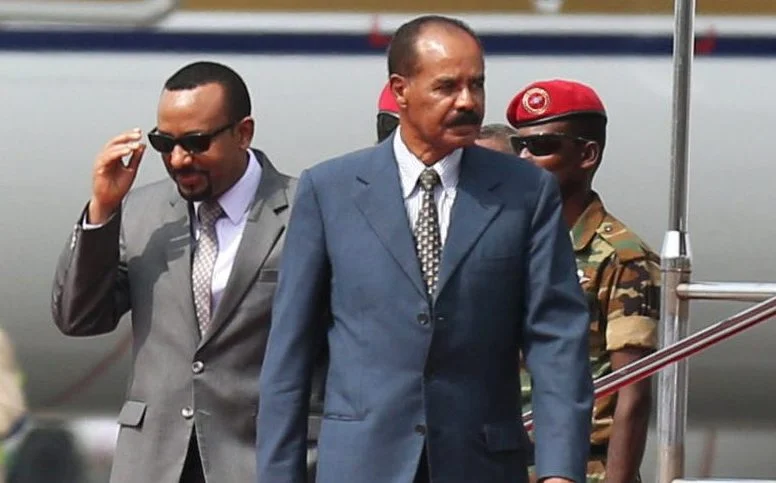
Why Eritrea’s IGAD Exit Matters: Red Sea Strategy and Ethiopian Tensions.
Eritrea’s formal withdrawal from the Intergovernmental Authority on Development (IGAD) in December 2025 marks a significant moment in Horn of Africa geopolitics, illuminating how evolving regional tensions — especially along strategic corridors like the Red Sea and the Nile basin — are reshaping alliances and strategic priorities.
On 12 December 2025, Eritrea’s Ministry of Foreign Affairs declared the country was leaving IGAD, accusing the bloc of losing its legal mandate and failing to contribute meaningfully to regional stability. Asmara asserted that IGAD offers “no discernible strategic benefit” to its constituencies and had become irrelevant to the Horn’s challenges. Eritrea had rejoined IGAD only in 2023 after nearly two decades outside the organization, and IGAD noted that Eritrea had not actively participated in meetings since re-entry.
This exit is not unprecedented; Eritrea previously withdrew from IGAD in 2007 amid disagreements with Ethiopia before rejoining in 2023.
Eritrea portrays its departure as a principled response to IGAD’s perceived paralysis. Observatory analysis suggests three overlapping strategic drivers:
Relations between Eritrea and Ethiopia, which briefly warmed after a 2018 peace overture, have frayed once more. Addis Ababa’s talk of gaining access to the Red Sea — considered by Eritrean leaders a core strategic concern — has exacerbated mutual distrust. Ethiopia’s quest to secure maritime outlets via Eritrean ports has been framed in Addis Ababa as vital for its economy and security, but Asmara sees it as a challenge to its territorial sovereignty.
These tensions are rooted in long-standing issues, including unresolved border demarcation after the Eritrea–Ethiopia War and later conflicts involving the Tigray region. Eritrea’s resistance to what it perceives as Ethiopian maneuvering reflects deep suspicions about Addis Ababa’s intentions toward Red Sea access — a strategic artery of global commerce and regional influence.
Eritrean officials and analysts critical of the bloc argue that IGAD has drifted from its founding principles, becoming a vehicle that advantages larger members — especially Ethiopia — over smaller states like Eritrea. Asmara’s statement frames IGAD as lacking impartial governance and failing to address pressing Horn of Africa security issues.
IGAD itself responded with regret over Eritrea’s withdrawal, noting the government “had not engaged” with reforms or bloc activities, underscoring a gap between Eritrean rhetoric and practical participation.
Though Eritrea’s exit from IGAD is framed institutionally, it is inseparable from broader regional dynamics that now converge on two arenas:
The Red Sea has become a crucial strategic and economic theatre. Its waters carry a significant portion of global trade and are the site of competing security interests involving Horn states, Arabian Gulf powers, and global navies. Efforts — including regional maritime governance proposals and cooperative frameworks — have sought inclusive security architectures, but Eritrea and Egypt have sometimes resisted broader participation, particularly regarding Ethiopia’s stake in Red Sea affairs.
Eritrea’s alignment with positions emphasizing coastal littoral primacy — often coupled with Egyptian geopolitical narratives — illustrates how maritime geopolitics can pull regional actors toward exclusionary postures. In this framing, Eritrea’s withdrawal parallels broader efforts to define the Red Sea not as a shared domain of multilateral cooperation but as a contested strategic space.
Upholding access to the sea for Ethiopia is a constant strategic concern for Addis Ababa, linked historically to its dependence on maritime outlets and the economic costs of landlocked status. Ethiopia’s push for a larger role in Red Sea governance — and persistent insistence on port access — reflect survival imperatives rooted in geography. This creates a strategic friction with Eritrea, whose control of Red Sea ports is inseparable from its security calculus.
Simultaneously, Nile geopolitics continues to bind regional states. Efforts toward equitable Nile management — including evolving frameworks for the Nile Basin — underscore how water, territory, and geopolitical cooperation are inseparable in Horn affairs. Eritrea’s shifting regional posture must be understood against this wider backdrop of competing claims, ecological necessities, and political alignments that extend beyond IGAD’s immediate mandate.
Eritrea’s exit weakens the nominal unity of IGAD at a time when the bloc confronts overlapping security challenges, including Sudan’s civil conflict, Somalia’s fragility, and Ethiopia’s post-Tigray tensions. Its departure accentuates the broader fragility of multilateral cooperation in the Horn — particularly where geopolitical rivalries override institutional loyalty.
International actors, including the United Nations, have expressed concern about rising tensions between Eritrea and Ethiopia, urging both to respect peace accords such as the Algiers Agreement and prevent renewed hostilities.
Eritrea’s withdrawal from IGAD is not an isolated administrative act. It reflects a confluence of long-standing distrust, shifting power equations, and geopolitical competition centered on the Red Sea and Nile basin. While framed in diplomatic language as an assertion of sovereignty and institutional principle, the move underscores how deeply regional rivalries — particularly between Eritrea and Ethiopia — now shape Horn of Africa politics.
Rather than cementing regional cooperation, Eritrea’s exit from IGAD highlights the challenges facing multilateral frameworks in contested strategic environments where geography, history, and national ambition intersect.
Eritrea Withdraws from IGAD, Citing Loss of Legitimacy and Regional Bias




















Inside the Secret US Plan to Seize Iran’s Enriched Uranium

Iran Strike on Oil Tanker Near Dubai Escalates Gulf Conflict

Oil Shock 2.0: The Crisis the World Isn’t Ready For


-

 US-Israel war on Iran1 month ago
UK Refuses Iran Strike Access, Trump Fires Back
-

 Russia-Ukraine War1 month ago
Europe’s Spies Challenge Trump’s Ukraine Peace Optimism
-

 Top stories4 weeks ago
War Expands Across Region as Iranian Militias Join Fight
-

 US-Israel war on Iran1 month ago
Iran Pledges ‘Never, Ever’ to Hold Bomb-Grade Material
-

 US-Israel war on Iran1 month ago
Syria Under Fire on Two Fronts
-

 Top stories1 month ago
India Turns to Brazil in Strategic Minerals Push Against China
-

 Russia-Ukraine War1 month ago
Estonia Warns NATO Would Strike Deep Inside Russia if Baltics Are Invaded
-

 Terrorism4 weeks ago
Regional Army Moves Against Expanding Armed Groups