
Top stories
Trump’s New ‘Trump-Class’ Battleship Will Carry Nuclear Weapons


Cold War firepower on the high seas—Trump wants nuclear-armed battleships back.
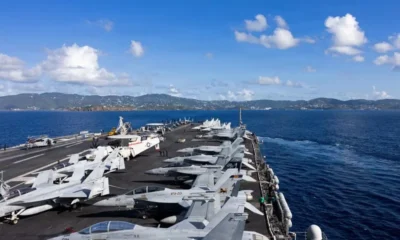
President Donald Trump on Monday announced plans for a new “Trump-class” battleship that would carry nuclear-armed cruise missiles, marking the first time the United States would deploy nuclear weapons on a surface combat ship since the Cold War.
Speaking from his Mar-a-Lago resort in Florida ahead of the winter holidays, Trump also revealed intentions to build a new class of aircraft carriers, signaling an expansive—and costly—effort to dramatically scale up U.S. naval power. Neither program currently has funding allocated in the Pentagon’s budget, leaving timelines and feasibility uncertain.
Trump said at least 25 Trump-class battleships would be constructed and described them as “the largest we’ve ever built,” calling for an aggressive production timeline that would deliver the first ship in just two and a half years. Defense experts, however, described that schedule as highly unrealistic given the absence of finalized designs and the Navy’s long-standing struggles with shipbuilding delays.
According to two people familiar with early planning, the battleships would integrate multiple advanced technologies that have never been combined on a single vessel. Initial concepts envision a 30,000-ton ship—larger than the Navy’s Arleigh Burke-class destroyers—with a crew exceeding 500 sailors.
The ships would be designed to carry hypersonic missiles, nuclear-armed cruise missiles, electromagnetic rail guns capable of firing munitions hundreds of miles, and power-generation systems to support directed-energy laser weapons.
Defense industry analyst Roman Schweizer of TD Cowen warned investors that the proposal runs counter to the Navy’s recent focus on unmanned and robotic maritime systems. Others pointed to deeper structural issues: every U.S. Navy ship currently under construction is at least a year behind schedule, and American shipyards continue to face chronic labor shortages.
Asked how the administration would overcome those constraints, Trump said he plans to meet with defense company executives and pressure them to reduce executive pay and stock buybacks in favor of investing in new factories and production capacity. “We need these ships now,” he said, “not in 10 or 15 years.”
Criticism from Capitol Hill and defense analysts was swift. Mark Montgomery, a retired Navy officer now with the Foundation for the Defense of Democracies, warned that maintaining multiple new ship classes would strain the Navy’s budget for decades. Rep. Joe Courtney, the ranking Democrat on the House Seapower and Projection Forces Subcommittee, called the plan vague and noted that there were historical reasons the Navy stopped building battleships after World War II.
“There’s a reason the Navy didn’t revive battleships even during President Ronald Reagan’s 600-ship fleet,” Courtney said.
Bryan Clark of the Hudson Institute added that without retiring existing ships early, the Navy simply lacks the funding to support such an ambitious expansion while also paying for new aircraft, operations, and personnel.
Trump was joined at the announcement by Defense Secretary Pete Hegseth, Navy Secretary John Phelan, and Chief of Naval Operations Daryl Caudle. The Wall Street Journal first reported several details of the proposal.
Whether the Trump-class battleship becomes a reality or remains a political signal, the announcement underscores a clear message: Trump intends to push the U.S. military—and the defense industrial base—toward a scale and posture not seen in decades, even as questions mount over cost, feasibility, and strategic necessity.













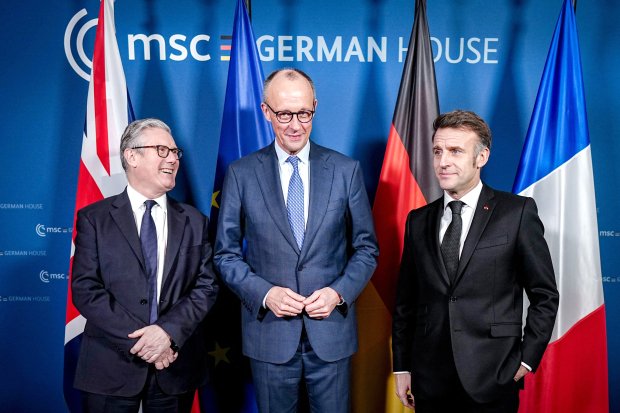
A turning point in European defense? Macron says the continent must redefine its security — with a new, “holistic” nuclear strategy.
French President Emmanuel Macron said Friday that Europe must redefine its security architecture independently, arguing that the continent can no longer rely solely on existing frameworks as it confronts an assertive Russia.
Speaking at the Munich Security Conference, Macron said Europeans must prepare for a future in which they negotiate their own security arrangements, rather than leaving such decisions to outside powers. “We have to be the ones to negotiate this new architecture of security for Europe,” he said, noting that geography ensures Europe will continue to coexist with Russia.
Macron suggested that redefining Europe’s defense posture could include a more “holistic” approach to nuclear deterrence — an area traditionally guarded as a strictly national prerogative. France, the European Union’s only nuclear-armed state, has begun what Macron described as a “new strategic dialogue” with German Chancellor Friedrich Merz and other European leaders.
The talks aim to explore how France’s national nuclear doctrine could align more closely with broader European security interests. Macron said the dialogue seeks to create strategic convergence, particularly between France and Germany.
Merz confirmed that confidential discussions on deterrence are underway but stressed that Germany remains bound by its commitments under NATO’s nuclear-sharing framework. He said Berlin would not support the emergence of “zones of differing security” across Europe.
Macron’s remarks reflect growing debate within Europe over long-term reliance on the U.S. security umbrella. While he did not call for replacing NATO, his comments signal that European leaders are increasingly weighing options for greater strategic autonomy.
Beyond defense policy, Macron also defended Europe against criticism that it is overregulated, economically stagnant or socially restrictive. He urged Europeans to adopt a more confident posture, arguing that the continent’s strengths are often overshadowed by negative narratives.
Macron said he would provide further details on his security proposals in the coming weeks, as Europe continues to reassess its strategic footing amid heightened geopolitical tensions.
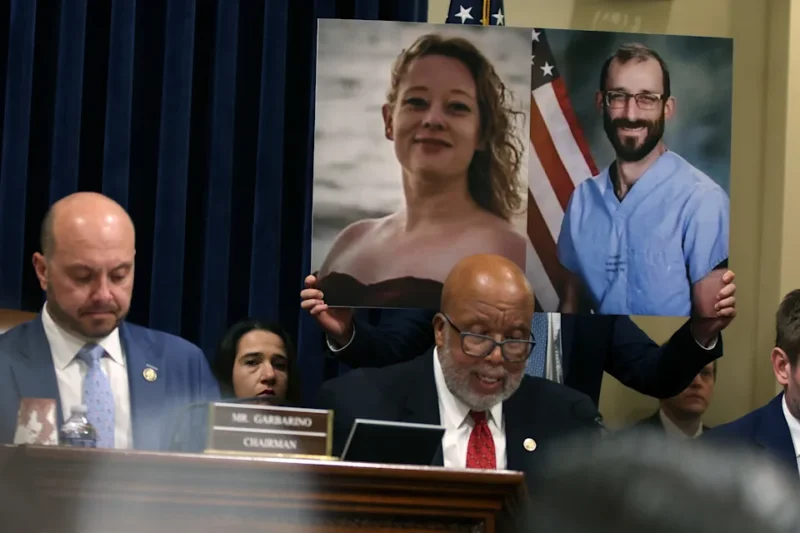
Another shutdown fight in Washington — and travelers could feel it first at airport security.
A partial shutdown of the Department of Homeland Security appeared imminent after Congress failed to reach agreement on immigration-related funding, raising concerns about disruptions for travelers and federal employees.
The funding lapse would affect agencies under DHS, including the Transportation Security Administration, which oversees security at more than 430 commercial airports. While TSA officers would continue working as “essential employees,” they would not receive pay until funding is restored.
During the previous 43-day shutdown, many TSA employees reported financial hardship, and absentee rates increased, contributing to flight delays and disruptions. Acting TSA Administrator Ha Nguyen McNeill warned lawmakers earlier this week that workers are still recovering from that period. “We cannot put them through another such experience,” she said.
The current impasse stems from disputes over immigration enforcement policies. Democrats are seeking changes within DHS, including stricter use-of-force standards, body camera requirements and limits on mask-wearing by federal agents. Republicans have rejected several of those proposals, arguing they could endanger officers.
Even if funding lapses, many DHS law enforcement functions — including operations by U.S. Immigration and Customs Enforcement (ICE) and Customs and Border Protection — would continue. However, administrative functions would scale back, and thousands of employees could see delayed paychecks.
The head of the Federal Emergency Management Agency has warned that a shutdown would hinder disaster reimbursement to states. Other federal services outside DHS — such as air traffic control and food assistance programs — would not be affected.
With Congress not scheduled to reconvene for votes until later this month, the duration of any shutdown remains uncertain. For travelers, the immediate concern is airport security lines and potential staffing shortages — a reminder that even a partial government closure can ripple quickly through daily life.
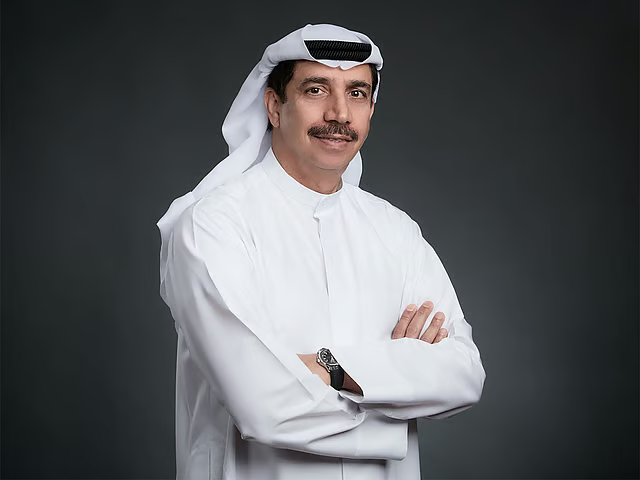
A major reshuffle at one of the world’s largest port operators — DP World names new leadership as it eyes long-term growth.
DP World announced Friday the appointment of Essa Kazim as chairman of its board of directors and Yuvraj Narayan as group chief executive officer, marking a significant leadership transition at the global logistics and port operator.
Kazim, who currently serves as governor of the Dubai International Financial Centre and chairman of Borse Dubai, brings decades of experience in financial and economic policy. He has also held senior roles within Dubai’s regulatory and fiscal institutions, including deputy chairman of the Supreme Legislation Committee and member of the Securities and Exchange Higher Committee.
His career began at the UAE Central Bank in 1988 before moving to the Dubai Department of Economic Development. He later served as director-general and then chairman of the Dubai Financial Market, playing a central role in shaping the emirate’s capital markets.
Narayan, who has been with DP World since 2004 and served as group chief financial officer since 2005, takes the helm after overseeing key strategic and financial initiatives that supported the company’s global expansion. The company credited him with strengthening financial resilience and operational efficiency across international markets.
Before joining DP World, Narayan held senior finance roles at ANZ Group and served as chief financial officer at Salalah Port Services in Oman.
DP World said the appointments align with its long-term strategy for sustainable growth and reinforce its position as an integrated global supply chain provider.
In a related move, Mohammed bin Rashid Al Maktoum issued a decree appointing Abdulla bin Damithan as chairman of the Ports, Customs and Free Zone Corporation, further reshaping leadership within Dubai’s trade and logistics sector.
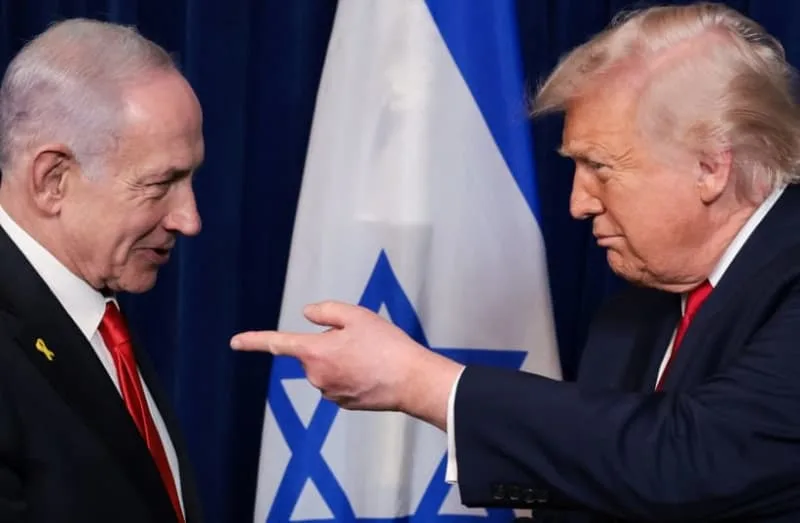
A mid-air moment of diplomacy: Trump calls for Netanyahu’s pardon — Herzog answers at 30,000 feet.
Israeli President Isaac Herzog pushed back Thursday after U.S. President Donald Trump publicly urged him to pardon Prime Minister Benjamin Netanyahu, saying Israel’s decisions are governed by its own laws.
Trump made the remarks during a White House event while Herzog was returning from a four-day visit to Australia. “He should give it,” Trump said, referring to a pardon for Netanyahu. “The people of Israel should really shame him. He’s disgraceful for not giving it.”
According to Israeli officials, Herzog was informed of Trump’s comments mid-flight and convened advisers aboard the plane to craft a response. In a statement issued from the aircraft, the President’s Residence said that any pardon request submitted by Netanyahu is currently under review by Israel’s Justice Ministry for a legal opinion.
“Only after the process is concluded will the president examine the request in accordance with the law, the good of the state, and his conscience — and without any influence from external or internal pressures of any kind,” the statement said.
The statement also expressed appreciation for Trump’s support of Israel’s security but emphasized that Israel is “a sovereign state governed by the rule of law.”
Pressed by reporters traveling with him for a personal reaction, Herzog replied tersely: “To the best of my recollection, I am the president of Israel.”
Netanyahu has been facing ongoing legal proceedings in Israel, and the question of a presidential pardon has drawn intense domestic debate. Herzog has previously said any such request would be handled strictly according to established legal procedures.
The exchange highlights the delicate balance between Israel’s close relationship with Washington and the independence of its judicial and constitutional processes.
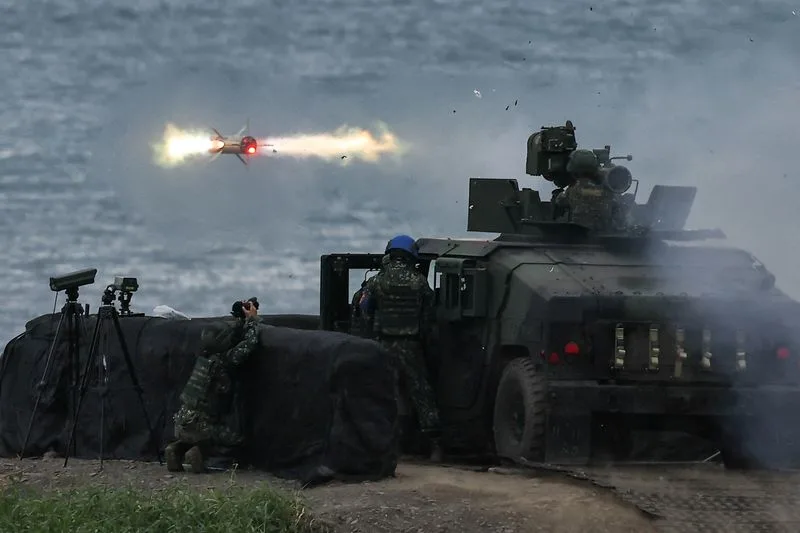
A bipartisan group of 37 U.S. lawmakers has urged Taiwan’s parliament to approve a stalled defense spending package, warning that the threat from China is intensifying.
In a letter addressed to Legislative Speaker Han Kuo-yu and leaders of Taiwan’s main political parties, the lawmakers said Beijing’s pressure on the island “has never been greater.” The letter cited Chinese President Xi Jinping and accused China of using all elements of its national power to assert control over Taiwan.
President Lai Ching-te last year proposed roughly $40 billion in additional defense spending to strengthen Taiwan’s military capabilities and accelerate U.S. weapons purchases. But opposition parties, including the Kuomintang and the Taiwan People’s Party, which control a majority in parliament, have declined to review the full proposal, advancing smaller alternatives instead.
The U.S. lawmakers acknowledged delays in American weapons deliveries but said Taiwan must also increase its own investment to maintain credible deterrence.
Taiwan’s defense minister has warned that further delays could weaken coordination with Washington. The United States remains Taiwan’s primary security partner despite the absence of formal diplomatic ties.
China considers Taiwan part of its territory and has not ruled out the use of force to bring the island under its control.
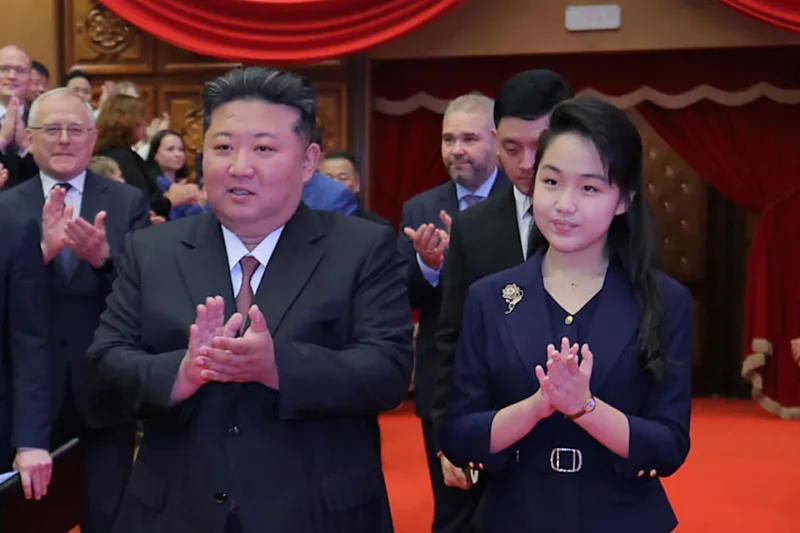
A missile launch debut. A mausoleum visit. A party congress ahead. Is North Korea preparing its next ruler?
South Korea’s intelligence agency told lawmakers Thursday that it believes the teenage daughter of North Korean leader Kim Jong Un is approaching formal recognition as his successor, signaling a potential fourth generation of dynastic rule in Pyongyang.
In a closed-door briefing, the National Intelligence Service said Kim’s daughter — widely believed to be named Kim Ju Ae and around 13 years old — appears to be entering what officials described as a “successor-designate stage.” The assessment marks a notable shift from earlier descriptions of her being in “successor training.”
The timing is significant. North Korea is preparing for a major congress of the Workers’ Party of Korea later this month, where Kim is expected to outline five-year policy goals and consolidate his authority. Lawmakers briefed by the agency said intelligence officials are closely watching whether the girl appears alongside her father before thousands of party delegates — a symbolic gesture that could carry political weight.
Kim Ju Ae first appeared publicly at a long-range missile test in November 2022. Since then, she has accompanied her father to high-profile military parades, weapons inspections and factory openings. Her presence at a summit in Beijing last year and, more recently, at Pyongyang’s Kumsusan Palace of the Sun — the mausoleum housing the embalmed bodies of Kim Il Sung and Kim Jong Il — intensified speculation that she is being positioned as heir.
North Korea has never publicly confirmed her name, referring to her only as Kim’s “most beloved” or “respected” child. The belief that she is Kim Ju Ae stems from remarks by former NBA star Dennis Rodman, who said he held Kim’s infant daughter during a 2013 visit.
For decades, North Korea’s leadership has passed exclusively through male members of the Kim family. Analysts previously questioned whether the country’s deeply patriarchal political culture would accept a female successor. But her increasingly prominent role in state propaganda has prompted reassessment.
Some experts argue that Kim Jong Un’s own abrupt ascent — formally designated heir at 26 after his father suffered a stroke — may influence his approach. Introducing a successor early could provide greater continuity and stability.
Whether the upcoming party congress formalizes her status remains uncertain. Formal party rules set age thresholds for senior posts, suggesting any confirmation could be subtle rather than explicit. Observers say language praising the “inheritance of the revolution” could serve as an indirect signal.
If confirmed, the move would reinforce the Kim dynasty’s grip on power, extending a lineage that has ruled the isolated state since 1948 — and reshaping the future of one of the world’s most tightly controlled political systems.
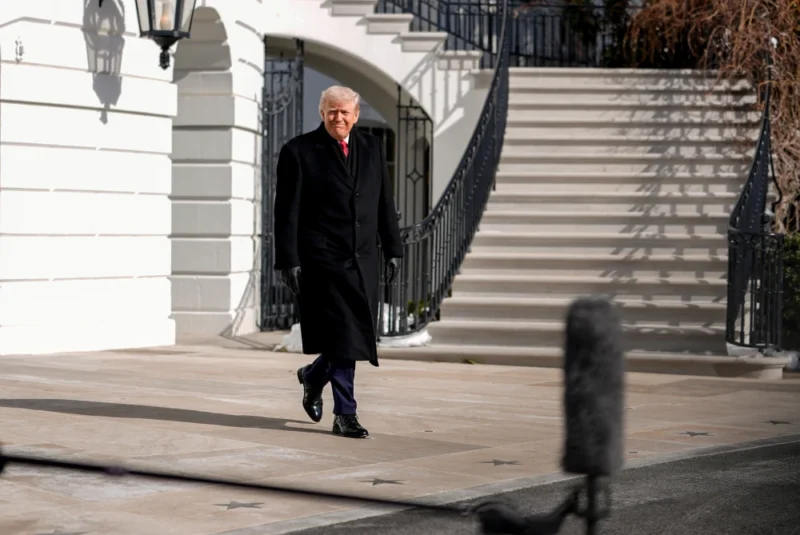
A bipartisan tradition turns political. Why are two Democratic governors excluded from Trump’s White House invite list?
President Donald Trump said Wednesday that he has invited nearly every U.S. governor — Democrat and Republican alike — to a long-standing bipartisan meeting at the White House next week, carving out two exceptions: Maryland Gov. Wes Moore and Colorado Gov. Jared Polis.
The annual session, organized in connection with the National Governors Association (NGA), has traditionally served as a rare moment of cross-party dialogue between state leaders and the president. This year’s gathering, scheduled for Feb. 20, instead ignited confusion and partisan friction.
In a post on Truth Social, Trump asserted that invitations “were sent to ALL governors” except Moore and Polis. He also criticized Oklahoma Gov. Kevin Stitt, the NGA chair, calling him a “RINO” — Republican in name only — and accusing him of misrepresenting the White House’s position.
Trump’s statement appeared to contradict earlier communications from NGA officials. Last week, the group said it had been informed by the White House that only Republican governors would be invited to the Feb. 20 business meeting. As a result, NGA leaders said they removed the event from their formal agenda, citing the association’s bipartisan mission.
Shortly before Trump’s post, NGA Chief Executive Brandon Tatum said Stitt had spoken with the White House and that all governors from “all 55 states and territories” would attend. In an email obtained by NBC News, Stitt told fellow governors that Trump had been “very clear” that the event was intended for the full NGA membership and that a scheduling misunderstanding had been addressed.
Complicating matters further, a source familiar with the situation said Moore had received an invitation Wednesday afternoon, prior to Trump’s public statement. A spokesperson for Polis declined to confirm whether Colorado had been formally invited, but said the governor remained focused on bipartisan cooperation regardless of the administration’s posture.
The status of a separate governors’ dinner, typically held alongside the business session, remains uncertain.
The dispute underscores how even routine Washington traditions can become flashpoints in an era of heightened political polarization. What was once a symbolic display of federal-state partnership has, at least for now, become another test of party lines — and presidential messaging.
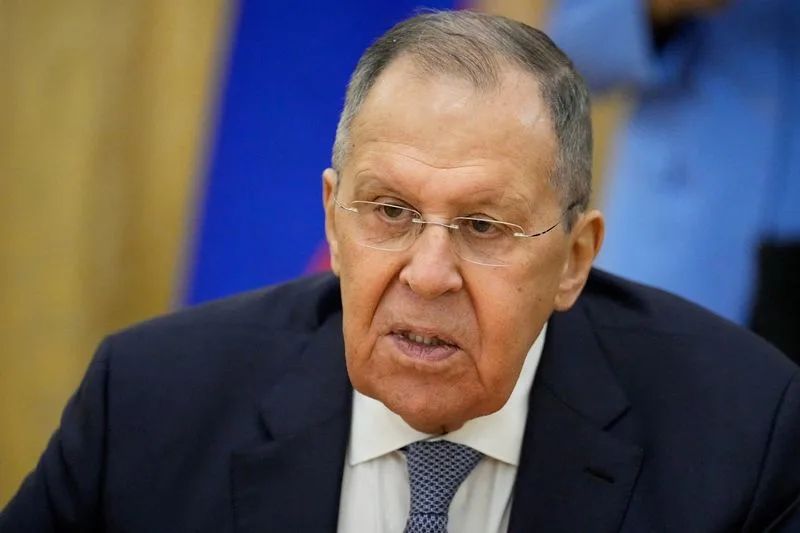
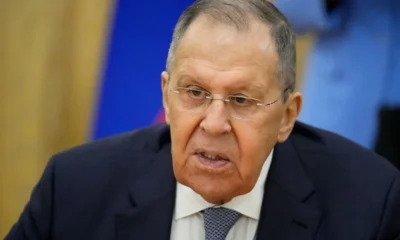
The last guardrail is gone. Russia says it will show restraint — but only if Washington does the same.
Russia said Wednesday it would continue observing the missile and warhead ceilings set under the now-expired New START agreement — provided the United States does not exceed those limits.
Speaking before the State Duma, Foreign Minister Sergei Lavrov described Moscow’s position as a conditional moratorium. “Our position is that this moratorium on our side that was declared by the president is still in place, but only as long as the United States doesn’t exceed the said limits,” he said.
The 2010 treaty formally expired on February 5, removing binding constraints on the world’s two largest nuclear arsenals for the first time in more than 50 years. The lapse has fueled concerns among arms-control advocates about a renewed strategic competition — potentially involving not only Washington and Moscow but also Beijing, whose nuclear stockpile remains smaller but is expanding rapidly.
U.S. President Donald Trump declined an offer from Russian President Vladimir Putin to voluntarily extend adherence to the treaty’s limits for another year. Trump said he preferred negotiating what he described as a “new, improved and modernized” agreement rather than prolonging the existing framework.
Lavrov suggested Moscow believes Washington has little immediate incentive to break from the treaty’s numerical thresholds, though he did not detail the intelligence underpinning that assessment. He also renewed calls for a broader “strategic dialogue,” saying such talks were “long overdue.”
Analysts say Russia’s pledge leaves important gaps. Georgia Cole, a security analyst at Chatham House in London, noted that Moscow remains free to continue developing nuclear systems that were not covered under New START’s scope. At the same time, she said, the Kremlin’s conditional restraint allows it to frame the United States as the destabilizing actor should Washington move to expand its arsenal beyond previous limits.
Economic considerations may also shape Moscow’s approach. Russia’s budget remains under strain from its prolonged war in Ukraine. A full-scale nuclear buildup would carry significant financial costs, even if the Kremlin sought to match any major U.S. expansion.
If hostilities in Ukraine ease, more resources could shift toward strategic forces. Yet rebuilding conventional capabilities would also compete for funding. For now, both sides appear to be signaling caution — even as the formal architecture that once enforced it has disappeared.

Macron in Munich: Europe Must Build Its Own Nuclear Shield

Airport Lines, Delays Possible as DHS Shutdown Nears

Separate U.S. Talks on Iran and Ukraine-Russia Set for Tuesday in Geneva


-
 Interagency Assessment2 months ago
TOP SECRET SHIFT: U.S. MILITARY ORDERED INTO SOMALILAND BY LAW
-

 Somaliland4 months ago
Somaliland Recognition: US, UK, Israel, and Gulf Bloc Poised for Historic Shift
-
 Minnesota1 month ago
Fraud Allegations Close In on Somalia’s Top Diplomats
-

 Middle East2 months ago
Saudi Arabia vs. UAE: How The Gulf Rivalry is Heating Up
-

 American Somali3 months ago
Why Frey Won a Significant Share of the Somali Vote Against a Somali Opponent
-
 Middle East2 months ago
Turkey’s Syria Radar Plan Triggers Israeli Red Lines
-
 Editor's Pick2 months ago
Why India Is Poised to Become the Next Major Power to Recognize Somaliland
-

 The Million-Follower Exile2 months ago
Why America Deported Its Most Famous Somali TikTok Star And Who Paid The Price