Middle East
Saudi Arabia Warns UAE Over Yemen, Alliance Cracks in Public
Saudi Arabia Accuses UAE of Dangerous Yemen Escalation as Gulf Rift Spills Into Open Conflict.
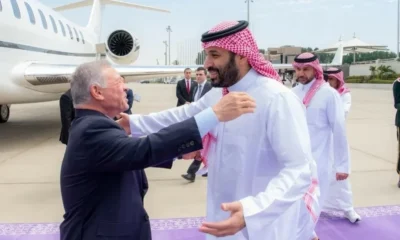
A rare and dramatic public rupture has erupted between Saudi Arabia and the United Arab Emirates, as Riyadh accused its closest Gulf ally of “highly dangerous” actions in Yemen, escalating one of the region’s most sensitive fault lines.
Saudi Arabia confirmed it carried out limited airstrikes on Yemen’s Mukalla port after alleging that two UAE-linked ships delivered weapons and combat vehicles to separatist forces. In an unusually sharp statement, the Saudi Foreign Ministry said the UAE’s actions posed a direct threat to Saudi national security, warning that such threats are a “red line.”
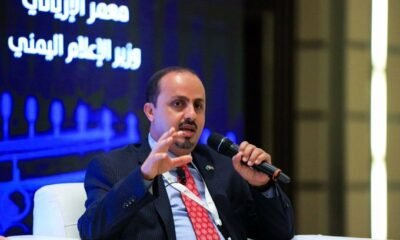
The accusation came moments after Yemen’s Saudi-backed Presidential Council chief, Rashad Al-Alimi, accused Abu Dhabi of directing forces to rebel against state authority and fueling military escalation through its support for the Southern Transitional Council (STC).
Abu Dhabi swiftly rejected the claims, saying the vehicles were destined for Emirati forces operating in Yemen and had been coordinated with the Saudi-led coalition. The UAE condemned what it called attempts to drag it into internal Yemeni tensions and denied pressuring any force to threaten Saudi borders.
The dispute follows a major UAE-backed STC offensive earlier this month that seized control of key provinces, including parts of oil-rich Hadramout, reviving calls for an independent southern Yemen and enraging Saudi-backed factions. In response, Saudi-aligned groups demanded all Emirati forces leave Yemen within 24 hours and scrapped a defense pact with Abu Dhabi.
The fallout exposes a widening strategic rift between two Gulf powers once united in Yemen, Qatar’s blockade, and regional power projection. The United States urged restraint, with Secretary of State Marco Rubio calling for diplomacy to prevent further destabilization.
After more than a decade of war, Yemen remains shattered, and the Saudi-UAE confrontation now risks splintering the anti-Houthi camp, reshaping the balance of power in one of the world’s most volatile theaters.
Middle East
Turkey’s Syria Radar Plan Triggers Israeli Red Lines
Turkey is attempting to deploy radar systems inside Syrian territory, a move that Western intelligence sources warn could sharply alter the regional military balance and directly constrain Israel’s operational reach across the Middle East.
According to two Western intelligence officials cited on Thursday, Ankara has in recent weeks sought to position advanced radar assets on Syrian soil, amid an intensifying standoff between Israel and Turkey over Ankara’s expanding footprint in post-Assad Syria. The implications are immediate and strategic. Radar coverage inside Syria would significantly limit the Israeli Air Force’s freedom of action over Syrian airspace—space Israel has relied on for years to strike Iranian-linked targets across the region.
Israeli planners are particularly concerned that Turkish-operated radar systems could detect and track Israeli aircraft transiting Syrian skies, complicating both intelligence missions and airstrikes. More critically, such deployments would undermine Israel’s ability to reach Iran, as Syrian airspace has served as a key corridor for long-range operations.
The issue cuts deeper than routine military maneuvering. Since the collapse of Bashar al-Assad’s regime last year, Syria has become a contested vacuum, with regional powers racing to secure influence, infrastructure, and strategic depth. Turkey’s efforts to embed radar and potentially air assets in Syria signal a bid to institutionalize its military presence—something Israel views as a direct challenge.
Israeli concerns are not theoretical. Shortly after Assad’s fall, Israel carried out a series of strikes on Syrian military installations, including key Syrian Air Force bases such as the T-4 airbase. Those strikes, Israeli officials later confirmed, were aimed at preventing Turkey from converting former Syrian facilities into permanent Turkish bases capable of hosting drones, aircraft, or surveillance systems.
At the time, an Israeli security official described the prospect of a Turkish military base in Syria as a “potential threat,” warning that it would amount to a direct infringement on Israel’s aerial freedom of action. “If a Turkish air base is established, it would entail a violation of Israel’s freedom of action in Syria,” the official said, adding that the strikes were intended as a clear deterrent message.
What is now unfolding appears to validate those concerns. Radar systems, unlike visible troop deployments, quietly reshape battlespace control. Their presence would not only affect Israeli operations but could also feed real-time airspace data into broader Turkish and allied command structures, effectively turning parts of Syria into a monitored zone hostile to Israeli maneuverability.
The confrontation reflects a wider regional shift. With Iran entrenched, Israel entrenched, and Turkey seeking to translate battlefield presence into long-term leverage, Syria is no longer just a fractured state—it is becoming a strategic chessboard for air superiority and early-warning dominance.
For Israel, the message is clear: radar deployment is not a technical detail but a red line. And for Turkey, the push into Syria’s skies signals ambitions that go well beyond counterterrorism or border security.
As both sides test limits, the struggle over Syrian airspace risks becoming one of the most consequential—and least visible—fronts in the region’s evolving power struggle.
Middle East
Jordan Strikes Drug, Arms Smugglers in Syria Border Region
Jordan’s military has carried out targeted strikes against drug and weapons smuggling networks operating along its northern border with Syria, escalating a campaign that reflects growing regional impatience with the narcotics trade that flourished during Syria’s long war.
According to Jordan’s state news agency, Petra, the strikes on Wednesday hit sites described as “launch points” used by trafficking groups to move arms and drugs into Jordanian territory.
The military said the operation neutralized several traffickers and destroyed factories and workshops linked to organized smuggling networks. The attacks were conducted on the basis of what Petra described as “precise intelligence” and in coordination with regional partners, though no countries were named.
Jordan’s armed forces issued a blunt warning alongside the announcement, saying they would continue to confront threats “with force at the appropriate time and place,” signaling that the operation was not an isolated action but part of a sustained security doctrine along the Syrian frontier.
On the Syrian side, state broadcaster Al-Ikhbariah reported that Jordanian air strikes hit locations in the southern and eastern countryside of Suwayda province, a sparsely governed border region long associated with smuggling routes.
A resident of the area told AFP that the bombardment was “extremely intense,” targeting farms and corridors used to move illicit goods. The Syrian Observatory for Human Rights said jets and helicopters were involved and that damage was visible at an abandoned military barracks once used by the former Assad regime.
There were no immediate reports of casualties, and authorities in Damascus offered no official response.
Independent Syrian outlet Zaman Al Wasl reported that at least one farm believed to be used as a drug storage site was struck. The outlet noted that Jordan has carried out similar operations in the past, underscoring Amman’s growing willingness to act unilaterally when cross-border trafficking is perceived as a direct national security threat.
At the center of the conflict is captagon, an addictive amphetamine-type stimulant that became synonymous with Syria’s war economy. Before the removal of President Bashar al-Assad in December 2024, captagon production had evolved into the regime’s most lucrative export, generating billions of dollars for Assad, his inner circle, and allied militias, according to analysts.
Although Damascus consistently denied involvement, the drug flooded markets across the Middle East, particularly in Gulf states, prompting record seizures and diplomatic pressure on Syria and Lebanon.
Jordan, positioned directly along key trafficking routes, has increasingly framed the drug trade as a form of asymmetric warfare—one that fuels criminal networks, destabilizes border communities, and undermines state authority. The latest strikes suggest that, even after Assad’s fall, Amman sees little evidence that the smuggling infrastructure has disappeared.
Instead, Jordan’s message appears clear: as long as trafficking networks survive in Syria’s borderlands, the battle against captagon and arms smuggling will not stop at the frontier.
Comment
Iraq Blinks, Militias Advance: Iran’s Axis Was Never Broken
Iran-Backed Militias Tighten Grip on Iraq, Underscoring Tehran’s Enduring Regional Strategy.
When Iraq’s government announced this week that it would freeze assets linked to Lebanese Hezbollah and Yemen’s Houthi movement, the decision was initially framed as a quiet but meaningful assertion of sovereignty. Baghdad, the narrative went, was finally drawing a line between the state and Iran’s regional web of militias.
The illusion lasted only hours. The prime minister’s media office abruptly reversed the move, blaming an unspecified “error.” The episode revealed not Iraqi resolve, but its limits.
The rapid climbdown offered a clear reminder that Iran-backed militias remain deeply embedded in Iraq’s political system—and retain the leverage to block any step that threatens their interests or those of Tehran. This is no longer just an internal Iraqi concern. With Syria weakened after two years of war and Israeli strikes, Iraq has become a central pillar in Iran’s effort to preserve and rebuild its regional axis.
Israeli security planners have long warned that militias aligned with Iran possess missile and drone capabilities positioned in Iraq’s vast western deserts. From there, Israel’s northern regions are less than 400 kilometers away.
In the event of renewed confrontation between Israel and Iran, those areas could serve as a forward launch zone. While Iraqi militias largely stayed on the sidelines after limited action in late 2023, there is little reason to assume restraint would hold in a future escalation.
Contrary to the perception that Iran’s proxy network has been decisively weakened, recent political developments in Iraq suggest the opposite. In November’s parliamentary elections, parties tied to Shi’ite militias made significant gains.
Asaib Ahl al-Haq’s Sadiqoun bloc secured 27 seats; the Badr Organization won 18; and Huquq, linked to Kataib Hezbollah, took six. Together, these factions form the backbone of the Coordination Framework, now the dominant force in parliament.
Prime Minister Mohammed Shia al-Sudani, whose bloc lacks a governing majority, depends on this framework to remain in power. Its most influential figure, former prime minister Nouri al-Maliki, has worked systematically to shield militia-linked actors by embedding them within formal political institutions.
The result is a hybrid system in which armed groups convert battlefield influence into legislative authority.
The consequences are structural. Iraq’s state functions, but only within boundaries set by militia power. When critical interests are at stake—sanctions, regional alignment, or Iran’s proxies—the formal government yields.
As one Arab Weekly analysis put it, Iraq now operates as a framework through which powerful political and militia networks rule.
For Israel, the lesson is sobering. The belief that Iran’s regional project has collapsed is premature. It has been damaged, not dismantled. Iraq’s trajectory shows that Tehran’s model—combining elections, paramilitary force, and strategic patience—remains intact, and increasingly effective.
Middle East
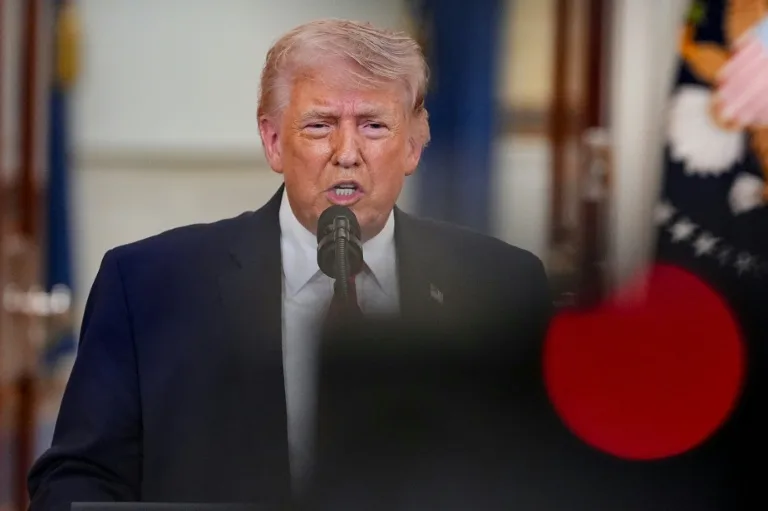
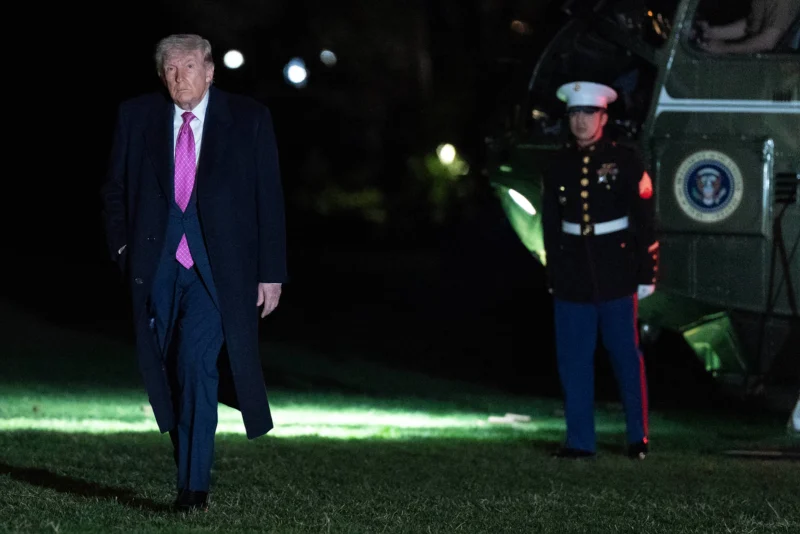
Trump Vows Retaliation After US Soldiers Killed in Syria
Trump’s Red Line in Syria: Retaliation, Palmyra, and the Fatal Cost of Reintegrating Extremists.
President Donald Trump’s vow of “very serious retaliation” following the killing of two U.S. Army soldiers and an interpreter in Syria marks more than a response to a single ISIS attack. It signals the re-emergence of a hard red line in American counterterrorism policy—one shaped not only by battlefield violence, but by the dangerous political compromises now defining post-war Syria.
The attack occurred in Palmyra, a city that has become a symbol of both ISIS’s brutality and Syria’s unresolved security collapse. According to U.S. officials, American forces conducting counter-terrorism operations were ambushed by a lone Islamic State gunman. Three additional U.S. personnel were wounded. The attacker was killed, but the damage—strategic and political—was already done.
Trump’s response was direct and characteristically blunt. By framing the incident as an ISIS attack in “a very dangerous part of Syria not fully controlled,” the president implicitly rejected any narrative that Syria’s security environment has stabilized. His warning of retaliation, deliberately left undefined, restores uncertainty as a weapon—one designed to deter not just ISIS remnants, but the permissive environments that allow them to operate.
That environment is inseparable from Syria’s current governing gamble. Palmyra now sits outside the effective control of President Ahmed al-Sharaa, who only months ago met Trump at the White House and secured additional sanctions relief by promising cooperation against ISIS. Yet the reality on the ground tells a far more troubling story. Intelligence and regional reporting indicate that former ISIS operatives have been quietly reintegrated into local security structures under informal agreements designed to reduce insurgent pressure and fill manpower shortages.
The Palmyra attack exposes the fatal flaw in that strategy. When yesterday’s extremists become today’s guards, loyalty becomes transactional and security becomes fragile. The idea that former ISIS commanders can be neutralized through accommodation has repeatedly failed across the Middle East—from Iraq to Libya—and Syria is now paying the price.
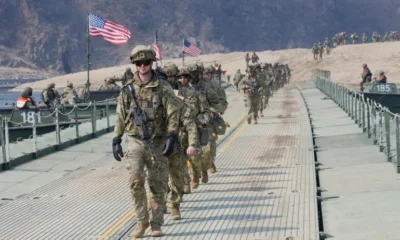
This is not merely a Syrian problem. For Washington, the incident cuts to the core of U.S. force protection and alliance credibility. The United States maintains roughly 1,000 troops in Syria, primarily working alongside Kurdish-led Syrian Democratic Forces to prevent an ISIS resurgence. These forces operate in a landscape riddled with overlapping militias, shifting allegiances, and security services built on expediency rather than accountability.
Trump’s warning therefore carries broader implications. Retaliation may target ISIS cells, but it also serves as a signal to Damascus and its partners that cosmetic stabilization will not shield them from consequences if American personnel are endangered. Sanctions relief, normalization, and diplomatic patience are conditional—not entitlements.
The deeper lesson of Palmyra is that ISIS was never defeated as an idea, only displaced as a governing structure. Its networks persist, adapt, and exploit every governance vacuum. Reintegration without justice does not neutralize extremism; it embeds it. When states outsource security to former enemies without transparent vetting or accountability, they trade short-term calm for long-term vulnerability.
Trump’s posture reflects a return to a doctrine where ambiguity favors deterrence, and where U.S. casualties reset the strategic clock. Syria’s leaders now face a stark choice: dismantle the shadow arrangements that blur the line between state authority and extremist accommodation, or accept that American retaliation will arrive without warning and without apology.
Palmyra, once a monument to history, has become a warning. Stability built on compromised foundations does not hold. And in Trump’s Syria, the cost of pretending otherwise is rising fast.
Middle East
US Forces Intercept Chinese Cargo Ship Carrying Military Equipment to Iran
U.S. forces have intercepted and seized military equipment from a Chinese cargo ship bound for Iran, marking one of the most significant disruptions of Iran’s rearmament efforts in years and signaling a sharp escalation in Washington’s response to Beijing’s indirect support for Tehran.
According to officials cited by The Wall Street Journal, the operation took place roughly a month ago in the Indian Ocean, near the coast of Sri Lanka. U.S. operatives tracked the vessel, boarded it at sea, confiscated the military cargo, and then allowed the ship to continue its journey. The mission was conducted quietly and remained undisclosed until now.
The seizure represents the first known interception in years of a Chinese-origin vessel en route to Iran by the U.S. military. Neither the name of the ship nor its owner was released, underscoring the sensitivity of the operation and the broader geopolitical implications surrounding China-Iran cooperation.
The interdiction comes amid mounting intelligence concerns that Iran is rebuilding its missile capabilities with external assistance, despite international sanctions.
In October, CNN reported that European intelligence agencies had identified multiple shipments from China to Iran containing more than 2,000 tons of sodium perchlorate—a dual-use chemical critical to the production of ammonium perchlorate, a key oxidizer used in solid-fuel ballistic missiles.
Ammonium perchlorate is central to Iran’s ballistic missile program, enabling the construction of longer-range and more reliable missile systems. Intelligence officials believe the seized cargo was part of a broader logistical pipeline designed to replenish Iran’s military stockpiles following years of sanctions pressure and recent regional confrontations.
The timing of the operation is particularly significant. In late September, the United Nations reimposed “snapback” sanctions on Iran, restoring comprehensive restrictions aimed at preventing Tehran from advancing nuclear-capable weapons and missile technologies.
The U.S. interception signals an intent to actively enforce those sanctions beyond diplomatic channels.
Strategically, the seizure highlights a widening fault line in global security: the quiet but deepening coordination between China and Iran. While Beijing officially denies military support to Tehran, repeated intelligence findings point to Chinese entities supplying critical materials under civilian or commercial cover, exploiting enforcement gaps across international waters.
For Washington, the operation serves multiple purposes—disrupting Iran’s rearmament, testing China’s tolerance for U.S. interdictions, and signaling that maritime corridors linking Asia to the Middle East are now active theaters in a broader geopolitical contest.
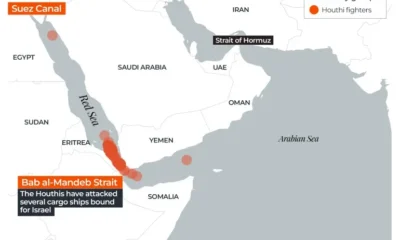
As tensions continue to rise across the Red Sea, the Gulf of Aden, and the Indian Ocean, the interception underscores a stark reality: the global struggle to contain Iran’s military ambitions is increasingly inseparable from the strategic rivalry between the United States and China.
Middle East
Saudi Arabia vs. UAE: How The Gulf Rivalry is Heating Up
Saudi Arabia vs. UAE: The Quiet Gulf Rivalry Reshaping Middle East Power Politics.
The once-solid partnership between Saudi Arabia and the United Arab Emirates, long seen as the driving force behind Gulf interventionism, is now showing visible cracks. Both governments still project unity in public. Yet diplomatic exchanges, battlefield choices, and economic decisions reveal growing tension. Riyadh and Abu Dhabi are no longer aligned on several of the region’s most pressing strategic issues.
Sudan exposes the rift most clearly. When the 2023 war erupted, Saudi Arabia backed the Sudanese Armed Forces. The UAE, however, faced mounting accusations that it supplied weapons and logistical support to the Rapid Support Forces.
During his recent visit to Washington, Crown Prince Mohammed bin Salman reportedly urged President Donald Trump to pressure Abu Dhabi over its alleged role. That appeal, delivered at the highest diplomatic level, signals a sharp decline in trust.
UAE President Mohammed bin Zayed chose silence, denying involvement while working to keep the dispute from escalating.
Sudan is only one example. The two states split over Yemen when the UAE supported southern separatists, while Saudi Arabia insisted on maintaining a unified Yemeni state.
Energy policy also became a battlefield. In 2021, the UAE resisted Riyadh’s efforts to cut oil production within OPEC.
The disagreement was brief, but it exposed an expanding pattern: each country now prioritizes its national interests, even at the expense of close coordination.
These differences are structural, not accidental. Saudi Arabia’s Vision 2030 and the UAE’s 2031 plan both aim to build diversified, technology-driven economies.
Each country is competing to lead the region in artificial intelligence, logistics, and global investment.
As their ambitions grow, friction becomes harder to avoid. Both are more confident, more assertive, and more committed to independent strategic paths.
The question of Israel adds another layer of strain. The UAE normalized relations in 2020 and prefers to maintain that partnership quietly. Saudi Arabia paused its own negotiations after the October 7 attacks.
Crown Prince Mohammed bin Salman now insists he will recognize Israel only if there is meaningful progress for Palestinians—a position Israel’s leadership rejects.
This divergence places Riyadh and Abu Dhabi on different tracks at a crucial diplomatic moment.
Even with rising tensions, neither country wants a direct confrontation. The Gulf remains vulnerable to shocks from Iran, Israel, and shifting global alliances.
The United States, Turkey, and China all play expanding roles in the region, and both Riyadh and Abu Dhabi recognize that fragmentation would weaken their influence.
Their partnership still stands, built on shared history and overlapping interests. But the era of complete alignment is over. What remains is a managed rivalry—quiet, calculated, and shaped by the evolving power politics of the Middle East.
Middle East
Graham: Saudi Crown Prince’s Survival Depends on Stronger Palestinian Deal
Saudi Crown Prince Mohammed bin Salman will not move toward recognizing Israel unless he can secure a significantly improved outcome for the Palestinians — and his political survival may depend on it, Sen. Lindsey Graham (R-S.C.) warned Wednesday, arguing that the Israel-Hamas war has sharply complicated the once-near-term prospect of formal Saudi-Israeli normalization.
Speaking at The Jerusalem Post’s Washington Conference, Graham delivered one of his bluntest assessments to date. “MBS is not going to recognize Israel until he gets an outcome better for the Palestinians, or he will get killed,” he said, describing the political stakes facing the crown prince as existential.
Any U.S.-brokered agreement, he argued, must balance Palestinian aspirations with Israel’s security needs, without rewarding Hamas or empowering extremist actors.
“I am not asking Israel to reward terrorism,” he said. “I am asking Israel to be open-minded to end the conflict, where Israel is secure and MBS can move his region forward.”
Graham stressed that a viable normalization package must rest on “real security fundamentals,” which, in his view, means neutralizing Iran’s regional proxy network.
“There is no hope for a Saudi-Israel deal unless you do away with Hamas and Hezbollah,” he said. “Neutralize the threat, and then you can talk rationally.”
The senator, long regarded in Israel as one of its strongest advocates in Washington, said the region was on the cusp of a breakthrough before Hamas’s October 7 attack and the subsequent war.
“We were this close,” he said. “We were running the framework.
Then October 7 happened.” He argued that Hamas intentionally filmed its atrocities to harden Israeli public opinion and derail Arab states contemplating diplomatic openings with Israel.
Graham repeated his view that Israel remains central to American strategic interests. “Israel is a good investment for America because we have common values and common enemies,” he said, adding that replicating Israel’s military capabilities would require the United States “to double our military budget.”
He called Israel “the anchor” of U.S. strategy in the Middle East.
On normalization, Graham rejected the idea of an international force stepping in to disarm Hamas. “There is no air force going to disarm Hamas,” he said. “You will find a unicorn quicker. Only Israel can do it.” He urged the international community to impose a firm deadline on Hamas: “Put Hamas on a clock.
If they do not give up their weapons, all bets are off. Send Israel in and wipe them out.”
Turning to Lebanon, Graham said the country has no viable future “as long as it tolerates an armed Hezbollah with the desire to destroy the Jewish state.” He said he is pressing the Trump administration to prepare for coordinated U.S.-Israel action if necessary.
“Build up the Lebanese army and fly with Israel to take this terrorist organization down,” he said.
Graham also unveiled plans for legislation targeting Iran’s energy exports, aiming to penalize countries — including China — that continue purchasing Iranian oil. The measure is designed to constrict Tehran’s ability to fund Hamas, Hezbollah, and other proxies across the region.
Despite the region’s volatility, Graham insisted a rare strategic opening remains within reach if Washington, Riyadh, and Jerusalem can navigate the postwar landscape.
Advanced U.S. weapons for Saudi Arabia, he suggested, could be justified if they deliver a historic diplomatic breakthrough. “It is the best idea in 3,000 years if it gets Saudi Arabia and Israel to make peace,” he said. “Do not let this window close.”
“There is a unity of purpose here,” Graham concluded. “Hamas and Hezbollah are not the future. The Abraham Accords are real. The change in the Arab world is real. Do not miss this moment.”
Comment
Hezbollah’s Vanishing War Machine: Abandoned Tunnel Stuns the World
The Lebanese Armed Forces opened one of Hezbollah’s underground tunnels to international journalists on Friday, offering a rare glimpse into the group’s concealed military infrastructure in the country’s volatile south.
The visit, organized by the LAF, appeared aimed at demonstrating both the army’s expanding control in areas long dominated by Hezbollah and the scale of the challenge it faces as tensions with Israel continue to rise.
The tunnel, dug into the hillside of Wadi Zibqin, sits in one of Hezbollah’s most entrenched strongholds just north of the Israeli border. Inside, reporters walked through a narrow passage that led to what resembled a small medical station, a rudimentary kitchen, preserved food supplies, water tanks, electrical wiring, and a ventilation system — evidence of a site designed to sustain fighters for extended periods.
No Hezbollah personnel were present, and the Lebanese military insisted the position had been abandoned.
Brig. Gen. Nicolas Thabet, who oversees army operations south of the Litani River, moved through the tunnel alongside the media delegation.
He framed the visit as part of a broader effort to reassert state authority in an area where Hezbollah’s influence has been largely unchecked for nearly two decades.
“We will not give up our objectives, whatever the difficulties may be,” he told reporters, describing the terrain as “one of the most dangerous areas in the Middle East” and stressing that the army has “sacrificed greatly.”
The location has already proven deadly. In August, six LAF sappers died when an explosion ripped through a nearby weapons depot believed to contain munitions stored by Hezbollah.
The army says it has since taken control of several former positions that were either struck by Israeli fire or abandoned by fighters.
Friday’s tour came at a moment of renewed tension following the killing of senior Hezbollah commander Haytham Ali Tabatabai in an Israeli airstrike on Beirut’s Dahiyeh district earlier in the week. Tabatabai, considered one of Hezbollah’s most experienced field commanders, played a central role in the group’s operations in Syria and Yemen and was a key node in Iran’s regional network.
Speaking after the strike, Hezbollah Deputy Secretary-General Naim Qassem warned that the group retained “the right to respond” and would choose the timing.
He accused the United States and unnamed Arab states of helping orchestrate what he described as a campaign of “infiltrations” targeting Hezbollah.
“The enemy did everything in its power to end the resistance, but it failed,” Qassem said, casting the group once again as the vanguard against what he called “Israeli-American aggression.”
For the LAF, the tunnel tour was as much an act of messaging as it was a display of access.
By showing the site to foreign media, the army signaled that it is trying — despite limited resources and complicated political constraints — to present itself as a stabilizing actor in a landscape now shaped by Israeli precision strikes, Hezbollah’s internal recalculations, and growing uncertainty over how long the current cycle of escalation can be contained.
-
Analysis10 months agoSaudi Arabia’s Billion-Dollar Bid for Eritrea’s Assab Port
-
Opinion17 years agoSomaliland Needs a Paradigm Change: Now or Never!
-
Interagency Assessment2 weeks agoTOP SECRET SHIFT: U.S. MILITARY ORDERED INTO SOMALILAND BY LAW
-
Somaliland2 months agoSomaliland Recognition: US, UK, Israel, and Gulf Bloc Poised for Historic Shift
-
ASSESSMENTS9 months agoOperation Geel Exposes the Truth: International Community’s Reluctance to Embrace Somaliland as a Strategic Ally
-
EDITORIAL1 year agoDr. Edna Adan Champions the Evolving Partnership Between Somaliland and Ethiopia
-
Somaliland11 months agoSomaliland and UAE Elevate Ties to Comprehensive Strategic Partnership
-
ASSESSMENTS6 months agoA Critique of the Hassan Sheikh Mohamud Administration and the Halane Enigma