
Middle East
Trump Signals Iran Strike as Missile Warning Raises Stakes

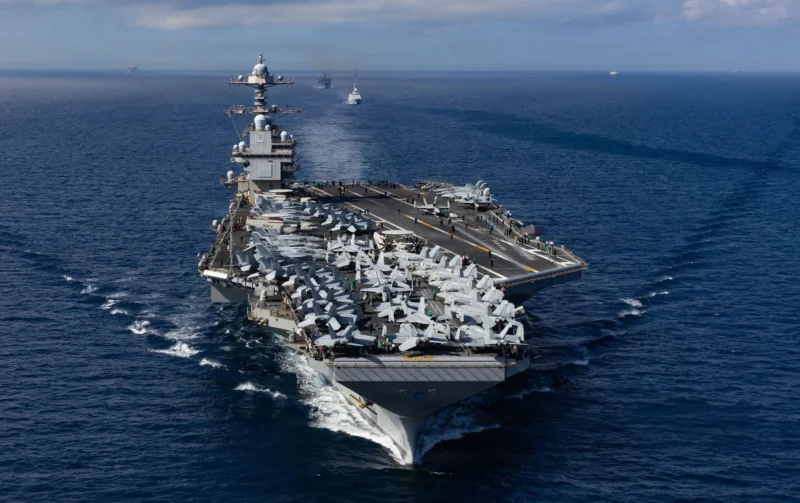
Missiles, nuclear fears, and a military build-up — is the U.S. heading toward another Middle East war?
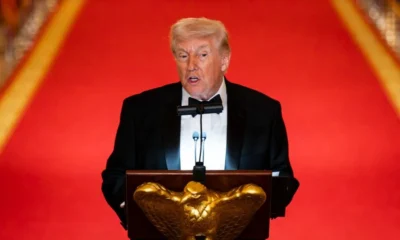
President Donald Trump used his State of the Union address to lay out a blunt warning to Iran, arguing that Tehran’s expanding missile program and nuclear ambitions could justify U.S. military action.
“They’re working to build missiles that will soon reach the United States of America,” Trump told lawmakers, framing Iran not only as a regional destabilizer but as a direct threat to American soil.
While the president stopped short of announcing an attack, his remarks come amid a significant U.S. military buildup in the Middle East. More than 150 aircraft have reportedly been repositioned to bases across Europe and the region, alongside expanded naval deployments. The scale of the movement has fueled speculation that Washington is preparing for possible sustained operations if diplomacy fails.
Trump accused Iran of reviving its nuclear program, backing militant proxies and being responsible for past attacks that killed U.S. service members. He also cited Tehran’s ballistic missile development, claiming it already possesses missiles capable of striking Europe and U.S. bases overseas.
U.S. defense assessments have previously indicated that while Iran currently fields short- and medium-range missiles, it could develop an intercontinental ballistic missile by 2035 if it chooses to pursue that capability. The continental United States lies more than 6,000 miles from Iran.
The president argued that Iran has not made the commitment Washington demands. “They want to make a deal, but we haven’t heard those secret words, ‘We will never have a nuclear weapon,’” Trump said.
Iran’s Foreign Minister Abbas Araghchi responded that a diplomatic breakthrough remains possible if talks are prioritized. Tehran maintains that its nuclear program is intended for civilian energy and insists on its sovereign right to enrich uranium.
Trump’s speech also highlighted Iran’s crackdown on protesters, though the casualty figures he cited were significantly higher than independent estimates.
The political backdrop is complicated. Trump rose to power promising to end “forever wars,” and public opinion remains cautious about new military entanglements. A recent Reuters/Ipsos poll found that nearly 70 percent of Americans believe the U.S. military should be used only when facing a direct and imminent threat.
Yet Trump struck a dual note: “As president, I will make peace wherever I can,” he said. “But I will never hesitate to confront threats to America wherever we must.”
The coming days — and the fate of nuclear negotiations — may determine which path he chooses.













West erupts with regime loyalists. East flares with ISIL attacks. Is Syria’s fragile transition already under strain?
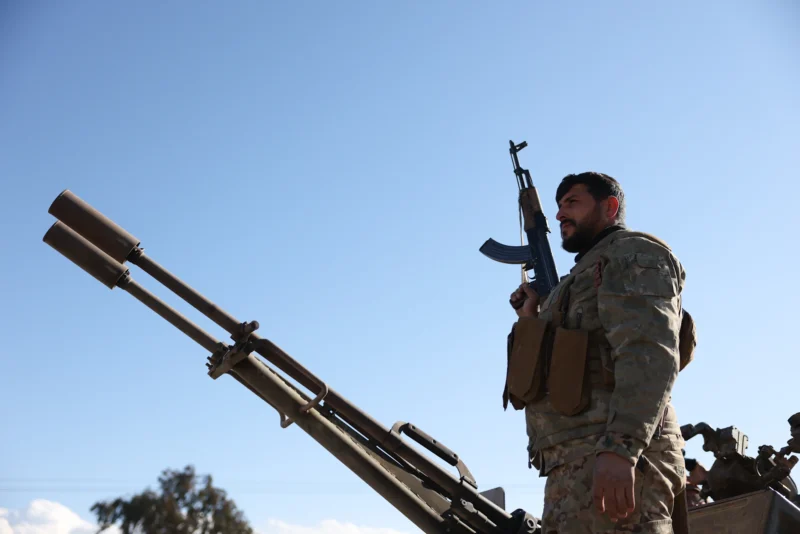
Syria’s transitional government is confronting simultaneous security threats in the west and east, as clashes with Assad loyalists in Latakia coincide with a renewed wave of ISIL attacks in Deir Az Zor.
In the coastal countryside near Jableh, fighting erupted Tuesday between Internal Security Forces and Saraya al-Jawad, a militia reportedly loyal to former regime commander Suheil al-Hassan, once head of the feared Tiger Forces. At least four people were killed, including a member of the security forces. Authorities said a senior militia commander was among those “neutralised.”
The emergence of Saraya al-Jawad signals a shift from scattered loyalist resistance to what officials describe as a more organized insurgency in the Alawite heartland — long the base of the al-Assad family’s rule. The Interior Ministry accuses the group of orchestrating assassinations, bombings and attempts to destabilize public life.
At the same time, ISIL claimed responsibility for deadly attacks in Deir Az Zor province. A soldier was killed near Al-Mayadin, while two separate assaults on a checkpoint in Al-Sabahiyah left four security personnel dead. The resurgence has reignited fears that extremist cells are exploiting the country’s fragile transition.
Interior Minister Anas Khattab accused “remnants of the previous regime and ISIL” of attempting to undermine stability. Analysts are divided over the cause. Some suggest external actors may be activating dormant networks to weaken the new government. Others argue the violence reflects a widening security vacuum following the withdrawal of foreign forces and the reshuffling of power structures.
The vast Syrian desert — nearly 40 percent of the country’s territory — remains particularly vulnerable. Experts warn it could again become a training ground for militants unless rapid coordination with local tribes and security forces is established.
After more than a decade of war and the regime’s collapse in late 2024, Syria’s new leadership faces a stark test: can it secure a fractured nation before competing armed factions regain ground?
150+ aircraft moved. Two carriers in play. Is Washington preparing for more than just a warning shot at Iran?
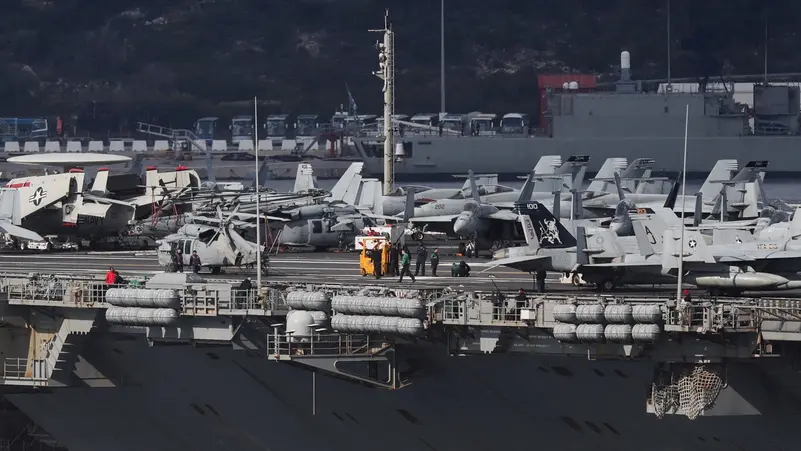
The United States has rapidly expanded its military footprint near Iran, deploying more than 150 aircraft to bases across Europe and the Middle East in what analysts describe as preparations for a potential multiday air campaign.
According to satellite imagery and flight tracking data cited by The Washington Post, the buildup began after nuclear talks between Washington and Tehran ended on February 17 without a breakthrough. The scale of the deployment is reportedly among the largest seen in the region since before the 2003 Iraq war.
President Donald Trump has repeatedly threatened military action if Iran does not agree to stricter limits on its nuclear program. Iranian officials say negotiations remain possible but caution that any agreement would take time.
Defense experts reviewing the deployments say the assets being assembled suggest planning for sustained air operations rather than a limited, one-off strike. Dana Stroul, a former Pentagon official, told the Post the current posture allows the military to execute “anything from a sustained, highly kinetic campaign to more targeted, limited strikes.”
Mark Cancian of the Center for Strategic and International Studies said that if Washington intends a weeks-long air campaign, even more assets may be required.
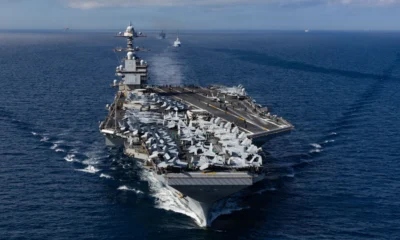
The US currently has more than a dozen warships in the Middle East, including the aircraft carrier USS Abraham Lincoln, nine destroyers and three littoral combat ships. The USS Gerald R. Ford, the world’s largest aircraft carrier, has arrived at Souda Bay in Crete en route to the region — a rare move that could place two US carrier strike groups within operational reach of Iran.
The last time two carriers operated simultaneously in the region was in June 2025, when the United States struck three Iranian nuclear sites during Israel’s 12-day conflict with Tehran.
For now, the Pentagon has not announced any strike decision. But the message is unmistakable: Washington is positioning itself to move quickly — and decisively — if diplomacy collapses.
Beirut is sending a quiet but urgent message: if Washington strikes Iran, Lebanon cannot afford another war.
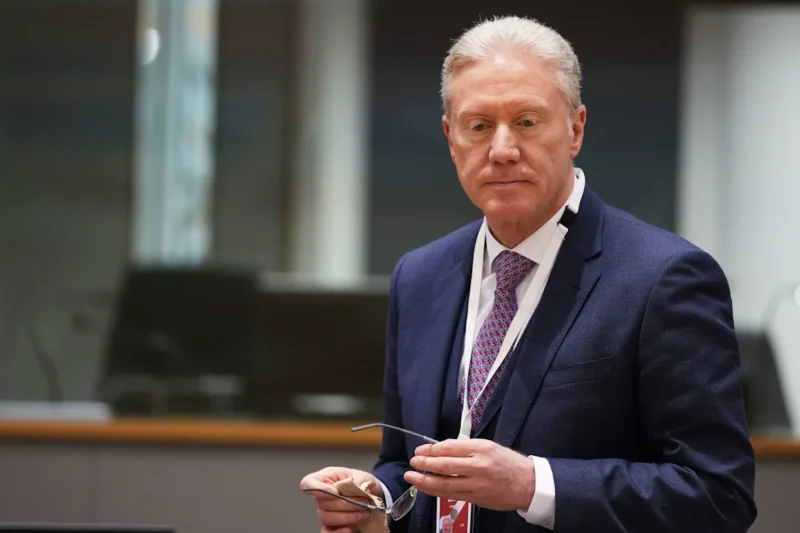
Lebanon’s government has urged Hezbollah not to retaliate if the United States launches strikes against Iran, warning that any escalation could trigger devastating Israeli attacks on Lebanese civilian infrastructure.
Speaking in Geneva, Lebanese Foreign Minister Youssef Rajji said authorities had appealed directly to the Iran-backed militant group to avoid actions that could create “bad situations” for civilians. His remarks come as tensions mount over the possibility of renewed U.S. military action against Tehran.
Rajji said Lebanese officials had received indications that Israel could respond far more aggressively than in previous conflicts if Hezbollah intervenes — potentially targeting key civilian sites, including Beirut’s international airport.
During the most recent Israel-Hezbollah war in 2024, the airport remained operational despite widespread bombardment. In the 2006 conflict, however, Israeli strikes shut it down. Repeated rounds of fighting have left thousands of Lebanese civilians dead, wounded or displaced.
Hezbollah, which is backed by Iran, began firing rockets into northern Israel one day after Hamas’ October 7, 2023 attack, drawing Lebanon into months of cross-border exchanges. That confrontation escalated into full-scale war in September 2024, when Israeli airstrikes killed much of Hezbollah’s leadership and a ground invasion further weakened the group before a U.S.-brokered ceasefire in November.
Despite the ceasefire, Israel has continued near-daily strikes in Lebanon, saying they are aimed at preventing Hezbollah from rebuilding its capabilities.
Rajji said Beirut is also urging Western partners to press Israel not to strike civilian infrastructure in any future escalation. His comments follow a U.S. State Department order for nonessential personnel to leave the U.S. Embassy in Beirut, citing rising regional tensions.
Lebanon has long been a flashpoint in U.S.-Iran hostilities due to Tehran’s backing of Hezbollah, which Washington designates as a terrorist organization. For Beirut, the stakes are clear: another regional war could devastate a country already struggling with economic collapse and political instability.
From nuclear sites to top commanders — U.S. plans for Iran now reportedly include targeting individuals. The stakes just escalated.
U.S. military planning for potential strikes on Iran has entered an advanced phase, with options reportedly including targeting senior Iranian officials and even pursuing regime change, according to two U.S. officials who spoke to Reuters.
The planning reflects growing tension between Washington and Tehran as diplomatic efforts over Iran’s nuclear program struggle to gain traction. Officials said the military is preparing for the possibility of a sustained operation that could last weeks, targeting not only nuclear infrastructure but also key security facilities and individuals within Iran’s command structure.
While no final decision has been announced, President Donald Trump has publicly floated the idea of changing Iran’s government, calling it potentially “the best thing that could happen.” At the same time, he has continued to signal that diplomacy remains an option, warning that “really bad things” would follow if a deal is not reached within what he suggested could be a short timeline.
The White House and Pentagon have not officially confirmed the scope of military planning.
Targeting individual leaders would mark a significant escalation. During his first term, Trump authorized the 2020 strike that killed Qassem Soleimani, the commander of the Quds Force within the Islamic Revolutionary Guard Corps.
U.S. officials noted that recent Israeli operations against Iranian commanders demonstrated the tactical impact of precision strikes, though such missions require extensive intelligence and carry risks of broader civilian casualties.
Iran has warned it would retaliate decisively against U.S. forces in the region if attacked. American bases stretch across Jordan, Kuwait, Saudi Arabia, Qatar, Bahrain, the United Arab Emirates and Turkey, placing thousands of personnel within range of Iran’s missile arsenal.
Tehran has also previously threatened to close the Strait of Hormuz — a chokepoint through which roughly 20 percent of global oil flows — a move that could trigger severe economic disruption worldwide.
Although U.S. negotiators met Iranian officials this week and discussed “guiding principles,” both sides acknowledged significant gaps remain. Trump reiterated that Iran “can’t have a nuclear weapon,” framing it as central to regional peace.
With warships and aircraft now positioned across the Middle East, the question is no longer whether Washington has military options — but whether the White House will choose to use them.
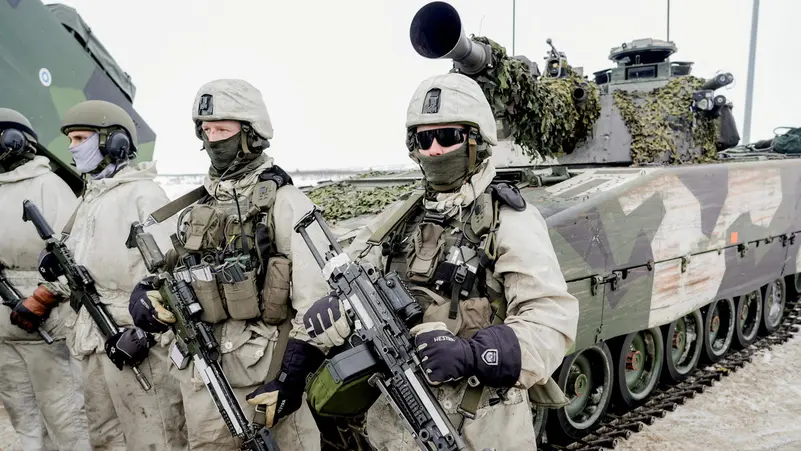
As tensions rise across the Middle East, even smaller NATO members are adjusting their military footprint.
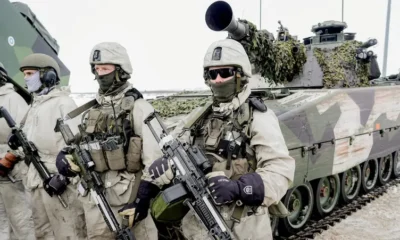
Norway is relocating some of its military personnel stationed in the Middle East, citing the deteriorating security situation in the region, the country’s armed forces confirmed Friday.
A spokesperson for Norway’s military said that some of the roughly 60 Norwegian soldiers currently deployed in the Middle East are being moved either back to Norway or repositioned within other countries in the region. The official did not specify the exact number of troops affected or the precise locations involved.
The decision comes amid escalating regional tensions, including increased military posturing by major powers and uncertainty surrounding ongoing diplomatic efforts related to Iran and broader Middle Eastern security.
Norwegian forces in the region are primarily engaged in training and advisory missions as part of international coalitions. Norway, a NATO member, has contributed personnel to multinational efforts focused on counterterrorism and regional stability.
Officials emphasized that the move is precautionary and based on ongoing assessments of risk to personnel. There was no indication that Norway plans a full withdrawal from its Middle East commitments.
The relocation reflects a broader pattern of allied forces adjusting deployments in response to heightened volatility across the region.
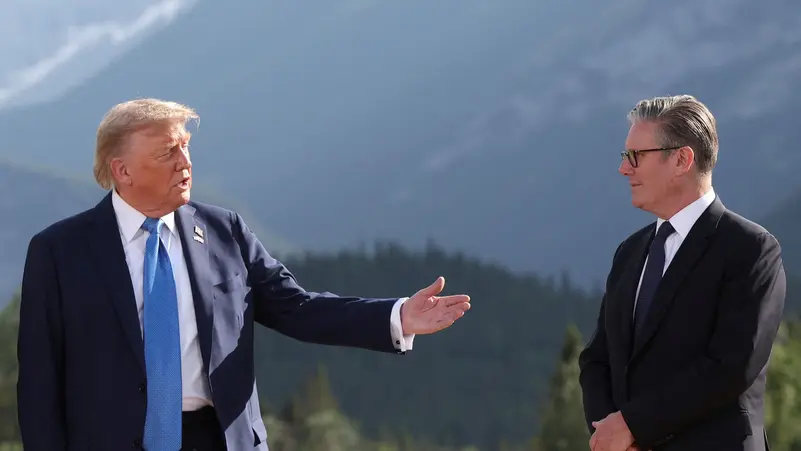
Did Britain just say no to a potential U.S. strike on Iran? And is Diego Garcia now the center of a new transatlantic rift?
Britain has reportedly declined to approve U.S. use of its military bases for potential strikes on Iran, a decision that appears to have triggered sharp criticism from President Donald Trump over London’s planned handover of the Chagos Islands to Mauritius.
According to The Times, the White House is drafting military options that could involve Diego Garcia — a key joint U.S.-UK base in the Indian Ocean — as well as RAF Fairford in Gloucestershire, home to America’s heavy bombers in Europe.
Under longstanding bilateral agreements, U.S. forces require British approval before launching offensive operations from UK territory.
The report suggests that Prime Minister Keir Starmer has not granted that approval, as Washington weighs military action following stalled nuclear talks with Tehran and months of rising tensions.
Hours after speaking with Starmer, Trump publicly lashed out at Britain’s agreement to lease Diego Garcia to Mauritius for 100 years as part of a sovereignty settlement over the Chagos archipelago. Writing on Truth Social, Trump warned Starmer not to “give away” the strategic base, arguing it could prove vital if the U.S. conducts operations against Iran.
“We will always be ready, willing, and able to fight for the UK,” Trump wrote, urging Britain to remain “strong.”
Diego Garcia has long served as a cornerstone of U.S. power projection in the Middle East and Indo-Pacific. Its role becomes especially sensitive as Washington positions aircraft carriers and other assets within range of Iran, while pressing Tehran for major concessions on its nuclear program.
The British Foreign Office defended the Mauritius agreement, stating that it guarantees the long-term future of the base and remains “crucial to the security of the UK and our key allies.”
The apparent disagreement underscores deeper strains in transatlantic coordination over Iran. While the U.S. has threatened military action if diplomacy fails, Britain’s reported hesitation highlights the political and strategic complexities facing Western allies as tensions escalate.
With nuclear negotiations unresolved and military planning underway, Diego Garcia has unexpectedly emerged as a flashpoint in both Middle East strategy and Anglo-American relations.
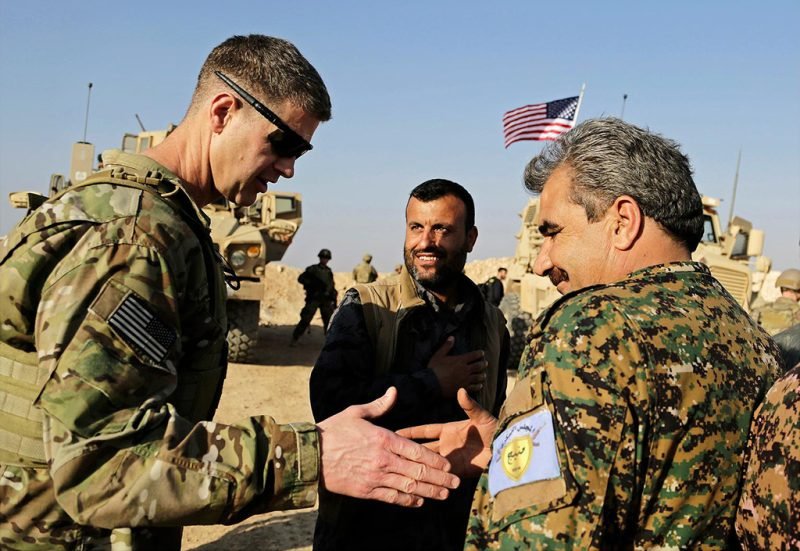
After years on the ground in Syria, the U.S. may be pulling out entirely. What does this mean for ISIS, the Kurds — and Iran?
The United States is preparing to withdraw all of its roughly 1,000 troops from Syria over the next two months, according to multiple U.S. media reports, marking a significant shift in Washington’s military posture in the Middle East.
The Wall Street Journal first reported the planned pullout, citing unnamed officials who said the decision follows the Syrian government’s consolidation of control across much of the country. Television network CBS also reported the withdrawal plan, referencing U.S. officials familiar with the matter.
American forces have already vacated several key installations, including bases at al-Tanf and al-Shadadi, which had been central to the U.S.-led coalition’s campaign against ISIS. Those positions were long viewed as strategic footholds in eastern Syria, particularly near the Iraqi border.
The move comes amid broader political shifts inside Syria. After the fall of former President Bashar al-Assad in late 2024, Washington has cautiously engaged with Syria’s new authorities. At the same time, the Kurdish-led Syrian Democratic Forces — once a crucial U.S. partner in combating ISIS — have pledged to integrate into the Syrian state structure.
Thousands of ISIS detainees previously held in Syrian facilities have been transferred to more secure sites in Iraq, according to the reports, reducing one of Washington’s major security concerns tied to its presence.
The planned withdrawal unfolds against a backdrop of rising tensions elsewhere in the region. The United States has recently increased its military deployments near Iran, where officials have warned of retaliatory action if attacked. Separate reports indicate Washington is positioning assets that could be used for potential strikes against Iranian targets, though President Donald Trump has not publicly finalized any decision.
The Pentagon has not officially confirmed the Syria withdrawal plan and did not immediately respond to requests for comment.
If carried out, the exit would close a chapter in a military mission that began during the fight against ISIS and evolved into a complex balancing act involving Kurdish allies, regional rivals, and shifting alliances across a fractured Syrian landscape.

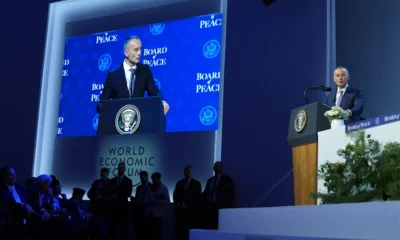
Billions pledged. Troops promised. Hamas still armed. Can Trump’s new “Board of Peace” actually change Gaza — or is the hardest part just beginning?
U.S. President Donald Trump is set to preside over the inaugural meeting of his newly formed “Board of Peace” on Thursday in Washington, bringing together representatives from more than 45 countries to discuss Gaza’s post-war future. The gathering, however, begins under the shadow of unresolved and politically explosive questions.
At the renamed Donald J. Trump U.S. Institute of Peace, the president is expected to announce that participating nations have pledged more than $5 billion toward Gaza’s reconstruction. According to U.S. officials, the United Arab Emirates and Kuwait are each contributing roughly $1.2 billion, forming a substantial portion of the initial fund.
Yet the financial pledges are only a starting point. Rebuilding Gaza after two years of war is projected to require tens of billions of dollars, and key operational details remain unsettled. Among the most contentious issues: the disarmament of Hamas, the deployment timeline of an International Stabilization Force, and the mechanism for distributing humanitarian aid to civilians.
Senior U.S. officials say several countries are prepared to send thousands of troops to participate in the stabilization force. However, its deployment hinges on Hamas relinquishing weapons — a demand the militant group has resisted despite last October’s fragile ceasefire agreement.
The structure of the Board itself has stirred controversy. Israel is represented, but Palestinian officials are not. Permanent members of the United Nations Security Council — including France, Britain, Russia and China — are also absent. Critics argue the initiative risks sidelining established multilateral frameworks traditionally led by the United Nations.
Speakers are expected to include Secretary of State Marco Rubio, U.S. envoys Steve Witkoff and Jared Kushner, former British Prime Minister Tony Blair, and U.S. Ambassador to the UN Mike Waltz. Former UN diplomat Nickolay Mladenov is also slated to participate.
Behind closed doors, diplomats acknowledge formidable obstacles. Security in Gaza remains fragile. Local policing capacity is limited. Aid distribution channels are described by officials as “disastrous.” Even basic questions — such as who negotiates directly or indirectly with Hamas — remain unresolved.
For Trump, the meeting is both a diplomatic test and a political statement. The pledges offer momentum. But without clarity on enforcement, governance, and demilitarization, the Board of Peace faces a stark reality: money alone cannot stabilize Gaza.

Somaliland President to Visit Israel in Historic First Trip

Trump Signals Iran Strike as Missile Warning Raises Stakes

Gates Calls Epstein Ties a “Huge Mistake”


-
 Minnesota2 months ago
Fraud Allegations Close In on Somalia’s Top Diplomats
-
 Editor's Pick2 months ago
Why India Is Poised to Become the Next Major Power to Recognize Somaliland
-

 ASSESSMENTS2 months ago
Somalia’s Risky Pact with Pakistan Sparks Regional Alarm
-

 Somaliland1 month ago
F-35s Over Hargeisa: The Night Somaliland’s Sovereignty Went Supersonic
-

 Somalia1 month ago
Aid Destroyed, Trust Shattered: Somalia Loses U.S. Support for Good
-
 Somaliland2 months ago
UAE, Bahrain, Morocco and Kazakhstan Hold Recognition Talks With Netanyahu
-
 Terrorism1 month ago
Foreign ISIS Pipeline Exposed: Puntland Captures Dozens of Non-Somali Fighters
-

 Somaliland1 month ago
Somaliland at Davos: The Moment Somaliland Entered the World’s Inner Circle