
ENERGY WARFARE
Global Energy Crisis Deepens as Hormuz Blockade Chokes Supply

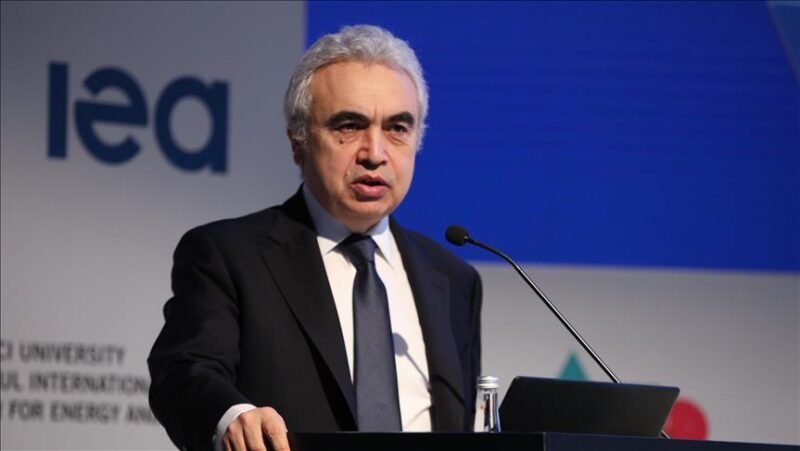
IEA Warns Hormuz Disruption Creates Unprecedented Energy Crisis, Surpassing Past Oil Shocks.
PARIS — The head of the International Energy Agency warned that the current disruption to global oil and gas supplies, driven by the closure of the Strait of Hormuz, is more severe than previous energy crises combined.
Fatih Birol, the agency’s executive director, said the scale of the shock exceeds the oil crises of 1973, 1979 and 2002, describing it as unprecedented in modern energy history. His assessment reflects the magnitude of supply disruption as traffic through one of the world’s most critical energy corridors has been largely halted.
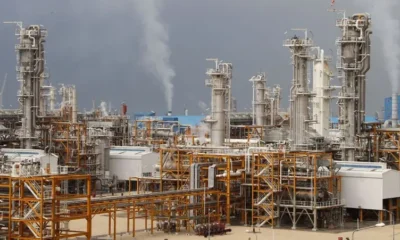
The Strait of Hormuz typically carries around a fifth of global oil and gas flows. Its effective blockade following strikes involving Iran has triggered sharp price increases and heightened volatility across global markets.
Birol said the consequences are uneven but far-reaching.
Advanced economies, including European countries, Japan and Australia, are expected to face rising energy costs and economic strain. However, he warned that developing nations are most exposed, as higher fuel prices feed directly into food costs and broader inflation pressures.
IEA member states agreed to release strategic reserves in an effort to stabilize markets, and some volumes have already been deployed. The measure provides short-term relief but does not address the structural disruption caused by restricted transit through the Gulf.
Global energy systems remain heavily dependent on a small number of chokepoints, with the Strait of Hormuz standing as the most critical. When access is constrained, the ripple effects extend beyond energy markets into trade, inflation and economic stability.
Decades of diversification and energy transition efforts have reduced reliance on single suppliers, but not on key transit routes. As a result, a localized disruption can still produce global consequences on a scale comparable to—or exceeding—past systemic shocks.
For now, markets are adjusting to a new level of uncertainty.
Whether the disruption proves temporary or prolonged will determine if this episode becomes a short-term spike or a defining moment in the global energy landscape.

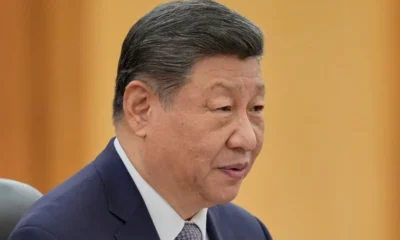











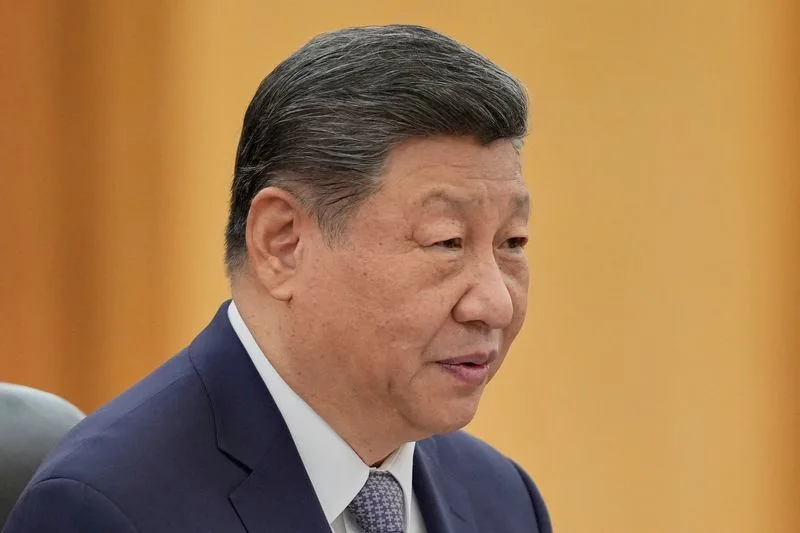
While others scramble over oil, China is quietly reshaping its energy future.
BEIJING — Xi Jinping has called for faster development of a new national energy system, signaling a strategic push to insulate China from global energy shocks as the Middle East conflict continues to disrupt oil markets.
Speaking through state media, Xi emphasized the need to accelerate planning across multiple sectors, including renewable energy, hydropower and nuclear capacity, while maintaining coal as a stabilizing foundation. He framed the effort as part of a broader long-term strategy to secure energy supply and support economic resilience.
Although Xi did not directly reference the war involving Iran and the United States, the timing of his remarks underscores the growing pressure on global energy systems. Disruptions linked to tensions in the Strait of Hormuz have pushed prices higher and heightened uncertainty for import-dependent economies.
The country remains heavily reliant on coal, which accounts for more than half of its energy consumption, providing a domestic buffer against external shocks. It also maintains significant oil reserves and a diversified import structure, with only a limited share of its total energy flows dependent on Gulf transit routes.
Xi’s remarks suggest Beijing views the current crisis less as an immediate threat and more as validation of its existing strategy.
China has spent years investing in wind and solar capacity, alongside large-scale infrastructure projects such as hydropower dams and high-altitude solar plants. At the same time, it has resisted calls to rapidly phase out coal, instead positioning it as a reliability anchor within a broader transition toward cleaner energy.
China is expanding renewable and low-carbon capacity while preserving conventional energy sources to ensure stability during periods of volatility. Xi reiterated that nuclear power would also play a growing role, provided its expansion remains controlled and safe.
The broader implication is strategic rather than reactive.
As energy markets tighten, Beijing is accelerating efforts to reduce exposure to external shocks without abandoning its industrial base. The emphasis on diversification suggests a recognition that energy security is now as much about flexibility as it is about supply.
China is reinforcing its commitment to clean energy while doubling down on coal as a strategic fallback. In doing so, it is balancing long-term climate goals with immediate economic and security priorities.
In a moment of global disruption, Beijing’s response is not to pivot—but to move faster along a path it had already chosen.
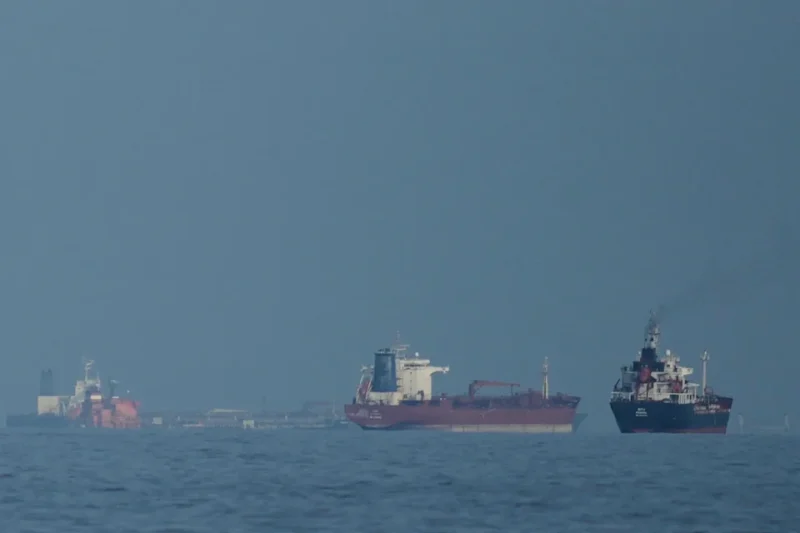
Hormuz Blockade Traps 2,190 Ships as Iran Tightens Control Over Global Energy Artery.
At anchor across the Arabian Gulf, tankers sit in long, silent rows—engines idle, crews waiting, cargoes stalled. For many, the journey has paused not for weather or mechanical failure, but for permission.
More than 2,190 commercial vessels are now trapped inside the Gulf, including over 320 oil and gas tankers, as Iran enforces a near-total blockade of the Strait of Hormuz. In peacetime, roughly 120 ships pass through the narrow corridor each day. Over a recent 24-hour period, just six were allowed to cross.
The numbers describe a disruption. The reality is closer to a controlled system.
Iran has not completely sealed the strait. Instead, it has narrowed access to a tightly managed corridor near Larak Island, granting passage selectively—often to vessels tied to friendly states or aligned economic interests. For others, entry comes with delays, uncertainty, or a reported fee of up to $2 million per transit, a charge some in the industry have begun calling the “Tehran toll.”
By the third layer of this crisis, the strategy becomes clear. This is not a blunt closure designed to halt all movement. It is a calibrated chokehold—restricting flow while preserving leverage. By allowing limited, conditional passage, Tehran avoids triggering an immediate full-scale military response while still exerting pressure on global markets.
The impact is already visible. Energy exports from major producers such as Saudi Arabia and Qatar have slowed sharply, with supply chains tightening and prices climbing. For importing countries, the disruption translates into higher fuel costs, strained logistics, and growing economic uncertainty.
There are signs of adaptation. Some vessels—Chinese, Indian, and Greek-operated—have managed to pass through after coordination with Iranian authorities or by navigating under heightened risk. Others have resorted to evasive tactics: sailing at night, moving in tight formation, or disabling tracking systems to reduce exposure to mines, drones, and missile threats.
But these are exceptions, not solutions. Thousands of ships remain anchored, and an estimated 20,000 seafarers are effectively caught in a maritime bottleneck with no clear timeline for release.
International responses are forming, but cautiously. The United Kingdom is convening a coalition of countries to explore diplomatic and political pathways to reopen the waterway. Military options, for now, remain largely off the table—no state appears willing to challenge Iran directly while conflict with the United States and Israel continues.
That restraint reflects a deeper calculation. Iran retains the capability to escalate quickly, targeting vessels or infrastructure in ways that could transform a controlled disruption into a broader maritime conflict.
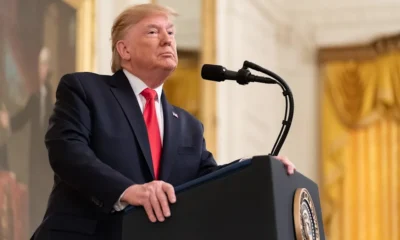
At the same time, Washington’s position adds another layer of complexity. Donald Trump has called on Tehran to lift the blockade while signaling that securing the strait is not solely America’s responsibility—a stance that is forcing allies to reconsider their own roles in safeguarding global trade routes.
There are gray areas in Iran’s approach. By selectively allowing passage and waiving fees for certain partners, Tehran is not only managing risk—it is reinforcing political alignments, rewarding allies while isolating others.
What is unfolding is not just a blockade. It is a test of control over one of the world’s most critical economic arteries.
The longer this system holds, the more it reshapes expectations. Shipping becomes negotiation. Trade becomes conditional. Access becomes leverage.
And in that shift, the question is no longer whether the strait can be reopened—but whether the rules governing it have already begun to change.
Iran Strike on Oil Tanker Near Dubai Escalates Gulf Conflict
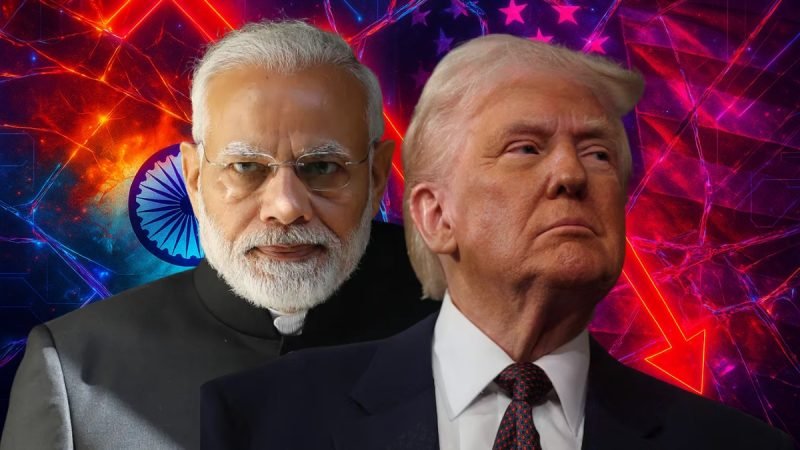
A diplomatic rift erupted Thursday after India flatly denied U.S. President Donald Trump’s claim that Prime Minister Narendra Modi had agreed to halt oil imports from Russia — a move that would have marked a dramatic reversal in one of the world’s most consequential energy partnerships.
“I am not aware of any such conversation,” India’s Foreign Ministry spokesman Randhir Jaiswal told reporters in New Delhi, hours after Trump boasted that Modi had “assured me today” that India would stop buying Russian oil.
The contradiction exposes the widening fault lines between Washington’s sanctions regime and New Delhi’s strategic independence.
For months, India has defied U.S. pressure to sever its energy links with Moscow, arguing that its top priority is keeping energy prices stable for its 1.4 billion citizens.
A Clash of Realities
India is one of the largest buyers of Russian crude since Moscow’s 2022 invasion of Ukraine — purchasing up to 1.8 million barrels per day, according to data from Kpler.
Trump’s comments come weeks after his administration imposed a 25% tariff on Indian goods as punishment for continued Russian oil purchases — doubling down on an earlier round of penalties.
Washington insists the sanctions are necessary to choke off Moscow’s war financing, but Indian officials see them as coercive and counterproductive.
“Ensuring stable energy prices and secured supplies are our twin goals,” India’s Foreign Ministry said in a statement pointedly omitting any mention of Russia. “Diversification will continue as appropriate to meet market conditions.”
The message was unmistakable: India will not be bullied into reshaping its energy policy for another nation’s war.
Modi’s Nationalist Defiance
Modi’s quiet refusal to bend to U.S. pressure reinforces his image at home — that of a leader who stands firm on India’s sovereignty.
It’s a narrative that resonates deeply with a domestic audience weary of Western lectures and double standards.
Trump’s misstep, meanwhile, highlights Washington’s waning leverage over partners who are now comfortable charting their own course in a multipolar energy world dominated by pragmatism, not ideology.
A Strained Partnership in Need of Repair
Behind the scenes, Indian and American diplomats are scrambling to cool tensions.
Both sides acknowledge “unresolved trade issues,” according to Indian Foreign Minister S. Jaishankar, but remain committed to finding “a landing ground.”
Still, this latest episode — a clash between rhetoric and reality — shows just how fragile that landing ground has become.

China Accelerates Energy Shift as Oil Shock Spreads

Global Energy Crisis Deepens as Hormuz Blockade Chokes Supply

North Korea Steps Back from Iran, Eyes Washington Reset


-
 US-Israel war on Iran3 weeks ago
Waves of Mystery Drones Breach U.S. Nuclear Base Airspace
-
 Terrorism1 week ago
Egypt Uncovers Alleged Plan to Down Presidential Plane
-
 US-Israel war on Iran3 weeks ago
Saudi Arabia Warns of Military Action After Iranian Missile Strike
-
 Top stories2 weeks ago
Saudi Arabia Deepens Defense Ties with Ukraine
-
 US-Israel war on Iran2 weeks ago
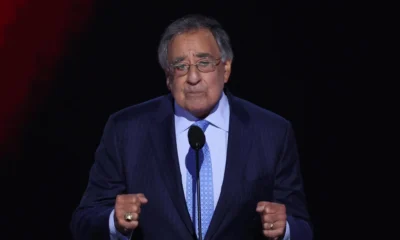
Former CIA Chief Blames White House for Escalating Iran War Crisis
-

 US-Israel war on Iran3 weeks ago
Iran’s Guard Leadership Hit Hard in Escalating Strikes
-

 Analysis2 weeks ago
Inside the IRGC’s Quiet Rebuild of Hezbollah
-
 US-Israel war on Iran3 weeks ago
Pentagon Signals War With Iran Is Open-Ended