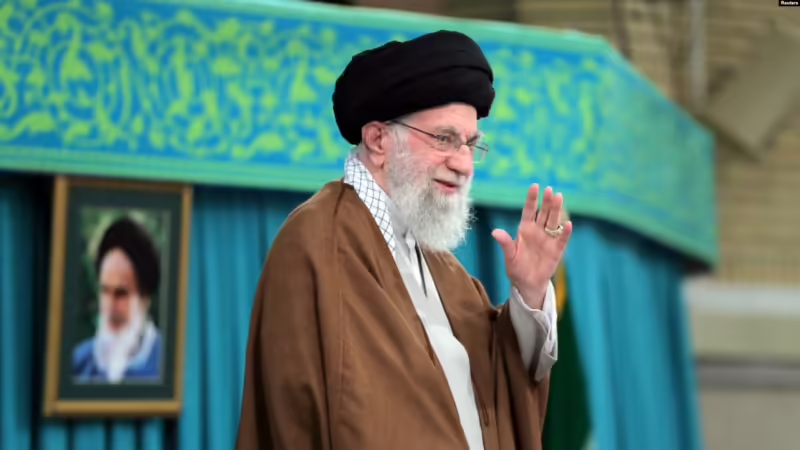
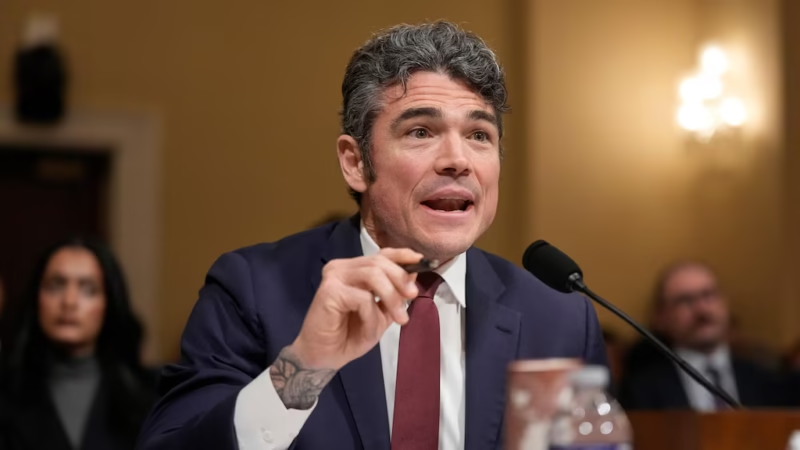
Three rounds in—and still no deal. The future of oil, war, and global stability now hinges on Islamabad.
ISLAMABAD — A third round of high-stakes negotiations between the United States and Iran has begun in Pakistan, as both sides remain sharply divided on key issues including sanctions, regional conflict, and control of vital energy routes.
Officials confirmed that talks, hosted by Pakistan, extended late into Saturday night and into Sunday, marking a shift toward direct engagement after earlier indirect diplomacy. The discussions are taking place in Islamabad, with both delegations now working at an expert level across economic, military, legal, and nuclear tracks.
According to Iranian state media, additional rounds may follow as negotiators attempt to bridge deep gaps.
At the center of the dispute is the Strait of Hormuz, a critical global energy artery. Iranian officials have signaled strong disagreements over how and when the waterway should be fully reopened, while the United States has made free navigation a core condition for any lasting agreement.
Tehran has also demanded that the ceasefire be extended to Lebanon and that sanctions be lifted—conditions Washington has so far rejected. U.S. officials have maintained a firm stance against easing restrictions or allowing continued uranium enrichment, further complicating negotiations.
Donald Trump underscored that position in remarks on social media, asserting that Iran has “no cards” in the talks, reflecting Washington’s hardened negotiating posture.
Despite the tensions, officials close to the process described the atmosphere as “cordial,” with Pakistan playing a central mediating role. Shehbaz Sharif has led a broader diplomatic effort to position Islamabad as a key intermediary in the conflict, supported by senior figures including Foreign Minister Ishaq Dar and military leadership.
Pakistani officials cautioned that progress will take time. “There has been 47 years of tension,” said Law Minister Azam Nazeer Tarar, noting that such disputes cannot be resolved in a single session.
The talks come amid a fragile ceasefire following weeks of conflict that disrupted global energy markets and triggered the largest oil supply shock in recent history. Analysts warn that failure to reach a durable agreement could prolong economic instability, drive inflation, and deepen geopolitical fractures.
For now, negotiations continue—but the path to a breakthrough remains uncertain.