Top stories
Abiy Showcases Elite Airborne Force in Power Display
Red bonnets, airborne units and a regional message — Abiy signals Ethiopia’s military ambitions beyond its borders.
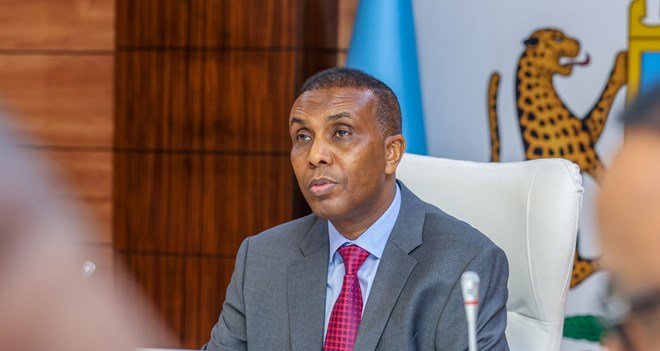
Ethiopian Prime Minister Abiy Ahmed on Sunday hailed the country’s elite airborne forces as a symbol of “purpose in one wing and discipline in the other,” in a high-profile ceremony marking the 65th anniversary of the Special Operations Command.
Speaking at Hawassa International Stadium before senior military officials and defense leaders, Abiy — commander-in-chief of the armed forces — described the red-beret unit as an “exceptional gift of Ethiopia,” embodying the country’s culture, identity and national resolve.
“These heroic figures are not just fighters,” he said, portraying the force as both a shield against threats and a vehicle for national transformation.
The celebration comes at a time when Ethiopia faces complex security challenges at home and across the Horn of Africa. Abiy framed the airborne command not only as a domestic security asset but as a regional stabilizer. He said Ethiopia seeks to promote peace and counter terrorism from Somalia to the Red Sea port of Massawa, signaling broader strategic ambitions.
Equipped with advanced technology and specialized training, the two-winged unit is designed for rapid deployment and preemptive operations, the prime minister said. Its mission, he added, is to deter conflict before it escalates and to respond decisively when crises emerge.
Abiy linked the force’s evolution to Ethiopia’s long-term state-building project, arguing that national strength rests on disciplined institutions capable of safeguarding sovereignty and stability. He extended congratulations to East African nations, describing the elite unit as a contribution to continental security.
The anniversary event was marked by a display of military precision and symbolism, reinforcing the government’s emphasis on unity, national pride and regional influence.
In a volatile region, Abiy’s message was clear: Ethiopia intends to remain not only a defender of its borders, but a strategic actor shaping security across the Horn of Africa.
Top stories
Trump Clash Forces Britain to Abandon Chagos Deal
UK Shelves Chagos Islands Handover Plan After US Withdraws Support.
A strategic island, a military base, and a broken alliance—why the UK just backed down.
The United Kingdom has halted its plan to return the Chagos Islands to Mauritius after losing crucial backing from the United States, marking a significant setback for Prime Minister Keir Starmer.
British officials confirmed that legislation required to complete the handover will not pass before the end of the current parliamentary session, effectively shelving the proposal for now.
The agreement would have transferred sovereignty of the archipelago to Mauritius while allowing Britain and the U.S. to retain control of the strategically vital Diego Garcia under a 99-year lease. But London has consistently said it would only proceed with the deal if Washington supported it—a condition that is no longer met.
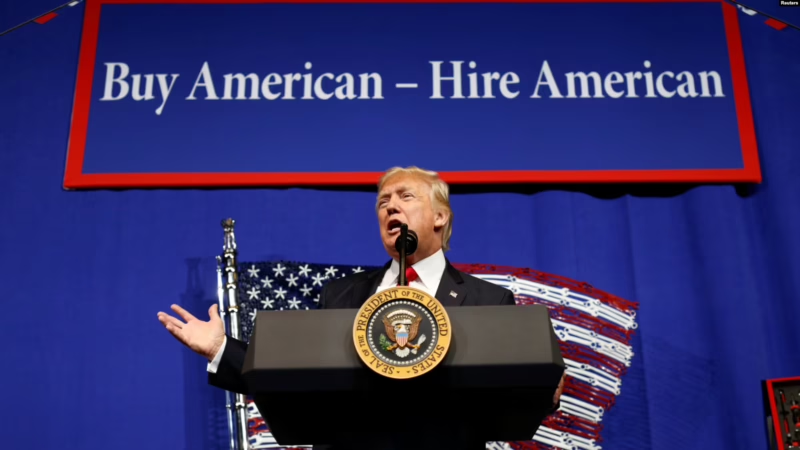
The reversal follows strong opposition from Donald Trump, who criticized the plan and raised concerns about its impact on Western security interests.
The decision also reflects broader tensions between the U.S. and UK, particularly over the handling of the Iran war. Disagreements over the use of British bases for U.S. operations and shifting diplomatic positions have strained what has traditionally been a close alliance.
Despite shelving the legislation, the British government maintains that securing the long-term future of Diego Garcia remains its top priority. Officials argue the original deal was designed to protect the base from potential legal challenges while preserving its strategic role.
The Chagos Islands have long been a source of dispute. The UK separated the territory from Mauritius in 1965 before Mauritian independence, and thousands of islanders were forcibly displaced—an issue that continues to fuel legal and political challenges today.
For now, the proposed transfer is effectively on hold, with no indication it will be revived in the next legislative agenda.
The outcome leaves the future of the islands—and the balance between sovereignty, security, and international law—uncertain once again.
Top stories
US Intelligence Says China Arms Iran as Ceasefire Hangs by a Thread
Peace talks on the surface—arms shipments behind the scenes? The Iran crisis just got bigger.
U.S. intelligence agencies have assessed that China may be preparing to deliver air defense systems to Iran in the coming weeks, a move that could complicate efforts to sustain the fragile ceasefire between Washington and Tehran, according to officials familiar with the matter.
The systems under consideration include shoulder-fired missiles, known as MANPADS, which are capable of targeting low-flying aircraft. Analysts say such weapons could pose a renewed threat to U.S. and allied air operations if hostilities resume.
The reported preparations come at a sensitive moment. The ceasefire, reached earlier this week after weeks of conflict, is being tested through ongoing negotiations, with talks underway to secure a longer-term agreement. U.S. officials have made reopening the Strait of Hormuz and addressing Iran’s nuclear program key priorities in those discussions.
China has denied the allegations.
A spokesperson for the Chinese embassy in Washington said Beijing “has never provided weapons to any party to the conflict,” calling the claims baseless and urging the United States to avoid escalating tensions. Chinese officials have previously said they are working to support de-escalation and maintain neutrality.
However, intelligence sources suggest Beijing may be attempting to balance competing interests.
China remains heavily dependent on Iranian oil and has longstanding economic and strategic ties with Tehran. At the same time, it has sought to position itself as a diplomatic actor capable of engaging all sides. According to sources, any potential shipments could be routed through third countries to obscure their origin.
If confirmed, such a transfer would mark a shift in China’s role—from indirect support through trade and dual-use technology to more direct military assistance.
The development also highlights the broader international dimension of the conflict.
Iran has relied on external partnerships throughout the war, including cooperation with Russia, which U.S. officials say has provided intelligence support. In return, Tehran has supplied drones to Moscow for use in its war in Ukraine, reflecting a network of reciprocal military ties.
The potential introduction of additional air defense systems could alter the operational balance, even if only incrementally. During the conflict, Iran demonstrated the ability to challenge advanced aircraft, including the reported downing of a U.S. fighter jet with a shoulder-fired missile.
The issue is likely to feature in upcoming diplomatic engagements, including a planned meeting between U.S. President Donald Trump and Chinese President Xi Jinping next month.
For now, the ceasefire remains in place—but the intelligence assessment underscores how quickly conditions could shift if external support begins to reshape the balance on the ground.
Top stories
Iran’s Own Mines Trap Its Strategy in Hormuz Crisis
Iran’s Hormuz Minefield Undermines Its Leverage in High-Stakes Ceasefire Talks.
Iran’s biggest weapon just backfired. The mines meant to block the world are now blocking Tehran itself.
Iran’s effort to weaponize the Strait of Hormuz has become a growing liability, as unaccounted sea mines now complicate its position in critical ceasefire negotiations with the United States.
U.S. officials say Iran is unable to locate all the mines it deployed during the early phase of the war, when small boats scattered explosives across the narrow waterway in response to U.S. and Israeli strikes. Some of those mines were reportedly laid without precise coordinates or may have drifted, leaving sections of the strait unsafe and unpredictable.
The consequence is immediate: Iran cannot fully reopen the passage—even if it wants to.
Iranian Foreign Minister Abbas Araghchi has indicated that ships could transit the strait “with due consideration of technical limitations,” a phrase U.S. officials interpret as a reference to the unresolved mine threat.
This reality undercuts one of Iran’s central war strategies.
Tehran had sought to control access to Hormuz, even proposing a toll system requiring tankers to submit cargo details and pay fees—reportedly in cryptocurrency—before passage. In theory, such a system could generate billions in revenue annually. In practice, however, the presence of uncharted mines makes safe navigation—and enforcement—highly uncertain.
The issue now sits at the heart of negotiations in Islamabad.
The U.S. delegation, led by JD Vance alongside envoy Steve Witkoff and advisor Jared Kushner, is pressing for the “complete, immediate, and safe” reopening of the strait. Iran’s team, led by Mohammad Bagher Ghalibaf and Araghchi, faces mounting pressure to deliver.
Yet neither side appears fully equipped to resolve the problem quickly.
Mine-clearing operations are complex and time-consuming, and both U.S. and Iranian capabilities in this area are limited. Without a coordinated effort—or external assistance—the process of securing the waterway could extend well beyond the current ceasefire window.
The economic stakes are high.
Even partial disruption of Hormuz has already strained global supply chains, affecting not only oil but also key commodities such as fertilizers and industrial materials. Prolonged uncertainty risks deepening those impacts, particularly for energy-dependent economies.
What began as a tactical move to pressure global markets has evolved into a strategic constraint.
Iran’s control of Hormuz gave it leverage. Its inability to fully manage that control now complicates its negotiating position, raising questions about how quickly—and under what terms—the strait can return to normal operations.
The outcome of the Islamabad talks may hinge less on political will than on technical reality.
And for now, that reality remains buried beneath the waters of Hormuz.
Top stories
Pakistan Sends Fighter Jets to Saudi Base in Major Defense Move
Pakistani Military Deploys to Saudi Arabia Under Strategic Defense Pact.
New forces, new signal: Pakistan and Saudi Arabia tighten military coordination amid regional tensions.
Pakistani military units, including fighter jets, have arrived in Saudi Arabia as part of a bilateral defense agreement aimed at strengthening joint readiness, Saudi officials said Saturday.
In a statement, the Saudi Ministry of Defense confirmed that forces from Pakistan were deployed to King Abdulaziz Air Base in the Eastern Province, describing the move as part of the Strategic Mutual Defense Agreement between the two countries.
The deployment includes combat and support aircraft and is intended to “enhance joint military coordination and raise the level of operational readiness” between Saudi and Pakistani forces, the ministry said.
The agreement, signed in September 2025, formalizes defense cooperation between Saudi Arabia and Pakistan, with provisions that treat an attack on one country as an attack on both.
The arrival of Pakistani forces comes at a time of heightened regional tensions following weeks of conflict involving Iran, the United States, and Israel. While Saudi officials did not directly link the deployment to the ongoing crisis, the move is likely to reinforce the kingdom’s defensive posture amid broader uncertainty.
Saudi Arabia and Pakistan have long maintained close military ties, including joint exercises, training programs, and security cooperation. The latest deployment signals a deepening of that partnership, particularly in the context of regional security challenges.
Officials said the presence of Pakistani forces will support coordination between the two militaries and contribute to overall stability, though no timeline for the deployment was disclosed.
Top stories
Starmer Pushes Gulf Powers to Lock In Fragile Ceasefire
No Gulf buy-in, no real peace. Britain is now pushing the region to take ownership of the ceasefire.
Britain has emphasized the need for stronger Gulf involvement in stabilizing the U.S.–Iran ceasefire, as Prime Minister Keir Starmer wrapped up a three-day tour of the region.
Speaking after meetings with Gulf leaders, Starmer said participation from regional states is “vital” to turning the temporary pause in fighting into a lasting agreement.
During a stop in Doha, Starmer met Tamim bin Hamad Al Thani to discuss the ceasefire and broader regional tensions. Both sides welcomed the agreement between Washington and Tehran, describing it as an important step toward de-escalation.
Officials also stressed the need for continued coordination with international partners to build on the ceasefire and move toward a more durable peace framework.
Talks focused heavily on safeguarding global energy flows, particularly through the Strait of Hormuz, which remains a central concern for both regional and global markets following weeks of disruption.
Starmer reiterated the United Kingdom’s condemnation of recent Iranian attacks on Qatar and expressed full support for Doha’s efforts to protect its sovereignty and security.
Qatar’s leadership, including Prime Minister and Foreign Minister Mohammed bin Abdulrahman bin Jassim Al Thani, emphasized the importance of joint diplomatic efforts to ensure stability and prevent further escalation.
The visit to Qatar was part of a broader Gulf tour that included Saudi Arabia, Bahrain, and the United Arab Emirates, reflecting London’s push to engage regional powers directly in shaping the outcome of the crisis.
British officials say the strategy is to reinforce a coordinated Western–Gulf approach, ensuring that any long-term agreement addresses both security concerns and economic stability.
While the ceasefire has reduced immediate tensions, leaders on all sides acknowledge that its success will depend on sustained regional cooperation—and the ability to keep critical trade routes open.
For now, the message from London is clear: without Gulf participation, the ceasefire may not hold.
Top stories
GCC Supports Beirut Power Shift
Lebanon moves to take back control of Beirut—and the Gulf is backing it.
The Gulf Cooperation Council has voiced strong support for Lebanon’s decision to tighten state control over security in its capital, framing the move as a critical step toward restoring sovereignty.
In a statement on Friday, Jasem al-Budaiwi welcomed Beirut’s decision to empower the Lebanese Armed Forces and security agencies to assert full authority across the Beirut Governorate and restrict weapons to official state institutions.
Al-Budaiwi described the measure as “an important step toward consolidating the sovereignty of the Lebanese state and strengthening its legitimate institutions,” adding that it would help enhance security and stability for both citizens and residents.
The move comes amid heightened tensions in Lebanon, where ongoing conflict involving Hezbollah has raised concerns about the state’s ability to maintain control over armed actors operating outside official structures.
By limiting weapons to state forces, Lebanese authorities appear to be signaling an effort to reassert central authority in a country long marked by competing power centers.
The GCC reaffirmed its longstanding support for Lebanon, emphasizing its commitment to the country’s sovereignty, territorial integrity, and stability. Al-Budaiwi said the decision aligns with the aspirations of the Lebanese people for greater security and development.
The announcement reflects growing regional backing for efforts to strengthen state institutions in Lebanon, particularly as the country faces both internal pressures and spillover effects from wider regional conflicts.
Top stories
Trump’s Feud With Former Allies
War abroad. Chaos at home. Trump is now fighting battles on both fronts.
As the United States navigates a fragile ceasefire with Iran, a different kind of conflict is unfolding in Washington—one that cuts through the core of MAGA itself.
Donald Trump has launched a sweeping public attack on prominent conservative voices who once formed the backbone of his political ecosystem. Figures such as Tucker Carlson, Megyn Kelly, Candace Owens, and Alex Jones—all previously aligned with Trump—have openly criticized his handling of the Iran war. His response has been unusually direct, labeling them “losers” and questioning their credibility.
The timing is not incidental.
This rupture comes at a moment when Trump is attempting to recalibrate his foreign policy narrative—from escalation to negotiation—after weeks of military confrontation. His earlier rhetoric, including threats of catastrophic retaliation against Iran, had already unsettled parts of his political base. Now, as those criticisms grow louder, the backlash has turned inward.
What emerges is a deeper strategic tension within Trump’s coalition.
For years, the MAGA movement balanced two competing instincts: assertive nationalism and skepticism toward foreign intervention. The Iran war has forced that contradiction into the open. Critics like Carlson and Owens represent a strain of conservative thought that views overseas conflicts as costly distractions. Trump’s more aggressive posture toward Tehran, particularly at the height of the crisis, placed him at odds with that camp.
The result is fragmentation.
The public nature of Trump’s response—lengthy, personal, and highly charged—suggests that these critiques are not being dismissed as marginal. Instead, they are being treated as a challenge to his authority within the movement. His insistence that he “does not care” contrasts sharply with the intensity of his engagement, underscoring the political sensitivity of dissent from within his own ranks.
This internal divide carries broader implications.
At a time when the administration is pursuing delicate negotiations with Iran, unity at home would typically strengthen its hand. Instead, visible fractures risk complicating the political environment in which those negotiations are taking place. Allies and adversaries alike are likely to interpret these divisions as signals of constraint—limitations on how far the White House can push either escalation or compromise.
The stakes extend beyond the immediate crisis.
Trump’s political identity has long been tied to personal loyalty and message discipline. A sustained break with influential media figures and former allies could reshape the contours of his support base, particularly if foreign policy remains a point of contention. For potential successors and rivals within the Republican Party, the moment also opens space to redefine what “America First” means in practice.
For now, the president is fighting on two fronts: managing a volatile international standoff while confronting dissent at home.
In both arenas, the outcome remains uncertain.
But one conclusion is already clear: the Iran war has not only redrawn geopolitical lines—it has begun to redraw political ones inside the United States as well.
Top stories
UAE Says No New Iranian Threats Detected as Ceasefire Holds
No missiles, no drones—but no illusions. The UAE is preparing for what comes next.
The United Arab Emirates has reported a temporary lull in hostilities, with its air defense systems detecting no new Iranian missile or drone threats in recent hours—an early sign that the fragile ceasefire may be holding, at least for now.
According to the UAE Ministry of Defense, no ballistic missiles, cruise missiles, or unmanned aerial vehicles were launched toward the country during the latest monitoring period. The update also confirmed no new casualties, with total injuries remaining at 224 and no fatalities recorded in recent hours.
But the calm masks the scale of what preceded it.
Since the conflict began, UAE defenses have intercepted hundreds of threats—over 500 ballistic missiles, dozens of cruise missiles, and more than 2,200 drones launched from Iran. The figures underscore both the intensity of the campaign and the country’s reliance on layered air defense systems to protect critical infrastructure and population centers.
The current pause comes amid a two-week ceasefire between Iran and the United States, following weeks of escalation that began with U.S. and Israeli strikes on Iranian targets. Tehran’s response extended beyond Israel, targeting Gulf states seen as aligned with Washington.
Despite the absence of immediate threats, the UAE’s posture remains cautious. Officials have emphasized full operational readiness and a willingness to respond decisively to any renewed attacks, signaling that the ceasefire has not altered the underlying risk environment.
That caution extends to diplomacy. Abu Dhabi has called for greater clarity on the terms of the ceasefire, stressing the need for a comprehensive and lasting framework that addresses not only direct conflict, but also broader regional threats linked to Iran’s capabilities and network.
The message is clear: a pause in attacks does not equal security.
For the UAE, the experience of absorbing sustained missile and drone barrages has reinforced a strategic lesson—deterrence must be constant, even when the skies are quiet.
The ceasefire may be holding in the moment. But for Gulf states on the front line, stability will only come when the conditions behind the conflict are resolved—not just temporarily contained.
-
Red Sea5 days agoHouthis Threaten to Shut Red Sea if War Widens
-
Terrorism2 weeks agoEgypt Uncovers Alleged Plan to Down Presidential Plane
-
Top stories3 days agoKremlin Claims EU Is Working Against Orbán
-
Top stories2 weeks agoSaudi Arabia Deepens Defense Ties with Ukraine
-
US-Israel war on Iran3 weeks agoFormer CIA Chief Blames White House for Escalating Iran War Crisis
-
Top stories7 days agoIRGC Moves to Control Iran’s Future
-
US-Israel war on Iran3 weeks agoIran War Sparks Global Crisis Warning
-
Top stories2 weeks agoFrance Leads Talks With 35 Nations to Secure Strait of Hormuz